 ProMapRanker
Best Credit Management Software in 2026


Large enterprises with complex receivables · Pricing starts at: See website
Key takeaways
- Most tools here are quote priced, so the real comparison is workflow fit, ERP support and credit data coverage, not a headline price.
- Chaser is the clearest priced option for smaller finance teams, while HighRadius, Esker and Serrala are built for larger, ERP heavy operations.
- Credit checks, limits and approvals matter as much as chasing, because a good limit decision prevents a bad debt before it starts.
- This article is general information only, not financial advice, and it does not promise approval, payment or recovery for any customer.
Quick comparison
| Pick | Great for | Pricing starts at | Free tier | |
|---|---|---|---|---|
| HighRadius | Large enterprises with complex receivables | See website | No | Visit |
 Esker | Policy driven credit decisions alongside order to cash | See website | No | Visit |
 Gaviti | Growing teams moving from spreadsheets to automation | See website | No | Visit |
 Sidetrade | High volume portfolios needing risk signals | See website | No | Visit |
 Quadient | Document led credit workflows | See website | No | Visit |
 Serrala | SAP centred credit and receivables teams | See website | No | Visit |
 Chaser | Small and mid sized teams wanting published pricing | $259 per month | Free trial | Visit |
 Kolleno | Global teams needing one receivables workspace | See website | No | Visit |
 Upflow | SaaS and subscription businesses using NetSuite or Stripe | See website | No | Visit |
The best credit management software
We compared tools that help a business check a customer, set a limit, approve an order and then collect on time. This is general information only, not financial advice, and no tool here can guarantee that a customer will be approved, will pay on time or will repay a debt.
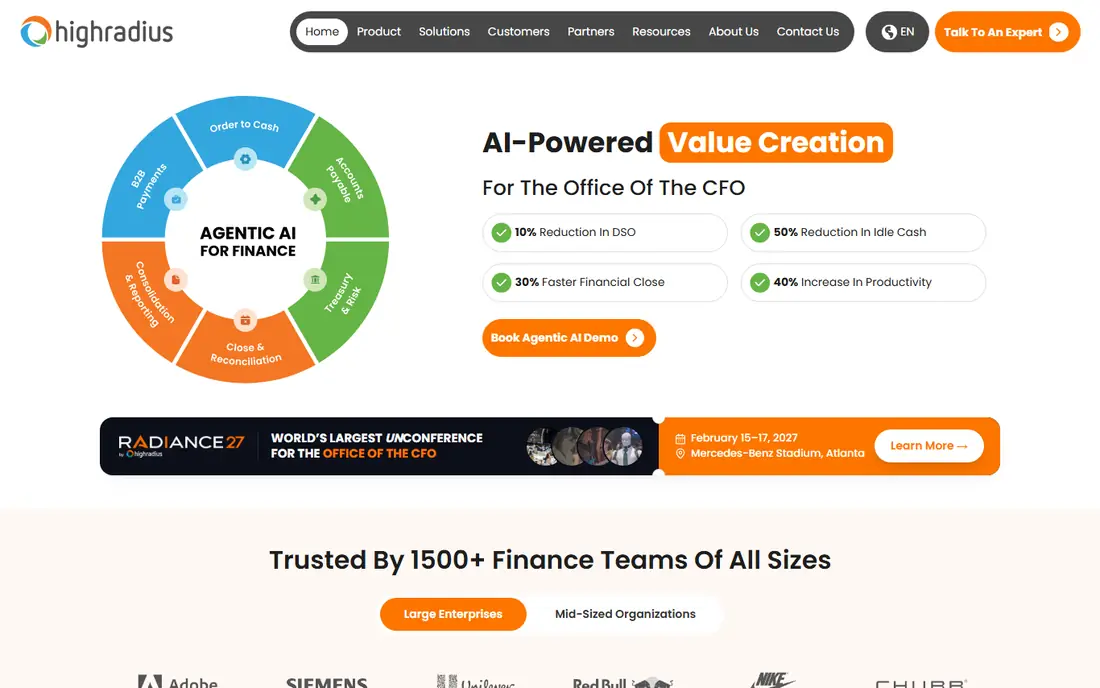
HighRadius suits a finance department that already runs a large ERP and needs credit decisions to sit next to collections, cash application and forecasting. Its credit management module covers applications, scoring inputs and limits, and it connects that work to what collectors see when an account falls behind. For a team with several business units, that shared view is the main draw, since credit, disputes and payment history stop living in separate files.
The trade off is scale and effort. Pricing comes through sales, and implementation is best treated as a project, with data cleanup, approval rules and ERP mapping to plan. Smaller teams may find the breadth more than they need, and the price will reflect an enterprise platform. If your volume is high, your customers are spread across regions and your credit policy has many exceptions, HighRadius is a serious shortlist candidate.
- Wide accounts receivable coverage
- Credit, collections and cash application in one suite
- Many ERP integrations
- Quote based pricing
- Setup can be a long project for smaller teams
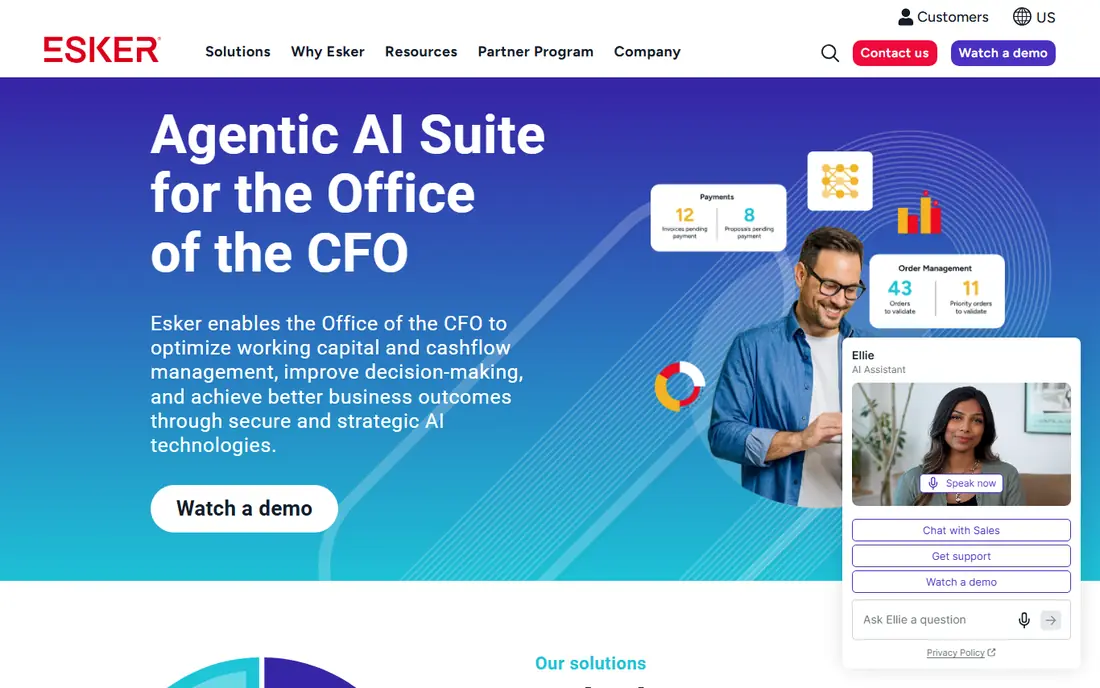
Esker works well when credit is one step in a longer order to cash chain, from order entry through invoicing and collections. A credit application can follow a defined policy, pull in bureau or third party data where available, and route to the right approver instead of sitting in an inbox. That structure helps teams that need an audit trail and consistent decisions across branches or subsidiaries.
The catch is that you are buying into a platform, not a single point tool. If you only need credit checks and nothing else, the scope and the sales led pricing may feel heavy. Esker fits best when your team also wants to tidy up invoicing, dispute handling or collections in the same system, and when SAP or a similar ERP is already central to how you work.
- Credit management inside a wider order to cash platform
- Structured approval workflows
- SAP friendly deployment
- Quote based pricing
- Broader platform may be more than a credit only buyer wants
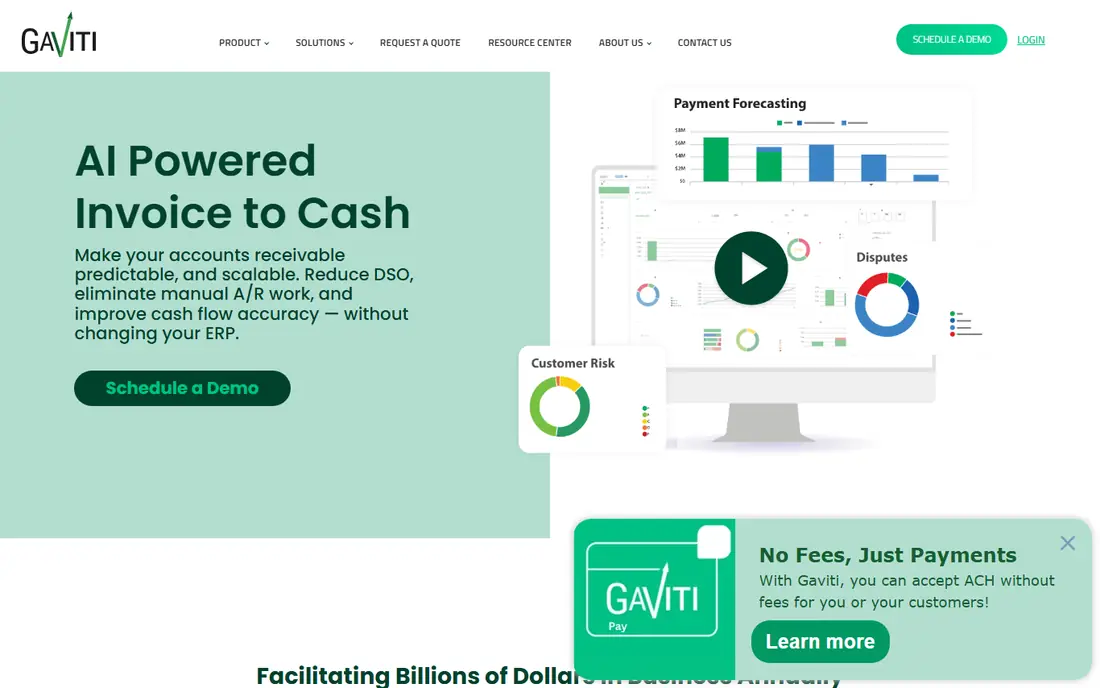
Gaviti is a sensible step up for a team that has outgrown spreadsheets and email reminders but does not want an enterprise rollout. Its credit review work, collections workflows and dispute handling sit in one place, so a collector can see why a limit was set, what was promised and what is still open. That context matters when a customer disputes an invoice and the credit decision is questioned later.
Pricing is usage based and quoted, so you will need a demo and a scope discussion to get a firm number. The product is strongest as a working system for day to day receivables, rather than as a deep risk modelling platform. For mid sized businesses that want faster onboarding, cleaner chasing and fewer manual checks, Gaviti earns its place on the list.
- Clear dunning and dispute workflows
- Automated credit review coverage
- Practical mid market focus
- Quote based pricing
- Advanced analytics may lag larger enterprise suites
Sidetrade appeals to teams that manage many customers and need to spot trouble early, rather than reacting after an invoice ages. It brings together risk signals from several sources and helps prioritise which accounts need attention first, which is useful when a collector cannot call everyone on the same day. Credit limits and portfolio views sit close to that collections work, so decisions stay tied to payment behaviour.
That analytical depth is also its limit for smaller buyers. A team with a short customer list and simple terms may not use the predictive side enough to justify an enterprise style purchase. Sidetrade fits best when volume is high, payment behaviour varies a lot by customer, and early warning is worth paying for.
- Predictive risk signals across large portfolios
- Multi source risk data
- Strong collections prioritisation
- Quote based pricing
- May be more analytical than a small team needs
Quadient takes a structured route to credit: applications, supporting documents, scoring and approvals follow a repeatable path. That discipline helps when several people touch a credit file and when a decision later needs to be explained to sales, audit or a customer. It is a good match for teams that already handle a lot of paperwork around onboarding and want that paperwork tied to the credit decision.
The main drawback is positioning. Buyers searching only for a credit brand may overlook Quadient, and pricing still requires a sales conversation. If your process is document heavy and you value a clean approval trail over flashy risk models, Quadient deserves a demo alongside the bigger names here.
- Structured credit application and scoring workflows
- Clear approval routing
- Fits document heavy finance teams
- Quote based pricing
- Less well known as a standalone credit brand in the US
Serrala is the pick to test first when SAP runs your finance operation. Credit limits, blocked orders and receivables data stay close to the ERP, which reduces duplicate entry and keeps sales, credit and collections working from the same customer record. For SAP shops, that closeness often matters more than a prettier standalone interface.
Outside SAP, the case weakens. You would be paying for depth you may not use, and integration work changes shape. Serrala is not a general small business tool, and it should not be judged as one. In its home ground, though, it is one of the most practical credit options in this list.
- Deep SAP integration
- ERP native credit limit decisions
- Strong fit for SAP finance operations
- Quote based pricing
- Weaker fit outside an SAP environment
Chaser stands out here because you can see the price before you talk to sales. The Compact plan starts at $259 per month for smaller revenue bands, with higher tiers for larger businesses, and it covers automated chasing, payment reminders and customer communication history. Integrations with common accounting systems mean invoices and payment status can stay in sync, so your team does not chase an invoice that was already paid.
The limits need a close read. Compact caps users and templates, and items such as SMS reminders or a payment portal may sit outside the base plan. That still leaves a clear, workable core for many small and mid sized teams, especially those on Xero, QuickBooks or Sage. If published pricing and a fast start matter more than enterprise risk modelling, start with Chaser.
- Published tiered pricing
- Automated reminder sequences
- Integrates with Xero, QuickBooks and Sage
- Entry tier caps users and templates
- Some features are paid add ons
Kolleno is built for businesses that sell across borders and need one place for invoicing, collections and reconciliation. Multi currency handling, a customer payment portal and collections dashboards help a distributed finance team work the same queue, even when customers pay in different currencies and through different methods. AI assisted matching can also cut the manual work of tying payments to invoices.
Cost is the watch point. Public figures point to per user pricing, which means the bill grows with every collector and finance user you add. That model can still be fair for a global team that replaces several tools, but a small domestic team will likely find cheaper options here. Ask for a total based on your actual user count, not a single seat price.
- Multi currency and global collections support
- Customer payment portal
- AI assisted reconciliation
- Per user pricing can rise quickly
- Quotes come through sales
Upflow positions itself around the customer relationship behind the invoice, not just the chase. For a SaaS or subscription business, that means payment behaviour, billing data and collections workflows can be read together, which helps when a late payment is really a billing dispute, a failed card or a churn signal. Integrations with NetSuite, Stripe Billing and similar systems support that view.
Pricing is quoted by revenue band, so two similar sized teams can still land on different scopes. Upflow is less obviously right for a traditional manufacturer with simple terms and a single ERP, and more obviously right for a recurring revenue business that lives in Stripe or NetSuite. If that describes you, put it near the top of your demo list.
- Strong fit for subscription billing data
- Customer payment behaviour analytics
- NetSuite and Stripe integrations
- Quote based pricing
- Tiers are set by revenue band
How we picked these
We compared official product pages, pricing pages and public comparison guides, and we kept only tools that still offer credit management, credit checks or credit led collections work in October 2026. We favoured tools with clear ERP or accounting integrations, a defined approval or limit workflow, and a real collections path, because credit software that only scores and never helps you collect leaves half the job undone. Where a vendor does not publish a price, we wrote See website rather than repeating a third party estimate as fact.
What to check before you sign
Start with your credit policy, not the demo. Write down who can approve a limit, what evidence you need for a new customer, when an order should be blocked and how often limits are reviewed. A tool that cannot mirror that policy will either be worked around or will slow sales down, and both outcomes cost money. Ask each vendor to walk through one real approval, one limit increase and one blocked order, using your own steps.
Next, check data coverage for your customers. Bureau and third party data vary by country, company size and industry, and a tool that covers US public companies well may be thin for small private buyers. Ask what happens when data is missing, who reviews the exception and how that decision is recorded. Also confirm how payment behaviour feeds back into limits, since a customer who always pays late should not keep the same terms by default.
Finally, price the whole team. Quote based tools often charge by user, module or invoice volume, and add ons for SMS, portals or advanced scoring can change the total. Get the number of users, the ERP connector and the support level in writing, and ask about implementation time. This is general information only, not financial advice, and your own credit policy and legal advice should govern how you use any score or limit.
Frequently asked questions
What is credit management software?
Credit management software helps a business check new customers, set credit limits, approve orders and collect overdue invoices in one workflow. It usually connects to an accounting system or ERP, so invoices, payments and disputes stay tied to the customer record. The goal is fewer bad debts and faster payment, without slowing legitimate sales.
Does credit software guarantee payment?
No. A score, a limit or a reminder sequence can reduce risk and improve follow up, but it cannot guarantee that a customer will pay. Payment still depends on the customer, the contract terms and, when needed, formal recovery steps. Treat any vendor promise of guaranteed recovery with caution and check the contract wording.
Do I need it if I already use accounting software?
Accounting software records invoices and payments, but it rarely manages credit applications, approvals and risk based chasing in depth. Credit software adds that decision layer and the follow up workflow. Smaller teams with few credit customers may manage with accounting tools alone, while teams with many terms customers usually benefit from a dedicated system.
How much does credit management software cost?
Prices range from a published $259 per month for Chaser Compact to quote based enterprise pricing for HighRadius, Esker, Serrala and others. The total depends on users, modules, invoice volume and add ons. Always ask for a quote based on your user count and ERP before comparing headline prices.
Which tool is best for an SAP business?
Serrala is the most SAP centred option here, with credit decisions close to ERP data. Esker and HighRadius also support SAP deployments, but they bring a wider platform with them. If SAP is your system of record, test Serrala first and check how blocked orders and limit changes flow back to sales.
Can small businesses use these tools?
Yes, but the fit varies. Chaser, Gaviti and Upflow are more approachable for smaller or growing teams, while HighRadius and Serrala are built for larger operations. Start with your customer count, your ERP and the number of people who will use the tool daily, then shortlist two or three for demos.
Sources
- https://www.highradius.com
- https://www.esker.com
- https://www.gaviti.com
- https://www.sidetrade.com
- https://www.quadient.com
- https://www.serrala.com
- https://www.chaserhq.com
- https://www.kolleno.com
- https://www.upflow.com
- https://www.chaserhq.com/blog/best-credit-management-software
- https://toolradar.com/tools/chaser
See where you really rank - block by block
ProMapRanker scans Google Maps across a grid of your service area. Simple monthly plans from $19, white-label on every plan.
Start freeKeep reading
 worlds best local seo company
8 Worlds Best Local SEO Companies for Map Pack Growth in 2026
Compare the worlds best local seo company options for Google Business Profile work, citations, reviews, and multi-location rankings and reporting in 2026.
Read → world's best web hosting company
World's Best Web Hosting Company in 2026
Searching for the world's best web hosting company? We compared 10 hosts on price, renewal rates, speed, and support to help you choose well today in 2026.
Read → who's got the best nanny tax services
Who's Got the Best Nanny Tax Services in 2026
We answer who's got the best nanny tax services, comparing full filing, back taxes, software, and pricing so families can handle nanny taxes correctly.
Read →