 ProMapRanker
Best Credit Card Processing Company for Small Business in 2026


New and small businesses wanting fast setup and no monthly fee · Pricing starts at: 2.6% + 15 cents in person
Key takeaways
- Flat-rate pricing is simplest when you start, while interchange-plus and subscription pricing can cost less as volume grows.
- The per-transaction fee matters more than the percentage when your average sale is small, because a fixed fee eats a larger share.
- Monthly fees, hardware costs and chargeback fees sit outside the headline rate, so compare the full monthly bill, not one rate.
- This guide is general information only, not financial advice, and rates and fees depend on business type and volume.
Quick comparison
| Pick | Great for | Pricing starts at | Free tier | |
|---|---|---|---|---|
| Square | New and small businesses wanting fast setup and no monthly fee | 2.6% + 15 cents in person | No | Visit |
 Stripe | Online businesses and developers needing flexible checkout | 2.9% + 30 cents online | No | Visit |
 Helcim | Growing businesses wanting interchange-plus pricing with no monthly fee | Interchange + 0.40% + 8 cents in person | No | Visit |
 Stax | Higher-volume businesses wanting subscription pricing | From $99 per month | No | Visit |
 Payment Depot | Growing businesses wanting subscription pricing and wholesale rates | From $79 per month | No | Visit |
 PayPal | Freelancers and sellers whose buyers already use PayPal | 2.29% + 9 cents in person | No | Visit |
 Shopify Payments | Online stores already running on Shopify | See website | No | Visit |
 Toast | Restaurants needing point of sale plus payments in one system | See website | No | Visit |
The best credit card processing companies for small business
Credit card processing looks like a single rate, yet the real cost is a mix of interchange, network fees, processor markup, monthly fees and hardware. A flat-rate processor charges one rate for most cards, an interchange-plus processor passes the card cost through and adds a markup, and a subscription processor charges a monthly fee and a smaller markup. We compared official pricing pages, hardware pages and public reviews for processors that serve small businesses in the United States, and we did not claim hands-on testing of any processor.
This guide is general information only, not financial advice, and rates and fees depend on business type and volume. A rate that suits a coffee shop with small tickets may not suit an online store with large tickets, and a rate quoted for one card type may not apply to premium rewards cards. Use your last three months of statements to compare processors on your own mix, not on a headline rate alone.

Square is the fastest route to taking cards for a new small business, and that speed is its main selling point. It charges 2.6% plus 15 cents for in-person payments, with no monthly fee, and it pairs processing with point-of-sale software, invoicing and hardware. That bundle suits shops, stalls and service firms that want to start the same day.
The limit is cost at scale: a flat rate can cost more than interchange-plus once volume grows, so revisit the maths after a few months of statements. It is a good match for readers who want New and small businesses wanting fast setup and no monthly fee and are ready to check the current terms before they commit.
- No monthly fee
- Fast setup
- Point-of-sale hardware and software under one roof
- Flat rate can cost more at higher volume
- Account holds can affect some sellers
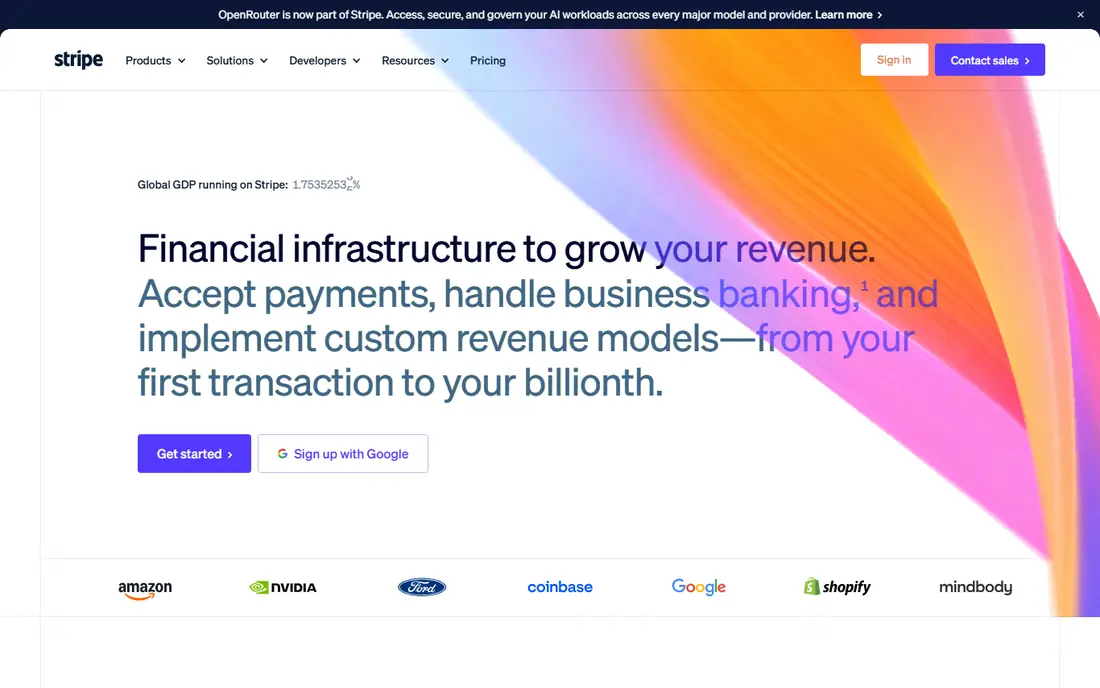
Stripe suits online businesses that want checkout, invoicing and subscriptions built around their own site or app. It charges 2.9% plus 30 cents for online payments, with no monthly fee for standard processing, and its developer tools support custom checkout, subscriptions and marketplaces. That flexibility helps firms that sell online first.
The trade-off is in-person work: card readers and in-person rates need separate setup, and support is mainly online rather than phone-led. Choose it when Online businesses and developers needing flexible checkout matters more than the lowest headline price, and confirm the full terms in writing first.
- Flexible online checkout
- Developer tools
- Invoicing and subscription billing
- In-person rate and hardware need separate setup
- Support is mainly online
Helcim
Great for: Growing businesses wanting interchange-plus pricing with no monthly fee
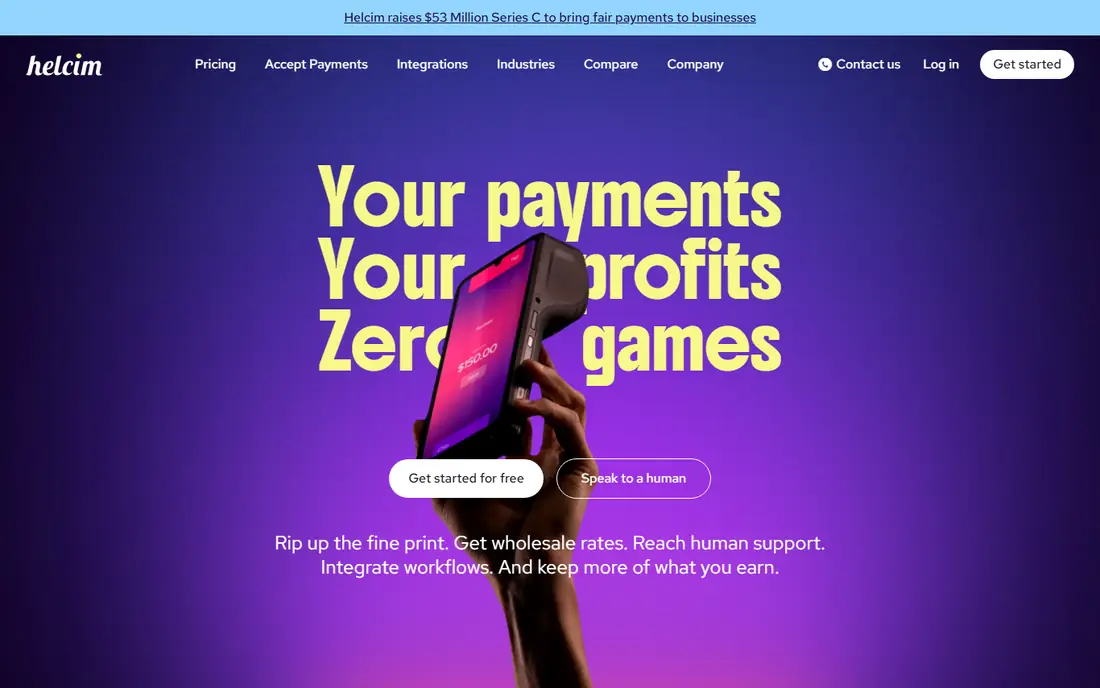
Helcim is the transparency pick for businesses that want to see interchange and markup as separate lines. It charges interchange plus 0.40% plus 8 cents for in-person payments on its entry tier, with no monthly fee, and it includes invoicing, online checkout and a customer portal. Volume tiers can lower the markup as processing grows.
The weakness is card mix: premium rewards and business cards carry higher interchange, so the final bill varies more than a flat rate from month to month. It fits a buyer who puts Growing businesses wanting interchange-plus pricing with no monthly fee first, provided the quoted terms match the service they actually need.
- Published interchange-plus tiers
- No monthly fee
- Invoicing and online checkout included
- Interchange costs vary by card type
- Hardware is priced separately
Stax suits businesses that process enough volume for a monthly fee to beat a percentage markup. Its subscription plans start from $99 per month, with interchange plus a small per-transaction fee and no percentage markup on interchange. That model can save money once monthly volume passes the point where the fee is covered by markup savings.
The limit is the threshold itself: a low-volume firm may pay more in monthly fees than it saves in markup, so check the crossover on your own statements. Pick it if Higher-volume businesses wanting subscription pricing is the main test, and compare the final quote with at least one other option on this list.
- Subscription model with interchange plus a small per-transaction fee
- No markup on interchange
- Monthly fee needs volume to pay off
- Entry plans suit larger firms better
Payment Depot
Great for: Growing businesses wanting subscription pricing and wholesale rates
Payment Depot is a second subscription option for firms that want wholesale rates without a percentage markup. Its plans start from $79 per month, with interchange passed through at wholesale rates plus a per-transaction fee, and it supports online and in-person sales. That structure suits retailers and service firms with steady volume.
The drawback is the same as with other subscriptions: the monthly fee must be earned back each month, so low-volume months can erase the saving. It works best for people who need Growing businesses wanting subscription pricing and wholesale rates and want a clear scope before work or payment starts.
- Subscription model
- Wholesale interchange rates
- Online and in-person options
- Monthly fee and hardware costs add up
- Smaller firms may not reach the saving threshold
PayPal suits sellers whose buyers already trust and use PayPal at checkout. It charges 2.29% plus 9 cents for in-person payments, with no monthly fee for standard processing, and it offers online checkout, invoicing and point-of-sale hardware. Buyer familiarity can lift conversion for online sellers.
The weakness is online cost: online rates run higher than in-person rates, and a chargeback fee applies when a dispute is filed, so factor both into the monthly bill. Consider it first when Freelancers and sellers whose buyers already use PayPal is the priority, then check delivery, limits and support before you decide.
- Buyer familiarity with PayPal
- Online checkout and invoicing
- Point-of-sale hardware
- Online rates are higher than in-person rates
- Chargeback fee applies on disputes
Shopify Payments is the natural choice for a store already built on Shopify, because it removes a separate gateway step. It is built into Shopify checkout, so store owners avoid a third-party gateway and can manage orders, payments and payouts in one dashboard. In-person selling through Shopify point of sale is also supported.
The limit is lock-in: it only works for Shopify stores, and the card rate changes with the Shopify plan tier, so a plan change also changes processing cost. It is worth a shortlist place for anyone who wants Online stores already running on Shopify, as long as the price and terms are confirmed in advance.
- Built into Shopify checkout
- No separate gateway needed
- In-person rates for Shopify stores
- Only available to Shopify stores
- Plan tier changes the card rate
Toast
Great for: Restaurants needing point of sale plus payments in one system
Toast rounds out the list for restaurants that want point of sale, payments and restaurant tools in one system. It combines restaurant point of sale with payments, online ordering, payroll and reporting add-ons, which suits cafes, bars and restaurants that need table, counter and delivery workflows together. Hardware bundles simplify setup for a new site.
The drawback is scope: pricing is quote-based and the system is built for restaurants, so a general retailer will usually get better value elsewhere. End your shortlist here if Restaurants needing point of sale plus payments in one system is what you need most, and get the key terms in writing before you sign up.
- Restaurant point-of-sale focus
- Online ordering and payroll add-ons
- Hardware bundles
- Pricing is quote-based
- Best fit is restaurants, not general retail
How we picked these
We compared official pricing pages, hardware pages and public reviews for processors that serve small businesses in the United States. We favoured processors with published rates or clear pricing models, no hidden monthly fees where claimed, and hardware and software a small firm can use without a developer. We did not test any processor with live sales and we did not rely on a single review source for any claim.
Where a rate was not published by the processor, we wrote See website rather than borrowing a third-party estimate. This guide is general information only, not financial advice, and rates and fees depend on business type and volume. A quote based on your own statements, card mix and average ticket is the only figure that counts.
How to compare processing costs on your own statements
Start with your last three statements and work out your effective rate. Add all processing fees for a month, divide by total card sales for that month, and write the result as a percentage. That effective rate is the fair test, because it includes interchange, markup, monthly fees and per-transaction fees together. Compare that figure across processors using the same months, not a single good month.
Next, split the result by how you sell. In-person, online and keyed-in payments often carry different rates, and premium rewards cards cost more than standard debit cards. If most sales are small, the fixed per-transaction fee matters more than the percentage, while large tickets make the percentage matter more. A processor that wins on in-person sales can lose on online sales, so compare each channel separately.
Finally, check the full contract before you switch. Confirm the monthly fee, the hardware cost, the chargeback fee, the payout timing, the contract length and any early exit fee. Ask if rates can change, how changes are notified, and what happens to your data if you leave. This guide is general information only, not financial advice, and rates and fees depend on business type and volume, so get a written quote for your own mix before you sign.
Frequently asked questions
What is the difference between flat-rate and interchange-plus pricing?
Flat-rate pricing charges one rate for most cards, which is simple to predict. Interchange-plus passes the card network cost through and adds a processor markup, which is clearer but varies by card type. Subscription pricing adds a monthly fee and a smaller markup.
How much does credit card processing cost a small business?
It depends on volume, card mix and average ticket. Small firms often pay an effective rate of around 2% to 3.5% of card sales, plus monthly and hardware costs where they apply. Your own statements give the best estimate.
Is there a monthly fee for card processing?
Some processors charge no monthly fee, while subscription processors charge $79 to $199 per month or more. A monthly fee can save money at higher volume, but it can cost more at low volume, so check the crossover point.
How long does it take to get paid?
Most processors pay out in one to two business days, with next-day funding common for in-person sales. First payouts can take longer while an account is verified, and instant payouts usually carry an extra fee.
Can I switch processors without changing hardware?
Sometimes, but not always. Some hardware only works with one processor, while other terminals can be reprogrammed. Check hardware ownership and compatibility before you sign a new contract.
Sources
See where you really rank - block by block
ProMapRanker scans Google Maps across a grid of your service area. Simple monthly plans from $19, white-label on every plan.
Start freeKeep reading
 worlds best local seo company
8 Worlds Best Local SEO Companies for Map Pack Growth in 2026
Compare the worlds best local seo company options for Google Business Profile work, citations, reviews, and multi-location rankings and reporting in 2026.
Read → world's best web hosting company
World's Best Web Hosting Company in 2026
Searching for the world's best web hosting company? We compared 10 hosts on price, renewal rates, speed, and support to help you choose well today in 2026.
Read → who's got the best nanny tax services
Who's Got the Best Nanny Tax Services in 2026
We answer who's got the best nanny tax services, comparing full filing, back taxes, software, and pricing so families can handle nanny taxes correctly.
Read →