 ProMapRanker
Best Credit Card Processing Companies in 2026

Key takeaways
- Square and Stripe are the easiest starting points for small businesses, with no monthly fee on basic plans and simple flat rates.
- Helcim offers the clearest interchange-plus pricing, with no monthly fee and automatic volume discounts as sales grow.
- Flat-rate pricing wins under about 10,000 dollars a month in card sales, while interchange-plus often wins above that level.
- Payment Depot and Stax suit higher-volume sellers, since a monthly subscription buys lower per-transaction costs.
- Always read the full fee schedule, including chargeback, hardware, and cancellation terms, before you sign.
Quick comparison
| Pick | Great for | Pricing starts at | Free tier | |
|---|---|---|---|---|
 Square | In-person small business | Free | Yes | Visit |
 Stripe | Online stores and subscriptions | Free | Yes | Visit |
 Helcim | Transparent interchange-plus pricing | Free | Yes | Visit |
 PayPal | Businesses with PayPal customers | Free | Yes | Visit |
 Shopify Payments | Stores already on Shopify | See website | No | Visit |
 Clover | Restaurants and retail POS | $14.95 per month | No | Visit |
 Payment Depot | High-volume sellers | $79 per month | Free trial | Visit |
 Stax | Growing businesses wanting subscription pricing | $99 per month | No | Visit |
 Toast | Restaurants wanting POS plus payments | See website | No | Visit |
The best credit card processing companies
We compared official pricing pages and published rate summaries for 2026, focusing on transaction rates, monthly fees, hardware, contracts, and the sales channel each provider serves best. Rates vary by card type and channel, so treat the figures here as published starting rates, not a quote for your business. This is general information, not financial advice, and you should confirm current terms with each provider before you sign.

Square remains the simplest way for a small shop, cafe, or market stall to start taking cards. The Free plan has no monthly fee, and published 2026 rates are 2.6 percent plus 15 cents in person and 3.3 percent plus 30 cents online. The free point-of-sale app covers sales, inventory basics, and reporting, and hardware starts with an inexpensive reader.
The catch is scale. Flat rates are easy to understand, but they cost more than interchange-plus pricing once monthly card volume grows. Square Plus, at 49 dollars per month, and Premium, at 149 dollars per month, lower online rates to 2.9 percent plus 30 cents, which only pays off above a certain volume. For a new or low-volume business selling mainly in person, Square is still the easiest pick.
- No monthly fee on the Free plan
- Simple flat rates and free POS app
- No long-term contract on basic plans
- Online rate on the Free plan is higher, at 3.3 percent plus 30 cents
- Flat rates cost more at high volume
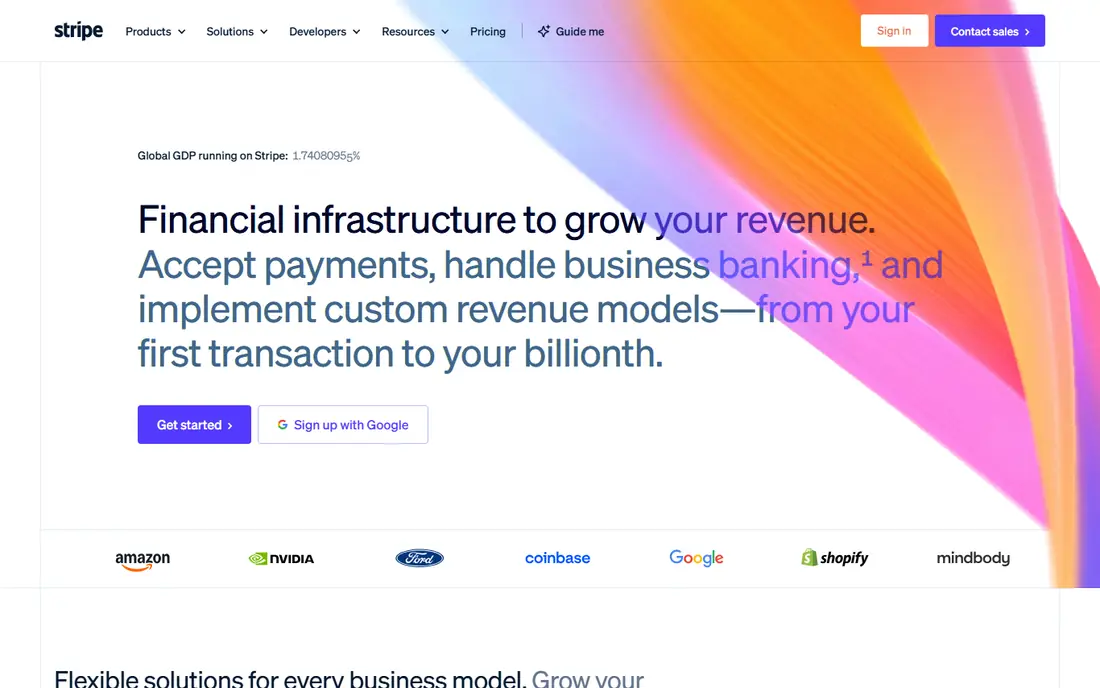
Stripe is the default for online businesses that need more than a checkout button. Published standard online pricing is 2.9 percent plus 30 cents, with no monthly fee for the core payments product, and Stripe Billing handles subscriptions, trials, and invoicing. Developers get thorough documentation and ready-made checkout pages, which shortens the build for a new store or software product.
In-person selling is possible through Stripe Terminal, with published in-person rates from 2.7 percent plus 5 cents, but hardware is an added purchase and the setup is more technical than Square. Chargebacks carry a 15 dollar fee. If you sell mainly online, run subscriptions, or need developer tools, Stripe is the strongest all-round choice here.
- No monthly fee for standard online payments
- Strong tools for subscriptions and developers
- Wide payment method support
- Online focus, with in-person hardware sold separately
- Chargeback fee of 15 dollars
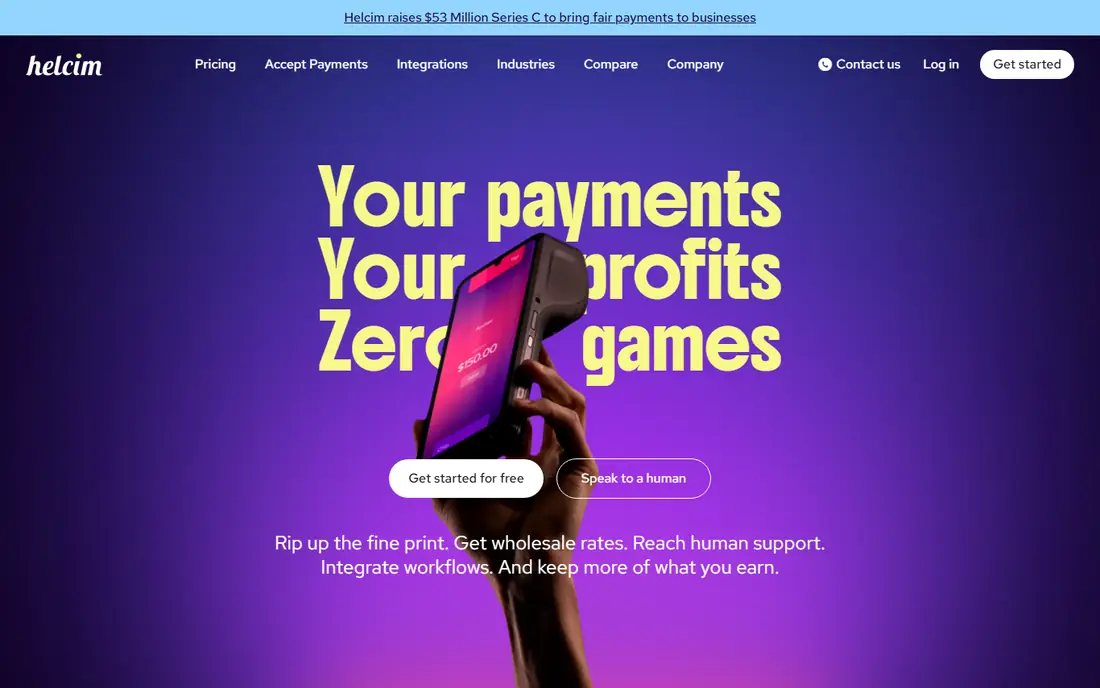
Helcim is the pick for owners who want to see exactly what they pay. It uses interchange-plus pricing, meaning you pay the card networks actual interchange cost plus a Helcim markup, with published in-person pricing of interchange plus 0.40 percent plus 8 cents and online pricing of interchange plus 0.50 percent plus 25 cents. There is no monthly fee, and volume discounts apply automatically as sales grow, up to a large reduction in the markup.
That transparency helps as volume rises, since flat-rate providers keep the difference when interchange costs fall. The trade-off is complexity, since your effective rate moves with card mix rather than staying fixed. Helcim also includes free point-of-sale tools and a Fee Saver surcharging feature where allowed. For businesses processing more than about 10,000 dollars a month, Helcim is often the cheapest honest option.
- No monthly fee
- Interchange-plus pricing with automatic volume discounts
- Free POS tools included
- Online transaction fee is higher than in-person
- Hardware is purchased up front
PayPal earns its place through customer familiarity. Millions of buyers already hold a PayPal account, and offering it at checkout can lift conversion for stores whose customers expect it. Published rates include 2.29 percent plus 9 cents for in-person payments through PayPal point-of-sale tools, while online PayPal Checkout is published at 3.49 percent plus 49 cents, which is higher than Stripe or Square online.
That online rate is the main weakness, and it makes PayPal a poor sole processor for a high-volume online store. It works best as an added payment option alongside Stripe or Square, or as the main option for a small seller whose customers strongly prefer PayPal. Watch account hold policies too, since sudden holds are a common complaint among new sellers.
- Customers already trust and use PayPal
- No monthly fee for standard checkout
- In-person rates are competitive for small sellers
- Online checkout rate of 3.49 percent plus 49 cents is high
- Account holds can disrupt cash flow for some sellers
Shopify Payments makes sense only in one situation, which is also the situation where it makes the most sense. If your store already runs on Shopify, it removes the need for a separate payment gateway, keeps reporting inside one dashboard, and avoids the extra transaction fee Shopify charges when you use an outside processor. Card rates vary by Shopify plan, so check the plan page for your tier.
Outside Shopify, this provider has no role. A business selling in person, through another platform, or by invoice needs a separate processor. For a Shopify store owner, though, the convenience and the avoided third-party fee make Shopify Payments the natural default, with Stripe or PayPal as added checkout options where useful.
- Built into Shopify checkout with no extra gateway
- No third-party transaction fee when using it
- Clean reporting inside Shopify
- Only useful inside Shopify
- Rates depend on your Shopify plan
Clover is a point-of-sale system first and a processor second, which is why restaurants and retailers choose it. The hardware range covers counter terminals, handheld devices, and kitchen displays, and the software handles orders, tables, inventory, and staff permissions. Published software plans start at 14.95 dollars per month, with higher tiers adding more features.
The main caution is that Clover processing is often sold through resellers, so rates, contract length, and exit fees can vary more than with Square or Stripe. Published card-present rates in comparisons run around 2.3 to 2.6 percent plus 10 cents, but your written proposal is what counts. Get the full fee schedule and contract terms in writing, and compare hardware costs, before you commit.
- Full POS hardware and software for counter service
- Plans from 14.95 dollars per month
- Strong app marketplace for restaurants and retail
- Processing terms often come through a reseller
- Hardware and contract terms vary by seller
Payment Depot suits businesses that already process enough card volume for a subscription model to pay off. Instead of a percentage markup, you pay a monthly subscription, starting at 79 dollars per month on published comparisons, plus wholesale interchange costs and a small per-transaction fee. For a high-volume seller, that structure can beat flat rates by a clear margin each month.
Low-volume sellers should stay away, since the monthly fee alone can exceed any rate saving. Payment Depot is also best judged on a full month of your own statements, not on a headline rate. If your card volume is high and steady, request a savings estimate based on your actual card mix before you switch.
- Subscription pricing with wholesale interchange rates
- Low markup above interchange
- No percentage markup on many plans
- Monthly fee makes it poor for low-volume sellers
- Subscription tiers start at 79 dollars per month
Stax, formerly Fattmerchant, follows the same subscription idea as Payment Depot, with monthly plans starting at 99 dollars per month on published comparisons and interchange-plus transaction pricing on top. The appeal is predictable costs and a lower per-transaction markup as volume grows, plus built-in tools for invoicing and recurring payments.
As with Payment Depot, the monthly fee means Stax only makes sense once volume is high enough to cover it. Small sellers will pay less with Square, Stripe, or Helcim, all of which charge no monthly fee. Growing businesses that want subscription pricing with support included should compare Stax and Payment Depot on their own statements, not on marketing claims.
- Subscription pricing with interchange-plus rates
- In-house support noted in reviews
- Tools for invoicing and recurring billing
- Monthly fee from 99 dollars makes it poor for small sellers
- Pricing varies by plan and volume
Toast is the restaurant specialist on this list. Its point-of-sale system is built around restaurant work, with tables, modifiers, kitchen display screens, handheld ordering, and online ordering in one package. That focus is why so many full-service and quick-service restaurants choose it over a general retail POS, even when a general tool would cost less.
Pricing is quote-based and varies by package, so check the current Toast page and request a written proposal for your restaurant size. Published comparisons put card rates in the range of 2.49 to 3.69 percent plus 15 cents, depending on plan and card type. For a restaurant that needs the full Toast feature set, the fit justifies the price. For a single food truck, Square or Clover may be simpler and cheaper.
- POS built specifically for restaurants
- Online ordering, handhelds, and kitchen tools in one system
- Strong restaurant feature set
- Pricing is quote-based and varies by package
- Can be costly for very small restaurants
How we picked these
We compared official pricing pages, published 2026 rate summaries, and public reviews for processors that serve US small businesses and publish clear starting rates or subscription terms. We favored providers with no long-term contract on basic plans, clear fee schedules, and a distinct fit, whether in-person, online, subscription, or restaurant work. Providers whose current rates we could not trace to a published source were left out, and rates here should be confirmed with each provider before signing.
How to choose a processor without overpaying
The cheapest processor on paper is rarely the cheapest for your sales mix. Work from your own numbers, and the choice usually becomes clear.
Start with your monthly volume and channel
Add up last month card sales and split them into in-person and online. Under about 10,000 dollars a month, flat-rate providers such as Square and Stripe usually win on simplicity and total cost. Above that level, interchange-plus providers such as Helcim, and subscription providers such as Payment Depot and Stax, are worth a quote based on your actual statements.
Compare the full cost, not the headline rate
A low percentage can hide a monthly fee, a chargeback fee, hardware costs, or a cancellation charge. Square charges no chargeback fee on its basic plans, Stripe and Helcim charge 15 dollars, and Clover chargeback fees vary by reseller. Ask for the full fee schedule, including PCI, statement, and early termination fees, and add hardware to the first-year total.
Check contract and payout terms
Month-to-month terms are now common on basic plans from Square, Stripe, and Helcim, while some Clover resellers still sell longer contracts. Ask how fast funds settle, what triggers an account hold, and what happens if you cancel. A processor that is hard to leave is a cost, even if its rate looks low.
Frequently asked questions
What is the best credit card processing company for small businesses?
Square is the best credit card processing company for most small in-person businesses, thanks to no monthly fee and simple flat rates. Stripe is the best for online stores and subscriptions, while Helcim is the best for transparent interchange-plus pricing. The right pick depends on your channel, volume, and whether you sell in person, online, or both.
What are the best credit card processing companies for small business with no monthly fee?
Square, Stripe, Helcim, and PayPal all offer basic plans with no monthly fee. Square charges 2.6 percent plus 15 cents in person, Stripe charges 2.9 percent plus 30 cents online, and Helcim charges interchange plus a small markup with no monthly fee. Compare transaction rates for your channel, since a free monthly plan can still cost more per sale.
What is the best merchant service for a small restaurant?
Toast is the best merchant service for full-service restaurants that need a complete restaurant POS, while Clover suits restaurants and retailers that want strong counter hardware. Square suits small cafes and food trucks that need a simple, low-cost start. Compare POS features and total monthly cost, not just the card rate, before you choose.
Is flat-rate or interchange-plus pricing better?
Flat-rate pricing is better for low-volume sellers, because it is simple and has no monthly fee on basic plans. Interchange-plus pricing is usually better above about 10,000 dollars a month in card sales, because you pay actual network costs plus a small markup instead of a bundled rate. Run both models on your own statements before you switch.
How much does credit card processing cost a small business?
Most small businesses pay between 1.5 and 3.5 percent per transaction in 2026, plus a fixed fee per sale. The total breaks into interchange fees, network fees, and the processor markup, and only the markup is negotiable. On 10,000 dollars a month in card sales, total processing costs typically run from about 165 to 380 dollars per month, depending on card mix and channel.
Do I need a separate merchant account?
Not always. Square, Stripe, and PayPal let you start without a traditional merchant account, using an aggregated account under their umbrella. A dedicated merchant account, through providers such as Helcim, Payment Depot, or Stax, gives more control and often lower rates at higher volume, but it involves underwriting and paperwork. Start with an aggregated provider, and move to a dedicated account when volume justifies it.
Sources
- https://www.helcim.com/guides/processors-with-the-lowest-credit-card-processing-fees/
- https://ueni.com/blog/how-to-accept-card-payments-small-business/
- https://theretailexec.com/tools/best-credit-card-processing-companies/
- https://koronapos.com/blog/credit-card-processing-for-small-business/
- https://gb.hostadvice.com/blog/how-to-manage-a-business/cheapest-payment-processing/
- https://www.smartbizcalc.com/how-much-does-a-merchant-account-cost
- https://www.nav.com/blog/free-and-low-cost-credit-card-processing/
- https://www.posusa.com/square-fees-pricing/
See where you really rank - block by block
ProMapRanker scans Google Maps across a grid of your service area. Simple monthly plans from $19, white-label on every plan.
Start freeKeep reading
 zendesk alternatives
Best Zendesk Alternatives in 2026
Compare the best Zendesk alternatives in 2026, from budget help desks to AI-first support tools, with current pricing, free plans, and honest trade-offs.
Read → wordpress alternatives
Best WordPress Alternatives in 2026
Looking for the best WordPress alternatives? We compare 8 free and paid options for blogs, business sites, stores, and developer-led projects in 2026.
Read → which real estate company has the best training
Best Real Estate Company Training in 2026
Compare which real estate company has the best training, from Keller Williams and eXp to Compass and Coldwell Banker, by program, mentor, and fit in 2026.
Read →