 ProMapRanker
Best CPQ Software for Streamlining Quote to Cash in 2026


Salesforce native enterprises · Pricing starts at: $150 per user per month
Key takeaways
- Salesforce Revenue Cloud is the default for Salesforce native enterprises, while DealHub and PandaDoc offer faster, lower cost starts for mid-market and small teams.
- Most enterprise CPQ pricing is quoted, so published entry prices are starting points, not final quotes, and implementation often costs as much as licenses.
- Quote to cash means more than a quote: check approvals, contracts, subscriptions, billing and renewals, not only configuration and pricing.
- The best test is a mid-term change, such as an upgrade, a co-term renewal or a usage overage, quoted and billed without a workaround.
Quick comparison
| Pick | Great for | Pricing starts at | Free tier | |
|---|---|---|---|---|
| Salesforce Revenue Cloud | Salesforce native enterprises | $150 per user per month | Free trial | Visit |
 DealHub | Mid-market sales led teams | See website | Free trial | Visit |
 Conga CPQ | Enterprises with complex catalogs | See website | Free trial | Visit |
 Oracle CPQ | Enterprises on Oracle ERP | See website | No | Visit |
 SAP CPQ | SAP centric companies | See website | No | Visit |
 PandaDoc | Proposal centric small and mid-market teams | $19 per user per month | Free trial | Visit |
 HubSpot CPQ | Teams quoting inside HubSpot | $90 per user per month | Free trial | Visit |
 QuoteWerks | Small businesses and IT resellers | $15 per user per month | Free trial | Visit |
 Zuora CPQ | Subscription businesses | See website | No | Visit |
The best CPQ software for streamlining quote-to-cash
CPQ stands for configure, price, quote. Good CPQ tools guide reps through valid product combinations, apply pricing and discount rules, produce accurate quotes, and hand off cleanly to contracts, orders, billing and renewals. That full quote to cash flow is the test in this guide, not only quote creation. We compared pricing pages, feature pages and public reviews for tools still sold in October 2026. Note that Salesforce no longer sells classic Salesforce CPQ to new buyers in public materials we checked, and points new buyers to Revenue Cloud.
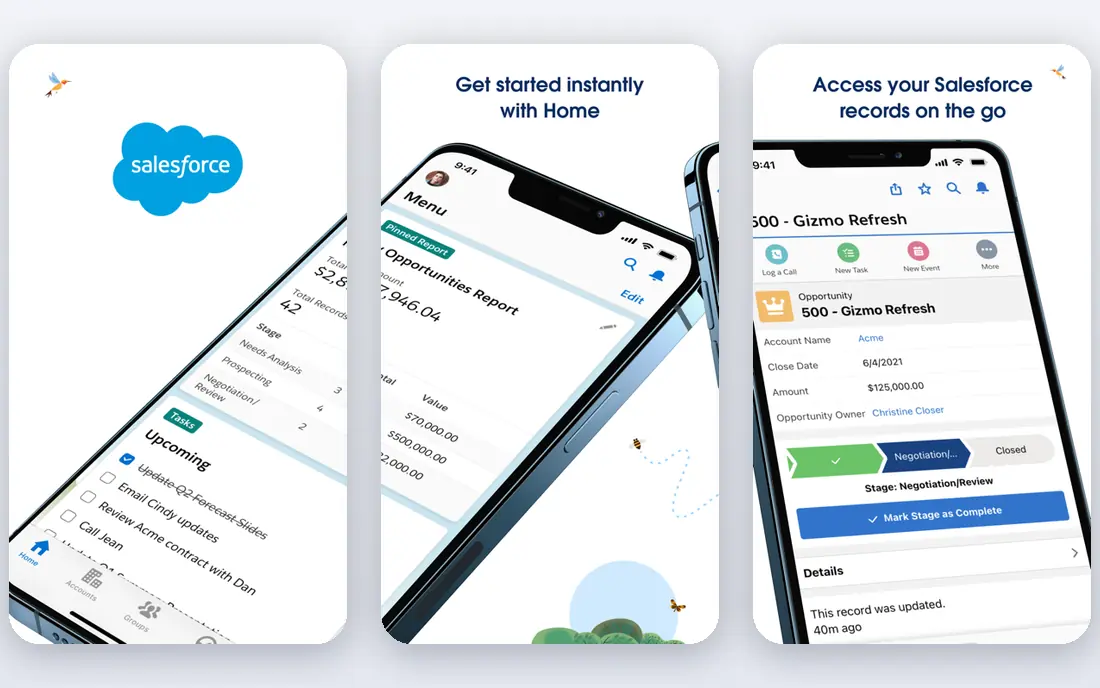
Salesforce Revenue Cloud is the default for companies already running on Salesforce. Quotes draw on live CRM data, pricing rules handle one-time, recurring and usage charges, and approvals, contracts, subscriptions and renewals sit in the same suite. That native link reduces the quote to invoice mismatches that happen when quoting and billing live in separate systems.
The catch is cost and effort. The entry price is high, implementation often takes months, and pricing tiers and add-ons stack up quickly. Smaller buyers will find Revenue Cloud heavy. Enterprises committed to Salesforce, with complex catalogs and subscription revenue, will get the deepest native quote to cash flow from it.
- Native fit with Salesforce CRM and revenue data
- Pricing engine for one-time, recurring and usage models
- Approvals, contracts and renewals in one suite
- High entry price and long implementation
- Complexity needs experienced admins or consultants
DealHub suits mid-market teams that want quote to cash without an enterprise project. Guided selling walks reps through valid configurations, approvals and discount rules, and the workflow carries a deal from quote to contract to subscription and billing. Buyer collaboration tools let customers review, comment and sign in one place, which shortens the closing cycle.
The weakness is price clarity. DealHub does not publish a single entry price in our checks, so teams must request a quote to compare it fairly. Some users also report sync friction with Salesforce, so Salesforce heavy teams should test sync with real opportunities in a trial. For sales led mid-market teams, DealHub offers a faster ramp than enterprise CPQ suites.
- Guided selling that reps learn quickly
- Quotes, contracts, subscriptions and billing in one workflow
- Buyer collaboration through DealRoom tools
- Pricing is quoted, not published as a clear entry price in our checks
- Some users report Salesforce sync friction in public reviews
Conga CPQ fits enterprises with complex catalogs, dependencies and approval chains. Configuration rules prevent invalid combinations, pricing and discount controls protect margins, and contract tools carry an approved quote into a signed agreement without retyping. That depth matters when a catalog has thousands of SKUs or many bundle rules.
The trade-off is effort and cost. Pricing is quoted, and complex catalogs need careful setup and admin ownership. Small teams will find Conga heavy. Enterprises with intricate products, long approval chains and a need for contract depth will find Conga a capable quote to cash platform, especially inside Salesforce environments.
- Strong rules for complex product catalogs
- Guided selling and approvals for large deals
- Contract management alongside CPQ
- Quote based pricing
- Implementation and admin effort are high for complex catalogs
Oracle CPQ suits global enterprises that run Oracle ERP and sell complex, configurable products. Configuration rules, pricing and quote generation connect to order and finance data, which helps quotes flow into orders without manual re-entry. Multi-entity pricing and complex B2B structures are core strengths for manufacturing and distribution teams.
The weakness is access and effort. Pricing is quoted, and implementation needs planning, data work and admin training. Teams outside the Oracle ecosystem will get less value and face heavier integration work. Oracle centric enterprises with complex products will find Oracle CPQ a natural quote to cash fit.
- Deep configuration for complex manufacturing and B2B products
- Strong fit with Oracle ERP and order data
- Instant pricing for large catalogs in vendor materials
- Quote based pricing
- Implementation is an enterprise project, not a quick setup
SAP CPQ fits manufacturers and distributors that run SAP ERP. Product data, pricing and configuration draw on SAP systems, guided selling helps reps and partners build valid quotes, and quotes can flow toward orders in the SAP system. That system fit reduces data duplication for SAP centric companies.
The limit is ecosystem dependence. Teams outside SAP will face integration work and may get better value from a CRM native or standalone CPQ tool. Pricing is also quoted, so budgeting needs a sales conversation. For SAP shops, SAP CPQ offers a coherent quote to cash path inside a familiar system.
- Guided selling for SAP product data
- Strong fit with SAP ERP and S/4HANA
- Configuration and pricing for manufacturers and distributors
- Quote based pricing
- Best value only for teams already on SAP
PandaDoc is the accessible pick for small and mid-market teams whose quote to cash job centers on proposals. Templates, pricing tables, e-signatures and payments cover quote to signature well, and tracking shows when buyers open, comment and sign. The entry price is clear, which is rare in this category, and setup takes days rather than months.
The catch is CPQ depth. PandaDoc does not match enterprise tools for complex configuration rules, large catalogs or subscription billing on its own, so teams with those needs should check integrations or choose a dedicated CPQ platform. For proposal centric teams that need fast, professional quotes with signatures, PandaDoc offers strong value.
- Clear published entry price
- Proposal templates, e-signatures and payments together
- Tracking shows buyer engagement before signing
- Configuration depth is thinner than enterprise CPQ
- Quote to cash depth depends on integrations for billing and renewals
HubSpot CPQ suits teams that already sell inside HubSpot and want quotes without adding a separate system. Quotes can be built from deal line items, with discounts, approvals and e-signatures, and signed quotes stay linked to the deal and customer record. That native link keeps quote data clean for reporting and follow-up.
The limit is depth and pricing structure. HubSpot CPQ is included in Sales Hub Pro in vendor materials we checked, so the cost is the HubSpot tier, not a standalone CPQ fee. Teams with complex configuration rules or large catalogs may need a dedicated tool. HubSpot native teams with straightforward quoting will find it a clean, low friction option.
- Quotes live inside HubSpot CRM and deals
- Line items, discounts and approvals without a separate CPQ system
- Good fit for HubSpot native sales teams
- Price is tied to Sales Hub Pro, not a standalone CPQ price
- Configuration depth is thinner than enterprise CPQ
QuoteWerks is the budget pick for small businesses, IT resellers and managed service providers. It builds quotes and proposals quickly, pulls real-time pricing from distributors in vendor materials we checked, and integrates with many CRM and accounting tools. The entry price is the lowest in this guide, which makes it easy for a small team to adopt.
The trade-off is polish and subscription depth. The interface prioritizes function over style, and complex subscription billing and renewal workflows are thinner than in Zuora or Salesforce Revenue Cloud. For small teams that need fast, accurate product quotes and proposals, QuoteWerks offers excellent value for money.
- Lowest entry price in this guide
- Real-time distributor pricing for IT resellers
- Fast proposals with many integrations
- Interface is more functional than modern rivals
- Quote to cash depth for subscriptions is thinner than Zuora or Revenue Cloud
Zuora CPQ suits businesses that sell subscriptions, usage or recurring services. Quotes connect to billing, amendments, co-term renewals and revenue recognition, which is where many quote tools fail after the first sale. A mid-term upgrade, a seat addition or a usage overage can be quoted and billed from the same subscription record, which is the quote to cash test that matters most for these firms.
The weakness is scope and price. Pricing is quoted, and one-time product sellers will not use the subscription depth. Subscription businesses that struggle with amendments and renewals should trial Zuora CPQ with a real amendment scenario, since that workflow is its clearest advantage.
- Quotes link cleanly to subscription billing and revenue
- Handles amendments, co-terms and renewals well
- Strong fit for recurring revenue models
- Quote based pricing
- More than a one-time product seller usually needs
How we picked these
We compared official pricing and feature pages and public reviews, and we kept only tools still sold in October 2026. We favored tools that cover configuration, pricing, quoting, approvals, contracts and billing or renewals, and we covered enterprise suites, mid-market platforms and budget tools. We did not claim hands-on testing, and we did not invent implementation costs beyond public guidance noted as such.
What to check before you buy
Start with a real deal, not a demo catalog. Test a complex configuration, a discount approval, a multi-year subscription, and a mid-term amendment with a co-term renewal. Check how the quote flows to contract, order, invoice and renewal, and where manual workarounds appear. Those handoffs decide whether quote to cash is truly streamlined or only looks streamlined in a demo.
Check total cost in the same way. Confirm quoted pricing, implementation fees, admin headcount, contract length, renewal terms and data export. Ask about catalog size limits, pricing rule complexity, CRM and ERP integrations, and support during month-end billing. Budget for implementation as well as licenses, since enterprise CPQ projects often cost a multiple of first year license fees in services.
Frequently asked questions
What is CPQ software?
CPQ stands for configure, price, quote. It helps sales teams build valid product configurations, apply pricing and discount rules, and produce accurate quotes. Good CPQ tools then carry quotes into contracts, orders, billing and renewals, which together form the quote to cash flow.
How much does CPQ software cost?
Entry prices in this guide run from $15 to $19 per user per month for budget and proposal tools, $90 per user per month for HubSpot Sales Hub Pro, and $150 per user per month for Salesforce Revenue Cloud, with several enterprise tools priced only on request. Implementation, admin time and integrations add to license cost, so get a written quote.
What is quote to cash?
Quote to cash is the full flow from configuring and quoting a deal, through approvals and contracts, to orders, billing, payments and renewals. A quote tool alone does not cover quote to cash. Check each handoff in a trial, especially amendments and renewals, before choosing.
Is Salesforce CPQ still available to new buyers?
Public materials we checked indicate Salesforce no longer sells classic Salesforce CPQ to new customers and points new buyers to Revenue Cloud. Existing Salesforce CPQ customers should confirm migration and support terms with Salesforce directly before planning a change.
Do small businesses need CPQ software?
Small teams with simple products may manage with proposal tools such as PandaDoc or QuoteWerks. CPQ software pays back when product combinations, pricing rules, discounts or subscription renewals become too complex or error prone to manage by hand or in spreadsheets.
How long does CPQ implementation take?
Simple proposal tools can be live in days, while enterprise CPQ projects often take months and need catalog, pricing rule and integration work. Budget time for cleaning product and price data, testing approvals and amendments, and training reps before the first live quote deadline.
Sources
See where you really rank - block by block
ProMapRanker scans Google Maps across a grid of your service area. Simple monthly plans from $19, white-label on every plan.
Start freeKeep reading
 what’s the best risk software for enterprises
What Is the Best Risk Software for Enterprises in 2026
We compared what’s the best risk software for enterprises on risk registers, controls, third-party risk, and reporting, with pricing notes for large teams.
Read → what's the best pam software for enterprises
What is the Best PAM Software for Enterprises in 2026
Find what's the best pam software for enterprises, with vaulting, session recording, just in time access and pricing compared for large enterprise IT teams.
Read → what’s the best grc software
What Is the Best GRC Software in 2026
We compared what’s the best grc software on risk, compliance, audit and vendor risk, so teams can pick a platform that fits their frameworks and budget.
Read →