 ProMapRanker
Best CPQ Service for Software Companies in 2026


Salesforce native software teams · Pricing starts at: $150 per user per month
Key takeaways
- Salesforce Revenue Cloud suits software companies already running on Salesforce and needing deep CRM quoting.
- HubSpot CPQ suits HubSpot centered teams that want quotes inside the CRM they already use.
- DealHub and Conga suit mid market and enterprise teams with complex bundles and approval rules.
- PandaDoc and QuoteWerks suit smaller software teams that need fast quotes without an enterprise project.
Quick comparison
| Pick | Great for | Pricing starts at | Free tier | |
|---|---|---|---|---|
| Salesforce Revenue Cloud | Salesforce native software teams | $150 per user per month | Free trial | Visit |
 HubSpot CPQ | HubSpot centered quoting | $90 per user per month | Free trial | Visit |
 DealHub | Guided selling and DealRoom quoting | See website | Free trial | Visit |
 Conga CPQ | Complex enterprise catalogs | $35 per user per month | Free trial | Visit |
 Oracle CPQ | Oracle ERP centered software firms | $240 per month | No | Visit |
 SAP CPQ | SAP centered software firms | $62 per user per month | No | Visit |
 PandaDoc | Proposal led quoting for smaller teams | $19 per user per month | Free trial | Visit |
 QuoteWerks | Low cost quoting for small teams | $15 per user per month | Free trial | Visit |
 Experlogix CPQ | Microsoft Dynamics 365 teams | See website | No | Visit |
The best CPQ service for software companies
CPQ stands for Configure, Price, Quote, and for a software company it means turning a subscription, usage plan, seat count, and discount into an accurate quote without spreadsheet errors. The best tool depends on your CRM, your pricing model, and how complex your bundles are, not on the longest feature list.
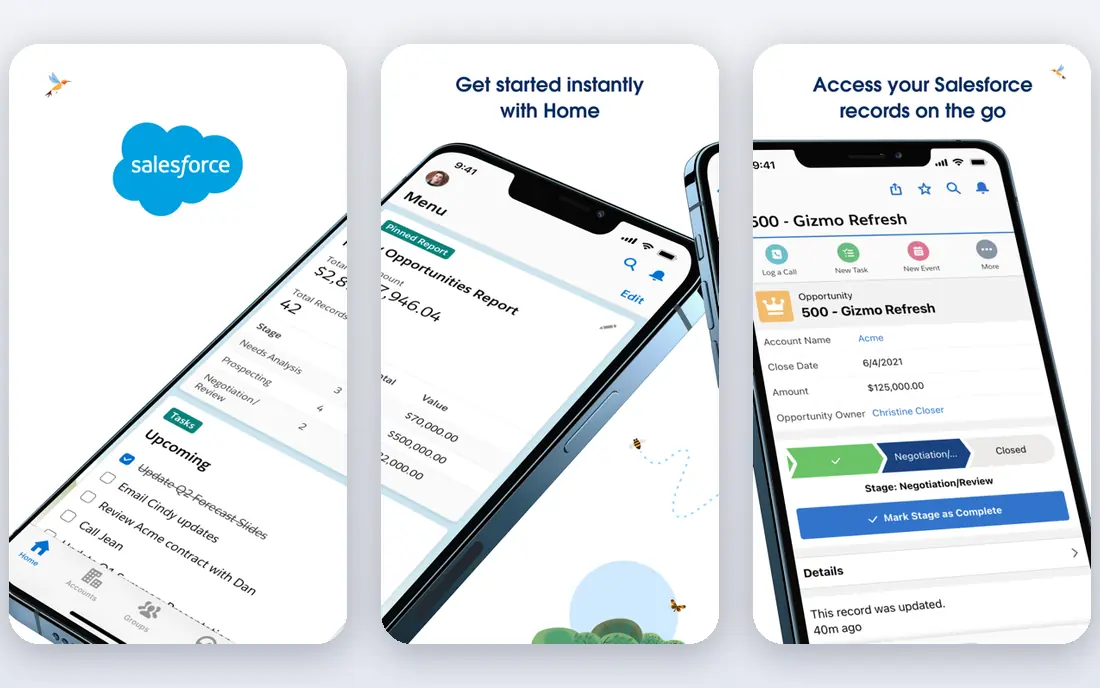
Salesforce Revenue Cloud, which replaced Salesforce CPQ for new buyers, is the default for software companies that already run sales on Salesforce. Quotes, product rules, approvals, and renewals live in the same system as opportunities, so reps do not copy data between tools. For a SaaS team with tiered plans, add ons, multi year deals, and discount approvals, that native link reduces errors and speeds up deal review.
The cost is the honest catch. Public guides list Growth pricing around 150 dollars per user per month, and implementation often takes months for complex catalogs, with services costs on top of licenses. If your team is small and your pricing is simple, that project may be more than you need, but for a Salesforce centered enterprise it is hard to beat on depth.
- Native Salesforce quoting
- Subscription and renewal handling
- Broad partner and app ecosystem
- Implementation can take months
- Total cost includes platform and services

HubSpot CPQ suits software teams that already live in HubSpot and want reps to quote without leaving the deal record. Product libraries, pricing rules, discount limits, and quote documents sit inside HubSpot, so a small RevOps team can manage quoting without a separate CPQ admin team. Public guides place the entry point at Sales Hub Pro, around 90 dollars per user per month, which keeps total cost visible.
The limit is complexity. HubSpot CPQ handles subscription quoting, bundles, and approvals well for mid market SaaS, but highly engineered configuration with deep dependency rules may need a dedicated CPQ tool. If your quotes are mostly seats, tiers, and add ons, HubSpot is often enough, and it will go live far faster than an enterprise CPQ project.
- Quotes inside HubSpot deals
- Pricing rules and discount guardrails
- Fast setup for mid market teams
- Less deep for very complex configuration
- Best value needs Sales Hub Pro or higher
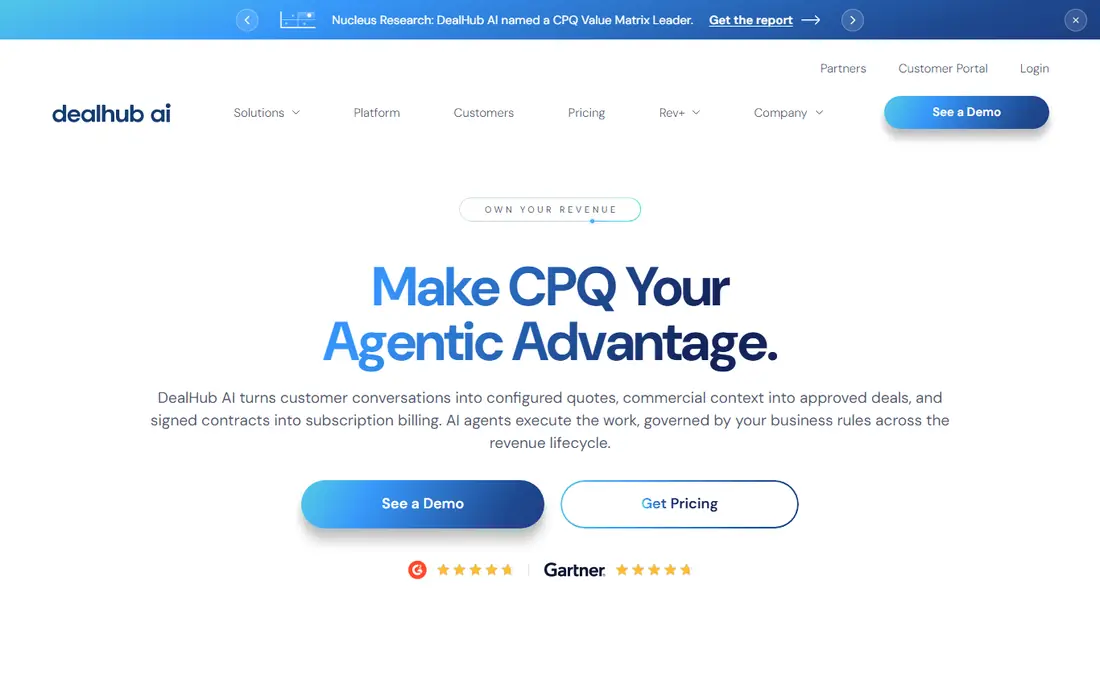
DealHub is built for sales led SaaS teams that want reps guided through configuration, pricing, and approvals, rather than left with a blank quote form. Its DealRoom gives buyers a single place to review quotes, documents, and next steps, which can shorten deal cycles for mid market software sales. Subscription terms, renewals, and discount rules are part of the core product, not an add on.
Pricing is quote based, and public guides differ on entry points, so treat any single figure as a starting point and get a written quote for your seat count. DealHub fits best when guided selling matters, such as when reps sell several product lines with different rules, and when buyer collaboration is part of how you close.
- Guided selling and playbooks
- DealRoom buyer collaboration
- Subscription and approval handling
- Quote based pricing
- Implementation effort grows with catalog complexity
Conga CPQ suits software companies with complex catalogs, especially where software is sold alongside services, hardware, or partner products with compatibility rules. Its configuration engine handles bundles, dependencies, and pricing rules that simpler tools struggle with, and it has long experience in Salesforce environments. Public guides list entry pricing around 35 dollars per user per month, though enterprise deals are usually quoted.
The trade off is effort. A powerful rules engine needs skilled administration, and implementation for a large catalog can take months. Conga is a strong pick when quote accuracy on complex deals is the main pain, and a weaker pick when you only need simple subscription quotes quickly.
- Deep product and pricing rules
- Salesforce ecosystem strength
- Handles hardware plus software bundles
- Enterprise implementation can be long
- Admin skill needed to manage rules
Oracle CPQ, also known as Oracle CPQ Cloud, fits software and technology firms that already run Oracle ERP or finance systems and need quoting tied closely to order and revenue processes. Its configuration strength suits complex, rules heavy products, and its enterprise controls suit large deals with strict approval chains. Public guides list entry pricing from around 240 dollars per month.
The cost and stack fit are the limits. A small SaaS team without Oracle systems will find setup heavier than a CRM native tool, and the entry price is higher than several rivals. Choose Oracle CPQ when ERP integration is the deciding factor, not when you only need a standalone quote tool.
- Strong configuration for complex products
- Oracle ERP and finance integration
- Enterprise grade controls
- Higher entry price
- Best fit needs Oracle stack
- Longer deployment
SAP CPQ suits companies that run SAP for ERP, finance, or product data and want quoting that respects SAP product and pricing logic. Public guides list Standard pricing around 62 dollars per user per month and Professional around 99 dollars, which gives a clear tier path as needs grow. Variant configuration is a strength when products have many options and dependencies.
Outside an SAP environment, that strength matters less, and integration work grows. A software company on Salesforce or HubSpot will usually get faster value from a CRM native tool. SAP CPQ earns its place when SAP is already the system of record for products and prices.
- SAP S/4HANA integration
- Standard and Professional tiers
- Variant configuration strength
- SAP centric
- Less natural outside SAP environments
PandaDoc is a practical pick for a smaller software team that needs clean quotes, proposals, and signatures fast. Its Essentials plan is listed around 19 dollars per user per month in public guides, and document creation, pricing tables, and eSignature are strengths. A team that sends many proposals and wants them to look professional will get value quickly.
PandaDoc is document led, not a deep configuration engine, so very complex bundles and approval chains may stretch it. Full CPQ features are tied to higher plans and quoted pricing in public guides. Use PandaDoc when speed and documents matter most, and move to a dedicated CPQ tool when configuration rules become the bottleneck.
- Low entry price
- Strong quote and proposal documents
- ESignature built in
- Lighter CPQ rules than enterprise tools
- Full CPQ features sit on higher plans
QuoteWerks is the cheapest real CPQ option on this list, with Standard pricing listed around 15 dollars per user per month in public guides. It suits small software firms, resellers, and managed service providers that need accurate quotes, product bundles, and proposal documents without an enterprise budget. Its long history means integrations with distributors and CRMs are well tested.
The interface and depth are the trade offs. QuoteWerks will not match Salesforce Revenue Cloud or Conga on complex enterprise rules, and larger teams may outgrow it. For a small team that needs reliable quoting today at a low cost, that trade is often worth making.
- Lowest entry price on this list
- Long track record
- Distributor and CRM integrations
- Interface feels older
- Less suited to large enterprise catalogs
Experlogix CPQ is the Dynamics 365 answer on this list, built to quote inside Microsoft Dynamics 365 sales processes. It handles product configuration, pricing rules, and quote documents for companies that sell complex products or software alongside configured goods. For a Dynamics centered software firm, native fit avoids the sync problems that come from bolting on a separate CPQ tool.
Pricing is quote based, and the value drops outside Dynamics environments. If your CRM is Dynamics 365 and your catalog has real configuration dependencies, Experlogix deserves a demo. If your CRM is Salesforce or HubSpot, a native tool for that CRM will usually go live faster.
- Native Dynamics 365 fit
- Strong configuration for complex products
- Manufacturing and software use cases
- Quote based pricing
- Dynamics centric
How we picked these
We compared vendor pricing pages, product documentation, and public CPQ guides for tools that are still sold in 2026 and that fit software and SaaS quoting, including subscriptions, seats, and usage. We favored tools with a clear CRM fit, published entry pricing where available, and a real configuration or pricing engine, over generic proposal tools with no pricing rules. Where pricing was quote based, we wrote See website rather than inventing a figure.
How to choose CPQ for a software company
Start with your CRM, since a CPQ tool that lives inside your CRM will be adopted faster and will need less integration work. Next, map your pricing model: seats, tiers, usage, credits, ramps, and multi year uplifts all need different handling, and a tool that handles your model natively will save RevOps time every quarter. Test a real deal in the demo, not a sample catalog, including a mid term amendment such as an upgrade, a co term, and an overage.
Budget for implementation, not just licenses. Enterprise CPQ projects often cost more in services than in first year licenses and take months, while mid market tools can go live in weeks. Finally, check who will own the catalog after go live. If only a consultant can change a price rule, every pricing change becomes a project, so favor tools your RevOps team can manage day to day.
Frequently asked questions
What does CPQ do for a software company?
CPQ helps sales teams configure a product bundle, apply correct pricing and discount rules, and generate an accurate quote, contract, and order. For software, that includes seats, subscription tiers, add ons, usage, and renewal terms, so the quote matches what billing will later charge.
Is CPQ the same as a proposal tool?
No. A proposal tool makes documents look good, while CPQ adds configuration, pricing rules, approvals, and CRM data behind the document. Some tools do both, but a pure proposal tool will not stop a rep from quoting an invalid bundle or a discount outside policy.
How much does CPQ software cost?
Entry prices on this list range from around 15 dollars per user per month for QuoteWerks to 150 dollars per user per month for Salesforce Revenue Cloud Growth, with several tools on quote based enterprise pricing. Implementation, admin time, and CRM platform costs sit on top of licenses, so get a total cost quote.
How long does CPQ implementation take?
Small and mid market tools can go live in two to eight weeks for a standard catalog, while enterprise CPQ with complex rules often takes three to nine months. The main drivers are catalog complexity, approval rules, and how clean your product and price data are before you start.
Do software companies need CPQ if they sell self serve?
Self serve teams with simple plans may not need full CPQ, since checkout and billing handle pricing. CPQ earns its place when sales led deals involve custom bundles, negotiated discounts, multi year terms, or usage pricing that self serve checkout cannot handle cleanly.
Can CPQ handle usage based pricing?
Some tools handle usage natively, while others need a billing integration to track usage and true ups. If usage is core to your pricing, test usage quoting, overage handling, and renewal amendments in the demo, and confirm how quotes flow to billing without manual re entry.
Sources
See where you really rank - block by block
ProMapRanker scans Google Maps across a grid of your service area. Simple monthly plans from $19, white-label on every plan.
Start freeKeep reading
 zoro.to alternatives
Best Zoro.to Alternatives in 2026
We compare the best zoro.to alternatives in 2026, listing only legal licensed anime streaming services, from Crunchyroll to free options for fans today.
Read → zip alternatives
Best Zip Alternatives in 2026
We compare the best zip alternatives for buy now, pay later in 2026, covering pay-in-4 plans, fees, spending limits, and credit reporting options today.
Read → yesware alternatives
Best Yesware Alternatives in 2026
Compare the best yesware alternatives for sales email tracking, templates, and sequences, with current pricing and honest tradeoffs for small sales teams.
Read →