 ProMapRanker
Best CPM Software in 2026: 9 Tools Compared

Key takeaways
- In this article, CPM means corporate performance management software, for budgeting, forecasting, consolidation and reporting, not advertising cost-per-mille products.
- Anaplan leads for large connected planning, OneStream leads for a unified close and planning platform, and Pigment suits teams that want a modern planning interface.
- Vena suits Excel-centered finance teams that want governance and version control without abandoning spreadsheets.
- Most CPM pricing is quote-based and enterprise-scale, so model three-year total cost, including implementation and support, before you sign.
- Our pick for most mid-market finance teams is Planful or Prophix for balance between depth and rollout effort, with Vena as the Excel-friendly alternative.
Quick comparison
| Pick | Great for | Pricing starts at | Free tier | |
|---|---|---|---|---|
 Anaplan | Large connected planning | See website | Free trial | Visit |
 OneStream | Unified close and planning | See website | No | Visit |
 Workday Adaptive Planning | Workday customers and workforce planning | See website | No | Visit |
 Oracle EPM Cloud | Oracle finance teams | See website | No | Visit |
 Board | Planning plus analytics in one platform | See website | No | Visit |
 Prophix | Mid-market budgeting and reporting | See website | No | Visit |
 Vena | Excel-centered planning | See website | No | Visit |
 Planful | Mid-market FP and A with AI insights | See website | No | Visit |
 Pigment | Modern AI-native planning | See website | No | Visit |
The best CPM software
Corporate performance management software helps finance teams plan, budget, forecast, consolidate results and report performance in one governed system. It replaces scattered spreadsheets with shared models, version control and audit trails, while still letting analysts work with familiar views.
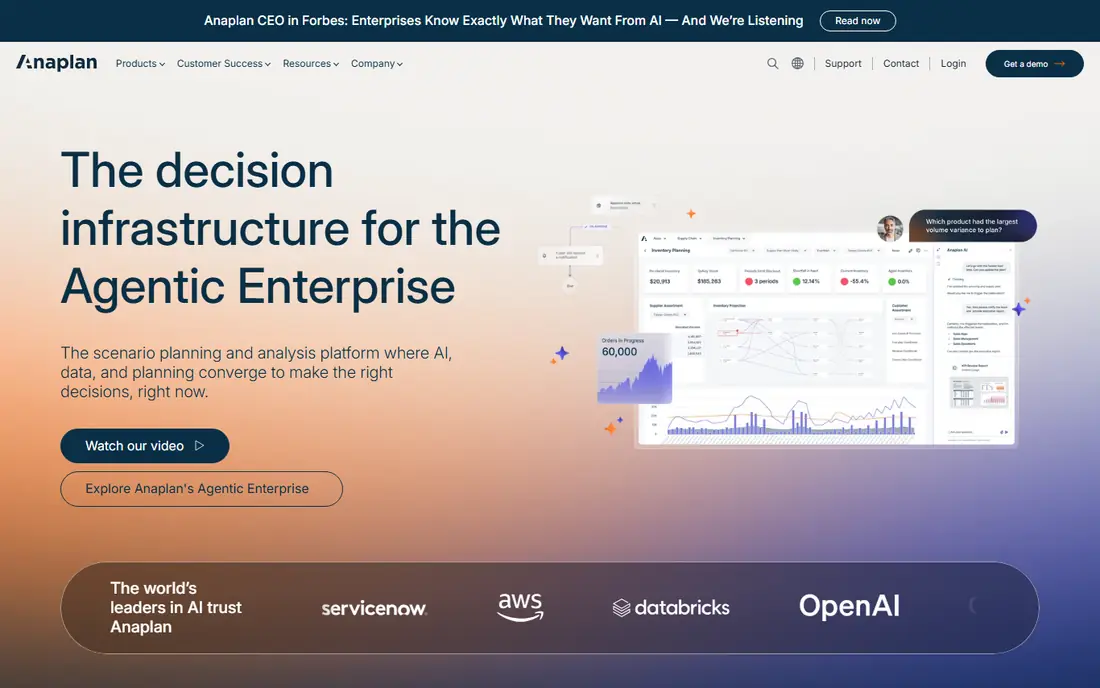
Anaplan is built for connected planning, where sales, workforce, supply and finance plans share models and drivers instead of living in separate files. A change in a sales forecast can flow into headcount, cost and cash plans, which helps large companies test scenarios without rebuilding spreadsheets. Its modeling language and calculation engine suit complex, multi-dimensional plans, and its partner network helps large teams build and maintain those models. For global companies with many entities and drivers, that connected approach is the main reason to choose Anaplan.
The cost and effort are also large. Anaplan does not publish list pricing, and third-party guides in October 2026 estimated starting costs near $30,000 to $50,000 per year, which we treat as an estimate, not a vendor price. Implementation often needs specialists, and model governance becomes important as more teams build in the same platform. For large, complex planning, Anaplan is a leading pick. For a small finance team, a simpler tool will likely move faster.
- Connected planning across finance and operations
- Strong scenario modeling
- Large partner and model-builder community
- Pricing is quote-based and enterprise-scale
- Implementation needs specialist help
- Model governance needs discipline at scale
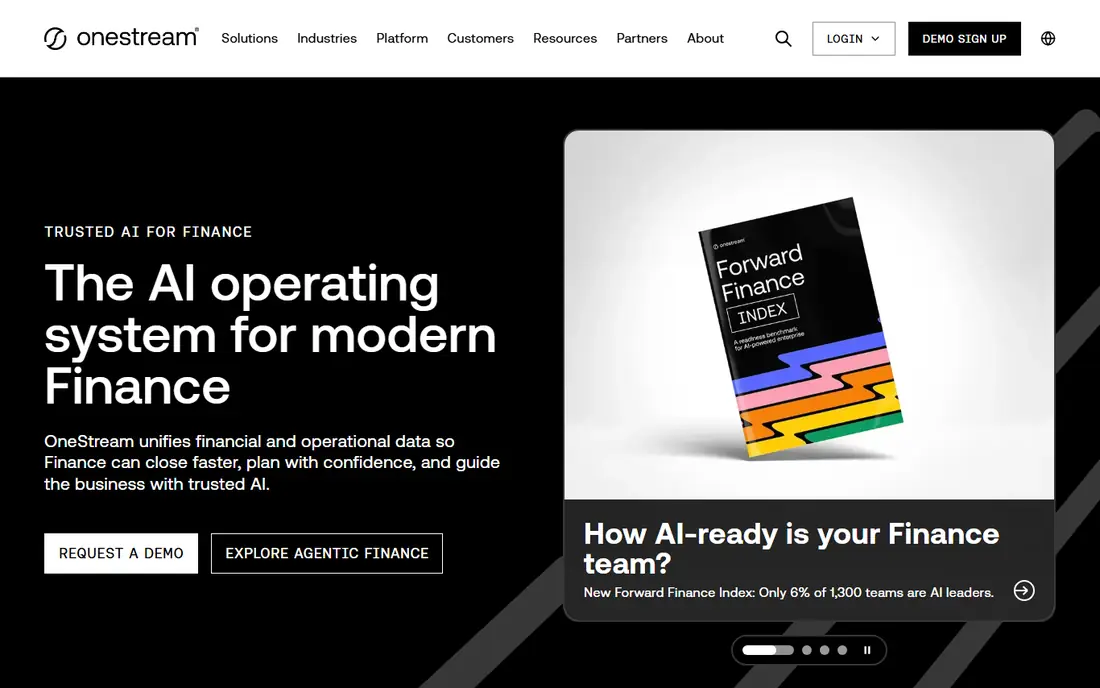
OneStream brings financial close, consolidation, budgeting, forecasting and reporting into one platform with a single data model. That unity helps groups with many entities, currencies and intercompany transactions, since close and plan data do not need to be reconciled between separate systems. Finance teams can move from actuals to forecast in the same environment, with audit trails and controls that auditors can follow. For complex groups, that single-model approach reduces the version confusion that plagues spreadsheet-based closes.
Rollout is a major project for large groups, and pricing is quote-based, so buyers should ask for implementation scope and timeline in writing. Skilled administrators are also needed to maintain models as the business changes. OneStream also offers faster-start options for focused deployments, but enterprise-wide use still needs planning. For unified close and planning, OneStream is our top pick in this list.
- Close, consolidation, planning and reporting in one platform
- Single data model
- Strong for complex groups
- Pricing is quote-based
- Rollout can be a major project
- Needs skilled administrators for complex models

Workday Adaptive Planning covers financial, workforce and operational planning in one cloud environment. Finance and HR teams can model headcount, compensation and skills alongside financial targets, with scenario planning that lets them test hiring, restructuring and cost options without version limits in many plans. The native link to Workday HCM helps Workday customers keep workforce plans tied to real employee data. Dashboards and OfficeConnect tools also let analysts view results in familiar Excel and PowerPoint formats.
Pricing is not published, and implementation often needs specialist partners and a dedicated internal owner. Advanced modeling also has a learning curve for casual users, who may need structured training. For Workday customers and for companies where workforce planning drives the budget, Adaptive Planning is a natural fit. For companies outside the Workday ecosystem, compare it with Anaplan, OneStream and Planful on total rollout effort.
- Strong workforce and financial planning
- Unlimited scenario versions in many plans
- Native link to Workday HCM
- Pricing is quote-based
- Implementation can be heavy
- Casual users may need training for advanced modeling
Oracle EPM Cloud is a broad enterprise performance management suite covering planning, budgeting, forecasting, consolidation, close and narrative reporting. Oracle ERP customers gain from shared data, security and vendor support, while large finance teams gain a suite that can cover many EPM tasks without stitching together several vendors. Its controls, audit trails and scale suit regulated and multinational groups that need consistent reporting across entities.
Breadth is also a challenge. Choosing and configuring the right EPM modules takes time, and a full rollout is a major program rather than a quick purchase. Pricing is quote-based, so buyers should ask for module-by-module costs and implementation estimates. For Oracle-centered finance teams, Oracle EPM Cloud is a strong and coherent choice. For smaller teams, a focused mid-market tool may be faster to value.
- Broad EPM suite for planning, close and reporting
- Strong for Oracle ERP customers
- Enterprise controls and scale
- Suite breadth can feel complex
- Pricing is quote-based
- Implementation needs experienced partners
Board combines planning, budgeting, forecasting, reporting and analytics in a single platform, so finance teams can build plans and then analyze results without moving data to a separate business intelligence tool. That pairing helps companies that want planning and performance reporting in one place, with dashboards that update from the same models. Operations teams can also build plans in Board, which helps align sales, supply and finance views. Its modeling flexibility suits companies with varied planning needs.
Pricing is quote-based, and third-party guides have estimated annual costs in a wide range, so buyers should rely on a written vendor quote rather than a guide figure. Implementation and user training also need time, especially for teams new to a unified planning and analytics platform. For companies that want planning and analytics together, Board is a strong contender alongside Anaplan and OneStream.
- Planning, budgeting and analytics in one platform
- Flexible modeling
- Useful for finance and operations together
- Pricing is quote-based
- Implementation needs planning
- Interface learning curve for new users
Prophix serves mid-market finance teams that need budgeting, forecasting, reporting and consolidation without an enterprise-suite rollout. Its workflow tools help teams manage budget cycles, approvals and versions, while reporting tools let finance share results without rebuilding spreadsheets each month. That focus makes Prophix a practical step up from spreadsheet planning for companies that have outgrown manual files but do not need a global connected planning platform. Implementation is generally lighter than for Anaplan or OneStream, though it still needs planning.
Very large companies with complex connected planning across many operational areas may find Prophix narrower than Anaplan or OneStream. Pricing is quote-based, so mid-market buyers should still ask for a full quote covering users, modules and support. For mid-market finance teams that want a balance of depth and rollout speed, Prophix is one of the best fits in this list.
- Focused mid-market budgeting, forecasting and reporting
- Workflow and version control
- Easier rollout than enterprise suites
- Pricing is quote-based
- Less suited to very large connected planning
- Advanced modeling may need partner help
Vena takes a different approach from most CPM tools: it keeps Excel as the interface analysts already know, and adds governance underneath. Finance teams build plans in Excel, while Vena adds workflow, version control, audit trails and centralized data, so a budget does not live in a dozen emailed files. That familiarity shortens training time and helps teams adopt the tool quickly, since analysts do not need to learn a wholly new modeling language on day one. For Excel-centered teams, that is a major advantage.
The Excel focus also sets a limit. Teams that want a fully native modeling environment for very large connected planning may prefer Anaplan, Pigment or OneStream. Vena also needs discipline, since Excel flexibility can still produce sprawl if templates and controls are weak. Pricing is quote-based. For finance teams that live in Excel and want control without a full rebuild, Vena is the leading Excel-native pick.
- Keeps Excel as the user interface
- Adds workflow, version control and audit trails
- Familiar for finance analysts
- Pricing is quote-based
- Less suited to very large non-Excel modeling
- Needs discipline to avoid spreadsheet sprawl
Planful covers budgeting, forecasting, consolidation support, reporting and scenario analysis for finance teams that want agile planning without an enterprise-suite project. Its interface is designed for finance users rather than specialist model builders, which helps mid-market teams move faster. Recent releases add AI-assisted insights and analysis, which can surface trends and anomalies in plan and actual data. That combination suits companies that want modern planning tools with a manageable rollout.
Pricing is quote-based, and some industry-specific needs may require customization or partner help. Buyers should confirm which modules cover consolidation, workforce planning and reporting for their own structure, since module choice shapes implementation time. For mid-market and growing finance teams, Planful is a strong balance of depth, usability and rollout effort.
- Budgeting, forecasting and reporting for mid-market and larger teams
- Scenario analysis
- AI-assisted insights in recent releases
- Pricing is quote-based
- Some industry needs need customization
- Implementation scope varies by modules chosen
Pigment is a modern planning platform built for finance and operations teams that want a clear interface and fast scenario work. Users can build models, test assumptions and share dashboards without the heavier setup of older enterprise suites, and recent releases add AI-assisted features for modeling and analysis. That modern feel helps cross-team planning, since sales, HR and finance users can work in the same platform with views suited to each team. For companies replacing spreadsheet planning with a first CPM platform, Pigment can feel more approachable than legacy suites.
As a newer vendor, Pigment should be evaluated carefully for very large, complex enterprise needs, including consolidation depth, governance and long-term support. Pricing is quote-based, so buyers should ask for a written quote and reference customers in a similar industry and size. For modern, cross-team planning with a strong interface, Pigment is a leading current pick.
- Modern interface for planning and scenario work
- AI-assisted modeling in recent releases
- Good for cross-team planning
- Pricing is quote-based
- Newer vendor than Anaplan or Oracle
- Large enterprise depth needs careful evaluation
How we picked these
We compared official product pages, vendor documentation and recent CPM comparisons for corporate performance management software that is live and supported in October 2026. We focused on budgeting, forecasting, consolidation, reporting and scenario planning, and we excluded advertising cost-per-mille products entirely. We wrote See website where vendors do not publish pricing, since most CPM pricing is quote-based. We did not claim hands-on testing, and we did not present third-party estimates as vendor prices.
What to check before you buy
Start by naming the job you need CPM software to do. Close and consolidation, connected operational planning, workforce planning and Excel governance are different jobs, and each favors a different tool in this list. A company that mainly needs a faster close should not buy a connected planning platform for that job alone, and a company that needs cross-team scenario planning should not settle for a reporting tool. Write the job down, then score vendors against it.
Next, price three years, not one. Add licence costs, implementation, partner help, training, support and the internal time of finance and IT staff. Ask for a written implementation plan with milestones, data sources and go-live scope, and ask for reference customers of similar size and complexity. A focused deployment can go live in weeks, while an enterprise-wide rollout can take months, so timeline honesty matters more than a fast sales promise.
Finally, test with your own close and forecast cycle. Ask vendors to run a real budget, forecast and consolidation example using your chart of accounts and entity structure, even in simplified form. Watch how versions, approvals and audit trails work, and how analysts change an assumption without breaking the model. The tool that handles your real cycle cleanly, with controls your auditors can follow, is the right pick, even if it is not the most featured tool in the demo.
Frequently asked questions
What is the best CPM software?
For large connected planning, Anaplan leads, while OneStream leads for unified close and planning. Pigment suits modern cross-team planning, and Vena suits Excel-centered teams. Workday Adaptive Planning suits Workday customers, and Prophix serves the mid-market well. The best tool depends on your main job, company size and existing systems.
What is the top CPM software for Excel users?
Vena is our top pick for Excel users, since it keeps Excel as the interface and adds workflow, version control and audit trails underneath. Other Excel-centered options exist outside the main list above. Teams that want to move away from Excel entirely should compare Anaplan, Pigment, OneStream and Planful instead.
What is the best CPM tool for a mid-market company?
Prophix and Planful are strong mid-market choices, with a balance of budgeting, forecasting and reporting depth and a lighter rollout than enterprise suites. Pigment is also worth a look for modern planning. Mid-market buyers should still get a written quote and implementation plan, since pricing and scope vary by users and modules.
How much does CPM software cost?
Most CPM vendors do not publish list prices, and pricing is quote-based. Third-party guides suggest mid-five-figure annual contracts for Excel-native tools and six figures for full enterprise platforms, plus implementation costs, but those are estimates, not vendor prices. Model three-year total cost and ask for a written quote.
Can CPM software replace Excel?
It depends on the tool. Anaplan, Pigment, OneStream and Prophix offer native modeling environments designed to replace spreadsheet planning. Vena takes the opposite approach, keeping Excel as the interface with governance underneath. Choose based on how your finance team actually works, not on a claim that spreadsheets must disappear.
How long does CPM implementation take?
Focused deployments can go live in weeks, while enterprise-wide rollouts take months. Timeline depends on process scope, data complexity, entity count and how much change management the finance team needs. Ask for a written plan with milestones and reference customers before signing.
Sources
See where you really rank - block by block
ProMapRanker scans Google Maps across a grid of your service area. Simple monthly plans from $19, white-label on every plan.
Start freeKeep reading
 zoro.to alternatives
Best Zoro.to Alternatives in 2026
We compare the best zoro.to alternatives in 2026, listing only legal licensed anime streaming services, from Crunchyroll to free options for fans today.
Read → zip alternatives
Best Zip Alternatives in 2026
We compare the best zip alternatives for buy now, pay later in 2026, covering pay-in-4 plans, fees, spending limits, and credit reporting options today.
Read → yesware alternatives
Best Yesware Alternatives in 2026
Compare the best yesware alternatives for sales email tracking, templates, and sequences, with current pricing and honest tradeoffs for small sales teams.
Read →