 ProMapRanker
Best Corporate Performance Management Software in 2026

Key takeaways
- Anaplan leads for large-scale connected planning, while OneStream suits companies that want close, consolidation and planning in one platform.
- Pigment is the modern challenger for visual scenario planning, while Vena and Datarails suit teams that want to keep Excel as the interface.
- Workday Adaptive Planning suits companies already using Workday, and Prophix and Planful serve the mid-market well.
- Almost all CPM pricing is quote-based, so compare implementation time, admin burden and three-year total cost, not just license fees.
- No CPM tool fixes a broken planning process on its own; fix ownership and calendar first, then buy the platform.
Quick comparison
| Pick | Great for | Pricing starts at | Free tier | |
|---|---|---|---|---|
 Anaplan | Large-scale connected planning | See website | No | Visit |
 OneStream | Unified close, consolidation and planning | See website | No | Visit |
 Workday Adaptive Planning | Workday customers and workforce planning | See website | No | Visit |
 Pigment | Modern visual scenario planning | See website | No | Visit |
 Vena | Excel-native planning teams | See website | No | Visit |
 Datarails | Excel and Sheets-native FP&A teams | See website | No | Visit |
 Prophix | Mid-market planning and reporting | See website | No | Visit |
 Planful | Mid-market FP&A plus close management | See website | No | Visit |
 Cube | Spreadsheet-first planning with published pricing | See website | Free trial | Visit |
The best corporate performance management software
Corporate performance management, also called enterprise performance management, covers budgeting, forecasting, consolidation, reporting and scenario planning in one governed system. The tools below differ in how much they replace spreadsheets, how they handle the close, and how heavy implementation feels. Finance teams should pick based on complexity, not brand size alone.
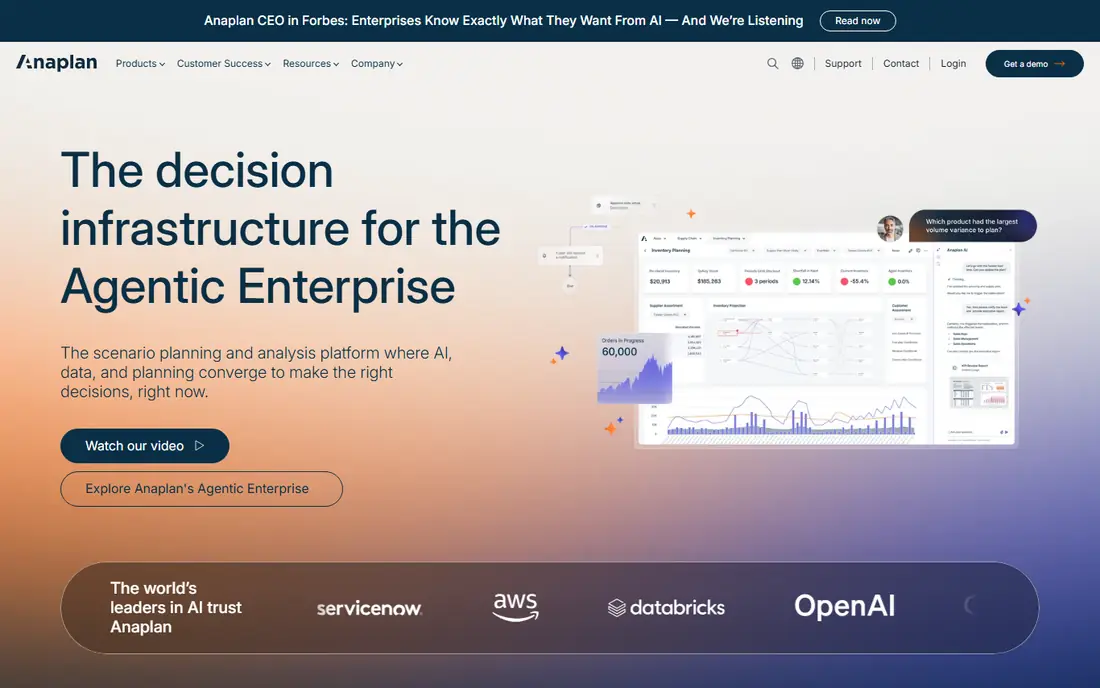
Anaplan is built for organizations where planning spans finance, sales, supply chain and workforce in one connected model. Changes in one area flow through to others, which helps large companies test scenarios without rebuilding spreadsheets for each department. That connected design is why it leads for complex, enterprise-wide planning.
The cost is the catch. Pricing is quoted and typically enterprise-scale, and implementation often needs specialist help plus a dedicated internal owner. Smaller finance teams may find the power unnecessary. For large, complex organizations, Anaplan remains the benchmark for connected planning.
- Powerful connected planning across finance and operations
- Strong scenario modeling
- Broad ecosystem
- Quote-based pricing at enterprise scale
- Implementation and admin effort are significant
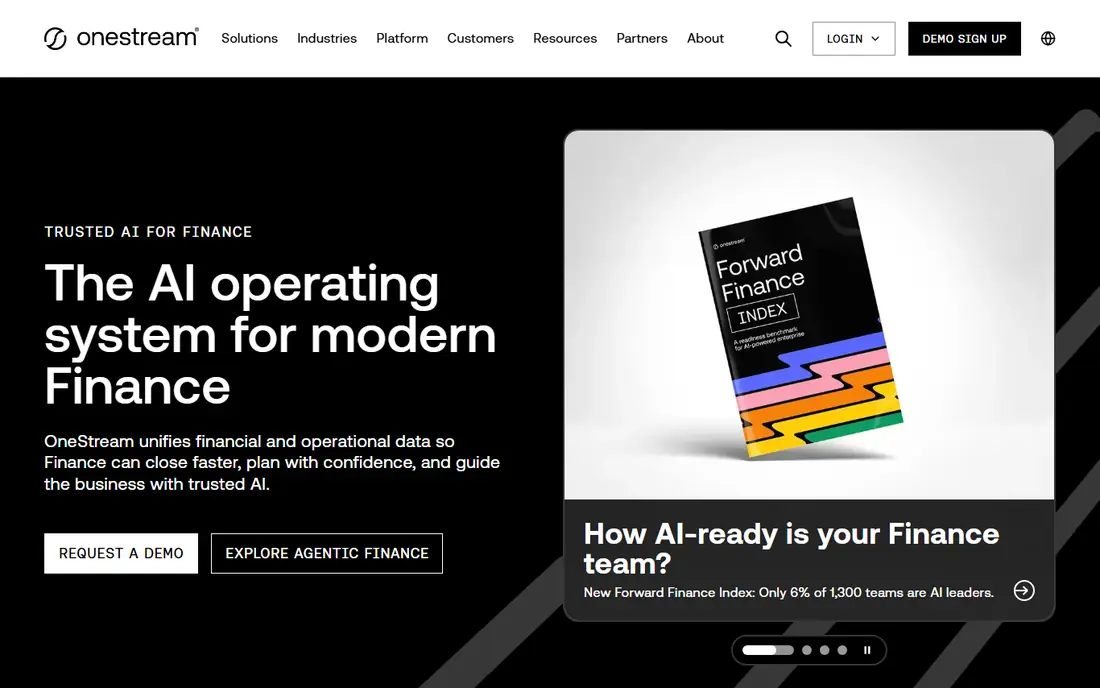
OneStream unifies financial close, consolidation and planning, which appeals to companies tired of stitching separate systems together. A single platform for actuals and forecasts reduces reconciliation work and gives finance one version of results. Focused deployment options can also shorten time to value for a narrower scope.
Enterprise-wide rollouts still take months, and pricing is quoted. Companies with simple structures may not need the full unification. For groups with many entities, currencies and reporting needs, OneStream offers a coherent alternative to a patchwork of tools.
- Close, consolidation and planning in one platform
- Strong for complex group structures
- Focused deployment options
- Quote-based pricing
- Enterprise rollouts can take months

Workday Adaptive Planning supports financial, workforce and operational planning in one environment. Workforce planning is a particular strength, with headcount, compensation and skills modeling tied to financial targets. Unlimited scenarios help finance and HR teams test hiring, restructuring and cost options without version limits.
Pricing is quoted, and setup often needs specialist partners, especially outside the Workday ecosystem. Casual users may also need training to use advanced modeling well. For companies already running Workday, the native integration makes this a natural shortlist pick.
- Unlimited scenario modeling
- Native Workday HCM integration
- Strong dashboards and reporting
- No public pricing
- Implementation can be heavy without Workday expertise
Pigment is the modern challenger in this list, with a visual interface that makes scenario planning feel more accessible to non-modelers. Teams can build drivers, test what-if cases and share dashboards without the spreadsheet maze that older platforms sometimes create. Collaboration features help finance work with operations in real time.
As a newer vendor, Pigment lacks the decades-long track record of larger rivals, and pricing is quoted. Implementation is generally lighter than enterprise platforms, but still needs planning ownership. For companies that want modern planning without legacy complexity, Pigment is a strong contender.
- Visual, collaborative scenario modeling
- Modern interface
- AI-assisted analysis features
- Quote-based pricing
- Newer vendor than Anaplan or OneStream
Vena takes the opposite approach from Anaplan: it keeps Excel as the interface and adds governance, workflow, version control and audit trails underneath. Finance teams that live in Excel can adopt it without learning a new modeling language, which shortens training and reduces resistance.
The Excel-first design can limit scalability for the most complex enterprise models, where a native platform may perform better. Pricing is also quoted, so budget planning needs a sales conversation. For Excel-centric teams that need control without abandoning spreadsheets, Vena is a natural fit.
- Keeps Excel as the interface
- Governance, workflow and audit trails underneath
- Familiar for finance staff
- Quote-based pricing
- Less suited to very large, highly complex models than Anaplan
Datarails is built for FP&A teams that want to keep working in Excel and Google Sheets while adding automation, reporting and consolidation on top. Data flows into familiar spreadsheets, variance analysis becomes faster, and reports update without manual copying. Finance teams can often own setup without heavy IT involvement.
Full consolidation and close depth are thinner than OneStream, so large groups with complex consolidation needs should test that area carefully. Pricing is quoted. For mid-size FP&A teams that want speed without abandoning spreadsheets, Datarails offers a practical path.
- Spreadsheet-native FP&A
- Automated reporting and variance analysis
- Finance-owned setup
- Quote-based pricing
- Less depth for full consolidation than OneStream
Prophix serves the mid-market with budgeting, forecasting, reporting and consolidation in one platform. It is less sprawling than enterprise CPM suites, which helps mid-size finance teams go live faster and manage the system with a smaller team. Reporting depth is a particular strength for companies that need clear board and management packs.
Very large, highly connected planning across many operational areas may stretch Prophix compared with Anaplan. Pricing is quoted, so total cost still needs a direct conversation. For mid-market finance teams, Prophix balances power and manageability well.
- Strong mid-market planning and reporting
- Budgeting, forecasting and consolidation
- Manageable implementation
- Quote-based pricing
- Less connected-planning depth than Anaplan for very large firms
Planful combines financial planning with close management, so budgeting, forecasting and reporting sit alongside close tasks in one system. Scenario analysis and reporting help finance teams respond faster to changing conditions, and AI-assisted features can flag anomalies in results. That combination suits mid-market to enterprise finance teams that want agility without a sprawling suite.
Customization needs vary, and pricing is quoted, so implementation scope should be agreed in writing. Planful is best for teams that want integrated planning and close work, with a platform that finance can run day to day.
- FP&A plus close management in one platform
- Scenario analysis and reporting
- AI-assisted insights
- Quote-based pricing
- Customization needs vary by company complexity
Cube is the most accessible entry point in this list for spreadsheet-first teams. It keeps Excel and Google Sheets as the interface, adds governance and automation underneath, and offers a published pricing path that makes early budgeting easier than quote-only rivals. Setup can take weeks rather than months, which suits teams that need to move quickly.
Enterprise consolidation depth is thinner than OneStream, and very large connected models may suit Anaplan better. For growing FP&A teams that want spreadsheet familiarity with real governance, Cube offers a low-friction way into CPM without a heavy enterprise project.
- Spreadsheet-first design with Excel and Sheets
- Faster setup than enterprise platforms
- Published pricing path
- Less enterprise consolidation depth than OneStream
- Smaller scale than Anaplan
How we picked these
We compared official product pages, pricing information and public reviews for CPM tools live in October 2026. We kept tools that cover budgeting, forecasting, consolidation or connected planning for corporate finance, and we treated CPM and EPM as interchangeable terms, since vendors use both. Where pricing was not published, we wrote See website instead of presenting third-party estimates as vendor prices. Our comparison rests on vendor documentation and public reviews, not on claimed hands-on testing.
What to check before you buy corporate performance management software
Start with scope. Decide whether you need planning alone, or planning plus close and consolidation, since that choice narrows the list fast. OneStream and Planful cover close work, Anaplan and Pigment lead on connected and scenario planning, and Vena, Datarails and Cube suit spreadsheet-first teams. Buying a full suite for planning alone wastes money and time.
Next, check implementation and admin burden. Ask how long a focused deployment takes, who builds and maintains models, and whether finance can own the system or needs retained consultants. Implementation fees for enterprise platforms can run well above the first-year license, so model three-year total cost, not just year one.
Finally, test with your real close and forecast cycle. Run a recent budget, a forecast update and a board report through the tool in a pilot, and measure how long each step takes. A vendor demo on clean sample data will not reveal data, entity or currency problems that show up in your real structure.
Frequently asked questions
What is the best corporate performance management software?
Anaplan leads for large-scale connected planning, OneStream for unified close and planning, Pigment for modern scenario planning, and Vena or Datarails for Excel-centric teams. Workday Adaptive Planning suits Workday customers, and Prophix serves the mid-market well.
What are the best corporate performance management tools for mid-market companies?
Prophix, Planful and Cube suit mid-market finance teams, with Datarails as another spreadsheet-native option. They offer faster setup and lower admin burden than enterprise platforms, though total cost still needs a written quote in most cases.
What is the difference between CPM and EPM software?
The terms are largely interchangeable. Both describe software for planning, budgeting, forecasting, consolidation and reporting, and vendors use whichever term their market prefers. Focus on features and scope rather than the label.
Can CPM software replace Excel?
It depends on the tool. Anaplan, Pigment, OneStream and Prophix offer native modeling environments designed to replace spreadsheet planning. Vena, Datarails and Cube take the opposite approach, keeping Excel or Sheets as the interface with governance underneath.
How much does CPM software cost?
Pricing is mostly quote-based and enterprise-scale, with mid-market tools starting in the tens of thousands per year and full platforms reaching six figures plus implementation. Always model three-year total cost, including implementation, admin and add-on modules.
How long does CPM implementation take?
Focused deployments can go live in weeks, while enterprise-wide rollouts take months. Timeline depends more on process scope, data complexity and entity count than on the software alone, so agree on scope and ownership before signing.
Sources
See where you really rank - block by block
ProMapRanker scans Google Maps across a grid of your service area. Simple monthly plans from $19, white-label on every plan.
Start freeKeep reading
 zscaler alternatives
Best Zscaler Alternatives in 2026
Looking for zscaler alternatives? We compare 9 SASE and zero trust platforms on architecture, data protection, pricing, and fit for your network and team.
Read → zapier alternatives free
Best Zapier Alternatives Free in 2026
Nine automation tools for zapier alternatives free in 2026, all with genuinely free tiers, plus free plan limits, starting prices and upgrade paths explained.
Read → which platform is best for online reputation
Which Platform Is Best for Online Reputation in 2026
Wondering which platform is best for online reputation? We compare 8 review, listing, and response tools for small and multi-location businesses and agencies.
Read →