 ProMapRanker
Best Corporate Expense Management Platforms in 2026


Startups and growth companies wanting cards plus expenses · Pricing starts at: Free
Key takeaways
- Ramp and Brex lead for card-first teams that want a free starting tier, while Expensify suits teams keeping existing cards.
- Navan is the natural pick when travel booking and expenses should live in one flow.
- SAP Concur and Airbase suit larger or more complex finance operations, but both are quote-led.
- Zoho Expense and BILL Spend and Expense are the budget-friendly options for smaller teams.
Quick comparison
| Pick | Great for | Pricing starts at | Free tier | |
|---|---|---|---|---|
| Ramp | Startups and growth companies wanting cards plus expenses | Free | Yes | Visit |
 Brex | Startups and mid-market teams wanting free spend management | Free | Yes | Visit |
 Navan | Companies where travel booking and expenses belong together | $15 per user per month | Yes | Visit |
 Expensify | Teams that want to keep existing corporate cards | $5 per user per month | Free trial | Visit |
 SAP Concur | Large enterprises with complex travel and expense policies | See website | No | Visit |
 Zoho Expense | Budget-conscious teams and Zoho users | $4 per user per month | Yes | Visit |
 Airbase | Mid-market finance teams wanting procure-to-pay control | See website | No | Visit |
 BILL Spend and Expense | Small teams wanting free spend controls with accounting focus | Free | Yes | Visit |
 Fyle | Teams wanting real-time card feeds and fast reimbursements | See website | Free trial | Visit |
 Rippling Spend | Companies wanting HR, payroll and spend in one system | See website | No | Visit |
The best corporate expense management platforms
We compared platforms that handle employee spending, receipts, approvals and reimbursements, including card-first tools and classic expense suites. This is not financial advice, and pricing should be confirmed on the vendor page, since plans change. The best choice depends on whether you want corporate cards, travel booking, or a tool that works with cards you already have.
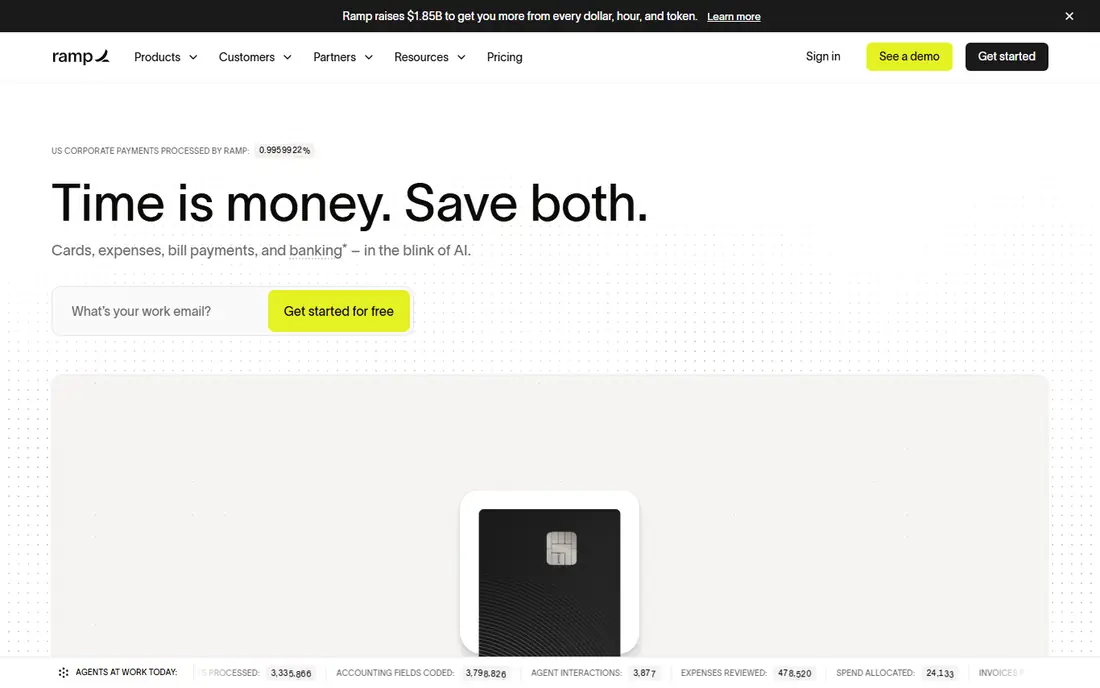
Ramp is the card-first pick for many growing companies. It pairs corporate cards with expense management, approvals and bill pay, so spending is controlled at the card rather than chased after the fact. The free tier makes it easy for a startup to start without a monthly software bill, provided the company qualifies.
The catch is that Ramp works best when you adopt its cards. Teams that want to keep an existing card programme may find a card-agnostic tool a better fit. Check the Plus tier price, platform fees and any card eligibility rules before you switch.
- Free starting tier
- Corporate cards with controls
- Bill pay and travel options
- Card-first model
- Advanced tiers add platform fees
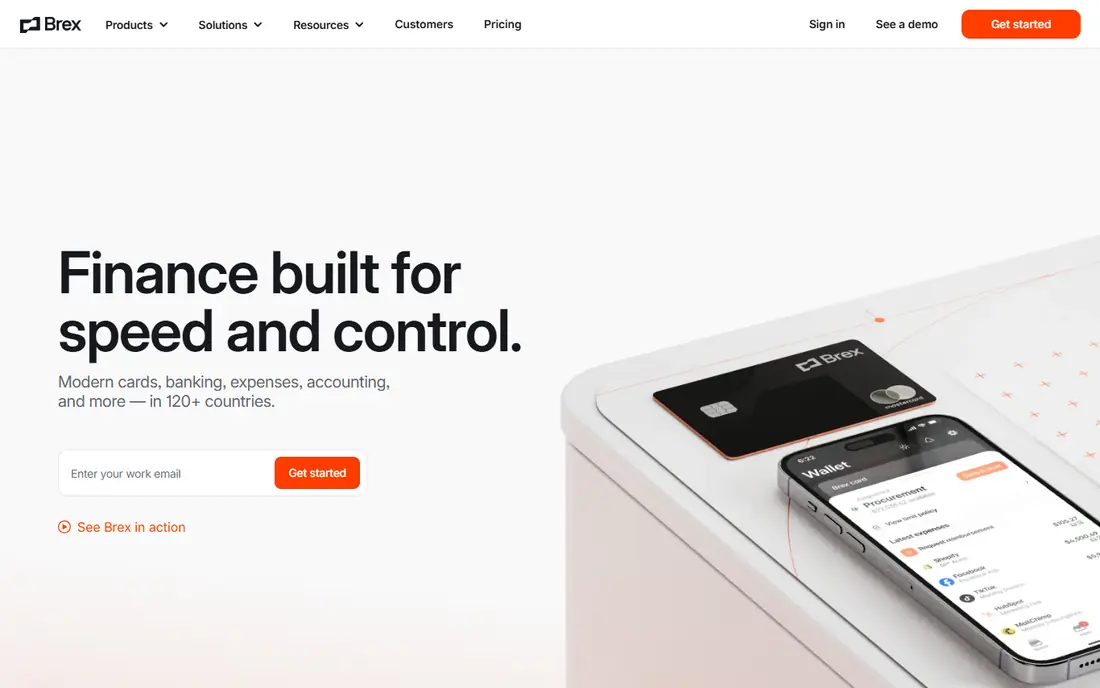
Brex competes directly with Ramp on the free-tier front, offering cards, expense management and bill pay from a single platform. Its Essentials tier is free, while Premium adds more controls and features for a per-user price. Global teams may value its multi-entity and currency options, depending on their setup.
As with Ramp, the model assumes you use Brex cards, and eligibility and credit terms matter. Compare the Premium tier against your actual needs, since many small teams do fine on Essentials. Confirm accounting integrations for your ledger before you migrate.
- Free Essentials tier
- Corporate cards
- Global spend options
- Premium features cost extra
- Card eligibility rules apply

Navan, formerly TripActions, is the pick when travel is a major spend category. Booking, policy and expense capture live in one system, so a trip booked in Navan flows into expenses without manual re-entry. That pairing saves finance time and gives managers a clearer view of travel spend.
The downside is cost for expense-only teams. If you rarely book travel, a simpler expense tool may cost less and do the same job. Check how many users are free, what the expense plan includes, and whether your travel volume justifies the combined platform.
- Travel plus expense in one flow
- First users free on some plans
- Corporate cards
- Expense pricing adds up for larger teams
- Travel focus may be more than needed
Expensify remains the flexible option for teams that do not want to switch cards. It captures receipts, automates expense reports and reimbursements, and works with cards you already use. That flexibility appeals to small teams and to companies with an existing bank card programme.
The trade-off is that some of the smoothest automation comes with the Expensify Card, so card-agnostic teams may miss a few conveniences. Compare the Collect and Control plans carefully, since approvals, integrations and support differ by tier.
- Works with existing cards
- Receipt scanning
- Flexible plans
- Higher tiers cost more
- Card features are strongest with Expensify Card
SAP Concur is the enterprise standard for many large companies, especially those already running SAP. It handles complex approval chains, audit trails, multi-entity structures and global travel and expense policies in a way that smaller tools cannot match. For a large, regulated organisation, that depth matters.
Cost and implementation are the honest downsides. Pricing is quoted, setup takes time, and smaller teams will find it heavy. Only shortlist Concur if your policy complexity, audit needs or SAP investment justify an enterprise project.
- Deep policy and audit controls
- SAP integration
- Global travel support
- Quote-led pricing
- Implementation can be long and costly
Zoho Expense is the budget pick that still feels complete. It covers receipt capture, approvals, mileage and accounting integrations, with a free version for smaller teams and low paid tiers. Teams already using Zoho Books or other Zoho apps get extra value from the shared ecosystem.
The limit is cards. Zoho Expense works with card feeds rather than issuing its own corporate cards, so card-first teams should look elsewhere. Check the free version limits, since user counts and features are capped, and confirm your accounting integration before you commit.
- Low entry price
- Free version
- Zoho ecosystem integration
- No native corporate card
- Advanced features need higher tiers
Airbase, now part of Paylocity, goes beyond expenses into procurement, bill pay and corporate cards. That procure-to-pay scope suits mid-market finance teams that want purchase requests, approvals and payments in one system, rather than stitching several tools together. Controls and audit trails are a core strength.
The scope is also the cost. Pricing is quoted, and a small team that only needs expense reports will find Airbase heavy. Shortlist it when procurement and spend control are real problems, not just nice extras, and ask for a scoped quote.
- Procurement plus expenses
- Strong approval controls
- Accounting integrations
- Quote-led pricing
- More than smaller teams need
BILL Spend and Expense
Great for: Small teams wanting free spend controls with accounting focus
BILL Spend and Expense, formerly Divvy, offers a free core card product with spend controls and expense management. It suits accountant-led finance teams that already use BILL for payables, since the card and expense data flow into the same accounting view. Small teams get real controls without a software bill.
The catch is scope. Full accounts payable and related BILL features are separate products with their own pricing, so the free card product is not the whole BILL suite. Confirm what is included in the free tier and what your accounting integration needs.
- Free core card product
- Spend controls
- Accounting integrations
- Full AP features sit in paid BILL products
- Card-first model
Fyle focuses on speed: card transactions appear in expenses quickly, receipts can be matched from common apps, and reimbursements move faster than in manual systems. It suits finance teams that want real-time visibility without forcing a card switch, since it works with existing card feeds.
Pricing transparency is weaker than for Ramp or Zoho, with some plans quoted. That makes a direct cost comparison harder, so request a written quote for your team size and confirm which integrations and approval features are included in that price.
- Real-time expense tracking
- Card feed integrations
- Accounting links
- Quote-led pricing on some plans
- Smaller brand than the largest rivals
Rippling Spend makes sense when a company already runs HR, payroll and IT on Rippling. Employee records drive card controls and reimbursements, so joiners, leavers and role changes update spend permissions automatically. Global reimbursement options add value for distributed teams.
For expense-only buyers, Rippling is overkill and pricing is quoted, so the total cost is hard to judge from the website alone. Only shortlist it if the HR and finance combination is a real benefit, and get a quote that separates spend pricing from the wider Rippling platform.
- Unified HR and finance data
- Corporate cards
- Global reimbursements
- Quote-led pricing
- Overkill for expense-only needs
How we picked these
We compared platforms with live pricing or quote pages, official feature documentation and accounting integrations in October 2026. We favoured tools that cover receipts, approvals and reimbursements as a core job, not just a card app with a receipt feature. Where pricing was quoted or changed by plan, we wrote See website rather than publishing a figure that might not apply to your team size.
We also weighed card model carefully. Card-first tools suit teams ready to switch cards, while card-agnostic tools suit teams keeping existing cards. That distinction shapes most of the write-ups, since it decides whether a platform fits at all, regardless of its feature list.
How to choose a corporate expense management platform
Start with your card decision. If you will issue new corporate cards, Ramp, Brex and BILL are strong starting points. If you must keep existing cards, Expensify, Fyle and Zoho Expense deserve the first look. If travel dominates spending, Navan moves to the front, and if policy complexity dominates, SAP Concur and Airbase enter the frame.
Trial the receipt flow with real employees, not just finance staff. Check how long a receipt takes to capture, how approvals work on mobile, and how cleanly data reaches your accounting system. Finally, confirm pricing for your actual user count, including any platform fees, and ask about renewal terms before you roll out company-wide.
Frequently asked questions
What is the best corporate expense management software?
The best tool depends on your card model and team size. Ramp and Brex suit card-first startups, Expensify suits teams keeping cards, and SAP Concur suits large enterprises. Start with the card decision, then compare features.
What are the best corporate expense management tools for small businesses?
Small teams should look at free tiers first, such as Ramp, Brex, Zoho Expense and BILL Spend and Expense. Check user limits and accounting integrations, since a free tier that does not connect to your ledger still creates manual work.
What is the top corporate expense management software for enterprises?
SAP Concur and Airbase are common enterprise choices because of policy, audit and procurement depth. Both are quote-led, so budget for implementation and a sales cycle, not just a monthly fee.
Do we need corporate cards to use expense software?
No. Card-agnostic tools work with existing cards and manual receipts, while card-first tools work best when you adopt their cards. Choose the model that matches your banking and finance setup.
How much does expense management software cost?
Entry prices range from free tiers at Ramp, Brex and Zoho Expense to $5 per user per month at Expensify and $15 at Navan for expense plans. Enterprise tools are quoted, so request a written quote for your team size.
Sources
See where you really rank - block by block
ProMapRanker scans Google Maps across a grid of your service area. Simple monthly plans from $19, white-label on every plan.
Start freeKeep reading
 zscaler alternatives
Best Zscaler Alternatives in 2026
Looking for zscaler alternatives? We compare 9 SASE and zero trust platforms on architecture, data protection, pricing, and fit for your network and team.
Read → zapier alternatives free
Best Zapier Alternatives Free in 2026
Nine automation tools for zapier alternatives free in 2026, all with genuinely free tiers, plus free plan limits, starting prices and upgrade paths explained.
Read → which platform is best for online reputation
Which Platform Is Best for Online Reputation in 2026
Wondering which platform is best for online reputation? We compare 8 review, listing, and response tools for small and multi-location businesses and agencies.
Read →