 ProMapRanker
Best Container Tracking App in 2026

Key takeaways
- project44 and FourKites suit large shippers that need broad carrier visibility, predictive ETAs, and exception alerts.
- Flexport, CargoWise, GoFreight, and Shipsy combine tracking with wider freight or forwarder workflows, not just a tracking screen.
- MarineTraffic and TrackAbout suit narrower needs, such as vessel positions or returnable container fleets.
- Carrier coverage decides value, so check that your carriers, ports, and container numbers are supported before you sign.
Quick comparison
| Pick | Great for | Pricing starts at | Free tier | |
|---|---|---|---|---|
 project44 | Large shippers and visibility | See website | No | Visit |
 FourKites | Multimodal visibility | See website | No | Visit |
 MarineTraffic | Vessel and port positions | Free | Yes | Visit |
 Flexport | Shippers using a freight platform | See website | No | Visit |
 CargoWise | Enterprise forwarders | See website | No | Visit |
 GoFreight | Forwarders that want a portal | See website | No | Visit |
 Shipsy | Logistics teams and 3PLs | See website | No | Visit |
 TrackAbout | Returnable container fleets | See website | No | Visit |
The best container tracking app
Container tracking is not just a map pin. A useful tool shows where a container is, when it is likely to arrive, and what has gone wrong, in time to tell a customer or change a plan. The tools below cover ocean visibility, forwarder portals, and fleet tracking, so pick by your role in the chain.
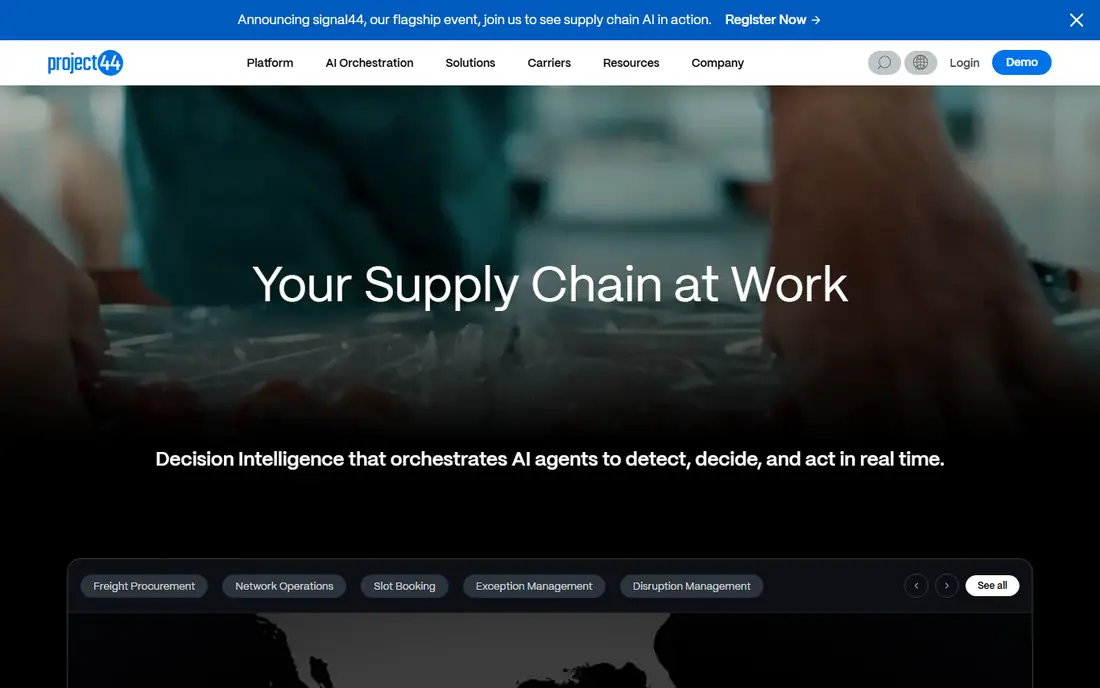
project44 is a visibility platform that connects carrier, telematics, and port data to show where freight is and when it is likely to arrive. For a large shipper, that single view replaces checking many carrier sites, and exception alerts help teams act before a customer asks. Its API also lets companies show tracking inside their own customer tools.
The limit is scope. project44 watches freight that someone else booked, so it does not tender loads, rate freight, or audit invoices on its own. Pair it with a transport system or forwarder if you need those jobs too. Pricing is enterprise and quote-based, so bring shipment volumes and carrier lists to the first call.
- Broad carrier and port data
- Predictive ETAs and exception alerts
- APIs for customer-facing tools
- Visibility only, not a full transport system
- Enterprise pricing is quote-based

FourKites is a well-known visibility platform for shippers that move freight across ocean, road, rail, and parcel. That multimodal view helps when a container moves from a vessel to a truck and then to a warehouse, since the whole journey stays in one system. Predictive ETAs and alerts are central to its pitch, and its network covers many carriers.
As with project44, coverage is the key test. If your carriers or lanes are weakly covered, the ETAs and alerts will be less useful. Ask for a coverage check on your top lanes and container types before you sign, and check how the platform handles data gaps. Enterprise pricing also means it suits larger shippers best.
- Multimodal tracking across ocean, road, and rail
- Predictive ETAs
- Broad carrier network
- Enterprise pricing
- Value depends on carrier coverage for your lanes

MarineTraffic is best for checking where a vessel is, rather than the full status of a single container through customs and terminals. For an importer who knows the vessel name, it gives a clear position, route, and port history, which helps explain a delay to a customer. A free tier covers basic use, with paid plans for deeper data.
Do not expect MarineTraffic alone to replace a forwarder portal for container milestones, such as gate-in, loaded, or customs release. It is a useful complement to a forwarder tool, especially for quick vessel checks. Use it when you need position data fast, and use a visibility platform when you need container-level milestones.
- Vessel positions and port data
- Free tier for basic tracking
- Useful for single-vessel checks
- Vessel tracking is not full container status
- Paid plans needed for deeper data
Flexport combines freight forwarding with a platform that shows shipment tracking, order management, and reporting. For a shipper that already uses Flexport for ocean or air freight, that integration is convenient, since tracking sits next to bookings and documents. It reduces the need to check a separate visibility tool for Flexport shipments.
The trade-off is that the best tracking experience comes when Flexport handles the shipment. If you use many forwarders, a carrier-neutral visibility tool may give a more complete view. Ask how Flexport shipments and non-Flexport shipments appear together, and what data you can export for your own systems.
- Tracking inside a freight platform
- Order and shipment management
- Reporting tools
- Tracking value is tied to using Flexport services
- Pricing is custom
CargoWise, from WiseTech Global, is an enterprise platform for forwarders that covers operations, compliance, and customer tracking in one system. For a large forwarder, that depth matters, since tracking is tied to bookings, documents, and finance rather than sitting in a separate app. Customer portals let clients check shipment status without calling the forwarder.
That depth comes with complexity. Implementation, training, and change management can take months, and smaller forwarders may find it more than they need. If you are a small forwarder, a lighter portal tool may be faster to adopt. If you are large and need global operations in one system, CargoWise is a serious candidate.
- Deep forwarder operations plus tracking
- Global network and compliance tools
- Customer portal options
- Large, complex system
- Implementation and training take time
GoFreight is a web platform for forwarders that includes booking, quotations, sales, and management, with tracking and a customer portal built in. For a forwarder that wants clients to check status online, that portal is a real time saver, since it cuts status emails and calls. The interface is modern compared with older forwarder systems, which helps adoption.
Pure shippers who do not run forwarder operations will find many features they do not need. Pricing is custom, so a forwarder should ask for a clear quote based on shipment volume and user count. Test the customer portal with a real client workflow before you commit, since portal adoption decides the value.
- Modern forwarder platform with tracking
- Customer portal tied to shipments
- Booking and sales tools
- Pricing is custom
- Best fit for forwarders, not pure shippers
Shipsy is a logistics platform that helps teams manage shipments, automate workflows, and track freight in real time. It suits 3PLs, importers, and exporters that need more than a tracking screen, such as shipment management, customer updates, and operational reports. That breadth helps when tracking is part of a larger logistics job.
A team that only needs to track a few containers a month may find Shipsy more than it needs. Ask for a demo on your actual shipment types, and check how tracking data flows into customer updates. If the automation saves real staff time, the wider scope is worth it. If not, a simpler visibility tool may be enough.
- Shipment management and tracking
- Automation for logistics workflows
- 3PL and importer use cases
- Pricing is custom
- Scope is wider than simple tracking
TrackAbout is different from the ocean tools above, since it focuses on returnable containers, such as reusable totes, tanks, and pooled assets. For a company that rents or pools containers, it tracks where each asset is, who has it, and when it should return. That fleet view helps reduce loss and improve utilization.
Do not pick TrackAbout for ocean container milestones, since that is not its core job. Pick it when your problem is asset loss, rental billing, or fleet utilization for reusable containers. Ask how assets are tagged, how data is captured in the field, and how the system handles damaged or missing units.
- Built for returnable and reusable containers
- Asset tracking and fleet visibility
- Suits rental and pooling fleets
- Not an ocean container visibility tool
- Pricing is custom
How we picked these
We compared official product pages, published visibility comparisons, and forwarder platform listings for tools that track containers or container fleets in 2026. We favored live tools with clear tracking, ETA, or portal features, and we separated ocean visibility, forwarder platforms, and returnable fleet tools, since they solve different problems. We did not claim hands-on testing, and we did not invent prices or coverage figures. Where pricing is not published, we wrote See website.
How to choose for your role
Start with the question you need answered each day. A shipper usually needs container milestones and ETAs across carriers. A forwarder usually needs a customer portal tied to bookings. A fleet owner needs asset location and return status. Naming that question first avoids buying a large platform for a small tracking job.
Next, test coverage on your real lanes. Give each vendor your top carriers, ports, and a sample container number, and ask what milestones they can show. Check how often data updates, how alerts are sent, and what happens when carrier data is missing. A tool that covers your lanes well is worth more than one with a longer feature list but weak coverage.
Finally, check integration and customer experience. Ask whether tracking can feed your ERP, warehouse system, or customer portal, and whether clients can check status without calling you. A clean customer view saves staff time and builds trust, especially when a shipment is delayed and a clear ETA matters more than a map pin.
Frequently asked questions
What is the best container tracking software?
project44 and FourKites are strong choices for large shippers that need broad visibility and predictive ETAs. Flexport, CargoWise, and GoFreight suit forwarders that need tracking inside a wider operations platform. The best choice depends on your role, carrier coverage, and shipment volume.
Can I track a container with just the container number?
Many tools accept a container number, a booking number, or a bill of lading, depending on the carrier and the tool. Coverage varies by carrier, so test a real container number before you commit. For vessel-only checks, MarineTraffic can help if you know the vessel name.
How accurate are predictive ETAs?
Predictive ETAs use carrier data, port data, and past patterns, but they are estimates, not guarantees. Weather, port congestion, and customs can change an ETA. Use alerts for changes, and confirm critical dates with your forwarder or carrier before promising a customer.
Is there a free container tracking app?
MarineTraffic has a free tier for basic vessel tracking, and some carrier sites offer free tracking for their own shipments. Full container visibility platforms are usually paid and quote-based. For a few containers, a carrier site or a free vessel tool may be enough.
What is the difference between vessel tracking and container tracking?
Vessel tracking shows where a ship is, while container tracking shows the status of a specific container, such as loaded, in transit, or released. Vessel data helps explain a delay, but container milestones are needed for delivery planning and customer updates.
Sources
See where you really rank - block by block
ProMapRanker scans Google Maps across a grid of your service area. Simple monthly plans from $19, white-label on every plan.
Start freeKeep reading
 zscaler alternatives
Best Zscaler Alternatives in 2026
Looking for zscaler alternatives? We compare 9 SASE and zero trust platforms on architecture, data protection, pricing, and fit for your network and team.
Read → zapier alternatives free
Best Zapier Alternatives Free in 2026
Nine automation tools for zapier alternatives free in 2026, all with genuinely free tiers, plus free plan limits, starting prices and upgrade paths explained.
Read → which platform is best for online reputation
Which Platform Is Best for Online Reputation in 2026
Wondering which platform is best for online reputation? We compare 8 review, listing, and response tools for small and multi-location businesses and agencies.
Read →