 ProMapRanker
Best Container Shipping Companies in 2026

Key takeaways
- MSC, Maersk and CMA CGM lead on fleet size and route coverage, so they suit shippers who need frequent sailings on major trade lanes.
- Schedule reliability varied widely in 2026, so a carrier with fewer sailings but steadier arrivals can beat a larger carrier on a time-sensitive shipment.
- Most ocean freight is quoted per shipment, not from a fixed price list, so compare the full landed quote, including fuel, terminal and documentation charges.
- Smaller and regional carriers such as ZIM and Wan Hai can be strong on specific lanes, even when they cannot match the global networks of the largest lines.
Quick comparison
| Pick | Great for | Pricing starts at | Free tier | |
|---|---|---|---|---|
 MSC | Largest global network | See website | No | Visit |
 Maersk | Integrated logistics and reliability | See website | No | Visit |
 CMA CGM | Wide route coverage and tracking | See website | No | Visit |
 COSCO SHIPPING | Asia-focused trade lanes | See website | No | Visit |
 Hapag-Lloyd | Service quality on major lanes | See website | No | Visit |
 ONE | Transpacific and intra-Asia routes | See website | No | Visit |
 Evergreen | Modern fleet on major lanes | See website | No | Visit |
 HMM | Cost-conscious mega-ship routes | See website | No | Visit |
 ZIM | Express and refrigerated cargo | See website | No | Visit |
The best container shipping companies
We compared the largest ocean carriers on fleet scale, route coverage, booking tools and published reliability data. Use this list to shortlist carriers for a lane, then get quotes for your exact cargo, dates and ports.
MSC, or Mediterranean Shipping Company, operates the largest container fleet by capacity, with a reported share of more than one fifth of global container capacity in 2026. That scale matters for shippers who need options. On busy lanes, more vessels usually mean more sailing choices and more chances to recover when a sailing is missed or rolled.
The trade-off is that size alone does not guarantee a smooth shipment. MSC works best when you book through a forwarder or use its online tools to check schedules early, confirm cut-off times and watch for blank sailings. For a single small shipment, a forwarder can also help you compare MSC against other lines on the same lane, rather than taking the first sailing offered.
- Largest container fleet in the world
- Very broad port coverage
- Frequent sailings on major lanes
- Large scale can mean less personal service for small shippers
- Reliability varies by lane and season
Maersk is our pick for shippers who value arrival predictability and a single provider for several steps in the chain. In Sea-Intelligence data for August 2026, Maersk was the most reliable carrier among the top 13, at 67.3 percent schedule reliability. That figure still leaves room for delays, and it is a reminder to build buffer time into any plan that depends on a fixed delivery date.
Maersk also sells inland transport, customs services and warehousing alongside ocean freight. That can simplify life for a business that ships regularly, because fewer handoffs mean fewer places for paperwork to stall. For a one-off shipment, compare its port-to-port quote with simpler options, since you may not need the full package.
- Strong schedule reliability among large carriers in 2026
- Broad logistics services beyond ocean freight
- Clear online booking tools
- Premium positioning can mean higher quotes on some lanes
- Its full logistics offer can be more than a simple port-to-port shipper needs
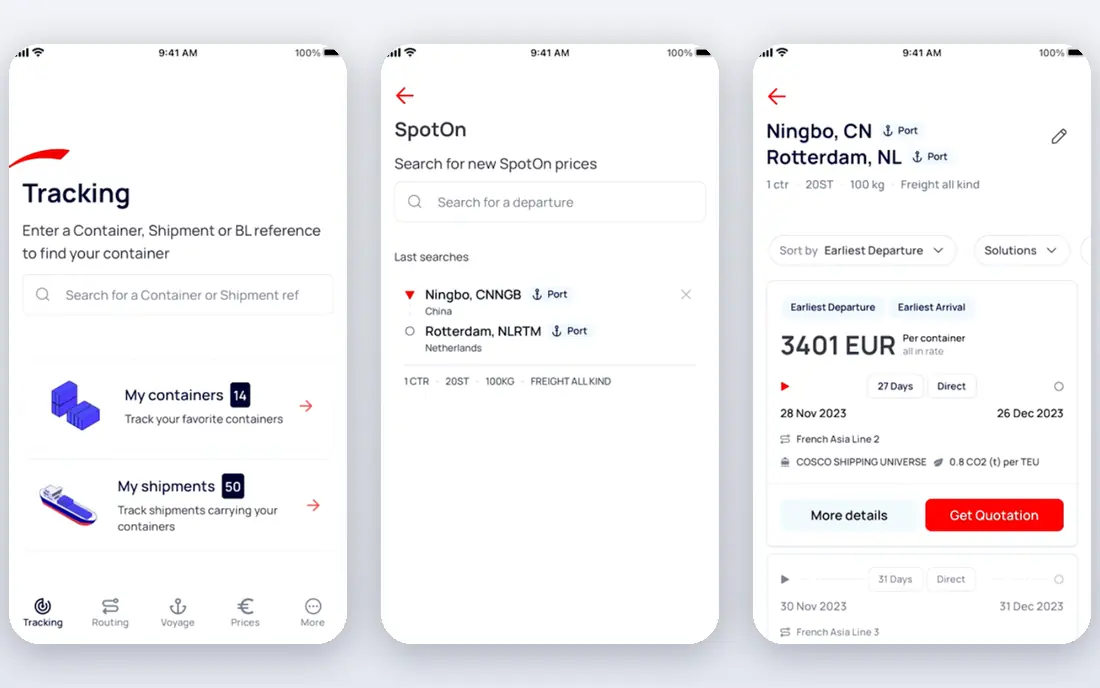
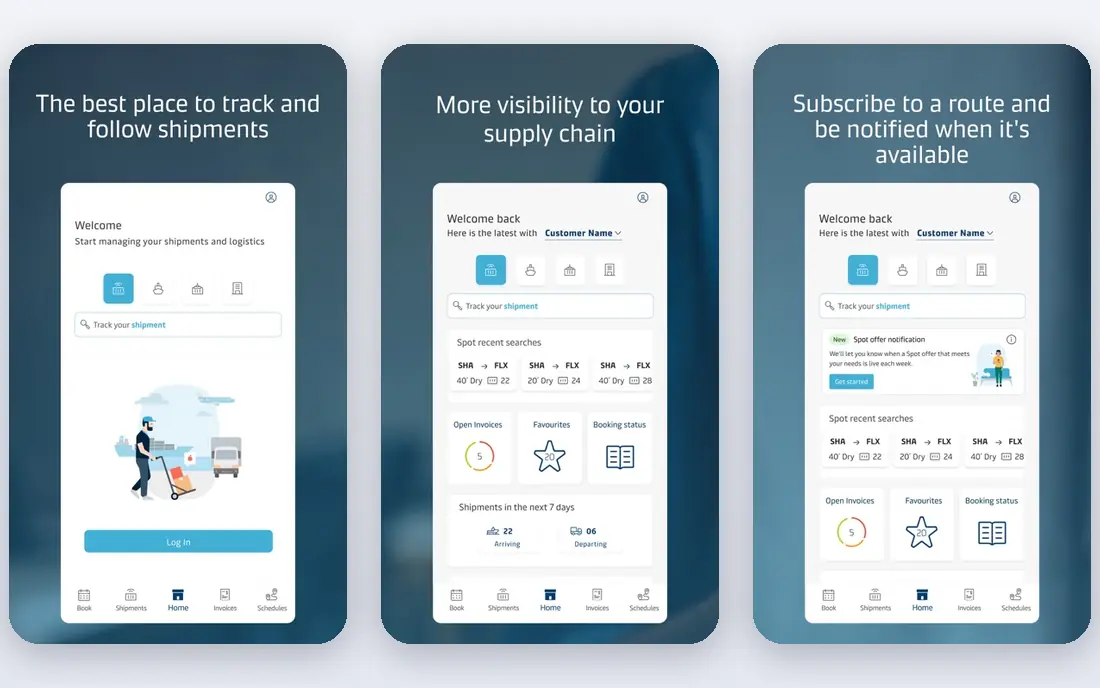
CMA CGM ranks third by fleet capacity and serves a wide set of ports across continents. For shippers moving goods between Asia and Europe or the Americas, that breadth gives you a good chance of finding a direct or well-connected service without a long transshipment wait. Its online tools help you follow a container once it is loaded, which matters when a customer is asking where a shipment sits.
The honest catch is consistency. Published reliability figures for CMA CGM in August 2026 sat around 50.6 percent, below Maersk and Hapag-Lloyd. That does not make it a poor choice, but it does mean you should ask about the specific service and vessel, not just the brand, and allow extra time on lanes where timing is tight.
- Very large global network with hundreds of offices
- Strong presence on Asia, Europe and Americas lanes
- Digital tracking tools
- Reliability in mid-2026 lagged the top two carriers in published data
- Service can vary by local office
COSCO SHIPPING is a strong choice when China or nearby Asian ports sit at one end of your route. Its scale in that region, plus membership in the Ocean Alliance, gives it broad sailing options and connections to partner carriers. Shippers who source from several Chinese ports often find COSCO schedules easier to align with factory readiness dates.
Outside Asia, the experience depends more on the local agent and the alliance partner handling the final leg. Check who handles delivery, documentation and customer service at the destination port before you book. If your freight forwarder already works well with COSCO on your lane, that relationship is a real plus.
- Deep network in China and emerging markets
- Large fleet and alliance coverage
- Strong Asia-Europe and transpacific presence
- Booking and support experience can vary outside Asia
- English-language tools may feel less polished than some rivals
Hapag-Lloyd pairs a mid-sized global fleet with service that, in recent published data, held up better than most rivals. At 61.5 percent schedule reliability in August 2026, it trailed only Maersk among the largest carriers. For a shipper who has been burned by late arrivals, that record is worth weighting alongside price.
Its Gemini Cooperation with Maersk also matters, because the two carriers coordinate services on key lanes. That can mean more reliable connections and more consistent schedules than either line could offer alone. The limit is coverage: on smaller or less common lanes, you may still need a larger carrier or an alliance partner to get the sailing you want.
- Second-highest reliability among large carriers in August 2026 data
- Clear online quoting and tracking
- Gemini Cooperation with Maersk
- Smaller fleet than the top three, so fewer sailings on some secondary lanes
- Rates can be firm on high-demand routes
Ocean Network Express, known as ONE, was formed from the container businesses of three Japanese carriers. That heritage shows in its strength on Asian routes, including services within Asia and across the Pacific to North America. If your cargo moves between Asian manufacturing hubs and US West Coast ports, ONE deserves a quote.
ONE also operates large vessels that can move a lot of cargo efficiently on busy lanes. The catch is that its network is not as broad as MSC, Maersk or CMA CGM, so a route that needs a less common port pair may involve a transshipment. Ask for the full transit time, including any connection, rather than comparing only the ocean leg.
- Strong intra-Asia and transpacific network
- Modern large vessels
- Premier Alliance coverage
- Less coverage than the top carriers on some Europe and Americas lanes
- Smaller fleet limits frequency on secondary routes
Evergreen is a long-standing carrier with a modern fleet and a strong position on major east-west lanes. Its ships are often newer and more fuel-efficient than older tonnage, which helps on long voyages and can support steadier service on high-volume routes. For shippers moving full containers between Asia and North America or Europe, Evergreen is a credible mainline option.
Like every carrier in 2026, Evergreen has faced congestion and schedule pressure, and its reliability has moved with conditions at key ports. That makes lane-level checking important. Get the sailing schedule, the expected arrival window and the forwarder's view on recent performance before you commit a time-sensitive load to any single carrier.
- Modern, fuel-efficient fleet
- Strong Asia-US and Asia-Europe services
- Ocean Alliance coverage
- Reliability can swing with port congestion
- Fewer direct services on some regional lanes
HMM, formerly Hyundai Merchant Marine, operates a smaller but modern fleet focused on major trade lanes. Its large vessels help keep per-container costs competitive on routes where it has scale, which can show up as a lower quote for a full container load. Shippers who are flexible on sailing day may find good value here.
The trade-off is frequency and coverage. With fewer vessels, HMM cannot offer daily sailings on as many lanes as the largest carriers, and a missed sailing can mean a longer wait for the next one. Use HMM when its schedule fits your readiness date, and keep a backup carrier in mind for urgent cargo.
- Large modern vessels can support competitive slot costs
- Premier Alliance services
- Strong Asia-US and Asia-Europe lanes
- Smaller fleet than the leaders, so less frequency on many lanes
- Schedule reliability has lagged the top carriers in some periods
ZIM is the smallest carrier on this list by fleet capacity, and that is part of its appeal. It focuses on selected lanes and cargo types, including express services and refrigerated shipments, rather than trying to serve every port pair. For a shipper with a clear lane fit, that focus can mean faster transit and more attention to a specific cargo need.
The limit is obvious: if ZIM does not serve your lane directly, it is not the right pick, no matter how good its service looks elsewhere. Check its current service map for your ports, confirm reefer availability early if you ship temperature-controlled goods, and compare its transit time door to door, not just port to port.
- Express services on selected lanes
- Noted strength in refrigerated cargo and e-commerce flows
- More agile than the largest lines
- Smaller network than global leaders
- Express focus means it does not serve every lane
- Rates can rise quickly when demand spikes
How we picked these
We compared fleet capacity data published in 2026, alliance membership, route coverage and published schedule reliability figures, alongside each carrier's own booking and tracking tools. We favoured carriers with a live global or major-lane service in October 2026, clear official websites and a track record on the lanes most US shippers use. We did not test shipments ourselves, and we did not rank carriers on price alone, because ocean freight quotes change with cargo, route, season and fuel.
What to check before you book a container
Start with the lane, not the brand. A carrier that leads globally may be weak on your exact port pair, while a smaller carrier may run a direct service that saves days. Ask for the sailing schedule, the transshipment ports, the free time at destination and the total quote, including fuel surcharges, terminal handling and documentation fees. A low ocean rate can look less attractive once those charges are added.
Cargo type and container choice
Match the container to the cargo. Standard dry containers suit most boxed goods, while refrigerated containers need power and monitoring, and oversized cargo may need open-top or flat-rack equipment. Confirm equipment availability at the loading port before you promise a delivery date, since a shortage of the right box can delay a shipment by a week or more.
Timing and reliability
Build buffer time into every plan, especially in 2026, when published global reliability fell below 50 percent in August. If a delivery date is fixed, pay attention to the carrier's recent reliability on your lane and consider a service with a better on-time record, even at a higher price. Also confirm cut-off times for documents and cargo delivery to the terminal, since missing a cut-off is a common and avoidable cause of delay.
Working with a forwarder
Most small and mid-sized shippers book through a freight forwarder, and that is often the right call. A good forwarder compares carriers, handles customs paperwork, arranges inland transport and tracks the shipment. Ask what is included in the forwarder's fee, who to contact when a sailing changes, and how delays are communicated, so you are not chasing updates across several companies.
Frequently asked questions
What is the best container shipping company?
There is no single best carrier for every shipment. MSC offers the largest network, Maersk scored highest on reliability among large carriers in August 2026 data, and smaller carriers such as ZIM can be faster on the lanes they specialise in. Compare carriers on your exact route, cargo type and dates, then weigh price against transit time and reliability.
What is the best shipping container company for small businesses?
Small businesses usually do best booking through a freight forwarder that can compare several carriers and handle paperwork. That approach gives you access to large carriers without needing the volume to negotiate directly. Ask the forwarder to show quotes from at least two carriers and to explain the full charges.
How much does container shipping cost?
Ocean freight is quoted per shipment and changes with route, container size, cargo weight, season and fuel prices. That is why most carriers show "See website" or ask you to request a quote rather than publishing a fixed price. Always ask for a written quote that lists every surcharge, so you can compare totals fairly.
How long does container shipping take?
Transit time depends on the route, the number of transshipments and port conditions. A transpacific sailing can take roughly two to five weeks port to port, while Asia-Europe routes are often longer. Add time for inland transport, customs clearance and possible delays, and confirm the door-to-door estimate with your forwarder.
How do I track a container shipment?
Most carriers on this list offer online tracking by container number, booking number or bill of lading number. Your forwarder can also track the shipment and should send updates when the vessel departs, arrives and clears the destination terminal. Keep the tracking number handy and check it at each stage, not only at departure.
Sources
- https://www.msc.com
- https://www.maersk.com
- https://www.cma-cgm.com
- https://www.cosco-shipping.com
- https://www.hapag-lloyd.com
- https://www.one-line.com
- https://www.evergreen-line.com
- https://www.hmm21.com
- https://www.zim.com
- https://www.supplychain247.com/article/top-30-ocean-carriers-2026
- https://container-news.com/sea-intelligence-global-schedule-reliability-continues-to-plummet-in-august/
See where you really rank - block by block
ProMapRanker scans Google Maps across a grid of your service area. Simple monthly plans from $19, white-label on every plan.
Start freeKeep reading
 zscaler alternatives
Best Zscaler Alternatives in 2026
Looking for zscaler alternatives? We compare 9 SASE and zero trust platforms on architecture, data protection, pricing, and fit for your network and team.
Read → zapier alternatives free
Best Zapier Alternatives Free in 2026
Nine automation tools for zapier alternatives free in 2026, all with genuinely free tiers, plus free plan limits, starting prices and upgrade paths explained.
Read → which platform is best for online reputation
Which Platform Is Best for Online Reputation in 2026
Wondering which platform is best for online reputation? We compare 8 review, listing, and response tools for small and multi-location businesses and agencies.
Read →