 ProMapRanker
Best Consumer Banking Companies Fees and Rates in 2026

Key takeaways
- Online banks usually charge no monthly checking fee and pay higher savings rates, while large branch banks charge fees that can often be waived.
- Savings rates change with the market, so check the current rate on the bank's own site on the day you apply.
- ATM access, cash deposits and branch needs matter as much as the headline rate, especially if you handle cash often.
- Overdraft policies differ widely, and a no-overdraft-fee policy can save more than a small rate difference.
- This guide is general information only, not financial advice, and rates and fees can change without notice.
Quick comparison
| Pick | Great for | Pricing starts at | Free tier | |
|---|---|---|---|---|
 Ally Bank | Online banking with no monthly fee | $0 per month | Yes | Visit |
 Capital One | No-fee checking and savings | $0 per month | Yes | Visit |
 SoFi | All-in-one online banking | $0 per month | Yes | Visit |
 Chase | Branch access nationwide | See website | No | Visit |
 Bank of America | Branch banking with rewards | See website | No | Visit |
 Wells Fargo | Branch banking and everyday accounts | See website | No | Visit |
 Marcus by Goldman Sachs | High-yield savings focus | See website | Yes | Visit |
 American Express | Savings and rewards checking | See website | Yes | Visit |
 Alliant Credit Union | Credit union savings and checking | See website | Yes | Visit |
The best consumer banking companies fees and rates
We compared national banks, online banks and a large credit union on monthly fees, savings rates, ATM access and branch options, using published fee schedules and rate pages where available.
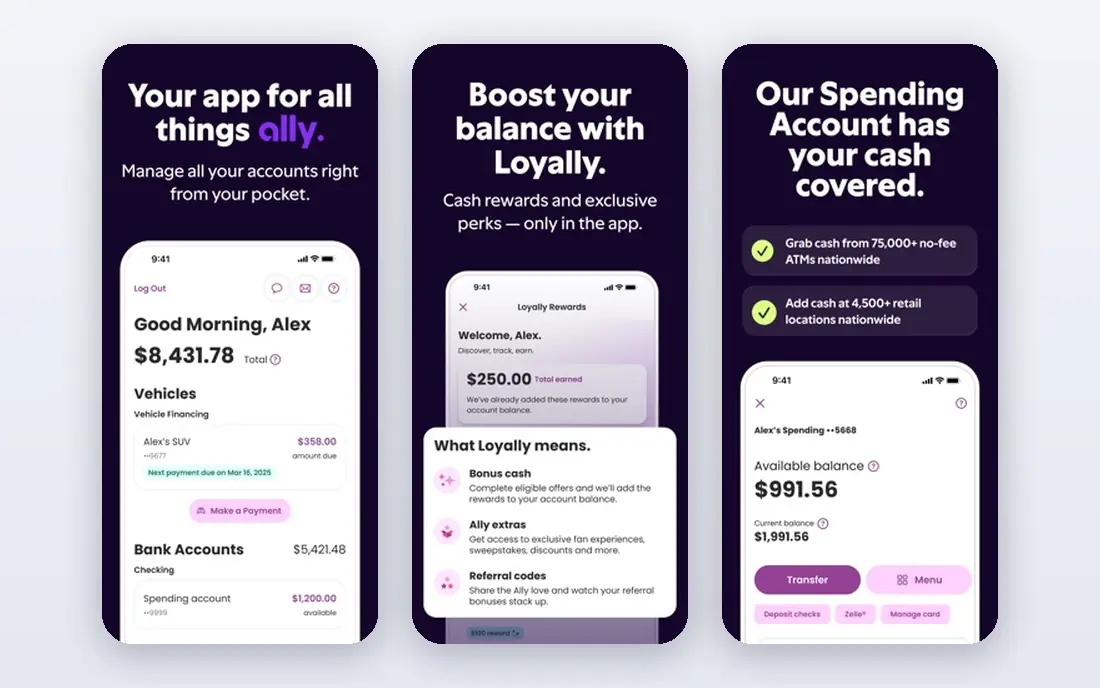
Ally Bank is a strong default for savers who are happy banking online. Its savings and spending accounts carry no monthly maintenance fee, and its savings rate has been competitive among large online banks in October 2026 reporting. ATM access comes through partner networks, with reimbursement up to a stated monthly cap for other ATM fees.
The main limit is the lack of branches. Cash deposits go through partner locations in the app, and complex in-person services need another route. If you rarely need a branch and want a simple, no-fee online setup, Ally is easy to recommend.
- No monthly maintenance fees on savings and spending accounts
- Competitive savings rates
- ATM fee reimbursement up to a monthly cap
- No physical branches
- Cash deposits need partner locations
- Savings rates are variable
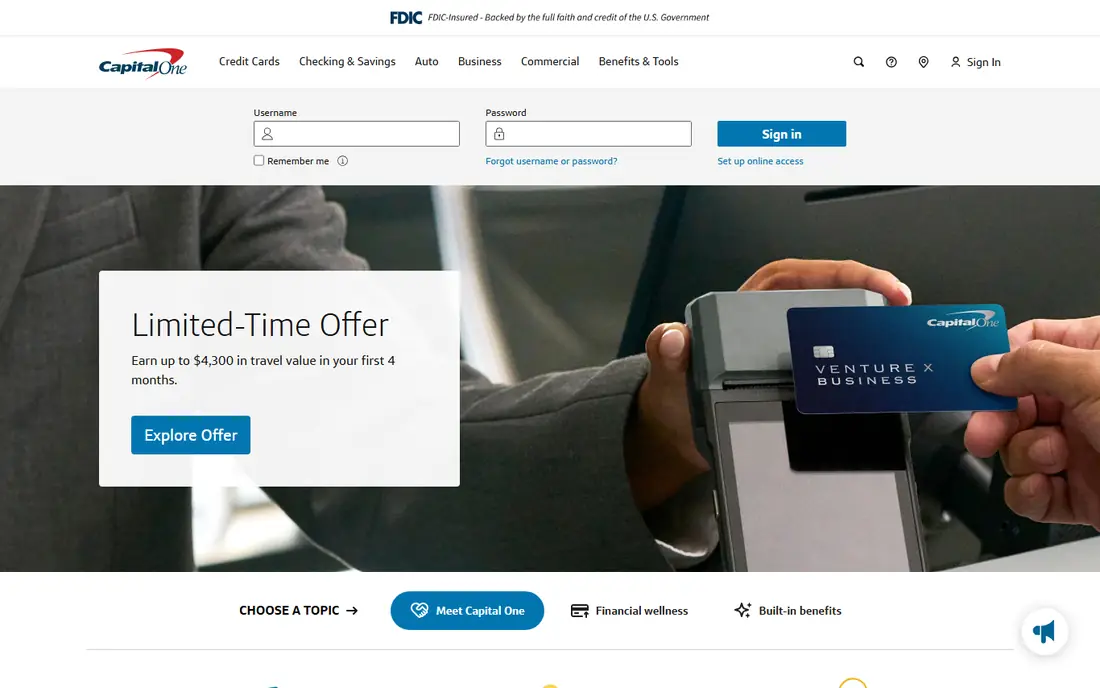
Capital One combines online banking with a real branch and cafe network in some states, which sets it apart from online-only banks. Its 360 Checking and 360 Performance Savings accounts carry no monthly fee, and its ATM network includes Capital One, Allpoint and MoneyPass locations. That mix suits savers who want no-fee banking plus occasional in-person help.
Rates are variable, so the savings rate on the day you apply is the one that matters. Branch access also depends on where you live, so check locations near you. For a no-fee account with broader ATM and branch options than a pure online bank, Capital One is a strong pick.
- No monthly fee on 360 Checking and 360 Performance Savings
- Large fee-free ATM network
- Branches and cafes in select areas
- Savings rates are variable
- Branch coverage is limited outside select states
- Some services need the app or phone

SoFi offers checking and savings in one online account with no monthly fees and a higher savings rate when you meet qualifying direct deposit terms. Its ATM network is large, and the app also links to investing, lending and budgeting tools. That all-in-one setup appeals to customers who want banking, saving and investing in one place.
The catch is the rate condition. Without qualifying deposits, the savings rate is lower, so read the current terms before assuming the top rate. Cash deposits through partner locations can also carry a fee. If you use direct deposit and bank mainly online, SoFi is a compelling option.
- No monthly fees
- Higher savings rate with qualifying direct deposit
- Large ATM network
- Integrated investing and lending options
- Top savings rate needs qualifying deposits
- No branches
- Cash deposits may carry a partner fee
Chase suits customers who value a branch nearby and a full range of banking products. Its branch and ATM network is among the largest in the United States, and its app covers mobile deposits, payments and card controls. For customers who deposit cash, need in-person help or want banking, credit cards and investing in one place, that scale helps.
Fees are the trade-off. Total Checking carries a monthly fee unless you meet a waiver condition, such as a minimum balance or qualifying direct deposit, and standard savings rates are low. Check the fee schedule for your account and track waiver conditions monthly. If branch access matters most, Chase is the most convenient national choice.
- Very large branch and ATM network
- Strong mobile app
- Wide range of accounts and credit products
- Monthly fees apply unless waived
- Standard savings rates are low
- Fee waiver rules need attention
Bank of America offers a large branch network, a strong app and rewards for customers who link banking with credit cards or investment accounts. Its Advantage Plus Checking is a common everyday account, with a monthly fee that can be waived by meeting balance or direct deposit conditions. For customers who already use Bank of America cards, the linked rewards can add value.
As with Chase, the fee waiver is the key detail. Miss the condition and the monthly fee applies, and standard savings rates are low compared with online banks. Many customers pair a branch account for daily banking with an online savings account for better rates. If you want branch banking plus rewards, Bank of America is a solid option.
- Large branch and ATM network
- Rewards programmes for linked accounts
- Strong app and budgeting tools
- Monthly fees unless waived
- Standard savings rates are low
- Fee rules vary by account tier
Wells Fargo provides everyday checking and savings with a large branch and ATM network across many states. Its app supports mobile deposits, payments and card management, and branches help customers who need in-person services or handle cash. That combination suits customers who want a traditional bank with digital tools.
Monthly fees apply to everyday checking unless a waiver condition is met, and standard savings rates are low. Read the current fee schedule for your account, since waiver rules differ by account type. If a nearby branch and a familiar national bank matter to you, Wells Fargo is a practical choice.
- Large branch and ATM network
- Everyday checking options
- In-person and app banking
- Monthly fees unless waived
- Standard savings rates are low
- Fee waiver conditions need checking
Marcus by Goldman Sachs focuses on savings and CDs rather than full everyday banking. Its high-yield savings rate has been competitive among large online savings providers in October 2026 reporting, and its savings accounts carry no monthly fee. That focus suits savers who want a separate, higher-rate home for emergency funds or goals.
The limit is clear. Marcus does not offer a checking account or debit card, so you will need another bank for daily spending and ATM access. Cash deposits and mobile check deposit options are also limited. If you want a simple, higher-rate savings account beside your main bank, Marcus is a good fit.
- Competitive high-yield savings rates
- No monthly fees on savings
- Simple online savings and CD options
- No checking account or ATM card
- No branches
- No mobile check deposit for some account types in published guides
American Express offers high-yield savings and a rewards checking account through its banking arm, with no monthly fees on those listed accounts. Its savings rate has been competitive in October 2026 reporting, and its ATM network uses MoneyPass locations. Customers who already use American Express cards may like keeping banking in the same app.
Branch access is limited, so in-person services are not the strength here. Rates are variable, and rewards checking terms should be read before opening. If you want online savings plus a rewards checking account without monthly fees, American Express is worth comparing.
- Competitive savings rates
- Rewards checking with interest
- Large fee-free ATM network
- No monthly fees on listed accounts
- Branch access is limited
- Savings rates are variable
- Rewards checking features depend on account terms
Alliant Credit Union is a large, mainly digital credit union offering high-rate savings and checking with a large fee-free ATM network. Its high-rate savings account has carried no monthly fee in published guides, with a qualifying average daily balance for the top rate. Credit union membership also gives access to a wider shared-branch and ATM system in some areas.
Eligibility and balance conditions are the details to check. You must meet membership rules, and some rates depend on balance or activity. If you qualify and want credit union service with online banking, Alliant is a strong alternative to a large bank.
- No monthly fee on high-rate savings with a qualifying balance
- Large fee-free ATM network
- Credit union member focus
- Membership eligibility rules apply
- No traditional branch network in most areas
- Some rates need a qualifying balance
How we picked these
We compared published fee schedules, savings rate pages and ATM and branch information for national banks, online banks and a large credit union in October 2026. We favoured institutions with clear fee information, wide availability and a mix of branch and online options. We used See website where fees or rates depend on account tier, balance or location, and we did not claim hands-on testing. Rates are variable, so always confirm the current rate before applying.
How to compare fees and rates without getting caught out
A headline savings rate tells only part of the story. Fees, conditions and access often decide whether an account is cheap or costly in practice.
Monthly fees and waivers
List every fee that could apply, including monthly maintenance, ATM, overdraft and wire fees. For branch banks, write down the exact waiver condition and check whether your balance or direct deposit meets it every month. A fee that is waivable in theory can still be paid in practice if your income or balance varies.
Rates, ATM access and cash handling
Compare savings rates on the same date, and note whether a top rate needs direct deposit, a minimum balance or a linked account. Check ATM locations near home and work, and confirm how cash deposits work if you handle cash. If you travel, check out-of-network ATM fees and foreign transaction fees as well.
Account structure that works for most people
Many savers use two accounts: a no-fee checking account for daily spending and a separate high-yield savings account for goals and emergencies. Keep a small buffer in checking to avoid overdrafts, and set up automatic transfers to savings on payday. Review rates and fees once or twice a year, since banks change terms and a better account may appear.
Frequently asked questions
Which bank has the lowest fees for everyday checking?
Online banks such as Ally, Capital One and SoFi usually charge no monthly checking fee, which makes them cheapest on fees alone. Branch banks can also cost nothing if you meet waiver conditions every month. Add up ATM, overdraft and other fees for a full year to compare fairly.
Are online banks safe for savings?
Online banks that are FDIC-insured offer the same deposit insurance protection as branch banks, up to the legal limit per depositor and ownership category. Check that the bank is FDIC-insured on its own site and in official listings. Credit unions use NCUA insurance, which works in a similar way.
Why do savings rates differ so much between banks?
Savings rates follow market rates, bank funding needs and business models. Online banks often pay more because they spend less on branches, while large branch banks often pay low standard savings rates. Rates are variable, so a bank that leads today may not lead next month.
Can I have accounts at more than one bank?
Yes, many people keep a branch account for daily banking and an online savings account for better rates. Transfers between banks usually take one to three business days, so keep enough in checking for bills. Make sure you know which account your direct deposit and automatic payments use.
What should I check before switching banks?
Check fee schedules, savings rates, ATM access, cash deposit options and overdraft policies on each bank's own site. Move direct deposit and automatic payments one by one, and keep the old account open until all payments have cleared. Get written confirmation when you close an old account.
Do credit unions offer better rates than banks?
Credit unions sometimes offer competitive savings rates and lower fees, but it depends on the institution and account. Alliant is an example of a large digital credit union with competitive rates. Compare the same account type, balance conditions and fees before deciding.
Sources
See where you really rank - block by block
ProMapRanker scans Google Maps across a grid of your service area. Simple monthly plans from $19, white-label on every plan.
Start freeKeep reading
 zoro.to alternatives
Best Zoro.to Alternatives in 2026
We compare the best zoro.to alternatives in 2026, listing only legal licensed anime streaming services, from Crunchyroll to free options for fans today.
Read → zip alternatives
Best Zip Alternatives in 2026
We compare the best zip alternatives for buy now, pay later in 2026, covering pay-in-4 plans, fees, spending limits, and credit reporting options today.
Read → yesware alternatives
Best Yesware Alternatives in 2026
Compare the best yesware alternatives for sales email tracking, templates, and sequences, with current pricing and honest tradeoffs for small sales teams.
Read →