 ProMapRanker
Best Consulting Companies in 2026


Broad strategy and transformation · Pricing starts at: See website
Key takeaways
- This guide is based on publicly reported focus areas and service lines, not a verified ranking or score.
- Strategy firms, Big Four firms and technology firms solve different problems, so fit matters more than brand alone.
- Large firms bring scale and global coverage, while specialist firms often bring deeper focus in one industry or function.
- Fees are usually quoted per engagement, so ask for scope, team seniority and deliverables before comparing firms.
- Our shortlist pick for most strategy questions is McKinsey, with Accenture as the stronger choice for technology delivery.
Quick comparison
| Pick | Great for | Pricing starts at | Free tier | |
|---|---|---|---|---|
| McKinsey and Company | Broad strategy and transformation | See website | No | Visit |
 Boston Consulting Group | Growth and innovation strategy | See website | No | Visit |
 Bain and Company | Performance improvement and private equity | See website | No | Visit |
 Deloitte | Large-scale technology and operations | See website | No | Visit |
 Accenture | Technology delivery at scale | See website | No | Visit |
 PwC | Deals, risk and business services | See website | No | Visit |
 EY | Transactions and business consulting | See website | No | Visit |
 KPMG | Risk, deals and operational advice | See website | No | Visit |
 Oliver Wyman | Financial services strategy | See website | No | Visit |
 L.E.K. Consulting | Strategy for investors and operators | See website | No | Visit |
The best consulting companies
Choosing a consulting firm starts with the problem, not the logo. A board-level growth question, a technology rollout, a cost programme and a deal review each need different skills, and firms differ in where they are strongest. The firms below cover the main types buyers meet, from global strategy houses to large professional services firms and focused specialists.
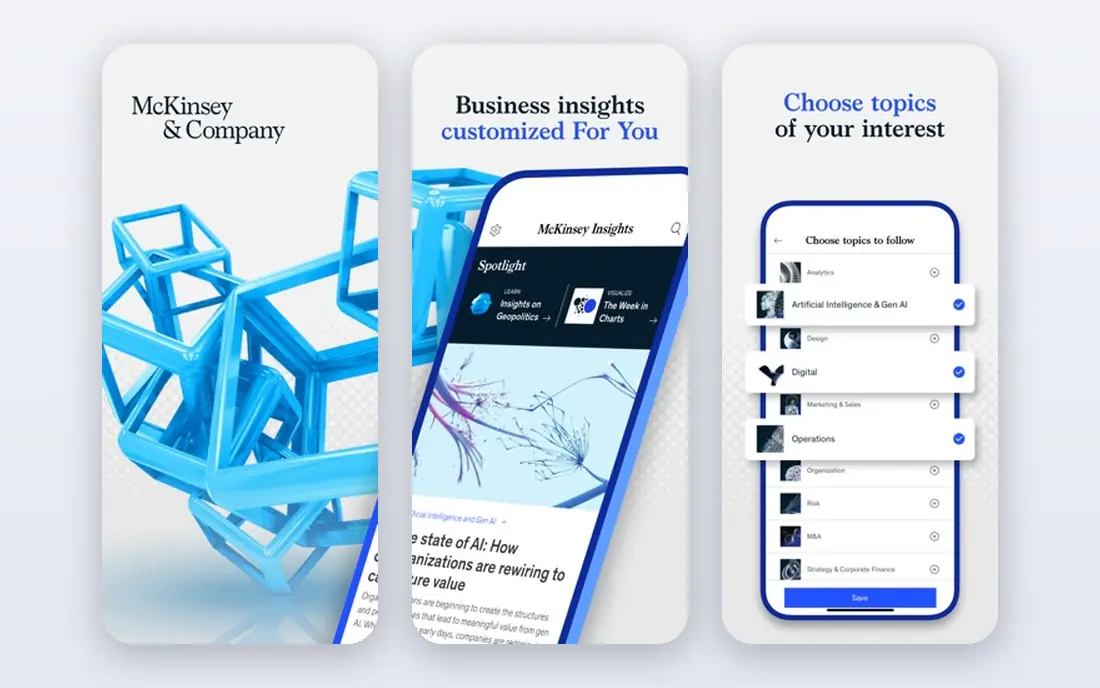
McKinsey is the firm many executives call first for a broad strategy question, from market entry to a full transformation programme. Its work spans industries and functions, and its published research gives clients a shared language for growth, operations, organisation and technology choices. For a company facing a decision that touches several parts of the business, that breadth is useful.
The trade-off is cost and fit. Fees are typically high, and the working style suits large organisations with senior sponsors and clear decision rights. A small company with a narrow, hands-on problem may get better value from a specialist. For a complex, board-level question, McKinsey remains a natural shortlist entry.
- Broad industry and function coverage
- Strong research base
- Global delivery network
- Premium fees for many engagements
- Large teams can feel formal for small firms

Boston Consulting Group, often called BCG, is known for growth strategy, market analysis and innovation work. Clients use it to test new markets, reshape a portfolio, rethink pricing or build a plan for digital products. Its technology and design arm, BCG X, also helps turn strategy into products and platforms, which matters when a plan must become working software.
Like other top strategy firms, BCG charges at the premium end, and its value drops if the client wants only staff to run a routine project. The firm works best when leaders need a clear, evidence-based choice and a plan they can defend. For growth and portfolio questions, it is a strong contender.
- Strong growth and innovation focus
- Practical strategy frameworks
- Growing technology arm
- Premium fees
- Less suited to routine implementation alone

Bain is closely linked with private equity work, including commercial diligence, portfolio improvement and exit planning. Investors and their portfolio companies use Bain to test a deal, find cost savings and lift performance after a purchase. That results focus also appeals to operators who want a plan tied to profit, cash and growth targets.
Bain is not a general technology delivery firm at the scale of Accenture or Deloitte, so a client needing a large system rollout will usually pair it with another provider. For diligence, performance improvement and growth in a portfolio company, Bain is a frequent first call.
- Strong private equity and diligence work
- Focus on measurable results
- Loyal client base
- Premium fees
- Narrower delivery scale than Big Four firms
Deloitte covers strategy, technology, operations, risk and tax-related advisory work at a scale few firms match. A client can move from a strategy review to a system implementation and an operating model change without changing provider. That breadth helps large companies with linked problems, such as a finance transformation that also needs new systems and controls.
Size brings a risk to manage. Experience can vary by office and team, so buyers should interview the actual engagement team, not just the firm brand. Ask for comparable past work, the seniority mix and how decisions will be made. Done well, Deloitte can handle work that would overwhelm a smaller firm.
- Very broad service range
- Strong technology implementation
- Global scale
- Size can mean varied team experience
- Scoping needs care
Accenture is the technology delivery choice on this list for many large companies. It builds and runs cloud platforms, data systems, customer platforms and AI tools, and it can staff a programme across many countries. Clients that need strategy plus a working system often find that combined offer attractive, since the same firm can design and deliver.
Large programmes need strong governance on the client side, with clear milestones, owners and exit terms. Scope can also grow quickly if requirements are loose. For a company that needs a system built, integrated and run, Accenture is a practical shortlist leader.
- Large technology and AI delivery capability
- Broad industry coverage
- Managed services option
- Large engagements need strong client governance
- Fees vary widely by scope
PwC, through its advisory and consulting arms, helps with deals, finance transformation, risk, tax-related advisory and operational improvement. Its finance background is a strength for companies changing reporting, controls or planning systems. Clients in regulated industries also value its risk and compliance experience.
PwC operates as a network of member firms, so service depth can differ by country. Buyers should confirm the local team, its sector experience and how cross-border work will be staffed. For a finance-led or deal-led question, PwC is a solid option.
- Broad advisory, deals and risk services
- Strong finance expertise
- Global network
- Firm structure varies by country
- Large teams need clear scope
EY combines transaction advisory, tax-related advisory and a growing consulting practice. Its EY-Parthenon arm focuses on strategy and transactions, which suits companies planning a deal, a carve-out or a growth plan tied to capital allocation. Sector teams in areas such as health, energy and financial services add depth for industry-specific questions.
As with other Big Four firms, local strength matters more than the global brand alone. Buyers should check the exact team and its recent comparable work. For a deal or a strategy question linked to a transaction, EY deserves a place on the shortlist.
- Strong transaction advisory
- Growing consulting practice
- Sector teams
- Service mix varies by market
- Large firm processes can feel slow
KPMG is often chosen for risk, regulatory, deals and operational work, including restructuring and performance improvement. Companies in banking, insurance and other regulated sectors use its teams to test controls, manage risk and reshape operations under tight rules. Its advisory practice also supports mergers, integrations and carve-outs.
Pure strategy buyers may find McKinsey, BCG or Bain a closer fit for a board-level growth question alone. KPMG works best when risk, regulation or a deal sits at the centre of the problem. Confirm the local advisory team before signing, since depth varies by market.
- Strong risk and regulatory knowledge
- Deals and restructuring support
- Operational advice
- Consulting depth varies by country
- Less known for pure strategy alone
Oliver Wyman is the specialist pick for banks, insurers, asset managers and payments firms. Its teams focus on strategy, risk, pricing and operating models in financial services, and its research in that sector is widely read. A financial firm that wants advisers who already know its market structure, regulation and competitors will find that focus valuable.
The same focus limits its appeal for a company outside financial services or transport and energy, where it also has teams. Fees in its core sectors sit at the premium end. For a financial services strategy or risk question, Oliver Wyman is often the most relevant specialist.
- Deep financial services focus
- Strong risk and actuarial work
- Clear industry research
- Narrower industry range than larger firms
- Premium fees in its core sectors
L.E.K. Consulting is known for strategy work that leans on market data, customer research and commercial diligence. Private equity firms use it to test markets and targets, while operators use it for growth, pricing and portfolio choices. Its reports tend to be direct and evidence-led, which helps leaders make a decision and explain it to a board or lender.
L.E.K. is smaller than the Big Four and the largest strategy firms, so it is not the choice for a vast technology rollout. For a focused strategy, market or diligence question, that smaller scale can be a benefit, with senior people closer to the work. It is a strong specialist shortlist entry.
- Strong diligence and market analysis
- Clear, data-led reports
- Focused sector teams
- Smaller global delivery scale
- Less suited to large system builds
How we picked these
We reviewed public service descriptions, industry focus pages and widely reported firm types for firms active in October 2026. We included strategy firms, Big Four advisory firms, a technology delivery leader and focused specialists, so buyers can compare types, not just names. We did not use invented scores, pay figures or verified rankings, and we treated this guide as a starting shortlist, not a final ranking.
What to check before you hire a firm
Start with a one-page problem statement that names the decision, the deadline and the success measure. Share it with two or three firms and ask for a proposal that lists scope, team members, seniority mix, timeline and fees. Interview the people who will do the work, and ask for two comparable engagements, including one that did not go smoothly and what changed as a result.
Check conflicts, independence and data handling, especially for deals or regulated work. Agree who owns the analysis, the models and the final recommendations, and how knowledge will transfer to your team. A firm that leaves clear tools, owners and next steps is worth more than a polished deck with no follow-through. Set a mid-point review, so scope or direction can be corrected early.
Frequently asked questions
How much do consulting firms charge?
Most firms quote per engagement, based on scope, team seniority and duration, so there is no single price to compare. Ask for a fixed scope, a daily or weekly rate breakdown, expenses and any extra charges. Compare proposals on the team and deliverables, not only the headline fee.
Should a small company hire a large consulting firm?
A large firm can help with a major decision, but a specialist or boutique firm often fits a narrow problem better and costs less. Match the firm to the problem size, and ask whether senior people will stay on the work. A small, focused team with the right experience often beats a large team learning your market.
What is the difference between strategy and implementation consulting?
Strategy firms focus on choices, such as markets, pricing, portfolio and operating models, and they leave a plan and a case for change. Implementation firms build systems, change processes and run programmes to deliver that plan. Many large firms now do both, but their strength usually sits on one side.
How do I choose between McKinsey, BCG and Bain?
All three handle top-level strategy, but their emphasis differs in public reporting, with Bain often linked to private equity and performance work, BCG to growth and innovation, and McKinsey to broad transformation. Interview the actual teams, ask for comparable work in your industry, and pick the team whose approach and people fit your decision style.
Do consulting firms guarantee results?
No firm can guarantee a business result, since market, execution and management choices affect outcomes. A good proposal should still name clear deliverables, milestones and measures, plus a plan for handover. Treat a promise of a fixed profit gain with caution, and ask how results will be tracked.
Sources
See where you really rank - block by block
ProMapRanker scans Google Maps across a grid of your service area. Simple monthly plans from $19, white-label on every plan.
Start freeKeep reading
 zoro.to alternatives
Best Zoro.to Alternatives in 2026
We compare the best zoro.to alternatives in 2026, listing only legal licensed anime streaming services, from Crunchyroll to free options for fans today.
Read → zip alternatives
Best Zip Alternatives in 2026
We compare the best zip alternatives for buy now, pay later in 2026, covering pay-in-4 plans, fees, spending limits, and credit reporting options today.
Read → yesware alternatives
Best Yesware Alternatives in 2026
Compare the best yesware alternatives for sales email tracking, templates, and sequences, with current pricing and honest tradeoffs for small sales teams.
Read →