 ProMapRanker
Best Compliance Software in 2026

Key takeaways
- Vanta and Drata lead for cloud companies chasing SOC 2 or ISO 27001, with broad integrations and continuous control monitoring.
- Secureframe and Sprinto suit smaller teams that want guided onboarding, while AuditBoard suits enterprise GRC programs.
- Most pricing is quote-based and varies by headcount and frameworks, so expect a sales quote rather than a fixed price.
- Audit fees are usually separate from software fees, and extra frameworks often cost extra, so budget for both.
Quick comparison
| Pick | Great for | Pricing starts at | Free tier | |
|---|---|---|---|---|
 Vanta | Broad compliance automation | See website | Free trial | Visit |
 Drata | Continuous monitoring | See website | Free trial | Visit |
 Secureframe | Guided SMB compliance | $7,500 per year | Free trial | Visit |
 Sprinto | Multi-framework growth | See website | Free trial | Visit |
 Thoropass | Compliance plus audit support | $8,700 per year | No | Visit |
 AuditBoard | Enterprise GRC and audit | See website | No | Visit |
 OneTrust | Privacy and consent operations | See website | No | Visit |
 Microsoft Purview | Microsoft 365 compliance | $12 per user per month | Free trial | Visit |
 Hyperproof | Flexible multi-framework GRC | See website | No | Visit |
The best compliance software
Compliance software helps a company prove it follows a standard such as SOC 2, ISO 27001, HIPAA or PCI DSS, by collecting evidence, testing controls, tracking issues and preparing audit reports. The best compliance tools in this guide cover automation platforms for tech companies and broader governance, risk and compliance suites for enterprises. A plain note up front: this is general information only, not legal or tax advice, and a software platform does not by itself make a company compliant.
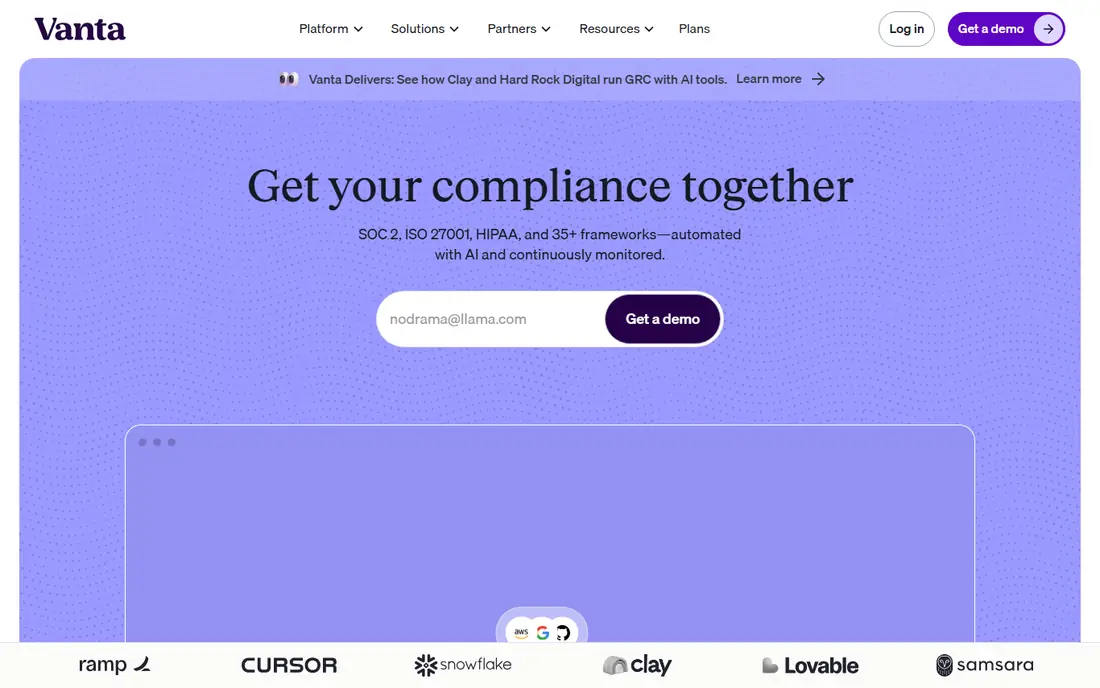
Vanta is the most widely named compliance automation platform for cloud companies, and for good reason. It connects to cloud services, identity tools and HR systems, collects evidence automatically, and tests controls on a continuous basis. A trust center lets a company share security documents with customers without sending the same packet by email each time.
Pricing is the main friction. Vanta does not publish a single price for all teams, and published marketplace figures have varied by company size and package. Audit fees from a licensed CPA firm sit on top of the software cost. Vanta fits best when a company needs SOC 2 or ISO 27001 to close enterprise deals and wants the broadest integration coverage.
- Very broad integrations
- Continuous control testing
- Trust center options
- Pricing is quote-based
- Audit fees are separate
- Costs rise with frameworks and headcount
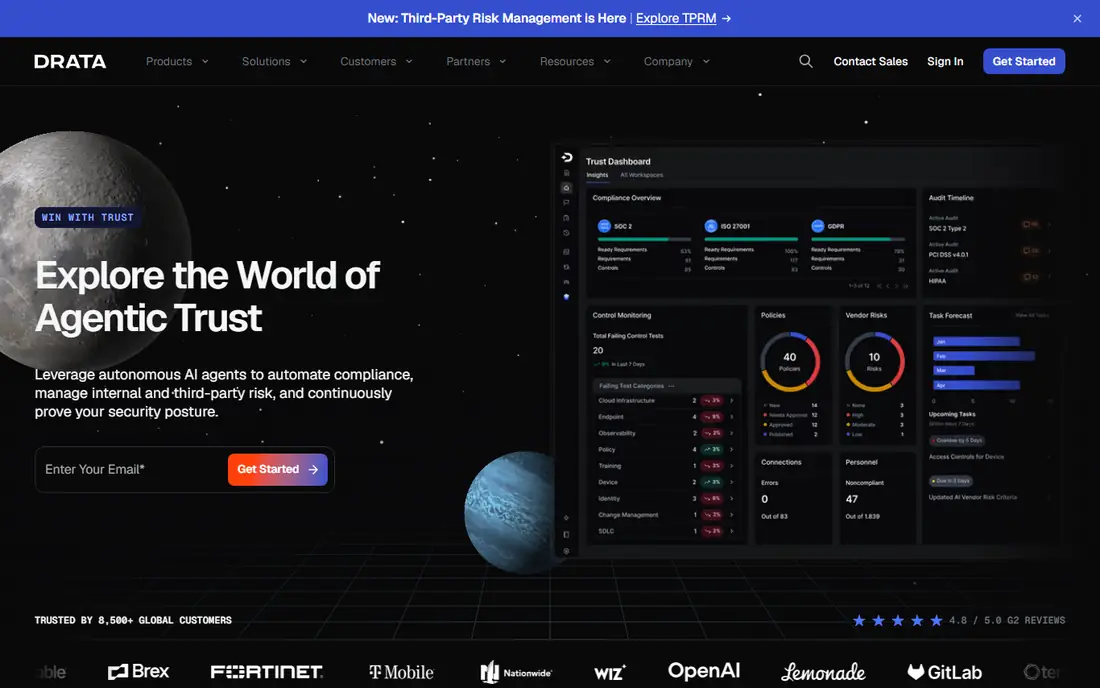
Drata suits mid-market teams that want audit readiness as an ongoing state, not a once-a-year scramble. Continuous monitoring flags control failures early, evidence collection runs in the background, and multi-framework support lets a team run SOC 2, ISO 27001 and HIPAA controls from shared evidence. That overlap saves work when a second framework is added.
Like Vanta, Drata prices by quote, with figures varying by headcount and framework count. Published estimates have placed Drata in a similar range to Vanta, often from $7,500 to $15,000 per year or higher for larger teams. Drata is a strong pick for teams with an existing security owner who can act on monitoring alerts.
- Continuous control monitoring
- Multi-framework support
- Clear audit-ready evidence
- Quote-based pricing
- Can be more than a small team needs
- Framework fees may apply
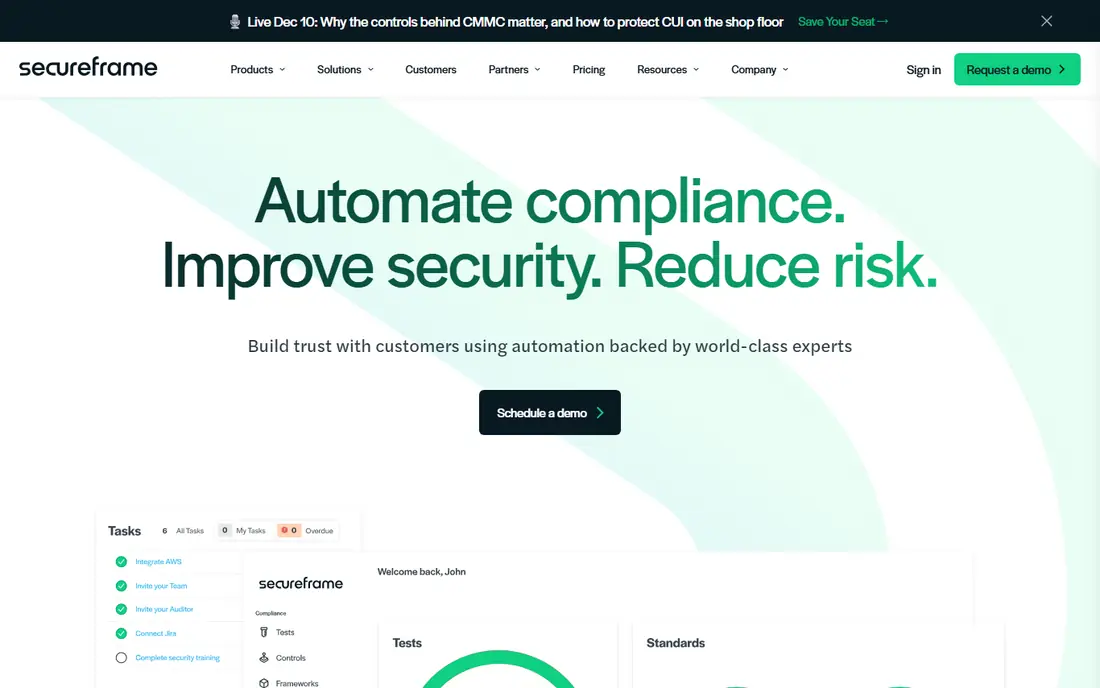
Secureframe appeals to smaller companies that want a guided path to their first SOC 2 or ISO 27001 audit. Prebuilt policies, vendor risk tracking and employee training sit in the same platform, which helps a team without a dedicated compliance hire. Pricing has been published from $7,500 per year for a fundamentals tier covering one framework.
That entry figure is a starting point, not a total. Extra frameworks, larger headcount and audit fees add cost, and some advisory help sits on higher tiers. Secureframe is best for a small to mid-size team that wants structure and onboarding help, rather than an enterprise team that needs full GRC governance.
- Guided onboarding
- Prebuilt policy libraries
- Vendor and training modules
- Some guidance costs extra on higher tiers
- Enterprise depth is thinner than AuditBoard
Sprinto suits growing companies that plan to run several frameworks in parallel. Support for 250 or more frameworks, modular workflows and guided onboarding help a team move from a first SOC 2 audit to ISO 27001, HIPAA or PCI DSS without switching platforms. Vendor risk, trust center and policy tools sit alongside control monitoring.
Pricing is quote-based, with published marketplace figures varying by company size and framework count. A team should ask for a quote that lists each framework separately, since adding a framework can change the total more than expected. Sprinto is a strong pick for companies that know a second or third framework is coming soon.
- Many frameworks supported
- Guided onboarding
- Modular workflows
- Quote-based pricing
- First framework fees may apply on some tiers
Thoropass pairs software with people. Its platform tracks controls and evidence, while its team helps with policy drafting and audit liaison work. That combination suits companies that want expert help through the audit, not just a dashboard. Published figures have placed Thoropass from $8,700 per year for a platform plus first framework package, with SOC 2 audit pricing listed alongside it in some marketplaces.
The catch is reading the quote carefully. Platform, framework and audit components can appear as separate lines, and the total depends on headcount and scope. Thoropass fits teams that value hands-on support and want one vendor to guide both the platform and the audit process.
- Platform plus audit liaison help
- Compliance expert support
- Hands-on policy help
- Audit and platform costs must be read together
- Less self-serve than some rivals
AuditBoard is the enterprise GRC standard in this list. It covers audit management, risk management, compliance and controls across a whole company, with reporting that suits boards and audit committees. Large firms with dedicated risk teams use AuditBoard to run a company-wide control inventory, not just a single SOC 2 program.
That depth comes with enterprise pricing and a longer setup. AuditBoard is not the right first tool for a 20-person startup chasing its first SOC 2 report, since simpler automation platforms will get there faster and cheaper. It earns its place for firms whose trigger is enterprise governance, SOX work or a broad audit program.
- Enterprise GRC depth
- Audit and risk workflows
- Board-level reporting
- Custom enterprise pricing
- Heavier setup than automation-only tools
OneTrust suits companies whose main compliance job is privacy, not SOC 2. Consent management, data subject request handling, privacy assessments and AI system inventory sit in one platform, which helps teams facing GDPR, state privacy laws and AI transparency duties. Workflow automation reduces manual tracking across many privacy tasks.
Pricing is custom and usage-based in many cases, and enterprise rollouts can take months. OneTrust is best when privacy operations are the core need, with SOC 2 or ISO work handled by a separate automation tool if needed. Teams should scope which privacy modules they need, since buying the full suite for one task wastes budget.
- Privacy workflow automation
- Consent management
- AI system inventory features
- Custom pricing
- Implementation can take weeks to months for enterprises
Microsoft Purview fits companies already on Microsoft 365 and Azure. It discovers sensitive data, applies data loss prevention, manages retention and supports eDiscovery, all inside the Microsoft cloud. That native fit avoids a separate data pipeline for many Microsoft shops, and entry pricing has been reported from $12 per user per month, with fuller features through Microsoft 365 E5.
The limit is ecosystem fit. Companies on Google Workspace or mixed clouds will get less value, and Purview setup still needs care around policies and permissions. Purview is a compliance tool for data protection and governance, not a direct replacement for a SOC 2 automation platform, so some teams use both.
- Native to Microsoft 365 and Azure
- Data discovery and loss prevention
- EDiscovery options
- Full value needs Microsoft 365 E5 in some cases
- Setup needs Microsoft expertise
Hyperproof suits teams that need flexible GRC work across several frameworks without a rigid, single-framework workflow. Control mapping lets shared evidence serve multiple standards, audit collaboration keeps auditors and teams in one workspace, and risk tracking links controls to business risk. That flexibility helps mid-size firms with mixed compliance duties.
Pricing is not published, so buyers must request a proposal. Hyperproof is best for teams that have outgrown spreadsheets but do not want a heavy enterprise GRC rollout. Ask for a demo on your exact framework mix, since flexibility matters most when controls overlap across standards.
- Flexible framework and control mapping
- Audit collaboration
- Risk tracking
- No public pricing
- Smaller footprint than Vanta or AuditBoard in some markets
How we picked these
We compared current 2026 compliance automation and GRC guides, vendor pricing pages and marketplace listings, and kept only platforms that are actively sold and serve real compliance work. We separated automation platforms from enterprise GRC suites and privacy platforms, and we used See website where pricing was quote-based or not published. We did not run hands-on trials, and we note that audit fees, framework fees and headcount all change the real cost.
How to choose compliance software
Start with the framework and the deadline. A SOC 2 Type II audit for a sales deal, an ISO 27001 certification for a tender, and a HIPAA program for a health product each need different controls, evidence and timelines. Name the framework, the audit date and the team owner, then shortlist tools that support that framework well.
Automation, guidance and audit
Decide how much help you need. Automation-only tools suit teams with a security owner, guided tools suit teams without one, and Thoropass-style bundles suit teams that want audit liaison help. Confirm whether the vendor provides an auditor, introduces one, or only prepares evidence for an auditor you hire separately.
Cost, frameworks and headcount
Ask for a quote that lists software, each framework, headcount tier and audit fees separately. Check second-year pricing, since renewal rates can rise as headcount grows. Also check how shared controls work across frameworks, since good mapping can cut the cost of a second standard.
Frequently asked questions
What is the best compliance software for SOC 2?
Vanta and Drata are the strongest SOC 2 automation picks for cloud companies, with Secureframe and Sprinto as strong alternatives for smaller or guided teams. The best choice depends on headcount, integrations and how much onboarding help a team needs. Get quotes from two vendors on the same headcount and framework list.
What is the best tool for software compliance for a startup?
Secureframe and Sprinto suit startups chasing a first SOC 2 or ISO 27001 audit, thanks to guided onboarding and lower entry costs than enterprise GRC suites. A very small team may also consider lower-cost automation tools, but should check whether the tool supports the exact framework a customer requires.
How much does compliance software cost?
Entry figures in this guide range from $12 per user per month for Microsoft Purview to $7,500 per year for Secureframe and $8,700 per year for Thoropass, with Vanta, Drata and AuditBoard priced by quote. Audit fees, extra frameworks and headcount tiers add to those figures. Always get a written quote for your exact scope.
What is the difference between compliance software and GRC software?
Compliance software focuses on proving adherence to a specific standard, such as SOC 2 or ISO 27001, through evidence and control testing. GRC software is broader, covering governance, risk and audit across a whole company. Many firms use a compliance automation tool for SOC 2 plus a GRC suite for enterprise risk, or one flexible platform for both.
Does compliance software replace an auditor?
No. Software collects evidence and tracks controls, but a licensed auditor or certification body still issues the SOC 2 report or ISO certificate. Some vendors, such as Thoropass, bundle audit liaison help, while others only prepare evidence. Confirm the audit arrangement before signing a software contract.
Sources
- https://underdefense.com/blog/compliance-automation-software/
- https://lowerplane.com/blog/best-soc-2-software-for-ai-startups/
- https://cataam.com/blog/soc-2-cost/
- https://kurums.com/best-grc-compliance-software-2026-comparison/?v=653f5ac96a69
- https://www.vanta.com
- https://drata.com
- https://secureframe.com
- https://www.sprinto.com
- https://www.thoropass.com
- https://www.auditboard.com
- https://www.onetrust.com
- https://www.microsoft.com/security/business/microsoft-purview
- https://hyperproof.io
See where you really rank - block by block
ProMapRanker scans Google Maps across a grid of your service area. Simple monthly plans from $19, white-label on every plan.
Start freeKeep reading
 outreach alternatives
Outreach Alternatives in 2026
Compare outreach alternatives for 2026, from Salesloft and Apollo to HubSpot and Lemlist, with pricing, channels, features, limits, and honest trade-offs.
Read → best web conference tools
Best Web Conference Tools in 2026
Compare the best web conference tools for meetings, webinars and team calls, with current pricing, free plans and honest limits for each option here today.
Read → best voice cloning tools
Best Voice Cloning Tools in 2026
Compare the best voice cloning tools in 2026, from ElevenLabs and Descript to Resemble and Cartesia, with consent rules, pricing, licenses, and limits.
Read →