 ProMapRanker
Best Compliance Audit Software in 2026

Key takeaways
- This is general information only, not legal or compliance advice, and software does not replace an independent audit by a licensed auditor.
- Vanta and Drata are the fastest paths to a first SOC 2 for SaaS teams, while AuditBoard suits enterprise internal audit and SOX programs.
- Secureframe and Sprinto suit smaller teams that want guided help, while Hyperproof and Workiva suit multi-framework and public-company programs.
- Most platforms here price by quote, so budget separately for the platform and the auditor, since the audit itself is a separate cost.
- Evidence reuse across frameworks is the biggest time saver: one control mapped to SOC 2, ISO 27001 and HIPAA beats three separate checklists.
Quick comparison
| Pick | Great for | Pricing starts at | Free tier | |
|---|---|---|---|---|
 Vanta | First SOC 2 for startups | See website | No | Visit |
 Drata | Continuous monitoring across frameworks | See website | No | Visit |
 AuditBoard | Enterprise internal audit and SOX | See website | No | Visit |
 Secureframe | Guided compliance for SMB SaaS | See website | No | Visit |
 Hyperproof | Multi-framework control management | See website | No | Visit |
 Sprinto | International teams on a budget | See website | No | Visit |
 Thoropass | Platform plus audit guidance | See website | No | Visit |
 Workiva | Public companies and SOX reporting | See website | No | Visit |
 LogicGate Risk Cloud | Custom GRC workflows | See website | No | Visit |
The best compliance audit software
These platforms help teams collect evidence, monitor controls, manage audit requests and stay ready between audits, but they fit different company sizes and frameworks.
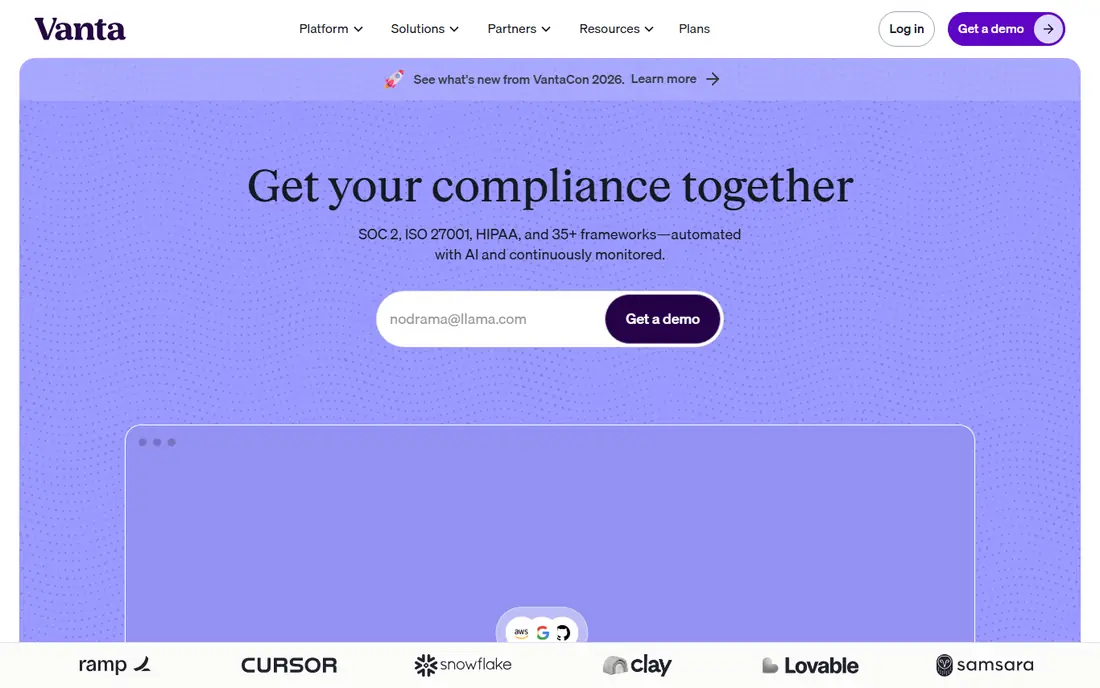
Vanta is the most common first choice for a SaaS startup that needs SOC 2 quickly. It connects to cloud, identity, HR and code tools, pulls evidence automatically, and flags controls that need attention. Auditors are familiar with its evidence format, which can make the audit process smoother than a spreadsheet-based approach.
The limit is cost growth. As frameworks, users and features grow, so does the quote, and renewal increases are a common complaint across this market. We would pick Vanta for a first SOC 2 or ISO 27001 program, and get the full quote, including frameworks and support, in writing before signing.
- Broad integration library for automated evidence
- Strong auditor familiarity
- Covers SOC 2, ISO 27001, HIPAA and other frameworks
- Quote-only pricing
- Renewal and add-on costs need careful review
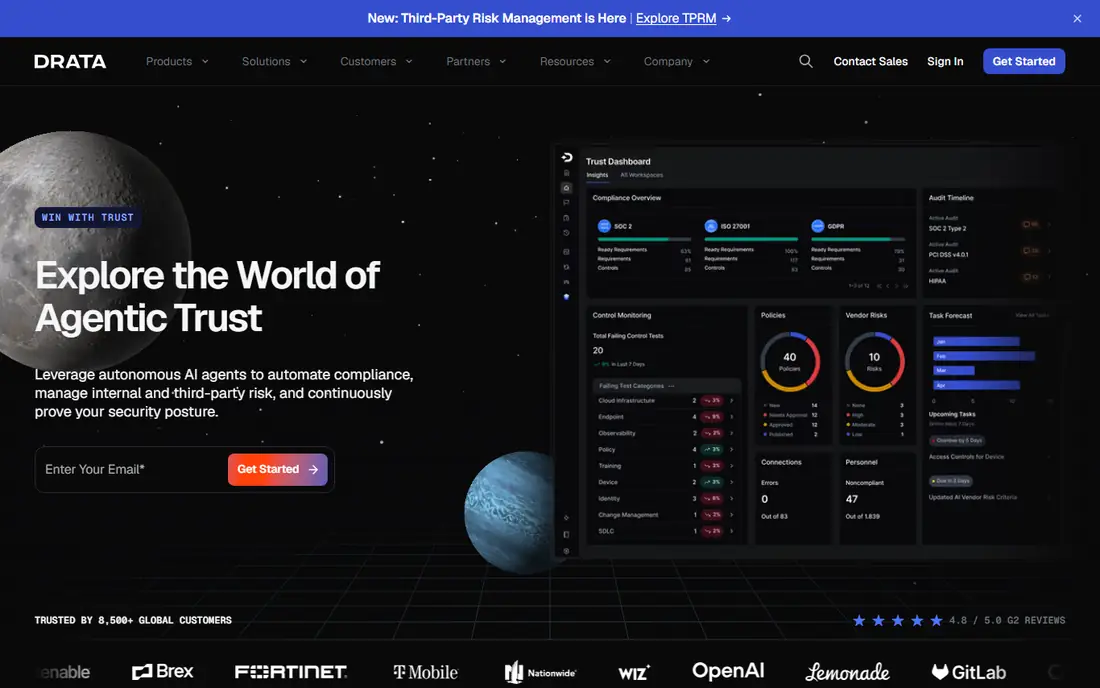
Drata suits security-focused teams that want compliance monitored year-round, not just before an audit. It watches controls continuously, collects evidence from connected systems, and maps one control to several frameworks, so SOC 2, ISO 27001 and HIPAA work can share evidence. Engineering teams often prefer its monitoring-first approach.
It is not a shortcut around good security practice. Teams still need owners for each control and a plan for fixing failures. We would pick Drata for cloud-native SaaS teams running several frameworks together, and compare it directly with Vanta on integrations for their specific stack.
- Continuous control monitoring
- Unified control library across frameworks
- Strong for engineering-led teams
- Quote-only pricing
- Setup still needs security and engineering time
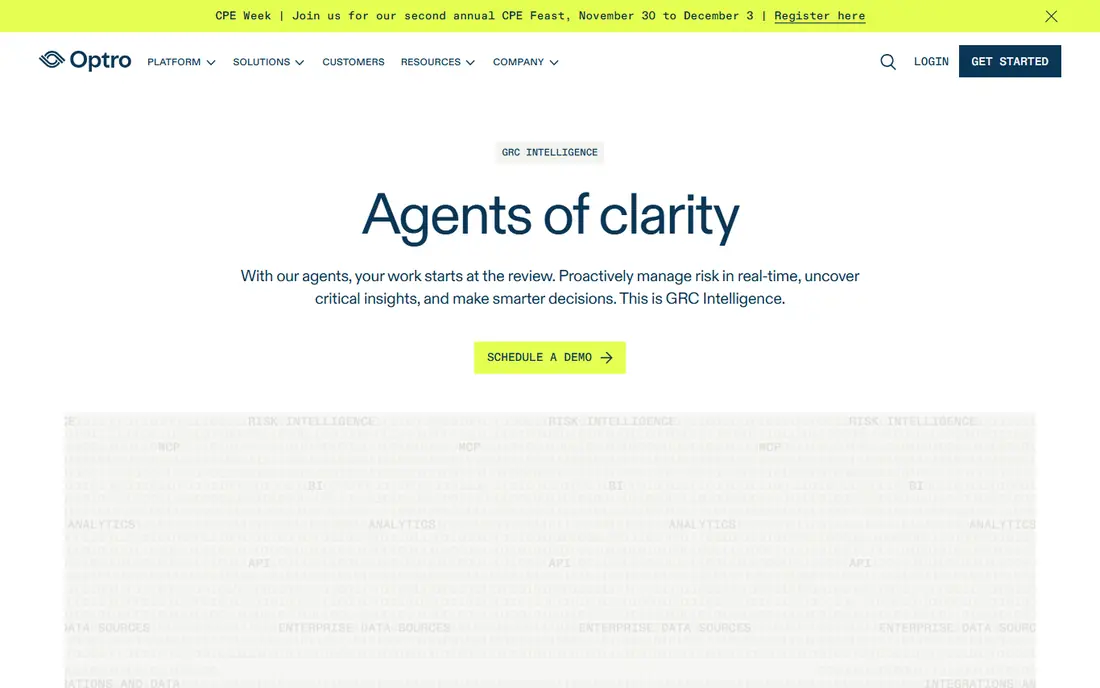
AuditBoard, now presented in some comparisons under the Optro name, remains the standard for enterprise internal audit and SOX work. It covers audit planning, control testing, issue tracking, risk management and reporting in one connected system. Large companies use it to run audit programs across entities, business units and frameworks without losing track of evidence and findings.
Smaller SaaS teams will find it larger than they need for a first SOC 2. We would shortlist AuditBoard for public companies and large enterprises where SOX, internal audit and risk must work together, and budget for implementation and training.
- Strong internal audit, SOX and risk workflows
- Built for large, multi-entity programs
- Connected risk reporting
- Quote-only pricing
- Enterprise implementation and admin effort
Secureframe suits SaaS companies that want guidance, not just software. Its onboarding walks teams through scoping, control setup and evidence collection, and its trust center helps share security posture with customers. That guided approach helps small teams that do not have a dedicated compliance lead.
The trade-off is depth for very large programs. Companies with complex enterprise risk needs may outgrow it. We would pick Secureframe for SMB SaaS teams getting their first SOC 2 or ISO 27001, and ask what expert support is included in the quote.
- Guided onboarding for first-time compliance teams
- Built-in training and trust center features
- Multi-framework support
- Quote-only pricing
- Larger enterprise programs may need deeper GRC tools
Hyperproof helps teams that manage several frameworks at once without duplicating work. Its common controls approach lets one control and one piece of evidence serve multiple frameworks, and it tracks when evidence goes stale. That matters for mid-market companies facing SOC 2, ISO 27001, HIPAA and customer questionnaires together.
Buyers should scope frameworks carefully, since adding frameworks changes price and effort. We would pick Hyperproof for teams standardizing on common controls across regions and frameworks, and test evidence reuse on two frameworks in a pilot.
- Common control library across frameworks
- Evidence freshness tracking
- Good for teams managing overlapping requirements
- Quote-only pricing
- Implementation needs clear framework scoping
Sprinto appeals to fast-growing SaaS and mid-market teams, including many international companies, that want deep automation without enterprise pricing. It covers SOC 2, ISO 27001, HIPAA, GDPR and other frameworks, with automated evidence collection and real-time audit readiness. Its guided workflows help lean teams move faster than a manual program.
The honest limit is that value depends on your frameworks, integrations and auditor. We would shortlist Sprinto for international teams that need many frameworks on a controlled budget, and confirm auditor partnerships and support hours for your time zones.
- Strong automation for SaaS and mid-market teams
- Broad framework coverage
- Often positioned as good value for international teams
- Quote-only pricing
- Support and auditor network should be checked for your region
Thoropass combines compliance software with expert guidance, and it is often chosen by fintech and regulated teams that want help through the audit, not just a dashboard. Its platform covers evidence, monitoring and multi-framework mapping, while its team supports readiness and audit preparation. That combination can reduce the burden on a small security or compliance team.
Buyers should confirm how the audit itself is handled, since independent attestation must come from a licensed auditor. We would pick Thoropass for teams that want automation plus hands-on guidance, and get the scope of guidance versus audit work in writing.
- Combines platform with hands-on audit guidance
- Good for fintech and regulated teams
- Multi-framework coverage
- Quote-only pricing
- Bundled audit arrangements need clear independence terms
Workiva suits public companies that need SOX, internal audit and financial reporting to agree. It links controls, evidence and reports in one platform, which helps finance, audit and compliance teams work from the same data. That connection matters when auditors, boards and regulators all review the same program.
Startups seeking only SOC 2 will likely find Workiva too broad. We would shortlist it for public companies and large finance-led programs, and compare it with AuditBoard on SOX depth for your reporting needs.
- Connects SOX, internal audit and financial reporting
- Strong controls for public-company reporting
- Audit-ready documentation
- Quote-only pricing
- Broader than a startup needs for a first SOC 2
LogicGate Risk Cloud appeals to GRC teams that need custom workflows rather than a fixed compliance template. Its no-code builder lets teams design risk assessments, audit tasks, control tests and approvals around their own processes. That flexibility helps companies with unique regulatory or internal requirements.
Flexibility is also the risk: without clear process design, workflows can become complex and hard to maintain. We would pick LogicGate for GRC teams that know their processes well and want to encode them, and start with one workflow before expanding across the program.
- No-code workflow configuration for GRC
- Flexible risk, audit and compliance processes
- Good for teams with unique processes
- Quote-only pricing
- Flexibility needs design effort to avoid overly complex workflows
How we picked these
We compared official product pages, pricing pages and recent independent compliance comparisons for platforms that are live in October 2026 and that cover audit planning, evidence collection, control monitoring or reporting. We favored tools with clear framework coverage and a defined audience, from startups to public companies. Where a vendor does not publish a price, we wrote See website, and we did not invent audit costs, since auditor fees vary by scope and firm.
How to choose compliance audit software
Start with the framework and the deadline. A startup chasing SOC 2 for enterprise customers has different needs from a public company running SOX, and a healthcare company focused on HIPAA needs different evidence than a SaaS company focused on ISO 27001. List your frameworks, integrations and auditor requirements before shortlisting, and ask each vendor to map your controls, not just list framework names.
Next, separate platform cost from audit cost in every quote. Ask what frameworks, users, integrations and support are included, and what the auditor charges separately. Finally, run a pilot on one framework with real integrations, and check how evidence is collected, how failures are flagged and how auditor requests are handled. The platform that keeps evidence fresh between audits will save the most time when audit season arrives. Remember, this guide is general information only and is not legal or compliance advice; confirm framework and audit requirements with a qualified professional.
Frequently asked questions
What is the best compliance audit software?
The best compliance audit software depends on your program. Vanta leads for a first SOC 2 at a startup, Drata leads for continuous monitoring across frameworks, and AuditBoard leads for enterprise internal audit and SOX. Shortlist by framework, company size and whether you need guided help or deep GRC workflows.
Which compliance audit software is top rated for SOC 2?
Vanta, Drata, Secureframe, Sprinto and Thoropass are all widely used for SOC 2, with different strengths in integrations, guidance and monitoring. Top ratings vary by review site and date, so compare integrations for your stack and ask each vendor for a pilot on your controls. No rating replaces a trial with your own systems.
What software is best for compliance audits in healthcare?
For HIPAA-focused programs, Vanta, Drata, Secureframe, Sprinto and Hyperproof all offer HIPAA coverage alongside other frameworks, while specialist healthcare tools may suit narrow clinical needs. Confirm HIPAA control mapping, evidence handling and auditor familiarity before choosing. This is general information, not legal or compliance advice.
What are the best compliance audit tools for enterprises?
AuditBoard, Workiva, LogicGate Risk Cloud and Hyperproof suit enterprise programs, with strengths in SOX, financial reporting, custom workflows and multi-framework control management. Enterprises should scope entities, frameworks and reporting needs carefully, since enterprise quotes and implementations vary widely.
What are the top systems for software audit and compliance?
Top systems here include Vanta and Drata for security compliance automation, AuditBoard for internal audit, Secureframe for guided SMB compliance, and Workiva for public-company reporting. The right system is the one that maps your frameworks, integrates with your stack and keeps evidence current between audits.
Does compliance audit software replace the audit?
No. Compliance software prepares evidence, monitors controls and manages auditor requests, but the audit itself must be performed by a licensed auditor who provides independent attestation. Budget for the platform and the auditor separately, and confirm the auditor arrangement before signing.
Sources
See where you really rank - block by block
ProMapRanker scans Google Maps across a grid of your service area. Simple monthly plans from $19, white-label on every plan.
Start freeKeep reading
 zoho inventory alternatives
6 Alternatives to Zoho Inventory, Compared on Price and Fit
Zoho Inventory alternatives: 6 tools compared on price, free plans and fit. Katana leads the list for manufacturers. Fit and flaws are laid out for each entry.
Read → zoho crm alternatives
Best Zoho CRM Alternatives (2026)
Need Zoho CRM alternatives? We compare 7 tools on cost, free access and who each suits. Every pick gets a straight assessment. Built for quick decisions.
Read → zelle alternatives
Best Zelle Alternatives in 2026
Compare the best Zelle alternatives for sending money to friends, paying sellers and moving funds abroad, with honest notes on fees, speed and safety in 2026.
Read →