 ProMapRanker
Best Company Earnings Websites in 2026

Key takeaways
- Yahoo Finance and Nasdaq offer the most useful free starting point for earnings dates, estimates, and basic results.
- Seeking Alpha and Zacks add deeper analysis, transcripts, and estimate revisions, but much of that depth sits behind paid tiers.
- Earnings Whispers focuses on the whisper number and confirmed dates, which traders use beside the official consensus estimate.
- These sites are data sources, not investment advice, and earnings dates, estimates, and figures can change or be revised.
- Cross-check a surprising figure against the company press release or investor relations page before you act on it.
Quick comparison
| Pick | Great for | Pricing starts at | Free tier | |
|---|---|---|---|---|
 Yahoo Finance | free earnings calendar and news | Free | Yes | Visit |
 Nasdaq | clean earnings calendar by date and sector | Free | Yes | Visit |
 Seeking Alpha | earnings analysis and transcripts | See website | Free trial | Visit |
 Zacks | estimates, surprise history, and rankings | See website | Free trial | Visit |
 MarketWatch | earnings news and results coverage | See website | No | Visit |
 Earnings Whispers | whisper numbers and confirmed dates | See website | No | Visit |
 StockTitan | earnings news with fast alerts | Free | Yes | Visit |
 Investing.com | global earnings calendar and surprises | Free | Yes | Visit |
The best company earnings websites
Company earnings websites help you answer three questions: when does a company report, what does Wall Street expect, and what did the company actually report. The sites below differ in how deep they go on estimates, transcripts, and history, and in how much sits behind a paywall. Treat them as data sources, not as investment advice, and do not rely on any single site for a trading decision.
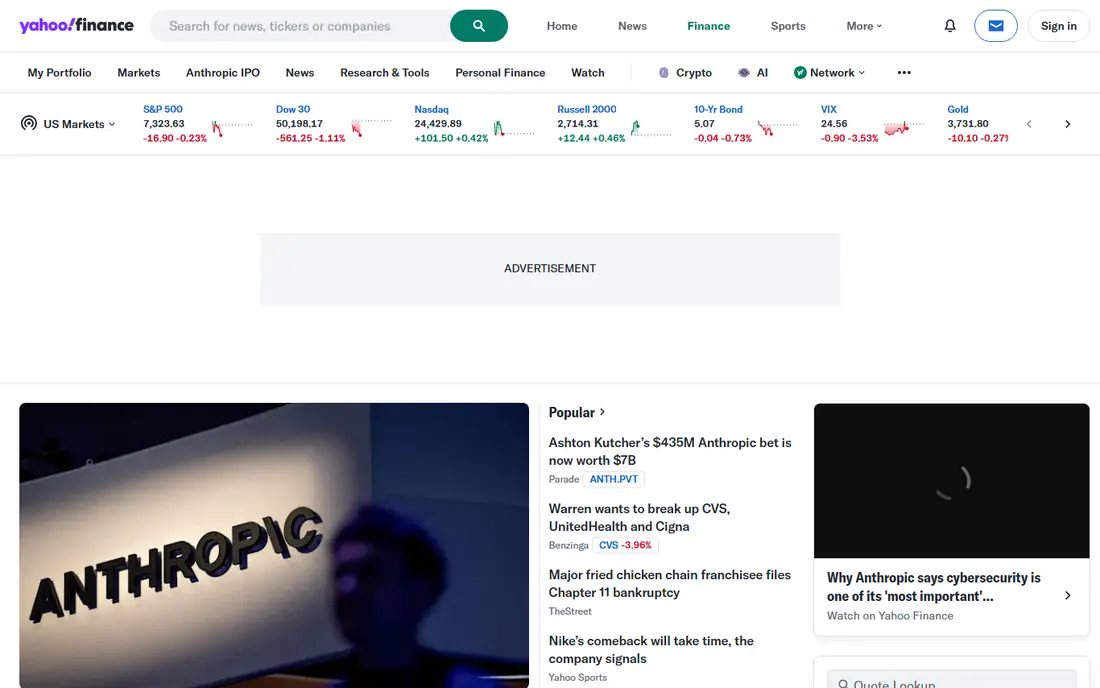
Yahoo Finance is the best free starting point for most readers. Its earnings calendar shows report dates, whether a company reports before the market opens or after it closes, and the expected earnings per share and revenue beside the actual figures when they land. Links to recent company news help you place a result in context without opening a second site.
The limit is depth. Yahoo gives you the calendar and the headline numbers, but not the full analyst research, detailed estimate revisions, or long transcript library that paid services offer. For a reader tracking a handful of companies, that is usually enough. For a reader who needs estimate history in detail, pair Yahoo with Zacks or Seeking Alpha.
- Detailed free earnings calendar
- Time of release, EPS expectations, and revenue estimates
- Direct links to company news
- No full research reports on the free tier
- Ads and upsells on free pages
- Data can be delayed on some quotes
Nasdaq suits readers who want a clean calendar without clutter. You can filter upcoming earnings by date, symbol, or sector, which helps when you only follow technology or banking stocks. Historical data and consensus EPS forecasts sit beside the calendar, so you can see how expectations looked before the report.
The trade-off is analysis. Nasdaq is a calendar and data source first, not a research house, so you will not get the same depth of commentary or transcript coverage as Seeking Alpha. Use Nasdaq to plan the week, then open the company release or a deeper site for the detail behind the numbers.
- Clean, easy-to-filter calendar
- Search by date, symbol, or sector
- Historical data and consensus forecasts
- Analysis depth is thinner than Seeking Alpha
- Some features need an account
- Market data can be delayed
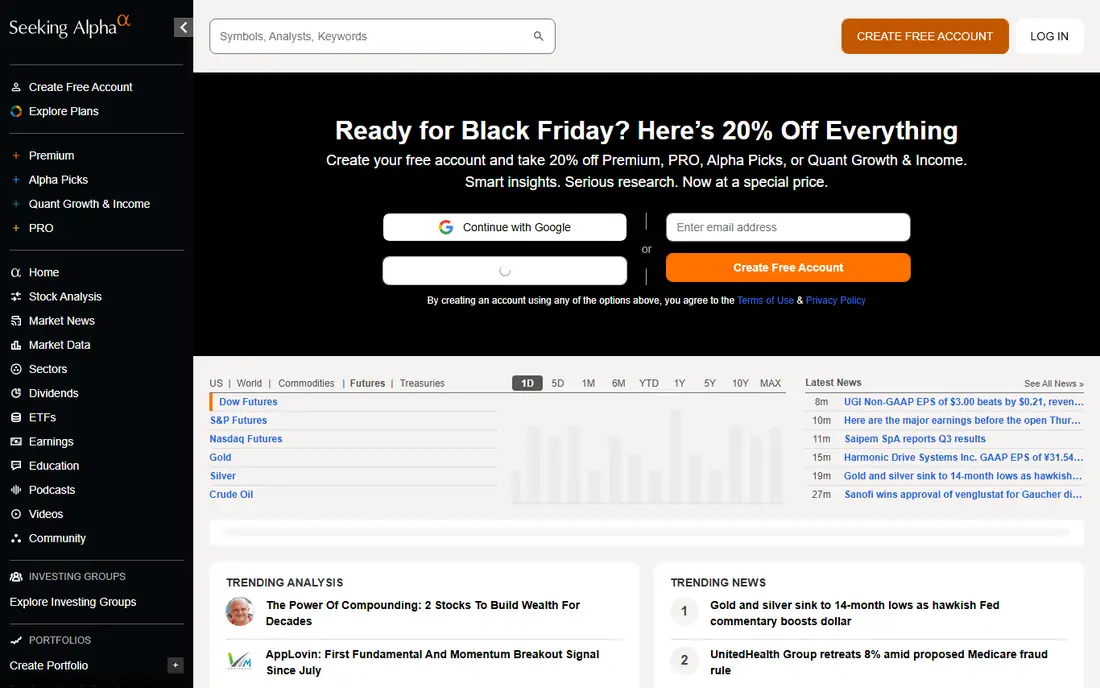
Seeking Alpha suits readers who want more than dates and headline numbers. Its earnings pages cover upcoming quarter expectations, and its transcript library and contributor analysis help you understand what management said on the call, not just what the press release reported. That context matters when a stock moves on guidance rather than on the quarter itself.
The catch is the paywall. A large share of the deeper analysis and transcript access needs a subscription, and contributor articles vary in quality, so read the author disclosure and check figures against the company release. Use the free tier to test whether the analysis style helps you, before you pay for a year.
- Earnings section with upcoming quarter detail
- Transcripts and analysis from contributors
- Earnings call coverage
- Much depth sits behind a paid subscription
- Contributor views vary in quality
- Free article limits apply
Zacks suits readers who follow estimate changes and surprise history. Its calendar highlights key companies, and its pages show how often a company has beaten or missed estimates, how analyst revisions have moved, and how its rank score sits beside the earnings data. That history helps you judge whether a beat was expected or a surprise.
The limit is that rank scores and surprise history describe the past, not the future, and full research needs a paid tier. Treat Zacks as a data source for expectations and history, not as a recommendation. Cross-check a surprising revision against the company release and at least one other calendar.
- Well-organized calendar
- Surprise history and analyst revisions
- Zacks Rank scores beside earnings data
- Full research sits behind paid tiers
- Data on free pages can be delayed
- Rank scores are not a buy signal on their own
MarketWatch suits readers who want earnings news written as stories, not just tables. Its results coverage explains what drove a quarter, how the stock reacted, and what management guided for next quarter, in plain news form. That helps readers who do not want to parse a full earnings release themselves.
The drawback is access and tools. Much MarketWatch content needs a subscription, and its calendar is less detailed than Yahoo or Nasdaq for planning. Use MarketWatch for the story after a report, and a dedicated calendar site for planning before the report.
- Clear earnings news coverage
- Results stories with context
- Market and sector coverage beside earnings
- Much content sits behind a subscription
- Calendar tools are thinner than Nasdaq or Yahoo
- Ads on free pages
Earnings Whispers suits readers who follow the informal whisper number, which is the unofficial expectation circulating among traders, beside the official consensus estimate. A company can beat the consensus and still fall if it misses the whisper number, so traders watch both. The site also focuses on confirmed dates, which helps avoid acting on an unconfirmed calendar entry.
The catch is that whisper numbers are informal and can be wrong, and full detail needs a paid tier. Treat the whisper number as one extra data point, not as a forecast. Confirm the date and the official figures against the company release before you rely on them.
- Whisper number beside consensus estimate
- Focus on confirmed earnings dates
- Trader-friendly layout
- Paid access for full detail
- Whisper numbers are informal, not official
- Smaller coverage than Yahoo or Nasdaq
StockTitan suits readers who want earnings news quickly, with alerts when a company reports. Its news feed groups earnings stories with other company news, so you can see a result beside guidance changes, insider moves, or product news without switching sites. The free tier covers core news well.
The limit is depth. StockTitan is a news and alert tool first, not a full estimate or transcript library. Use it to learn that a company reported and to read the headline, then open Yahoo, Nasdaq, or the company release for the full figures and the call detail.
- Fast earnings news and alerts
- Company news feed beside earnings
- Free tier covers core news
- Analysis depth is thinner than Seeking Alpha
- Calendar tools are basic
- Some features need a paid tier
Investing.com suits readers who follow companies outside the United States as well as US stocks. Its global earnings calendar covers many markets, and its surprise figures show actual results beside estimates in a clear format. That breadth helps when your watchlist spans several countries.
The trade-off is the free experience. Pages are ad-supported, and some data can be delayed, so a time-sensitive figure should be checked against the company release. Depth also varies by market, with US large caps covered far more fully than small foreign firms. For global planning, it is a useful free calendar.
- Global earnings calendar
- Earnings surprises shown beside estimates
- Broad market coverage
- Ad-supported free pages
- Some data can be delayed
- Depth varies by market and company
How we picked these
We compared official site features, earnings calendar tools, estimate and transcript coverage, and free versus paid access for sites that were live in October 2026. We favored sites with a clear earnings use case, from free calendars to deeper analysis, and we noted where depth needs a subscription. We did not claim hands-on testing, and we did not rank sites by accuracy, since accuracy claims would need independent verification against company releases.
What to check before you rely on an earnings website
Start with the date and time. Earnings dates change, and a company can move a report by days. Check whether the site marks a date as confirmed or estimated, and confirm the final date on the company investor relations page. A trade or decision based on an unconfirmed date is a common and avoidable error.
Next, compare estimates, not just actuals. The consensus estimate, the whisper number, and the prior quarter figures tell different stories. A beat against consensus can still disappoint if guidance falls, and a miss can still lift a stock if guidance rises. Read the press release headline, the guidance section, and the call summary together.
Finally, check revision history and data timing. Estimates move as analysts update models, and free data can be delayed by minutes. For a fast-moving stock, a delayed quote or an old estimate can mislead you. Use at least two sources for any figure you plan to act on, and treat all of these sites as data sources, not investment advice.
Reading an earnings report in five minutes
Open the press release, note revenue, earnings per share, and the comparison with the consensus estimate. Then read guidance for next quarter, check the call summary for what management stressed, and note any one-time items that distort the headline. That short routine beats reading ten opinion pieces.
When to pay for a deeper site
Pay when you track many companies, need transcripts often, or need estimate revision history in detail. For a handful of companies, free calendars from Yahoo and Nasdaq plus company releases usually cover you. A paid tier should save you time or give you data you cannot get free, not just more opinion.
Frequently asked questions
What is the best free company earnings website?
Yahoo Finance and Nasdaq are the strongest free starting points. Yahoo gives a detailed calendar with expected and actual figures, while Nasdaq gives a clean calendar filtered by date, symbol, or sector. Pair either with the company investor relations page for the official release.
What is an earnings whisper number?
The whisper number is an informal expectation circulating among traders, separate from the official consensus estimate from analysts. A company can beat consensus and still fall if it misses the whisper number. Earnings Whispers tracks this figure, but it is informal, not official, and should not be used alone.
Where can I read earnings call transcripts?
Seeking Alpha offers a large transcript library, with much depth behind a paid tier, and many companies publish transcripts or webcasts on their own investor relations pages. Company releases and webcasts are the primary source, and third-party transcripts should be checked against them for key figures.
How accurate are earnings calendars?
Calendars are useful but not perfect. Dates can move, estimates can be revised, and free data can be delayed. Sites that mark dates as confirmed are more reliable than sites that list estimated dates without a label. Confirm the final date and figures on the company release before you act.
Do I need a paid earnings website to invest well?
No. Free calendars, company releases, and basic estimate data cover most individual investors. Paid sites help when you need transcripts often, detailed revision history, or fast alerts across many companies. No site, free or paid, can predict how a stock will move after earnings.
Sources
See where you really rank - block by block
ProMapRanker scans Google Maps across a grid of your service area. Simple monthly plans from $19, white-label on every plan.
Start freeKeep reading
 zscaler alternatives
Best Zscaler Alternatives in 2026
Looking for zscaler alternatives? We compare 9 SASE and zero trust platforms on architecture, data protection, pricing, and fit for your network and team.
Read → zapier alternatives free
Best Zapier Alternatives Free in 2026
Nine automation tools for zapier alternatives free in 2026, all with genuinely free tiers, plus free plan limits, starting prices and upgrade paths explained.
Read → which platform is best for online reputation
Which Platform Is Best for Online Reputation in 2026
Wondering which platform is best for online reputation? We compare 8 review, listing, and response tools for small and multi-location businesses and agencies.
Read →