 ProMapRanker
Best Companies to Work in 2026

Stable careers with internal mobility · Pricing starts at: See website
Key takeaways
- Microsoft, Google, and NVIDIA lead for many tech job seekers, thanks to scale, AI work, and internal mobility.
- Salesforce, Adobe, and Apple suit readers who want enterprise stability, creative tools, or hardware and software work.
- GitHub and GitLab suit developers who want remote first or developer focused cultures, with open source work at the centre.
- The best company to work for depends on role, location, team, and work model, not just brand name, so check team level reviews before applying.
- Pay, benefits, and flexibility vary by role and location, so use official careers pages and current job listings to verify details for your target role.
Quick comparison
| Pick | Great for | Pricing starts at | Free tier | |
|---|---|---|---|---|
| Microsoft | Stable careers with internal mobility | See website | No | Visit |
 Google | Breadth, research, and large scale impact | See website | No | Visit |
 NVIDIA | AI infrastructure and GPU engineering | See website | No | Visit |
 Salesforce | Enterprise software with work life balance focus | See website | No | Visit |
 Adobe | Creative software and design led work | See website | No | Visit |
 Apple | Hardware and software integration | See website | No | Visit |
 GitHub | Developer tools and remote friendly work | See website | No | Visit |
 GitLab | Fully remote work with transparency | See website | No | Visit |
The best companies to work
The best companies to work for are not just the highest paying names. Growth, learning, team culture, flexibility, and stability shape daily work far more than a brand logo. The employers below appear repeatedly in employer rankings and employee reviews for 2026, and each one suits a different kind of career, from large scale tech to remote first development.
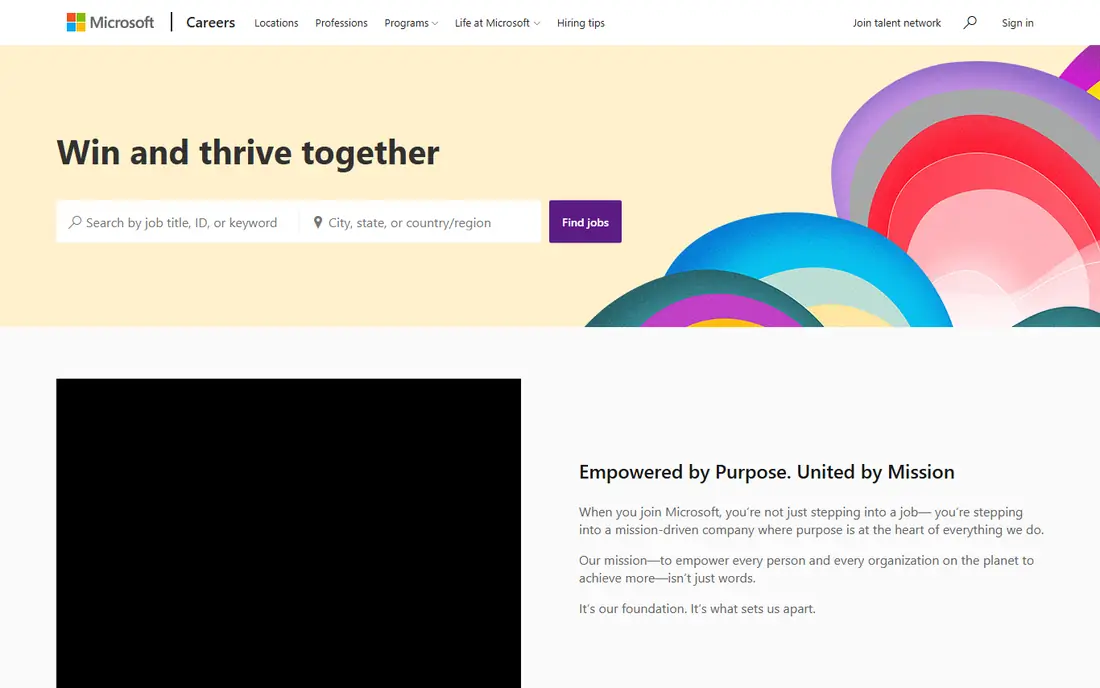
Microsoft is the steady choice on this list. Roles span Azure cloud, Copilot and AI, developer tools, security, and enterprise software, and internal mobility lets people move between teams without leaving the company. That breadth helps careers survive market cycles, because a slow team does not have to mean a dead end.
Hybrid work is common, though exact policy depends on team and location. The trade off is scale. A large company brings process, reviews, and internal tools that can feel slow, and team culture varies widely. For readers who want stability, learning, and many possible next roles inside one employer, Microsoft is hard to beat.
- Broad roles across Azure, Copilot, and enterprise tools
- Internal mobility
- Hybrid work on many teams
- Large company bureaucracy
- Experience varies a lot by team
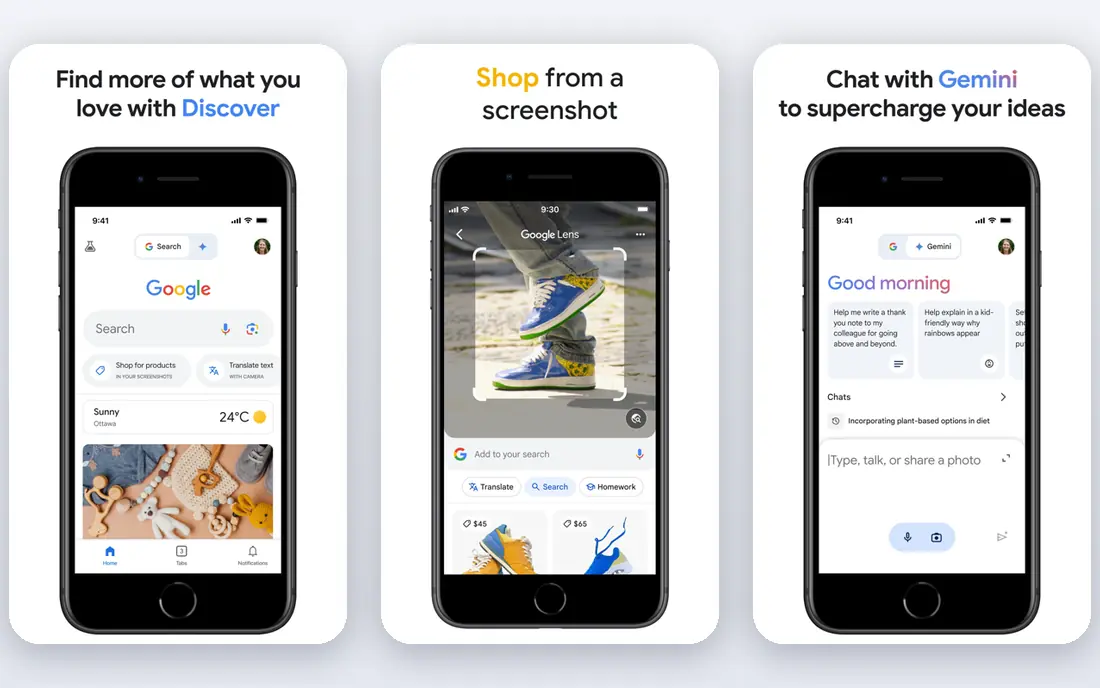
Google remains a top destination for technical depth and brand value. Work spans search, Google Cloud, Gemini and AI research, Android, and DeepMind, which gives engineers and product people a wide range of problems to tackle. Learning resources and internal mobility support moves between those areas over time.
Competition for roles is intense, and large company process can slow smaller projects. Work models are typically hybrid, with some remote flexibility by team. For readers who want scale, research depth, and a resume signal that travels well, Google is a strong pick, provided the team and role match your interests.
- Work across search, cloud, and DeepMind
- Strong learning resources
- Large scale problems
- Bureaucracy at scale
- Hiring is highly competitive
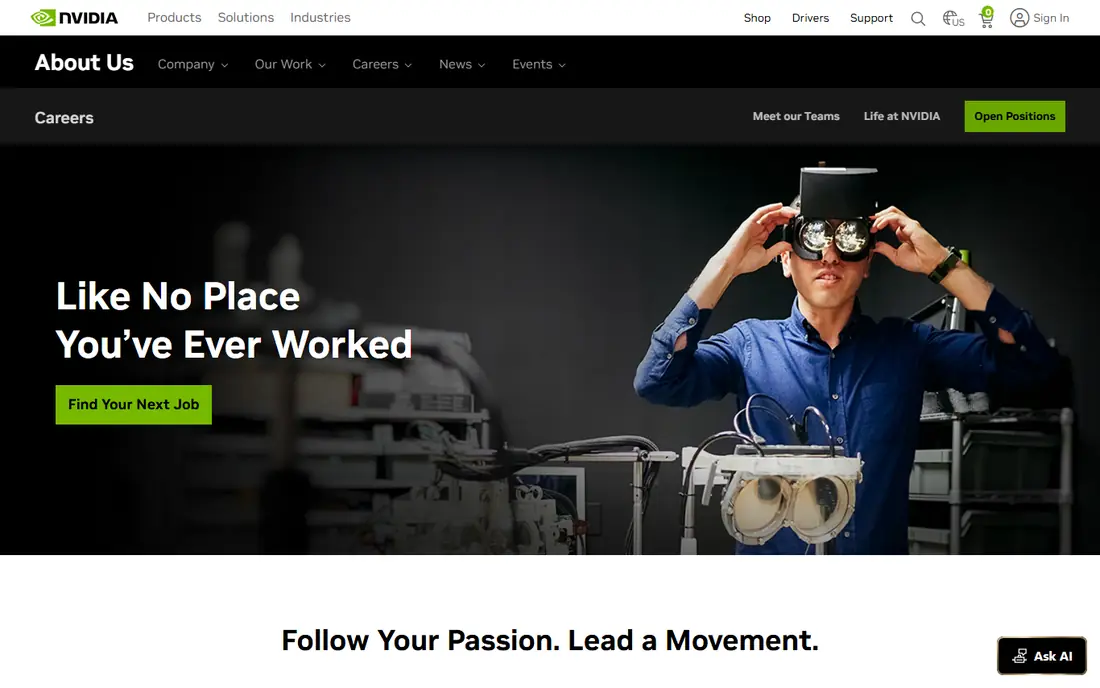
NVIDIA has become one of the most sought after employers for AI work. Its GPUs, CUDA platform, and AI systems sit at the centre of modern AI infrastructure, so engineers work on problems that shape the wider industry. Employee reviews often note a flat structure and direct leadership communication, which appeals to people who dislike heavy hierarchy.
The pace is demanding, and roles skew toward AI, hardware, and systems work, so non technical or generalist careers are less central here. For engineers focused on AI, machine learning, and high performance computing, NVIDIA offers impact and learning that few other employers can match.
- Central role in AI hardware and software
- Flat culture noted in employee reviews
- Strong demand for AI skills
- Fast paced and demanding
- Roles are concentrated in AI and hardware areas
Salesforce suits readers who want enterprise software careers without a purely engineering focus. Roles span engineering, product, sales, customer success, and consulting, and the Trailhead learning platform supports structured skill building. That breadth makes Salesforce a good fit for career changers and for people who want growth beyond a single technical track.
Enterprise pace and process are the trade off, and product teams differ in culture. Benefits and flexibility are generally strong, though exact policies vary by role and location. For a stable enterprise career with clear learning paths, Salesforce belongs on the shortlist.
- Enterprise scale with structured learning
- Trailhead learning platform
- Broad non technical roles
- Large enterprise pace
- Experience varies by product team
Adobe is the natural home for people who care about creative tools. Photoshop, Illustrator, Premiere, and the wider Creative Cloud suite are used across media, marketing, and design, so work here touches creative professionals daily. Engineering and design collaboration is central, which suits people who like building tools for makers.
Roles can be specialised, and the business focus on subscriptions shapes product priorities. For designers, creative engineers, and product people who want their work used by millions of creators, Adobe offers a focused, respected career path that is distinct from generalist tech giants.
- Leading creative tools
- Design and engineering collaboration
- Strong brand for creative careers
- Subscription business focus
- Some roles are highly specialised
Apple appeals to people who care about product craft. Hardware, software, silicon, and services teams work together on iPhone, Mac, iPad, Watch, and services, which gives engineers and designers a rare view of a full product stack. That integration is the main draw, and consumer scale means work reaches a huge audience.
Secrecy is the well known trade off, since teams often cannot discuss work outside the company, and process can feel rigid. Locations are concentrated in major hubs, though retail and support roles are wider. For readers who want to build polished consumer products, Apple remains a top employer.
- Deep hardware and software integration
- Strong product craft
- Large scale consumer impact
- Secrecy and process can limit visibility
- Roles are concentrated in key hubs
GitHub is a dream employer for many developers because the product is the tool they already use daily. Roles centre on developer tools, open source, security, and collaboration, and remote friendly work is common. That focus creates a culture where engineering craft and developer experience matter in a direct way.
Headcount is smaller than Microsoft, Google, or Apple, so roles are fewer and more competitive. Non technical careers exist, but the centre of gravity is technical. For developers who want to build tools for other developers, GitHub offers a focused mission that larger generalist employers cannot replicate.
- Developer focused culture
- Remote friendly roles
- Work used by developers worldwide
- Smaller headcount than tech giants
- Roles skew technical
GitLab is the clearest remote first choice here. The company is fully remote, publishes a public handbook covering culture and processes, and builds an open source DevOps platform. That transparency helps remote workers know what to expect before applying, from communication norms to career paths.
Async work is the trade off. Decisions happen in written issues and merge requests across time zones, which suits self directed workers and frustrates people who prefer live collaboration. For readers who want remote work without a hybrid compromise, GitLab is one of the best companies to work for in this style.
- Fully remote company
- Public handbook and transparent culture
- Open source DevOps platform
- Async remote work suits some people better than others
- Time zone spread can slow decisions
How we picked these
We compared official careers pages, employer rankings, and public employee reviews, focusing on employers that are hiring in 2026 and appear repeatedly in reputable employer lists. We weighed role breadth, learning support, work models, stability, and employee feedback, while noting that team level experience varies inside every large company. We did not claim hands on employment we did not have, and we did not rank companies on pay alone, since pay varies by role, level, and location.
How to judge an employer beyond the brand
Start with the team, not the company. Read recent reviews for the specific product team and location, ask about manager tenure and team size in interviews, and check how often the team ships and how it handles on call work. A great company with a struggling team is a poor job, while a good team inside a less famous company can be a strong career move.
Next, verify the practical details on the official careers page and job listing. Confirm work model, location, travel, benefits, and growth paths for the exact role, since company wide policies often vary by team. Finally, talk to current or former team members if you can, and ask about learning support, internal mobility, and why the last person left the role. Those answers tell you more than any ranking.
Frequently asked questions
What are the best companies to work for?
Microsoft, Google, NVIDIA, Salesforce, Adobe, Apple, GitHub, and GitLab are among the best companies to work for in 2026, each for different reasons. Microsoft suits stability, Google suits breadth, NVIDIA suits AI engineering, and GitLab suits fully remote work. The best company for you depends on role, team, location, and work model.
What is the best company to work for in tech?
For large scale tech careers, Microsoft and Google are the safest top picks, thanks to breadth and internal mobility. NVIDIA suits AI focused engineers, while GitHub and GitLab suit developers who want tool focused or remote first cultures. Check team level reviews, since experience varies inside every large employer.
What are the best companies to work for in Florida?
Florida roles vary by employer and team, so filter official careers pages by Florida locations before shortlisting. Microsoft, Google, Apple, Salesforce, and Adobe all list roles in Florida at different times, though availability changes with hiring cycles. The best companies to work for in Florida are the ones with a real team in your city, not just a remote listing.
What are the top 10 best companies to work for?
Top employer lists vary by publisher and method, but Microsoft, Google, NVIDIA, Apple, Salesforce, Adobe, and similar large tech employers appear on most 2026 lists. Rankings should be a starting point, not a decision, because team, role, and location matter more than a national rank. Use this guide to shortlist, then verify team details before applying.
What are the best corporate companies to work for?
Microsoft, Salesforce, Adobe, and Apple are strong corporate employers, with structured benefits, learning programs, and internal mobility. Corporate roles suit readers who want stability, clear career paths, and large teams. Smaller or remote first companies such as GitLab suit readers who prefer flexibility and async work over corporate structure.
What are the best IT companies in the world to work for?
Microsoft, Google, NVIDIA, Apple, and Salesforce are among the best IT companies in the world to work for, thanks to scale, product impact, and global roles. GitHub and GitLab also rank highly for developers, thanks to developer focused cultures. The best IT company for you depends on whether you want large scale impact, creative tools, AI work, or remote flexibility.
Sources
See where you really rank - block by block
ProMapRanker scans Google Maps across a grid of your service area. Simple monthly plans from $19, white-label on every plan.
Start freeKeep reading
 youtube alternatives
Best YouTube Alternatives in 2026
Looking for youtube alternatives in 2026? We compare Vimeo, Dailymotion, Twitch, Rumble, and more on price, audience, monetization, control and privacy.
Read → what's the best ai tool for photo editing
What Is the Best AI Tool for Photo Editing in 2026
What is the best AI tool for photo editing? We compare ten tools for 2026, from Photoshop and Lightroom to Luminar, Topaz, Canva and mobile editors today.
Read → twitter alternatives
Best Twitter Alternatives in 2026
Compare the best twitter alternatives for 2026, from Bluesky, Threads, and Mastodon to Reddit, Tumblr, and Micro.blog, with free plans and audience notes.
Read →