 ProMapRanker
Best Companies for Managing IT Infrastructure in 2026

Key takeaways
- Kyndryl is the most infrastructure-focused choice on this list, while IBM, Accenture and the large systems integrators suit combined cloud, security and application work.
- Companies with heavy legacy systems should weight mainframe, network and service desk depth more than generic cloud marketing.
- Most enterprise infrastructure deals are custom-priced, so ask for service levels, response times and exit terms in writing before you sign.
- A smaller provider can be a better fit for a mid-sized company than a global firm whose minimums and processes are built for enterprises.
Quick comparison
| Pick | Great for | Pricing starts at | Free tier | |
|---|---|---|---|---|
 Kyndryl | Dedicated infrastructure management | See website | No | Visit |
 IBM | Hybrid cloud and legacy systems | See website | No | Visit |
 Accenture | Managed services at scale | See website | No | Visit |
 HCLTech | Automation-led infrastructure | See website | No | Visit |
 Tata Consultancy Services | Large global operations | See website | No | Visit |
 Wipro | Infrastructure and workplace services | See website | No | Visit |
 DXC Technology | Mainframe and data centre operations | See website | No | Visit |
 NTT DATA | Global infrastructure and networks | See website | No | Visit |
 Capgemini | Cloud infrastructure and operations | See website | No | Visit |
 Cognizant | Infrastructure modernisation | See website | No | Visit |
The best companies for managing IT infrastructure
We looked for firms that run infrastructure day to day, not just advise on it, and we weighed coverage, automation, security practice and the size of company each firm serves best.
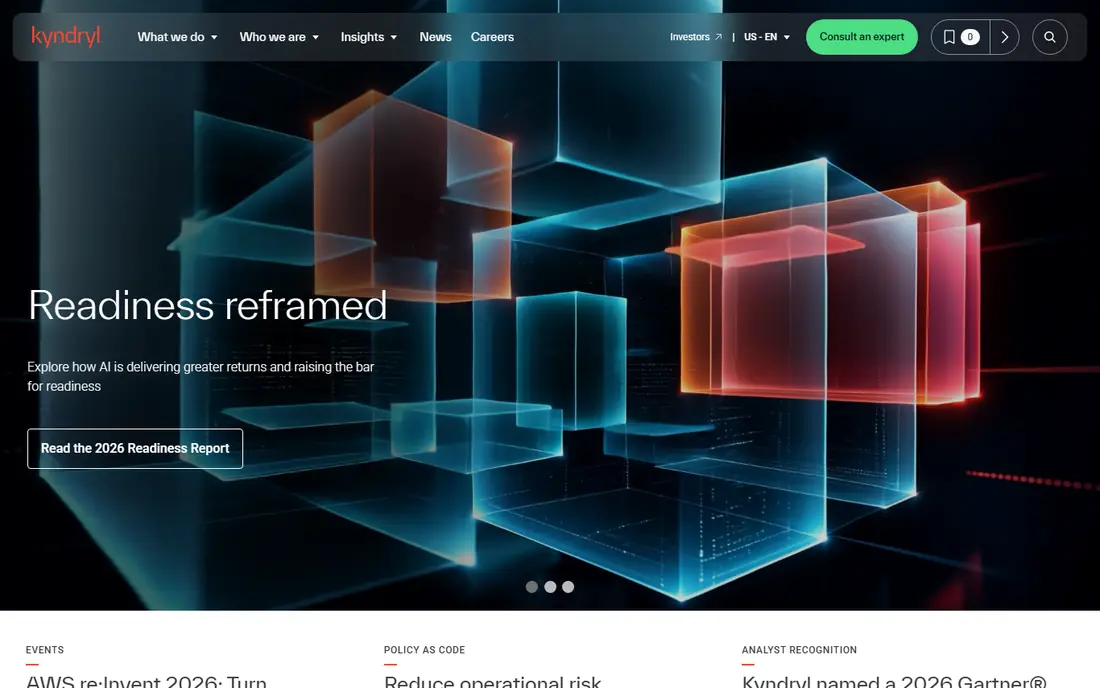
Kyndryl was formed from IBM managed infrastructure services, and that heritage still shapes its work. It manages mainframes, networks, data centres and cloud environments for large organisations where downtime carries serious cost. Its Bridge platform gives clients a shared view of operational health across that estate, which helps teams spot problems before users do.
The honest limit is size. Kyndryl is built for large, complex estates, and a mid-sized company with a mostly cloud-native setup may find the model heavier than it needs. If your estate includes legacy systems alongside cloud services, Kyndryl deserves a shortlist spot.
- Infrastructure is the core business
- Deep mainframe and hybrid cloud experience
- Global delivery network
- Enterprise scale and minimums can overwhelm smaller buyers
- Pricing is not published
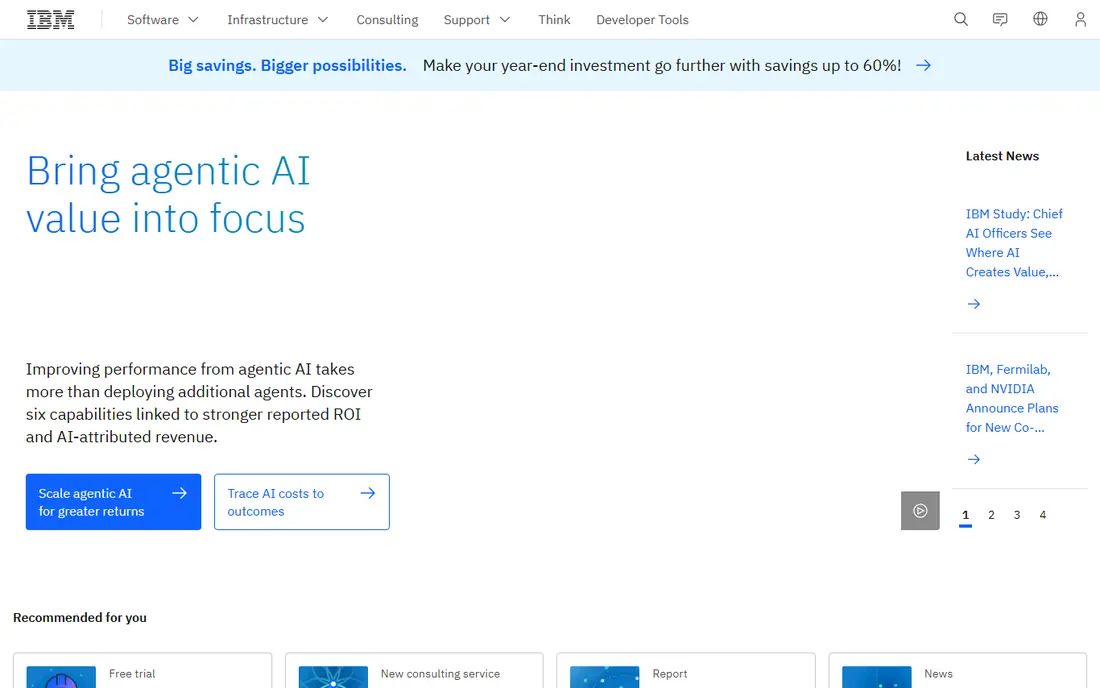
IBM remains a major infrastructure partner through hybrid cloud, consulting and automation, even though its dedicated managed infrastructure business became Kyndryl. Companies already running IBM systems, or planning a hybrid mix of on-premises and public cloud, can benefit from that continuity. IBM also brings AI and automation tools that help teams manage large estates with fewer manual steps.
Buyers should be clear about which IBM unit will deliver the work and how it relates to Kyndryl where relevant. A well-scoped IBM engagement works best when your internal team keeps ownership of architecture decisions and service levels.
- Broad hybrid cloud and AI capability
- Deep enterprise experience
- Strong security and consulting arms
- Managed infrastructure now sits mainly with Kyndryl
- IBM engagements can be complex to govern
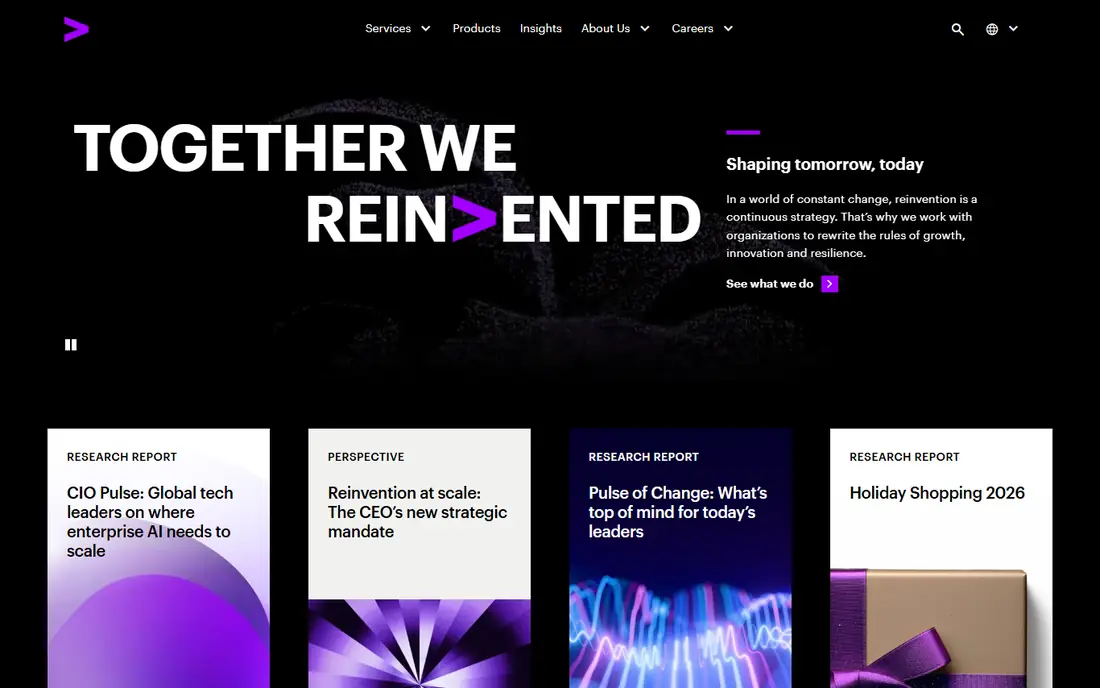
Accenture manages infrastructure as part of a wider technology practice that includes cloud migration, security operations and application management. That breadth helps when infrastructure change is tied to new platforms, data work or customer systems. Its scale also supports round-the-clock operations across time zones.
The trade-off is cost and complexity. Accenture suits enterprises with large, multi-country estates and a clear governance structure. Mid-sized buyers should test whether the proposed team and service model fit their budget, and whether a regional provider could offer closer support.
- Very large managed services practice
- Strong cloud and security capability
- Global talent pool
- Premium pricing
- Smaller clients may get less attention than large accounts
HCLTech has built a large infrastructure services business around automation, aiming to reduce manual tickets and resolve common issues without human intervention. That approach appeals to companies with sprawling estates, many devices and repetitive operational work. Its industry coverage spans banking, manufacturing, healthcare and the public sector.
As with any large provider, results depend on the delivery team and the service levels agreed at the start. Ask for automation outcomes in concrete terms, such as ticket reduction or faster resolution for specific incident types, rather than accepting general claims about efficiency.
- Strong automation platforms
- Large infrastructure practice
- Experience across many industries
- Large-firm delivery can feel distant
- Service quality depends on the assigned team
Tata Consultancy Services, known as TCS, manages infrastructure for some of the largest organisations in the world, often alongside application development and business process work. That scale supports consistent operations across many countries and a deep bench of specialists. Companies standardising infrastructure globally often value that consistency.
TCS is less obviously suited to a small company that needs a hands-on local partner. Its processes are designed for scale, so buyers should check response models, escalation paths and how local support will actually work in their offices.
- Huge global delivery scale
- Broad infrastructure and cloud capability
- Long enterprise track record
- Engagements tend to be large
- Smaller companies may find the model too formal
Wipro covers infrastructure management, cloud operations and digital workplace services, which makes it a useful option when device management and user support matter as much as servers and networks. Its automation work aims to cut routine effort and give IT teams more time for improvement projects. Industry experience includes banking, retail, energy and healthcare.
Because Wipro offers so much, buyers should probe the specific practice that will serve them. Ask for references in your industry, service level history for similar clients, and a clear plan for the first 90 days of transition.
- Broad infrastructure and digital workplace services
- Automation focus
- Global reach
- Portfolio is wide, so depth varies by service line
- Pricing is quote-based
DXC Technology is a practical choice for organisations that still depend on mainframes and traditional data centres. It runs and modernises those environments, and it has long experience in insurance, banking, automotive and the public sector. For a company that cannot simply move everything to cloud, that operational depth matters.
The risk is pace. Modernisation programmes with DXC can be lengthy, and buyers should agree on milestones, costs per phase and what happens if priorities change. A phased plan with clear exit points protects both sides better than a single huge commitment.
- Deep mainframe and legacy expertise
- Data centre services
- Experience in regulated industries
- Modernisation roadmaps can be long
- Company focus has shifted over time, so check current practice strength
NTT DATA combines infrastructure management with network services, data centres and application work, which suits companies with offices and customers across many regions. Its network heritage is a genuine advantage when connectivity, latency and resilience matter. Public sector and telecom experience also adds useful depth.
Buyers should confirm which NTT DATA entity will hold the contract in each country and how support is coordinated across borders. A single accountable lead, named in the agreement, prevents the common problem of regional teams working from different plans.
- Strong global network and data centre footprint
- Broad managed services
- Public sector experience
- Brand structure can confuse buyers
- Local service depth varies by region
Capgemini manages cloud infrastructure and operations alongside engineering, data and application services, which helps when infrastructure change supports a wider digital programme. Its teams are strong in cloud migration and in running hybrid environments, and it has deep work in manufacturing, retail and financial services. Automation and observability are central to its pitch.
Capgemini is best for mid-sized to large companies with a clear transformation goal. Smaller buyers should ask whether the engagement will be staffed by a dedicated infrastructure team or shared with wider consulting work, and price the difference accordingly.
- Strong cloud and engineering capability
- Good European and North American coverage
- Automation focus
- Infrastructure is one part of a wide portfolio
- Enterprise pricing and process
Cognizant offers managed infrastructure, cloud operations and workplace services, often as part of a modernisation programme that also updates applications. Its US presence and industry teams in healthcare, banking and retail make it a practical option for North American companies. Clients often value its focus on measurable operational improvement.
The catch, as with other large firms, is governance. A Cognizant engagement needs a clear service catalogue, agreed response times and regular reviews. Without those controls, a broad contract can drift into generic support that does not match your priorities.
- Broad managed infrastructure and cloud services
- Strong US presence
- Industry-specific teams
- Service depth varies by account
- Large engagements need strong client governance
How we picked these
We compared official service pages, practice descriptions and public information on coverage, automation and legacy capability. We favoured firms that actually operate infrastructure for clients in 2026, rather than firms that only advise on strategy. Because enterprise pricing is custom, we use See website for starting prices and urge buyers to request a written service level agreement before committing.
How to choose an infrastructure management partner
Begin by mapping what you actually run. List servers, networks, cloud accounts, mainframes, devices and the applications that depend on them, plus the service levels each one truly needs. That inventory stops vendors from selling a uniform model to systems with very different risks.
Next, test operations, not slides. Ask how incidents are detected, who responds at night, how changes are approved, and what happens during a major outage. Request anonymised examples of service level performance for clients of a similar size, and speak to a reference client if the vendor allows it.
Finally, protect your exit. Agree on data return, documentation, knowledge transfer and the notice period before you sign. A good infrastructure partner should make it possible, not painful, for you to change direction if your needs or budget change.
Frequently asked questions
What does an IT infrastructure management company actually do?
It runs and maintains servers, networks, cloud environments, devices and related services day to day. That work includes monitoring, patching, incident response, capacity planning, backup and user support, usually under a service level agreement.
How much does managed IT infrastructure cost?
Enterprise pricing is almost always custom and depends on estate size, locations, service hours and required response times. Expect a quote based on devices, servers, users or a monthly managed service fee, and ask what is included before you compare vendors.
Should we outsource all of our infrastructure or keep some in-house?
Many companies outsource routine operations and keep architecture, security policy and vendor management in-house. That split preserves control over strategy while giving daily operations to a team that can staff them around the clock.
What is the difference between managed services and cloud hosting?
Cloud hosting provides computing resources on demand, while managed services add the people and processes that run, monitor and fix those resources. A company can use cloud hosting without managed services, but it then carries the operational work itself.
How do we avoid lock-in with an infrastructure provider?
Use standard tools where possible, keep documentation and credentials under your control, and agree on exit terms in the contract. Regular reviews and a clear knowledge transfer plan make a future change far less disruptive.
Sources
See where you really rank - block by block
ProMapRanker scans Google Maps across a grid of your service area. Simple monthly plans from $19, white-label on every plan.
Start freeKeep reading
 worlds best local seo company
8 Worlds Best Local SEO Companies for Map Pack Growth in 2026
Compare the worlds best local seo company options for Google Business Profile work, citations, reviews, and multi-location rankings and reporting in 2026.
Read → world's best web hosting company
World's Best Web Hosting Company in 2026
Searching for the world's best web hosting company? We compared 10 hosts on price, renewal rates, speed, and support to help you choose well today in 2026.
Read → who's got the best nanny tax services
Who's Got the Best Nanny Tax Services in 2026
We answer who's got the best nanny tax services, comparing full filing, back taxes, software, and pricing so families can handle nanny taxes correctly.
Read →