 ProMapRanker
Best Companies for Infinite Banking in 2026

Key takeaways
- Infinite banking usually uses participating whole life insurance from a mutual insurer, with policy loans used for major purchases or liquidity.
- Dividend history, loan terms, paid-up additions flexibility, and financial strength are the factors most often cited by specialists.
- This guide is based on publicly reported factors, not a verified ranking, and it promises no returns.
- This article is general information only, not financial advice, and whole life costs, loans, and lapse risks need careful review with a licensed adviser.
Quick comparison
| Pick | Great for | Pricing starts at | Free tier | |
|---|---|---|---|---|
 Penn Mutual | Cash value focused whole life | See website | No | Visit |
 Lafayette Life | Non-direct recognition whole life | See website | No | Visit |
 Foresters Financial | Accessible whole life options | See website | No | Visit |
 MassMutual | Large mutual insurer whole life | See website | No | Visit |
 Guardian Life | Established mutual whole life | See website | No | Visit |
 OneAmerica | Flexible whole life options | See website | No | Visit |
 New York Life | Large mutual insurer whole life | See website | No | Visit |
 Ameritas | Shorter funding period whole life | See website | No | Visit |
 Mutual Trust Life | Whole life focused insurer | See website | No | Visit |
The best companies for infinite banking
We compared mutual life insurers whose participating whole life products are commonly discussed for infinite banking. This guide is based on publicly reported factors, not a verified ranking. This is general information only, not financial advice, and no returns are promised.
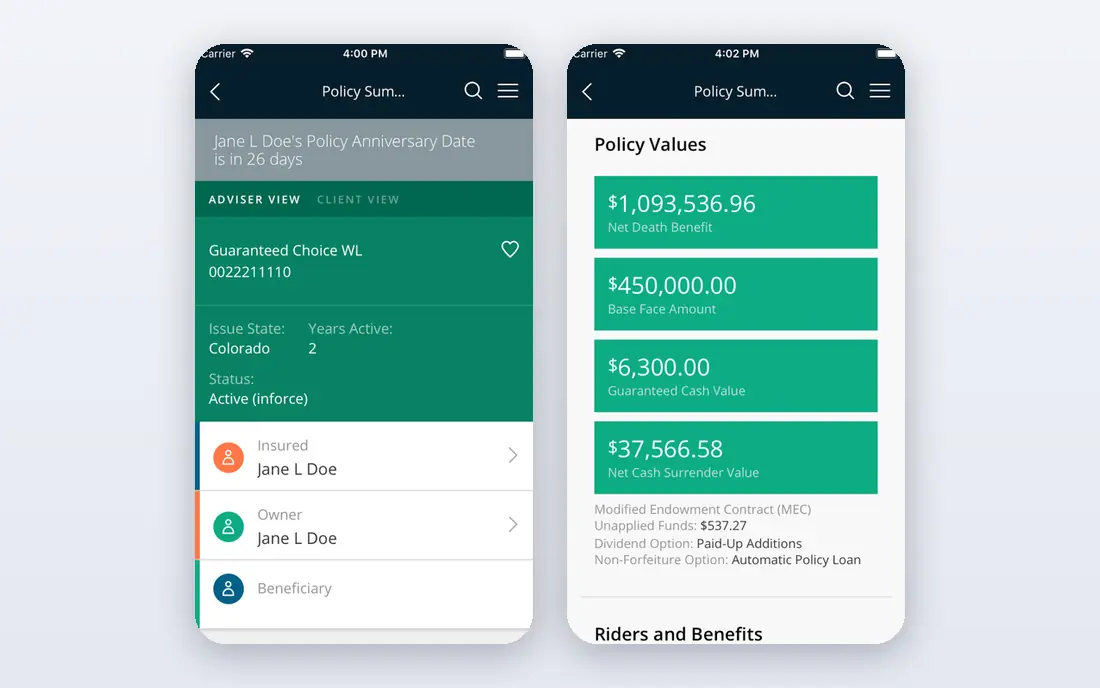
Penn Mutual is often discussed for infinite banking because it is a mutual insurer with participating whole life products and options for paid-up additions. Those additions can increase cash value over time, which is central to the infinite banking idea of borrowing against cash value rather than using a bank loan. Specialists also note its dividend history and financial strength as factors to review, though dividends are not guaranteed.
The key caution is that a policy illustration is not a promise. Premiums, costs, loan interest, and loan effects on dividends and death benefit all vary by product, age, health, and funding design. Work with a licensed adviser, request a full illustration with loan scenarios, and check what happens if premiums stop or a loan remains unpaid. Penn Mutual suits people who want to research a mutual whole life design in detail, not a quick purchase.
- Long mutual history
- Participating whole life products
- Paid-up additions options discussed by specialists
- Policy costs and loan terms vary by product and health
- Needs adviser-led illustration review
Lafayette Life is frequently cited by infinite banking specialists for its non-direct recognition approach, which means dividends are not reduced solely because a loan is outstanding, under the terms of the specific product. That feature matters to people who plan to use policy loans regularly, because loan activity is central to the strategy. Its whole life products also offer paid-up additions options that specialists discuss for cash value growth.
Availability and product terms still need checking, since state availability varies and product details change. A non-direct recognition label does not remove loan interest costs, nor does it guarantee cash value growth. Review the illustration, loan rate, and dividend treatment for the exact product offered, and compare it with at least one other mutual insurer before deciding.
- Non-direct recognition approach discussed by specialists
- Whole life products with paid-up additions
- Part of a larger financial group
- Availability varies by state
- Loan and dividend details need product-specific review

Foresters Financial is a fraternal benefit society that offers whole life products discussed in infinite banking guides. Some products offer simpler application paths, which can help people who want to start with a smaller policy and learn the mechanics. Its mutual-style structure means policyholders share in the organisation, and participating products may pay dividends, though dividends are not guaranteed.
Early cash value is the main caution with any whole life policy, including Foresters products. Premiums in early years largely cover costs and death benefit, so cash value builds slowly at first. That slow start matters for infinite banking, because loans depend on available cash value. Check the illustration year by year, and do not assume early borrowing capacity that the policy does not yet support.
- Fraternal mutual structure
- Whole life products discussed for infinite banking
- Simpler application paths for some products
- Product fit varies by state and health
- Cash value growth is slow in early years
MassMutual is one of the largest mutual life insurers in the US, and its participating whole life products are widely discussed for infinite banking. Scale brings product choice, financial strength discussion, and a long dividend history, though dividends are not guaranteed and rates change. Its whole life range covers different funding periods and rider options, which advisers can shape around a cash value goal.
Size also brings complexity. Product names, riders, and loan terms vary, and a general brand reputation does not tell you how a specific policy will perform for your age, health, and funding plan. Request an illustration for the exact product, compare loan provisions, and ask how loans affect dividends and the death benefit. MassMutual suits people who want a large mutual insurer and are willing to review product detail with an adviser.
- Very large mutual insurer
- Broad whole life product range
- Long dividend history discussed by specialists
- Large-company processes can feel impersonal
- Product and loan terms need adviser review
Guardian Life is a long-established mutual insurer whose participating whole life products appear in many infinite banking discussions. Specialists note its dividend history, financial strength, and options for shorter funding periods, which some buyers prefer when they want to front-load a policy. Those features make it a common name on infinite banking shortlists, alongside Penn Mutual and MassMutual.
The same cautions apply as with any whole life design. Premiums for meaningful cash value can be substantial, and early cash value grows slowly. Shorter funding periods change the premium pattern and should be modelled over the full policy life, not just the payment years. Review loan interest, dividend treatment, and lapse risk with a licensed adviser before committing to a long-term premium schedule.
- Long-established mutual insurer
- Participating whole life products
- Shorter funding options discussed by specialists
- Premiums can be substantial for larger policies
- Illustrations need careful loan scenario review
OneAmerica is a mutual insurer whose whole life products are discussed for infinite banking, with flexibility around paid-up additions and, on some products, an indexed dividend option. That flexibility appeals to buyers who want to adjust funding over time rather than follow a fixed pattern from day one. Specialists also note its dividend approach as a factor to compare, though dividends are not guaranteed.
OneAmerica has a smaller public profile than MassMutual or New York Life, so buyers should verify product availability, agent support, and illustration detail in their state. Flexibility is useful only if the funding plan is actually followed, because irregular premiums change cash value growth. Compare the exact product illustration with larger mutuals, and check loan terms and dividend treatment in writing.
- Mutual insurer with whole life products
- Flexible paid-up additions discussed by specialists
- Indexed dividend option on some products
- Smaller profile than the largest mutuals
- Product availability and terms vary
New York Life is the largest mutual life insurer in the US in many industry discussions, with a broad agent network and a long history of participating whole life products. That scale and agent access make it easy to find an adviser and to discuss whole life designs in person. Its dividend history is often cited by specialists, though dividends are not guaranteed.
Buyers should pay attention to direct versus non-direct recognition on the specific product offered, because loan treatment can affect dividends. A large brand does not remove the need for a product-specific illustration, loan scenarios, and a lapse-risk review. New York Life suits people who value scale and local agent support, and who will review the exact policy terms rather than relying on brand alone.
- Largest mutual life insurer by scale in many discussions
- Broad agent network
- Long dividend history
- Direct recognition treatment on some products needs review
- Large policies carry substantial premiums
Ameritas is a mutual insurer whose whole life products are discussed for infinite banking, particularly around shorter funding periods that let buyers complete premiums in fewer years. That pattern appeals to people with higher current income who want to front-load a policy, though it raises annual premiums during the payment period. Living benefit riders on some products add another feature to review, though rider terms vary.
Shorter funding does not mean faster guaranteed cash value, and early years still carry costs. Compare the full illustration, including loan interest and dividend treatment, against a standard funding pattern from another mutual insurer. Ameritas suits buyers who want to compare a shorter funding design alongside larger mutual options, with an adviser modelling both.
- Mutual insurer with whole life products
- Shorter funding options discussed by specialists
- Living benefit riders on some products
- Dividend and loan terms vary by product
- Smaller whole life profile than the largest mutuals
Mutual Trust Life describes itself around whole life insurance, and its products appear in infinite banking specialist discussions. A whole life focus can mean product design and agent familiarity with cash value strategies, which helps when the conversation is about paid-up additions, loans, and long-term funding. Its mutual structure aligns it with the participating whole life model used in infinite banking.
Smaller scale is the trade-off. Agent availability, product availability, and public illustration detail may be thinner than for the largest mutuals, so buyers should confirm terms directly. That extra checking matters, because infinite banking depends on specific loan and dividend provisions, not on a general whole life label. Mutual Trust Life suits buyers who want a whole life focused option on a shortlist, compared carefully with larger mutuals.
- Whole life focused insurer
- Products discussed by infinite banking specialists
- Mutual structure
- Smaller scale and agent footprint
- Product detail and availability need direct confirmation
How we picked these
We compared specialist guides, insurer product pages, and public information about mutual structure, participating whole life products, loan provisions, and dividend history. We kept only insurers that exist and work in October 2026 and offer participating whole life products discussed for infinite banking. We did not rank these companies with scores, and we did not promise returns, because dividends are not guaranteed and policy performance depends on age, health, funding, and loan use. This article is general information only, not financial advice.
What to check before you buy
Start by understanding the mechanics in plain terms. Infinite banking usually means overfunding a participating whole life policy, letting cash value grow, then borrowing against that cash value for purchases instead of borrowing from a bank. The loan is not free money: interest accrues, unpaid loans reduce the death benefit, and a policy that lapses with a loan outstanding can create tax consequences. Read those risks before you focus on any advertised benefit.
Then compare illustrations, not headlines. Ask a licensed adviser for full illustrations for at least two insurers, with and without loan scenarios, over twenty years or more. Check early cash value, premium flexibility, loan interest rates, dividend treatment when loans are outstanding, and what happens if premiums stop. A policy that looks strong in year twenty but weak in year five may not suit a buyer who needs liquidity sooner.
Finally, consider alternatives and costs. Term life plus separate saving or investing is often cheaper for pure protection, and ordinary loans or savings may suit short-term liquidity better. Whole life involves long-term premium commitments and commissions that affect early cash value. If the premium strains your budget, or if you need the money back soon, infinite banking is probably the wrong tool, however appealing the concept sounds.
Frequently asked questions
What is the best infinite banking company?
There is no single best company for every buyer, because fit depends on age, health, funding ability, and loan plans. Penn Mutual, Lafayette Life, MassMutual, and Guardian Life appear most often in specialist guides, for different reasons. Compare product illustrations from at least two mutual insurers with a licensed adviser before deciding.
What is the best life insurance company for infinite banking?
The best life insurance company for infinite banking is usually a mutual insurer with participating whole life products, flexible paid-up additions, and clear loan terms. MassMutual, New York Life, Guardian Life, and Penn Mutual are common starting points for research. The specific product and funding design matter more than the brand name alone.
How does infinite banking work?
Infinite banking uses a participating whole life policy as a store of cash value, which the owner can borrow against for major purchases. Premiums fund the policy, cash value grows over time, and policy loans provide liquidity without a bank application. Loans carry interest, reduce the death benefit if unpaid, and can create tax risk if the policy lapses with a loan outstanding.
Is infinite banking a good idea?
It can suit some long-term buyers with stable income, a need for permanent life cover, and a willingness to fund a policy for many years. It is often a poor fit for buyers who need cheap protection, quick access to cash, or flexible budgets. Get independent advice, compare term plus investing, and review the full illustration before committing.
What are the risks of infinite banking?
Key risks include slow early cash value growth, substantial long-term premiums, loan interest costs, reduced death benefit from unpaid loans, and tax consequences if a policy lapses with a loan. Dividends are not guaranteed, and policy performance depends on funding and loan use. These risks should be modelled in an illustration, not assumed away.
Sources
See where you really rank - block by block
ProMapRanker scans Google Maps across a grid of your service area. Simple monthly plans from $19, white-label on every plan.
Start freeKeep reading
 zoro.to alternatives
Best Zoro.to Alternatives in 2026
We compare the best zoro.to alternatives in 2026, listing only legal licensed anime streaming services, from Crunchyroll to free options for fans today.
Read → zip alternatives
Best Zip Alternatives in 2026
We compare the best zip alternatives for buy now, pay later in 2026, covering pay-in-4 plans, fees, spending limits, and credit reporting options today.
Read → yesware alternatives
Best Yesware Alternatives in 2026
Compare the best yesware alternatives for sales email tracking, templates, and sequences, with current pricing and honest tradeoffs for small sales teams.
Read →