 ProMapRanker
Best Companies for Digital Billboards in 2026

Key takeaways
- Media owners sell their own boards, while platforms and agencies let you buy across many owners from one plan.
- Digital boards suit short flights, dayparting, and fast creative changes, but premium highway spots still carry premium prices.
- Ask for proof of posting, impression estimates, and the exact share of voice before you sign, because a board in rotation is not the same as sole ownership.
- Small advertisers often do better with a self-serve platform or a local agency than with a direct national buy that needs a large minimum.
Quick comparison
| Pick | Great for | Pricing starts at | Free tier | |
|---|---|---|---|---|
 Lamar Advertising | Broad US coverage | See website | No | Visit |
 Clear Channel Outdoor | Large-city digital boards | See website | No | Visit |
 OUTFRONT Media | Transit and urban boards | See website | No | Visit |
 JCDecaux | Premium street furniture | See website | No | Visit |
 Adams Outdoor Advertising | Regional markets | See website | No | Visit |
 AdQuick | Planning across owners | See website | No | Visit |
 Blip | Small-budget digital boards | See website | No | Visit |
 DASH TWO | Full-service outdoor buying | See website | No | Visit |
 Vistar Media | Programmatic digital buying | See website | No | Visit |
The best companies for digital billboards
A digital billboard company can mean three different things: a company that owns boards, a platform that sells space across owners, or an agency that plans and buys for you. This list covers all three, so you can match the buying model to your budget and your need for help.
Lamar is one of the largest billboard owners in the United States, with boards in large cities, mid-size markets, and smaller towns. That range helps brands that want the same message in many places, or local businesses that want a board near their store rather than in a distant city. Lamar also sells digital bulletins that rotate messages, which keeps a campaign flexible.
The catch is pricing transparency. Rates depend on market, location, board size, and flight length, so you will need a quote for a real comparison. Ask how many spots you get per loop, how long each spot runs, and what proof of posting you will receive after launch.
- Large national inventory
- Strong presence outside major cities
- Digital and static options
- Premium locations are costly
- Small single-board buys may need local sales help
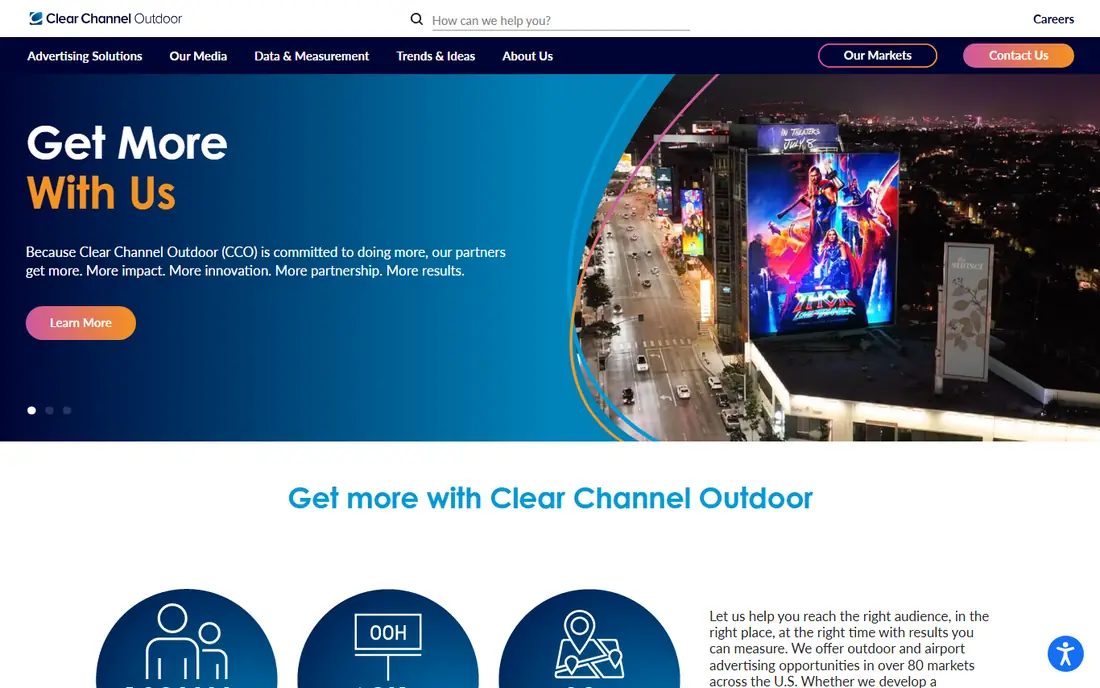
Clear Channel Outdoor owns a large share of digital billboards in major US markets, along with street furniture and airport displays in some cities. For a brand launching in a big city, that depth can deliver repeated exposure along commuter routes. Its sales teams can also bundle boards across neighborhoods to build frequency.
Smaller advertisers should ask about shorter flights and remnant or lower-demand boards. A two-week digital flight on a secondary route can test a message at a lower cost than a four-week buy on a prime highway board. Get the impression estimate in writing, and ask how it was calculated.
- Large digital network in major metros
- Airport and transit-adjacent formats
- Audience data tools
- Big-market pricing
- Minimums may suit larger advertisers better
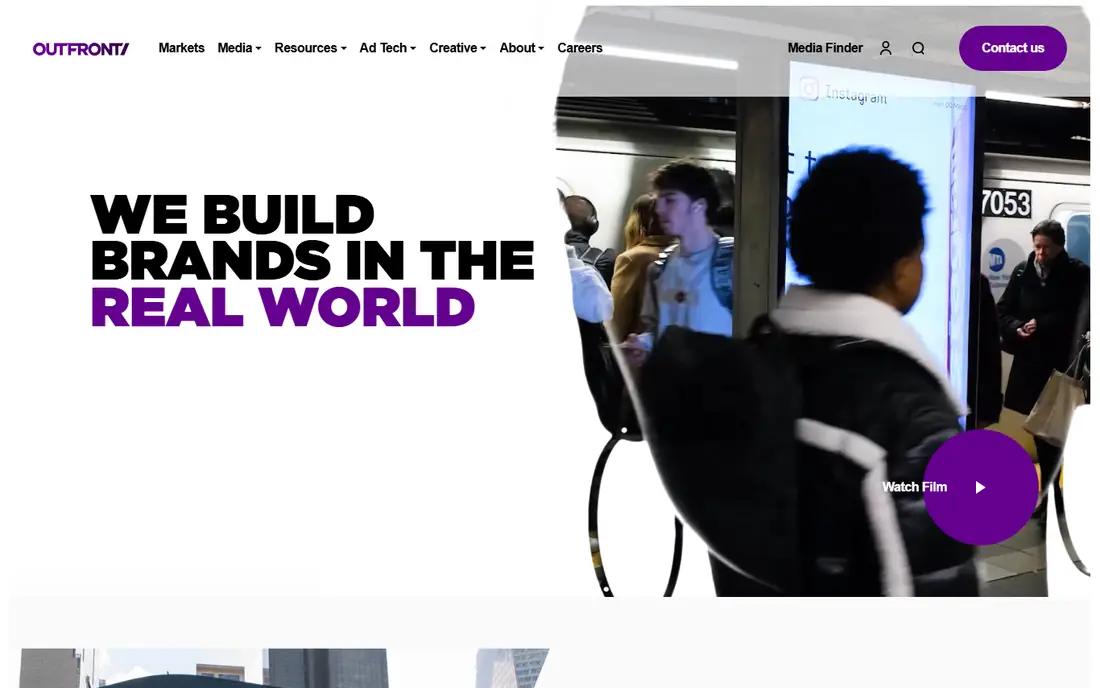
OUTFRONT Media is best known for transit advertising and urban billboards, including large digital boards in busy city areas. That mix suits brands that want to reach pedestrians, commuters, and shoppers in dense neighborhoods, not only drivers on highways. It also offers digital boards that can change creative by time of day.
Check the format carefully before you buy. A transit shelter, a subway display, and a highway bulletin reach different audiences at different speeds. Ask for photos of the exact locations, dwell time, and audience context, so your creative fits the viewing distance and time available.
- Strong transit and urban inventory
- Digital billboards in dense areas
- National and local sales teams
- Transit-heavy mix may not fit highway-focused campaigns
- Pricing varies widely by market
JCDecaux focuses on premium outdoor formats, including airport displays and street furniture in major cities. Its inventory tends to suit luxury, travel, fashion, and other brands that want a polished setting and a longer dwell time. Airport placements, in particular, can reach travelers who have time to read a message and act on it later.
The trade-off is cost and scale. JCDecaux is not the first call for a low-cost highway campaign across small towns. Use it when placement quality matters more than raw board count, and ask about audience profiles for airports and city centers rather than assuming every passerby is your buyer.
- Premium airport and street furniture placements
- High design standards
- Strong presence in major cities
- Premium pricing
- Less suited to rural or highway-heavy plans
Adams Outdoor Advertising serves a set of regional markets with a mix of static and digital boards. For a business that operates in a handful of cities, a regional owner can offer local knowledge, simpler buying, and boards near the places customers actually travel. Local sales teams often know which routes carry shoppers, commuters, or event traffic.
The limit is geography. A national campaign will need Adams plus other owners, or an agency to stitch the plan together. If you buy direct, ask for a map of your boards, the rotation details, and the renewal terms, so a successful test can be extended without losing prime spots.
- Strong regional coverage
- Digital boards in mid-size markets
- Local sales support
- National coverage needs multiple vendors
- Inventory varies by region
AdQuick is a marketplace and planning platform for outdoor advertising, including digital billboards. Instead of calling each owner separately, you can search inventory, compare locations, and build a plan in one place. That saves time for multi-market campaigns and for buyers who want to test several cities at once.
AdQuick does not remove the need to check each board. Review location photos, audience data, and the share of voice for every placement, and confirm creative specs before launch. A platform makes buying easier, but the quality of each board still decides whether the campaign works.
- Search inventory across media owners
- Campaign planning tools
- Measurement options
- Final pricing depends on owner availability
- Platform fees or minimums may apply
Blip lets small advertisers buy short digital billboard spots, often called blips, on participating boards. You set a daily budget, choose boards and times, and upload creative through a self-serve dashboard. That model opens billboards to businesses that could never afford a traditional four-week buy.
The honest limit is frequency. A small budget spread across many boards may buy only a few showings per day on each board, which may not build recall. Start with a small set of boards near your business, run a clear offer, and track redemptions or website visits before you expand.
- Low minimum budgets
- Pay-per-blip model
- Self-serve campaign control
- Small budgets buy limited frequency
- Coverage depends on participating boards
DASH TWO is an outdoor advertising agency that plans, negotiates, and manages billboard campaigns across media owners. That help matters when you need market research, rate negotiation, creative that reads at highway speed, and proof of posting across many boards. Agencies can also find remnant or short-term inventory that a direct buyer might miss.
Agency buying is not free, even when the cost is bundled into media. Ask how fees are charged, what reporting you will get, and who owns the creative files. For a single small board, a self-serve platform may be cheaper, but for a multi-city launch, agency planning often pays for itself in better placements.
- Agency planning and negotiation
- Creative built for outdoor formats
- Campaigns in many US markets
- Agency service suits larger budgets better
- You pay for strategy as well as media
Vistar Media provides programmatic technology for buying digital out-of-home advertising. That means you can buy impressions on digital boards and other screens based on audience, location, and time, rather than buying a fixed board for a fixed flight. For data-driven teams, that flexibility supports testing and optimization.
Programmatic buying adds complexity. You need clear goals, a budget floor that buys enough impressions to learn from, and creative in the right sizes for each screen type. If you are new to programmatic, work with Vistar through an agency or demand-side partner rather than learning the system on a live campaign budget.
- Programmatic buying across digital screens
- Audience targeting options
- Campaign reporting tools
- Needs programmatic knowledge or a partner
- Not ideal for a single static board buy
How we picked these
We compared media owners, marketplaces, and agencies that sell digital billboard space in the United States, using official inventory pages, buying guides, and public campaign information. We favored companies with current digital inventory, clear buying paths, and a distinct role, from national owners to small-budget platforms. We left out firms that only sell static boards or that had no clear digital buying option.
What to check before you buy
Start with the goal and the geography. A board works best when it sits on a route your customers already travel, whether that is a commute, a shopping trip, or a trip to an event. A cheap board in the wrong place is worse than no board at all, because it spends budget without reaching buyers.
Creative rules matter more outdoors than online. Use a short headline, one clear action, and large type that can be read in a few seconds. Avoid dense text, small phone numbers, and complex web addresses. A QR code can work on a slow-moving street board, but it is less useful on a fast highway bulletin.
Ask for the full commercial terms before you sign. Confirm the flight dates, the number of spots per hour, the share of voice, the creative change policy, and the proof of posting. Ask what happens if a board goes dark, and whether you get make-good time. Those details protect a small budget far more than a discount on the rate card.
Measuring a billboard campaign
Use a dedicated landing page, a short offer code, or a tracked phone number so you can separate billboard response from other channels. Foot traffic studies and brand surveys can help for larger campaigns, but they cost money and need a baseline. For most small campaigns, a simple before-and-after check on store visits, calls, and website traffic from the board area is a fair start.
Frequently asked questions
What is the best digital billboard company?
It depends on your buying model. Lamar, Clear Channel Outdoor, and OUTFRONT own large board networks, while AdQuick and Vistar help you buy across owners. Blip suits small budgets, and DASH TWO suits buyers who want agency help. Shortlist by market, budget, and how much planning help you need.
How much does a digital billboard cost?
Costs vary by market, location, board size, and flight length. Small-market digital boards can cost far less than prime highway boards in large cities. Ask each vendor for a quote on the exact boards you want, including the share of voice and the number of spots per loop, so quotes are comparable.
How long should a digital billboard campaign run?
Many digital campaigns run for two to four weeks, though some platforms allow shorter flights. A short test can check creative and response, but brand recall usually needs repeated exposure over weeks. Plan enough time for people to see the message more than once on their regular routes.
Can small businesses afford digital billboards?
Yes, in many cases, through self-serve platforms such as Blip or through a short flight on a secondary board. Keep the geography tight, use one clear offer, and track response before you expand. A single board near your business often beats a scattered buy across a whole city.
Do digital billboards work better than static billboards?
Each format has a job. Digital boards allow fast creative changes, dayparting, and shorter flights, while static boards own one location around the clock. Many campaigns use both: a static anchor board for constant presence, plus digital boards for timely offers and event traffic.
Sources
See where you really rank - block by block
ProMapRanker scans Google Maps across a grid of your service area. Simple monthly plans from $19, white-label on every plan.
Start freeKeep reading
 zscaler alternatives
Best Zscaler Alternatives in 2026
Looking for zscaler alternatives? We compare 9 SASE and zero trust platforms on architecture, data protection, pricing, and fit for your network and team.
Read → zapier alternatives free
Best Zapier Alternatives Free in 2026
Nine automation tools for zapier alternatives free in 2026, all with genuinely free tiers, plus free plan limits, starting prices and upgrade paths explained.
Read → which platform is best for online reputation
Which Platform Is Best for Online Reputation in 2026
Wondering which platform is best for online reputation? We compare 8 review, listing, and response tools for small and multi-location businesses and agencies.
Read →