 ProMapRanker
Best Community Platforms in 2026

Key takeaways
- Circle is our pick for most paid creator communities because it mixes polished spaces, courses, events and automation in one hosted platform.
- Mighty Networks suits mobile-first communities where courses, programmes and daily member activity sit in one app.
- Discourse suits forum-style communities that want open-source control, strong search and long-lived discussion threads.
- Discord and Slack suit free or low-cost chat communities, but they offer less control over monetisation and data than a dedicated platform.
- Check transaction fees, export options and moderation tools before you choose, because those three points decide whether a platform still fits as you grow.
Quick comparison
| Pick | Great for | Pricing starts at | Free tier | |
|---|---|---|---|---|
 Circle | Paid creator communities | $89 per month | Free trial | Visit |
 Mighty Networks | Mobile-first courses and community | $79 per month | Free trial | Visit |
 Discourse | Open forum communities | Free | Yes | Visit |
 Discord | Free real-time chat communities | Free | Yes | Visit |
 Skool | Simple gamified course communities | $99 per month | Free trial | Visit |
 Bettermode | Branded customer communities | $149 per month | Free trial | Visit |
 Hivebrite | Alumni and association networks | See website | No | Visit |
 Slack | Small focused chat groups | Free | Yes | Visit |
The best community platforms
We compared official pricing pages, feature pages and public reviews for the platforms below, and we focused on spaces, moderation, monetisation, mobile access and data control. These are the best online community platforms we found for different kinds of groups.
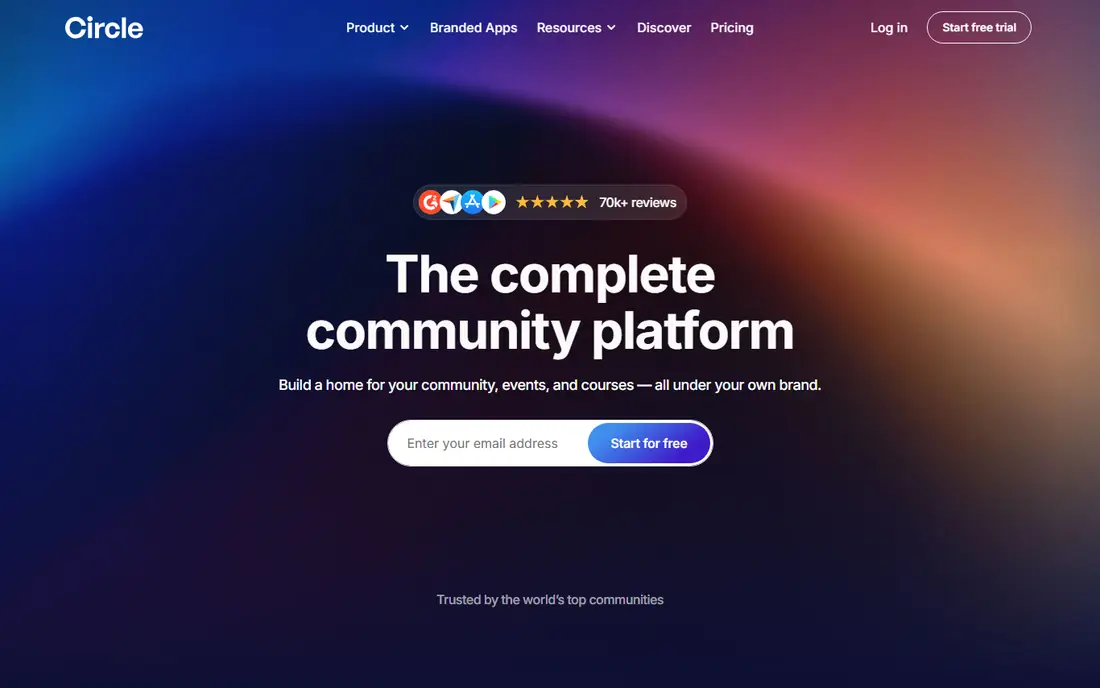
Circle is the cleanest all-round choice for a paid community. Spaces can hold discussion, courses, events and live sessions, and members get a modern, easy-to-read layout on web and mobile. Workflow automation can welcome new members, move them into the right space and send reminders, which saves a community manager hours each week.
The catch is tiering. The best automation, white-label app options and some advanced tools sit above the entry plan, and a transaction fee applies on lower plans. A 14-day trial helps you test the setup, but you should map which features you need before choosing a tier. For creators and coaches building a paid community, Circle is the best community platform in this list for most cases.
- Polished spaces, courses, events and live rooms
- Workflow automation
- Transaction fees fall on higher plans
- Higher plans hold the best automation and app features
- Transaction fees apply on lower plans
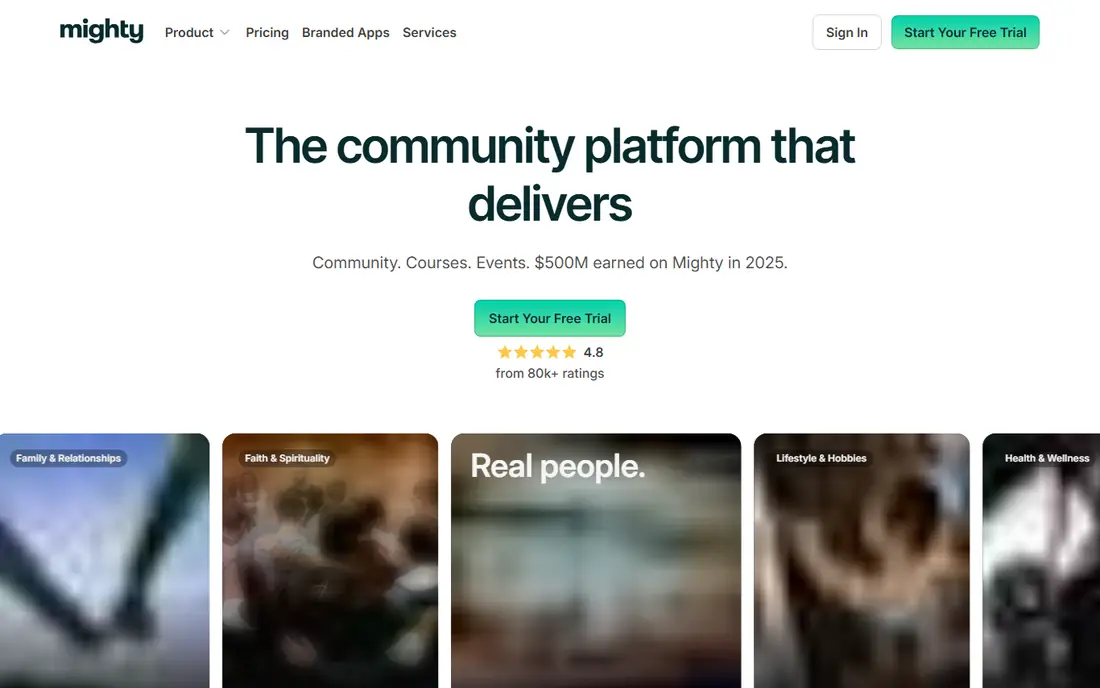
Mighty Networks puts the mobile experience first. Members open one app for posts, courses, events, chat and live sessions, which suits communities where daily phone use drives engagement. Its community design framework also helps creators structure a programme, from onboarding to courses to member milestones, rather than leaving a forum to grow on its own.
Pricing mirrors Circle, with a starting plan around $79 per month and transaction fees on lower plans. A custom branded app is a higher-tier option, not an entry feature. If your members live on their phones and your offer mixes courses with community, Mighty Networks is one of the best community apps here, and a close rival to Circle.
- Strong native mobile apps
- Courses, groups and events in one place
- Community design tools for programmes
- Transaction fees on lower plans
- Full custom app options sit on higher plans
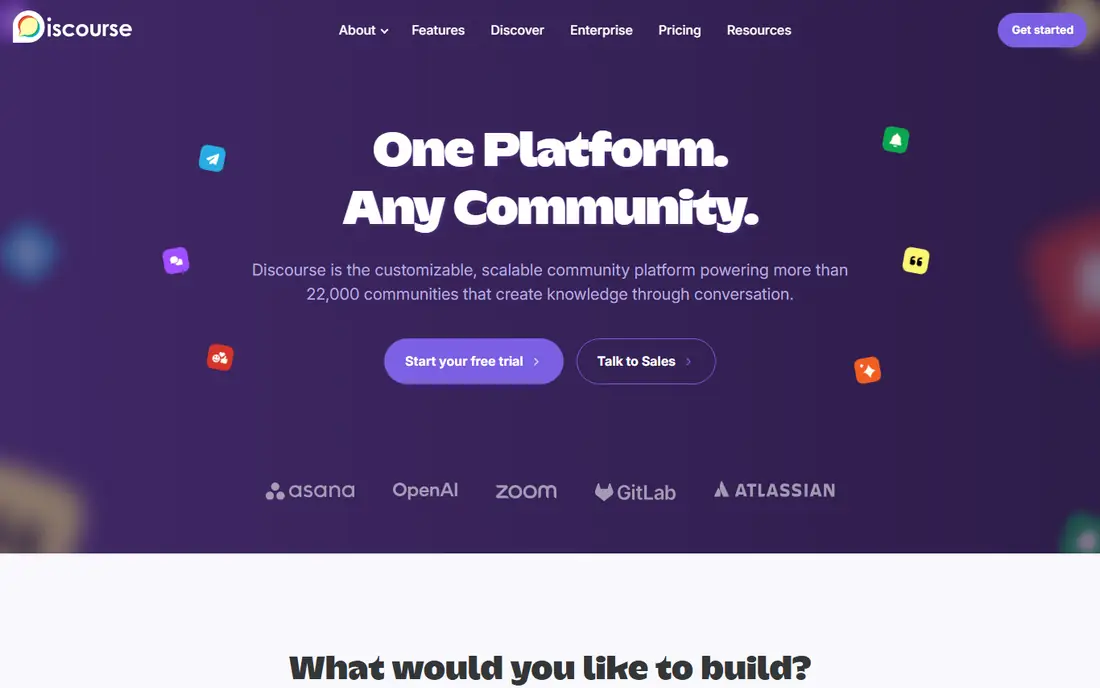
Discourse is the pick for communities that live in threads. Long discussions stay searchable for years, categories and tags keep topics organised, and trust levels let active members earn moderation powers over time. That structure suits developer forums, product communities, support groups and hobby communities where answers should be easy to find later.
Self-hosting is free in licence terms, but it needs server setup and upkeep, while hosted plans start at a published monthly price. Discourse also does less as a course or live-event platform than Circle or Mighty Networks. For a forum-first community that values openness and data control, it is the best online community software choice in this list.
- Open source and self-hostable
- Strong search and long-thread discussion
- Trust levels and moderation tools
- Forum style suits discussion more than courses or live events
- Self-hosting needs technical skill
Discord suits informal, high-volume chat. Servers can hold text channels, voice rooms, events and bots, and members can join free without a new account in many cases. Gaming, hobby, study and creator communities thrive here because conversation is fast and always on.
The limits appear when a community grows into a business. Search across years of chat is weaker than a forum, paid access tools are less direct than a dedicated platform, and you do not control the underlying data or branding in the same way. Discord is still the best community app for a free, chat-led group, but treat it as a gathering place, not a full membership business, unless you add tools around it.
- Free to start
- Voice, video and text channels
- Large existing user base and bot ecosystem
- Chat history and search are weaker for long-term knowledge
- Monetisation and data control are limited
Skool wins on simplicity. One plan covers a community, courses, a calendar and a leaderboard, and members earn points and levels for posting and engaging. That game-like loop suits coaches and course creators who want members to show up, finish lessons and talk to each other, without learning a complex platform.
Simplicity is also the trade-off. Customisation, automation and branding options are thinner than on Circle or Mighty Networks, and the flat monthly price may feel high for a very small group. If you want the simplest path to a paid course community, Skool is one of the best community platforms for getting started quickly.
- Simple setup
- Courses, community and calendar in one view
- Gamification with points and levels
- Single-plan simplicity limits customisation
- Fewer advanced automation options than Circle
Bettermode, formerly Tribe, suits brands that want a community on their own site, with their own look and feel. Spaces can hold discussion, Q and A, articles and product feedback, and integrations link the community to support and CRM tools. That makes it a good fit for software companies and customer communities, where the goal is retention and support, not just chat.
The starting price, around $149 per month on annual billing in recent listings, puts it above creator platforms for a solo user. Higher growth plans cost far more. For a brand that needs a polished, branded support community, Bettermode is a strong pick among the best community management software options here.
- Customisable branded spaces
- Good for customer and support communities
- Integrations with help and product tools
- Starting price is high for solo creators
- Some advanced plans are quoted
Hivebrite is designed for structured networks, such as alumni groups, professional associations and large organisations. A member directory, subgroups, events, email campaigns and paid membership tools sit in one branded platform, which suits networks that need order and governance, not just open chat.
That structure comes at enterprise cost. Pricing is quoted, and small creators will find it out of reach. A demo is the usual first step, rather than a self-serve trial. For an association or alumni network that needs a managed, branded home, Hivebrite is one of the best community platform software options, even if it is not a creator tool.
- Built for alumni, associations and professional networks
- Member directory and groups
- Event and email tools
- Pricing is quoted and high for small groups
- Demo-based sales process
Slack works well for a small, focused community that already uses it for work or study. Channels, threads, file sharing and integrations make daily chat easy, and the free tier covers basic use for a small group. Private cohorts, mastermind groups and project teams often choose Slack because members already know it.
It is not built as a public community platform. Free plan message history is limited, paid membership and discovery tools are weak, and costs rise per user on paid plans. For a small private group, Slack is a practical best community software choice. For a public paid community, Circle, Mighty Networks or Discourse will fit better.
- Free tier for small groups
- Familiar chat, channels and threads
- Many integrations
- Message history limits on the free plan
- Not built for public paid communities
How we picked these
We compared official pricing and feature pages and public reviews for each platform, and we checked that each one is live and actively sold in October 2026. We favoured platforms that offer clear moderation, member spaces, mobile access and a path to monetisation, and we mixed free chat tools with paid creator and enterprise platforms. Prices shown are starting prices from recent listings, and where pricing is quoted we wrote See website rather than guessing.
What to check before you choose a community platform
Start with the kind of conversation you want. A forum suits long, searchable answers, a chat app suits fast daily talk, and a course community suits structured learning with discussion beside it. Picking the wrong format will frustrate members, even if the platform itself is good, so match the format to your content first.
Next, check money and ownership. Ask about monthly fees, transaction fees on member payments, and what you can export if you leave, including member lists, posts and payment data. A platform that locks your members in may feel fine at launch and painful at year two. Get export options in writing, or at least confirmed on a help page, before you build.
Finally, test moderation on a real group. Invite a small test group, post, report a test message, and see how roles, approvals and spam controls work. Good moderation tools protect members and save the manager time, while weak tools turn growth into a chore. A short trial with real people tells you more than a feature page.
Frequently asked questions
What is the best online community platform for creators?
Circle is a strong all-round pick for paid creator communities, with spaces, courses, events and automation in one place. Mighty Networks suits mobile-first communities, while Skool suits coaches who want a simpler, gamified setup. The best choice depends on whether your members learn, chat or attend events most.
What is the best free community platform?
Discord is the best free option for real-time chat, and Discourse is the best free option for a searchable forum, if you self-host it. Slack also offers a free tier for small private groups. Free platforms cost less in money, but they offer less control over branding, payments and data than paid platforms.
What is the best community management software for support teams?
Bettermode and Discourse suit support communities, because both offer searchable discussion, categories and moderation tools that help members find answers. Hivebrite suits larger associations that need a member directory and governance. For a small support community, Discourse self-hosted is a low-cost place to start.
Do community platforms charge transaction fees?
Many do, especially on lower plans. Circle and Mighty Networks charge a transaction percentage that falls on higher plans, while Discord and Discourse do not take a cut of member payments in the same way. Always add transaction fees and payment processing to the monthly plan price to get the true cost.
Can I move my community to another platform later?
In most cases you can export member lists, and often posts, but the ease varies a lot by platform. Dedicated platforms usually offer export tools, while chat apps may export less. Check export options before you launch, and keep your own email list so a move does not mean losing contact with members.
Is a Facebook Group a good community platform?
A Facebook Group is free and easy to start, and it suits testing an idea or running a casual hobby group. It offers little control over data, branding, monetisation and reach, because the algorithm and rules sit with Facebook. Most serious paid communities treat a Facebook Group as a discovery channel, not the main home.
Sources
See where you really rank - block by block
ProMapRanker scans Google Maps across a grid of your service area. Simple monthly plans from $19, white-label on every plan.
Start freeKeep reading
 vercel alternatives
Vercel Alternatives in 2026
Compare the best Vercel alternatives for static sites, full-stack apps and backends, with free tiers, current pricing and honest trade-offs for developers.
Read → best veterinary software
Best Veterinary Software in 2026
We compared the best veterinary software for clinics of every size, from cloud practice tools to desktop systems, with detailed pricing and trade-offs.
Read → best truck gps app
Best Truck GPS App in 2026: 8 Apps Compared
Best truck GPS app picks for truckers, with truck routing, low bridge warnings, parking and fuel tools, plus current prices and free options for US drivers.
Read →