 ProMapRanker
Best Commercial Auto Companies in 2026


Small fleets and owner-operators · Pricing starts at: See website
Key takeaways
- Commercial auto insurance is priced per business, so the cheapest carrier for one fleet is rarely the cheapest for another.
- Progressive Commercial suits many small fleets and owner-operators, while Travelers and The Hartford often suit larger or more complex fleets.
- NEXT Insurance suits very small businesses that want fast online cover, but its limits may not suit larger fleets.
- Compare quotes with the same limits, deductibles, and vehicle list, or the price comparison will mislead you.
Quick comparison
| Pick | Great for | Pricing starts at | Free tier | |
|---|---|---|---|---|
| Progressive Commercial | Small fleets and owner-operators | See website | No | Visit |
 Travelers | Larger and complex fleets | See website | No | Visit |
 Nationwide | Multi-state and bundled business cover | See website | No | Visit |
 Liberty Mutual | Safety-focused fleets | See website | No | Visit |
 The Hartford | Small to mid-sized business fleets | See website | No | Visit |
 GEICO Commercial | Direct online quotes | See website | No | Visit |
 NEXT Insurance | Very small businesses | See website | No | Visit |
 State Farm | Agent-led service and bundling | See website | No | Visit |
The best commercial auto companies
This guide treats "commercial auto companies" as insurers that offer commercial auto cover for business vehicles, since that is how most small business owners search for this topic. Prices depend on vehicle type, driving history, location, limits, and claims history, so we do not publish a single price for any carrier. Get quotes with identical limits and deductibles, and check which endorsements each carrier includes.
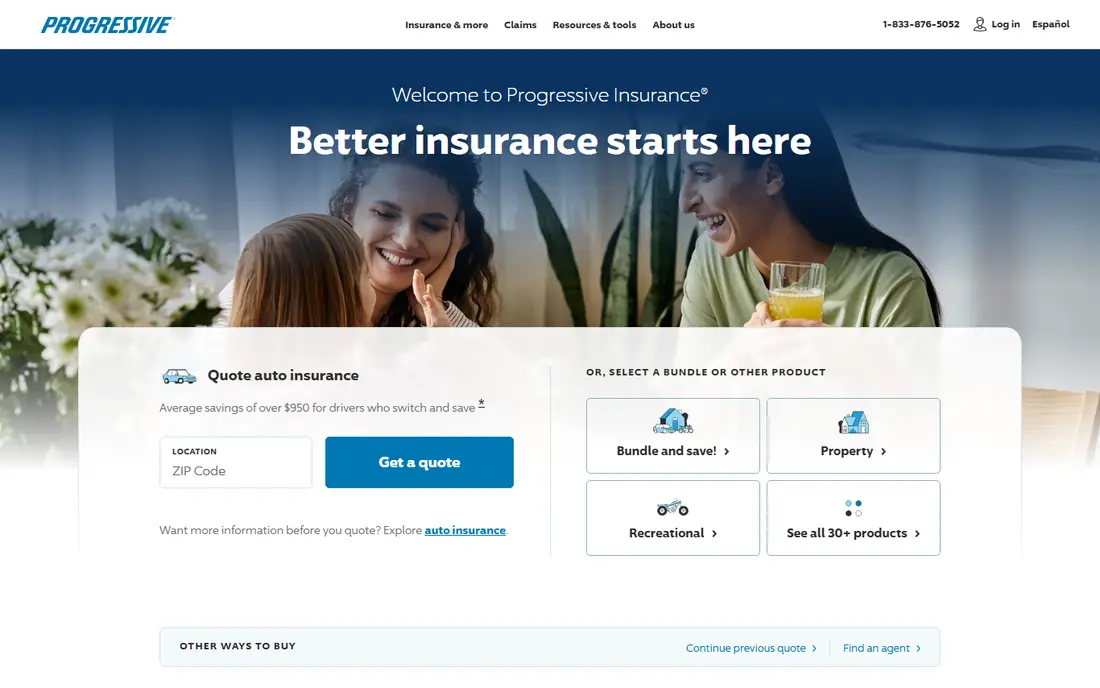
Progressive Commercial is the largest commercial auto insurer in the United States by several industry measures, and it is a natural first quote for many small fleets. It covers cars, trucks, vans, food trucks, tow trucks, and many other business vehicles, and its online quoting and claims tools suit owners who prefer to manage cover digitally. Telematics options can reward safer driving for some fleets, though savings depend on driving data and state rules.
The catch is experience. A direct, digital-first carrier can feel impersonal when a claim is complex, and some owners prefer an agent who knows their business. Progressive also notes limits on fleet size for some online products, so larger fleets should confirm eligibility before assuming online cover applies.
- Large commercial auto presence
- Online quotes and claims tools
- Wide range of vehicle types covered
- Service can feel less personal than an agent-led carrier
- Best rates may require bundling
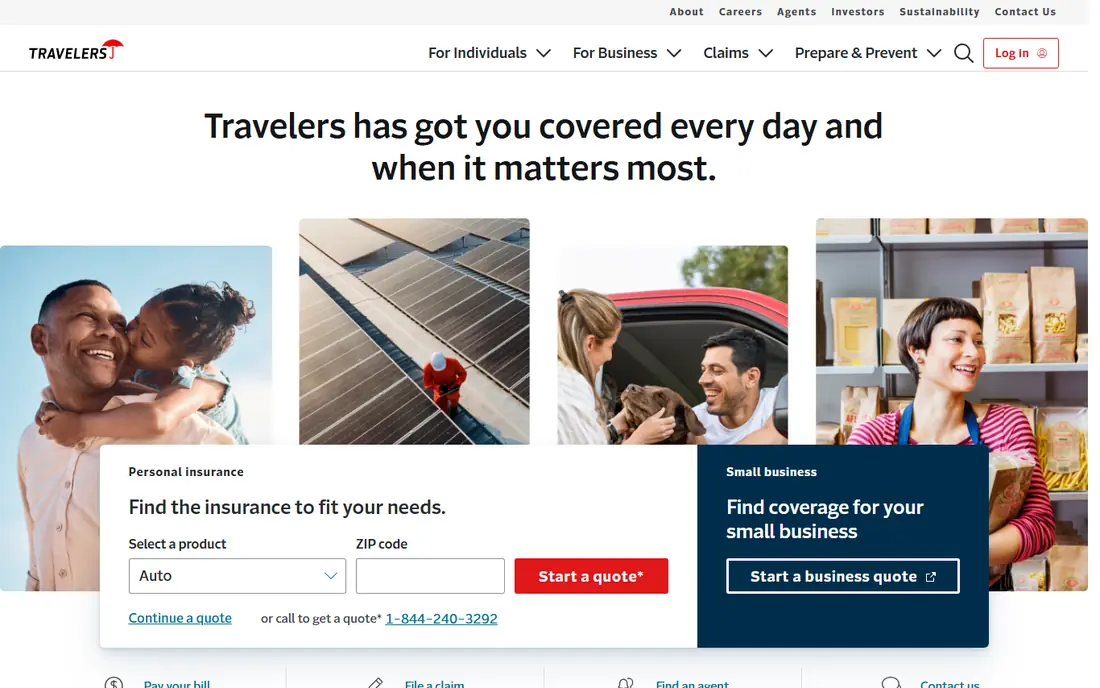
Travelers suits businesses with mixed vehicle types, multiple locations, or complex risks. Its risk control services, driver safety resources, and industry-specific packages help larger fleets manage claims before they happen, not just after. That support is a real benefit for companies with safety managers or formal driver training programs.
Small businesses may find Travelers less accessible. Minimum premiums and underwriting requirements can be steep for a one-vehicle operation, and the quoting process is often agent-led rather than instant online. It is a strong shortlist pick for established fleets, less so for a brand-new single-truck business.
- Strong risk control and fleet safety resources
- Broad industry packages
- Strong financial strength
- Minimum premiums may be high for very small businesses
- Quoting can be more involved
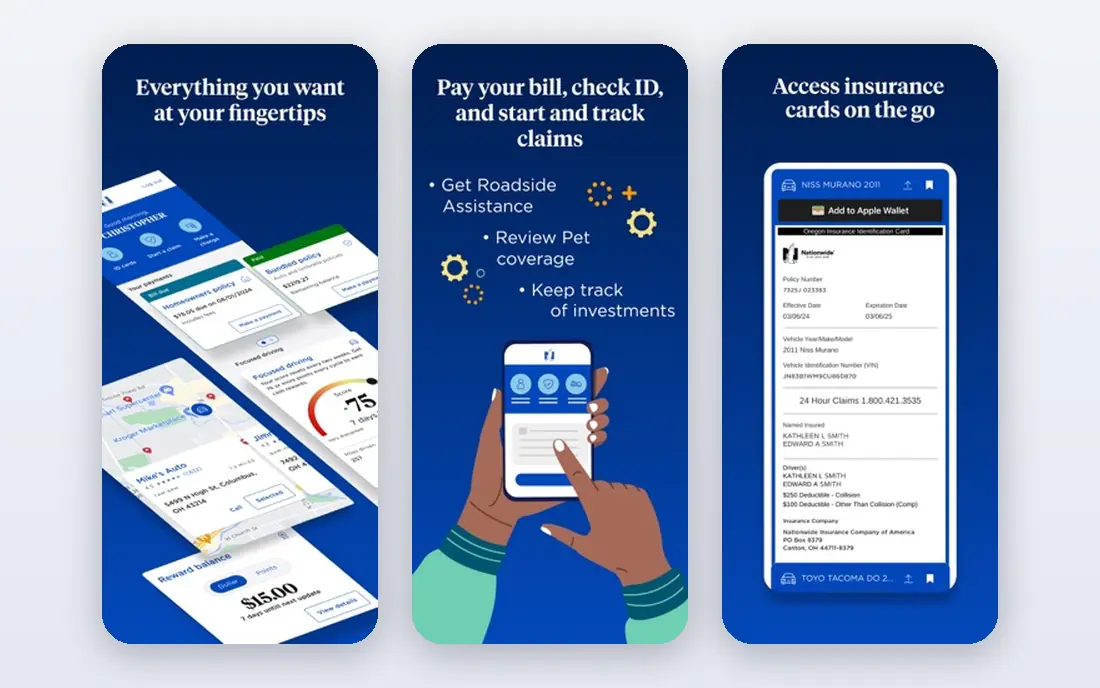
Nationwide works well for businesses that operate in several states and want one carrier for auto, general liability, and other business cover. Its agent network suits owners who want local help, and its annual policy reviews can catch changes in vehicle lists or limits. Telematics and safe-driving options are available in many states, though terms vary.
The digital experience is the weak spot. Owners who want a fully online quote, policy change, and claim process may find Nationwide slower than Progressive or NEXT. If agent support matters more than speed, that trade is easy to accept.
- Broad agent network
- Bundling with other business cover
- Telematics options in many states
- Digital tools can lag direct rivals
- Cover details vary by state
Liberty Mutual is a good fit for companies that invest in driver safety and want a carrier that rewards that work. Its loss control resources, driver training partnerships, and business auto enhancement options help fleets reduce risk over time, and its agent network gives owners a person to call when cover questions arise. International cover options also suit businesses with cross-border operations.
Quoting is not always quick, and price comparisons can surprise owners who expect a safety program alone to guarantee the lowest premium. Get a full quote with the same limits as other carriers, and ask which safety discounts actually apply to your fleet.
- Loss prevention and safety resources
- Agent network
- Enhancement packages for business auto
- Quoting can be complex
- Premiums can be higher for low-risk profiles in some comparisons
The Hartford is a common pick for small to mid-sized fleets, typically in the one to ten vehicle range. Its claims service, online portal, and payment flexibility suit owners who want a stable carrier without a fully digital-only experience. A wide range of endorsements lets businesses add cover for hired autos, non-owned autos, and other common needs.
Very high-risk industries, such as long-haul trucking with a difficult claims history, may find The Hartford less competitive. New businesses should also check terms carefully, since established businesses with a claims history often get better treatment.
- Strong claims service reputation
- Flexible payment options
- Wide range of endorsements
- May be less competitive for very high-risk industries
- New businesses may face stricter terms
GEICO Commercial suits owners who want a fast, direct quote without an agent meeting. Its online tools cover quoting, policy changes, and claims reporting, and its pricing is often competitive for small fleets and owner-operators. For a straightforward business with standard vehicles, that simplicity is a genuine benefit.
The trade is advice. Owners with unusual vehicles, mixed fleets, or complex liability needs may miss cover gaps without an agent review. Use GEICO as a price benchmark, then check its cover against an agent-led quote before deciding.
- Direct online quoting
- Competitive pricing for many small fleets
- Simple policy management
- Less agent support than agent-led carriers
- Cover options vary by business type
NEXT Insurance is built for micro-businesses and startups that need cover quickly. Quotes can be completed online in minutes, policies are often month-to-month, and the interface is simpler than a traditional carrier portal. For a sole trader with one van or a small service business, that speed removes a common barrier to getting insured.
Limits are the constraint. Larger fleets, specialized vehicles, and higher limit needs may exceed what NEXT offers in a given state. Treat NEXT as a strong starter option, and move to a larger carrier as fleet size and risk grow.
- Fast online quotes
- Month-to-month options in many cases
- Simple interface for new businesses
- Limited to smaller fleets and lower limits in many cases
- Not suited to large or specialized fleets
State Farm suits owners who want a local agent and a single carrier for several policies. Its agents can review vehicle lists, driver lists, and liability limits in person, which helps businesses with changing fleets or seasonal staff. Bundling business auto with other cover can also simplify renewals and billing.
The online experience is less direct than Progressive, GEICO, or NEXT, and quotes often run through an agent. Owners who value speed above personal service may prefer a digital carrier, while owners who value a known contact will find State Farm a solid fit.
- Large agent network
- Bundling with business and personal cover
- Local claims support
- Online quoting is less direct than digital rivals
- Pricing varies widely by state and agent
How we picked these
We compared carriers that offer commercial auto cover in the United States in October 2026, using official product pages, carrier descriptions, and independent comparison reporting. We favored carriers with broad availability, clear commercial auto products, and distinct strengths for different fleet sizes. We did not publish prices, since commercial auto premiums depend on fleet, location, history, and limits, and a single figure would mislead readers.
How to compare commercial auto quotes fairly
Start with a single vehicle and driver list, and use it for every quote. List each vehicle, its use, its garaging location, and each driver, then set the same liability limits, deductibles, and endorsements for every carrier. If one quote uses lower limits, it will look cheaper without offering the same protection. Ask each carrier to confirm hired and non-owned auto cover if staff ever drive personal or rented vehicles for work.
Next, check claims and service, not just price. Ask how claims are reported, whether repairs use approved shops, and how quickly a commercial claim is typically handled. Check telematics terms carefully: some programs reward safe driving, while others may raise rates based on driving data, depending on state rules. Finally, review the policy each year, since fleet size, vehicle use, and driver lists change faster than most owners expect.
Cover types to understand before you buy
Liability cover pays for injury or damage your business causes to others, and it is required in most states. Physical damage cover pays for your own vehicles after a collision or other loss, subject to a deductible. Medical payments, uninsured motorist, and hired or non-owned auto endorsements fill common gaps. A carrier that explains these options clearly, in plain terms, is easier to work with when a claim arrives.
Mistakes that cost small fleets money
The most common mistake is listing a personal vehicle as commercial, or a commercial vehicle as personal, which can lead to a denied claim. Another is forgetting to add new drivers or vehicles promptly. A third is choosing the lowest limit to save money, then facing a large uncovered loss after a serious crash. Spend time on the vehicle and driver list, since that list drives both price and protection.
Frequently asked questions
What is commercial auto insurance?
Commercial auto insurance covers vehicles used for business, including company cars, trucks, vans, and fleets. It typically includes liability, physical damage, medical payments, and uninsured motorist cover, with optional endorsements for hired and non-owned vehicles. Personal auto policies usually exclude regular business use, so a separate commercial policy is often required.
How much does commercial auto insurance cost?
It varies widely by vehicle type, location, driving history, claims history, limits, and fleet size. That is why this guide uses See website for prices rather than a single figure. Get at least three quotes with identical limits and deductibles to compare fairly.
Do I need commercial auto insurance for one vehicle?
Often yes, if the vehicle is owned by the business, used mainly for business, or carries goods, tools, or passengers for work. Check your state rules and your personal policy exclusions, since personal cover may not apply to regular business use. An agent or carrier can confirm whether a commercial policy is required in your case.
What is the difference between hired and non-owned auto cover?
Hired auto cover applies to vehicles your business rents or leases for work. Non-owned auto cover applies to vehicles owned by staff or others but used for business trips. Both are common endorsements, and many small businesses need at least one of them.
Can telematics lower my commercial auto premium?
It can, for fleets with safe driving patterns, though savings depend on the carrier, the state, and the driving data collected. Ask how data is used, whether it can raise rates, and how long data is kept before enrolling a fleet in a telematics program.
Sources
See where you really rank - block by block
ProMapRanker scans Google Maps across a grid of your service area. Simple monthly plans from $19, white-label on every plan.
Start freeKeep reading
 zscaler alternatives
Best Zscaler Alternatives in 2026
Looking for zscaler alternatives? We compare 9 SASE and zero trust platforms on architecture, data protection, pricing, and fit for your network and team.
Read → zapier alternatives free
Best Zapier Alternatives Free in 2026
Nine automation tools for zapier alternatives free in 2026, all with genuinely free tiers, plus free plan limits, starting prices and upgrade paths explained.
Read → which platform is best for online reputation
Which Platform Is Best for Online Reputation in 2026
Wondering which platform is best for online reputation? We compare 8 review, listing, and response tools for small and multi-location businesses and agencies.
Read →