 ProMapRanker
Best Combined Expense and Corporate Card Platform in 2026

Key takeaways
- Ramp and Brex offer a genuinely free core tier for cards plus expenses, while paid tiers add deeper controls and accounting integrations.
- BILL Spend and Expense suits teams already using BILL for payables, since cards, budgets and approvals sit in the same system.
- Expensify suits teams that want expense reporting without switching cards, while Navan suits teams that also book travel.
- Airbase, Pleo and Spendesk suit mid-market and European teams that need procurement, multi-currency or VAT handling.
- This is general information only, not financial advice. Card eligibility, credit limits, fees and approval terms vary by business and are never guaranteed.
Quick comparison
| Pick | Great for | Pricing starts at | Free tier | |
|---|---|---|---|---|
 Ramp | Free cards plus expenses for startups | Free | Yes | Visit |
 Brex | Startups wanting cards plus spend controls | Free | Yes | Visit |
 BILL Spend and Expense | Teams already using BILL | Free | Yes | Visit |
 Expensify | Expense reporting without new cards | $5 per member per month | Yes | Visit |
 Navan | Travel plus expense in one platform | Free | Yes | Visit |
 Airbase | Procurement-led mid-market spend | See website | Free trial | Visit |
 Pleo | European teams with VAT needs | See website | Free trial | Visit |
 Spendesk | European mid-market spend control | See website | No | Visit |
The best combined expense and corporate card platforms
We compared official pricing pages, product documentation and public reviews for platforms that issue corporate cards and handle expenses in one place, and we kept tools that still serve US and European teams in October 2026.
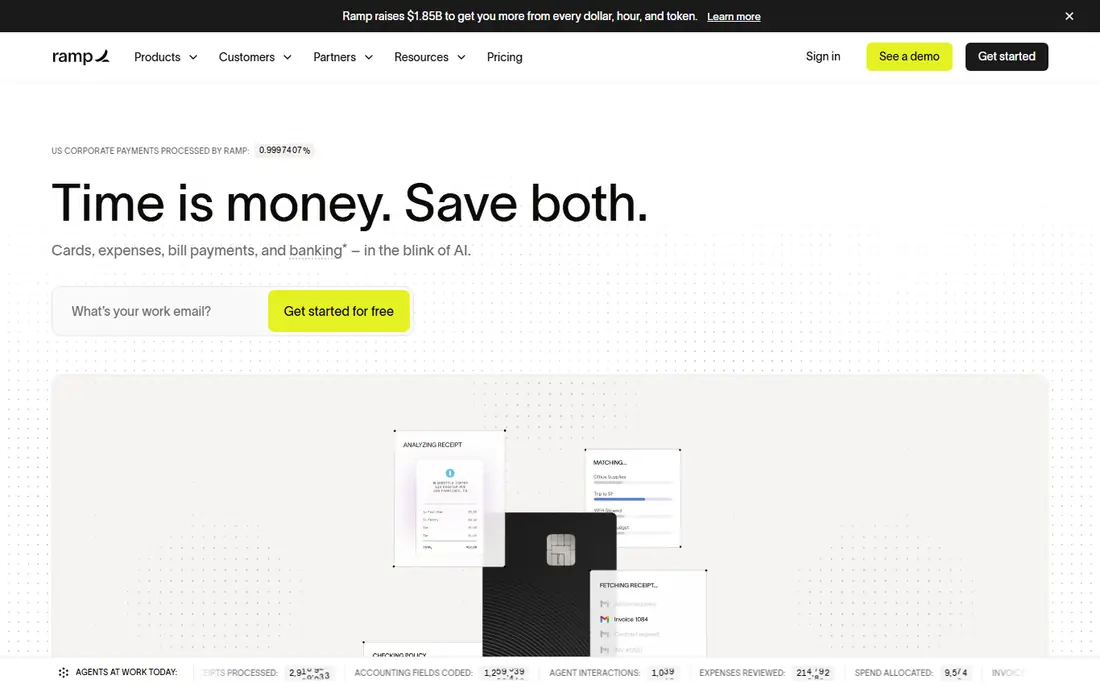
Ramp is the pick we point to first for small teams that want cards and expenses without a subscription. The free core platform covers corporate cards, expense tracking, basic accounting integrations and bill pay, and policy checks happen at card authorisation rather than after the money is spent. That timing helps finance teams stop out-of-policy spend before it becomes a reimbursement dispute.
Paid tiers add depth. Ramp Plus costs $15 per user per month plus a platform fee, and it adds advanced controls, policy enforcement and deeper accounting integrations. Card approval is not automatic for every business, so check eligibility and credit terms before you plan a rollout. For qualifying startups, Ramp is a strong free starting point.
- Free core platform
- Cards, expenses and bill pay in one place
- Policy checks at card authorisation
- Plus costs $15 per user per month plus a platform fee
- Card eligibility depends on underwriting
- Some features need paid tiers
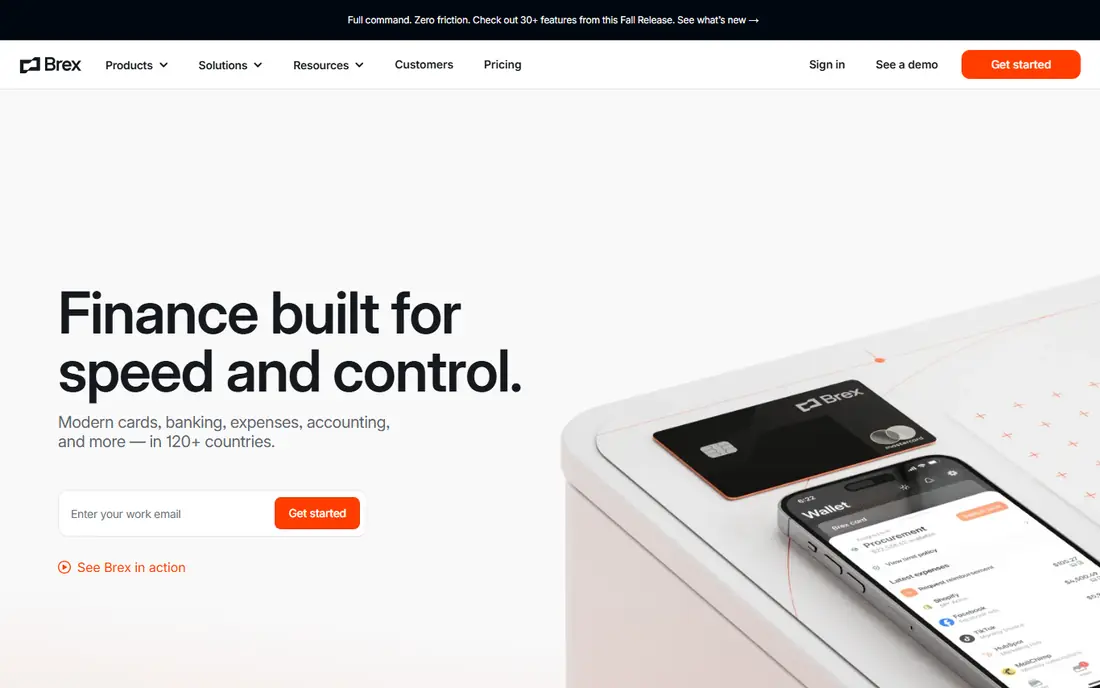
Brex pairs corporate cards with expense management and spend controls in one dashboard. Essentials is free and covers cards, expense management, spend controls and basic integrations. When a card is used, the system checks the purchase against policy at transaction time, which reduces the cleanup work that comes with post-spend approvals.
Premium costs $12 per user per month and adds deeper integrations, higher credit limits and priority support. Brex also offers travel and bill pay features, though some sit on paid tiers. For startups and global teams that want a free core with a clear upgrade path, Brex is a close rival to Ramp.
- Free Essentials tier
- Cards with spend controls and budgets
- AI checks at transaction time
- Premium costs $12 per user per month
- Some integrations sit on paid tiers
- Card eligibility depends on underwriting

BILL Spend and Expense, formerly Divvy, gives teams corporate cards with budgets, approvals and expense tracking at no software cost when they use a BILL corporate card. Managers set budgets by team or category, employees request funds in the app, and finance sees spend as it happens rather than at month end.
The main limit is fit. Teams that do not use BILL for payables may find less reason to choose it over Ramp or Brex, and other BILL products are priced separately. For a team already running payables on BILL, adding cards and expenses here keeps approvals, budgets and payments in one place.
- Free with a BILL corporate card
- Budgets and approvals tied to cards
- Fits BILL payables users
- Best value inside the BILL system
- Other BILL products cost extra
- Card eligibility depends on underwriting
Expensify is the classic expense reporting choice, and it now also offers its own card for teams that want a combined setup. Collect starts at $5 per member per month, and the platform handles receipt capture, expense reports, approvals and reimbursements. Teams that want to keep their current corporate cards can still use Expensify for reporting, which is a real advantage over card-first rivals.
The catch is timing. Policy checks happen during approval, so out-of-policy spend is caught after the purchase, not blocked at the card. Control, which adds multi-level approvals and deeper integrations, costs more. For teams that value reporting flexibility over card-first control, Expensify remains a solid pick.
- Works with existing cards
- Receipt scanning and SmartScan
- Expensify Card available for teams that want one
- Policy enforcement happens during approval, not at purchase
- Advanced controls sit on Control
- Per-member pricing adds up
Navan, formerly TripActions, is the best combined choice when travel is a large share of spend. Employees book travel inside policy, expenses are categorised in real time, and managers see travel and non-travel spend together. For companies under 300 employees, the first 5 monthly expensing users are free, which lets a small team test the expense side at no cost.
Beyond those users, the expense plan costs $15 per user per month, and travel booking itself is free for many teams. Navan does not focus on bill pay in the same way as Ramp or Brex, so accounts payable teams may need another tool. For travel-heavy companies, the combined booking and expense flow is a clear win.
- Travel booking plus expenses in one flow
- Real-time expense categorisation
- First 5 expensing users free for smaller companies
- Expense plan costs $15 per user per month after the free users
- Bill pay is not the focus
- Travel-heavy pricing needs checking
Airbase suits mid-market companies that want procurement, cards and expenses under one set of controls. Purchase requests, approvals, cards and accounting sync sit in the same workflow, which helps finance teams that need to approve spend before it happens, not just track it after. That procure-to-pay depth is the reason larger finance teams choose Airbase over simpler card tools.
Pricing is quote-based, and implementation runs longer than a self-serve card signup. Small teams with simple expense needs will find Airbase too heavy. For a growing company with procurement, vendor and accounting complexity, it gives finance a single control point.
- Procure-to-pay controls
- Cards, approvals and accounting in one system
- Strong mid-market workflows
- Quote-based pricing
- Implementation takes longer than card-first tools
- Smaller teams may find it too heavy
Pleo is built for European teams that need cards, expenses and VAT handling in one tool. Employees get company cards with limits, capture receipts in the app, and finance teams get multi-currency support and accounting integrations. That VAT and currency depth is why many European companies choose Pleo over US-first card tools.
Pricing is not a free tier, with third-party sources reporting an Essential plan from $39 per month for 3 users, so confirm the current plan on the vendor site. US teams may find fewer US-specific integrations than with Ramp or Brex. For European spend, Pleo is a strong, focused choice.
- Strong multi-currency and VAT handling
- Company cards with limits
- Expense capture in the app
- No permanent free plan
- Entry pricing reported from $39 per month for 3 users
- US teams may prefer US-first vendors
Spendesk gives mid-market European companies cards, expense claims, approvals and budgets in one system. Managers approve requests before spend happens, finance teams track budgets by team, and multi-entity support helps companies with several subsidiaries. Accounting integrations keep expense data flowing to the ledger without manual re-entry.
Pricing is quote-based and there is no permanent free plan, so budgeting needs a sales conversation. Smaller teams may find the setup heavier than a self-serve card tool. For a mid-market company that wants control across entities and currencies, Spendesk is a credible pick.
- Cards, approvals and budgets in one platform
- Multi-entity support
- Strong European accounting links
- Quote-based pricing
- No permanent free plan
- Implementation needs planning for larger teams
How we picked these
We compared official pricing pages, product documentation and public reviews, and we kept only platforms that combine corporate cards with expense handling in October 2026. We favoured tools with clear card controls, approvals and accounting integrations, and we used See website where pricing was quote-based or varied across sources. We did not claim hands-on testing, and we did not present card terms, limits or rewards as guaranteed, since underwriting and fees vary by business.
What to check before you pick a card plus expense platform
Start with how spend happens in your company. Card-first tools control spend at the card, while reporting-first tools control it at approval, and that timing changes how much cleanup finance faces. Check card eligibility, credit limits, foreign transaction fees and any platform fees before you promise a rollout date to staff.
Next, test the accounting link. Confirm that expenses, categories and receipts sync to your accounting system in the format your bookkeeper needs, and check how multi-currency and VAT are handled if you operate across borders. Run a pilot with one team, set a clear budget and approval rule, and review the first month of transactions before you issue cards company-wide. This is general information only, not financial advice, and fees and approval terms can change.
A short checklist for the pilot
Issue cards to one team, set limits by category, and require receipts above a threshold you choose. Track how many transactions need manual fixes, how fast approvals happen, and how clean the accounting export looks. If the pilot creates more manual work than your current process, fix the rules before you expand.
Frequently asked questions
What is the best combined expense and corporate card platform?
Ramp is the best free starting point for many startups, Brex is a close rival with a free core tier, and BILL Spend and Expense suits teams already using BILL. Navan wins for travel-heavy teams, while Airbase suits procurement-led mid-market companies.
Are Ramp and Brex really free?
Yes, both offer a free core tier for cards and expenses for qualifying businesses, funded in part by card revenue. Paid tiers add deeper controls and integrations, and card eligibility, limits and fees depend on underwriting, so confirm terms before you rely on the free tier.
Do I need a corporate card to use expense software?
No, Expensify and other reporting tools work with existing cards and reimbursements. Card-first platforms such as Ramp, Brex, BILL and Navan issue their own cards as part of the product, which is the point for teams that want control at the card.
How do approvals work on card-first platforms?
Card-first platforms check policy at card authorisation or at transaction time, so out-of-policy spend can be blocked or flagged before it is final. Reporting-first tools check policy during approval, after the purchase has already happened.
Is this financial advice?
No, this article is general information only, not financial advice. Card eligibility, credit limits, rewards, fees and approval terms vary by business and can change, so check the current vendor terms and speak to a qualified adviser for decisions about your company finances.
Which platform is best for European teams?
Pleo and Spendesk are strong for European teams because they handle multi-currency spend, VAT and European accounting links well. US-first tools may work too, but check currency, tax and integration support for your countries before you choose.
Sources
See where you really rank - block by block
ProMapRanker scans Google Maps across a grid of your service area. Simple monthly plans from $19, white-label on every plan.
Start freeKeep reading
 worlds best local seo company
8 Worlds Best Local SEO Companies for Map Pack Growth in 2026
Compare the worlds best local seo company options for Google Business Profile work, citations, reviews, and multi-location rankings and reporting in 2026.
Read → world's best web hosting company
World's Best Web Hosting Company in 2026
Searching for the world's best web hosting company? We compared 10 hosts on price, renewal rates, speed, and support to help you choose well today in 2026.
Read → who's got the best nanny tax services
Who's Got the Best Nanny Tax Services in 2026
We answer who's got the best nanny tax services, comparing full filing, back taxes, software, and pricing so families can handle nanny taxes correctly.
Read →