 ProMapRanker
Best Cloud Vulnerability Management Services in 2026


Broad infrastructure scanning · Pricing starts at: $4,790 per year
Key takeaways
- Tenable, Qualys, and Rapid7 remain the established platforms for broad infrastructure scanning and patch tracking.
- Wiz and Orca Security suit cloud-first teams that want agentless visibility and attack-path prioritisation.
- Snyk and Intruder help smaller teams start faster, with developer-friendly scanning and simpler setup.
- Pricing is often quote-only, so run a pilot on your real accounts and count assets before signing.
Quick comparison
| Pick | Great for | Pricing starts at | Free tier | |
|---|---|---|---|---|
| Tenable Nessus | Broad infrastructure scanning | $4,790 per year | Free trial | Visit |
 Qualys VMDR | Hybrid scanning and patching | See website | Free trial | Visit |
 Rapid7 InsightVM | Remediation tracking | $1.62 per asset per month | Free trial | Visit |
 Wiz | Cloud exposure prioritisation | See website | Free trial | Visit |
 Orca Security | Agentless cloud assessment | See website | Free trial | Visit |
 CrowdStrike Falcon Exposure Management | Threat-led exposure work | See website | Free trial | Visit |
 Microsoft Defender Vulnerability Management | Microsoft endpoint estates | See website | Free trial | Visit |
 Snyk | Developer-led fixes | Free | Yes | Visit |
 Intruder | Continuous scanning without infrastructure | See website | Free trial | Visit |
The best cloud vulnerability management services
These tools are for lawful, authorised use only. Scan only systems you own or have clear written permission to test, and follow your change and patch policies. We compared official pricing and feature pages with public review coverage to find platforms that scan, prioritise, and track fixes rather than only listing findings.
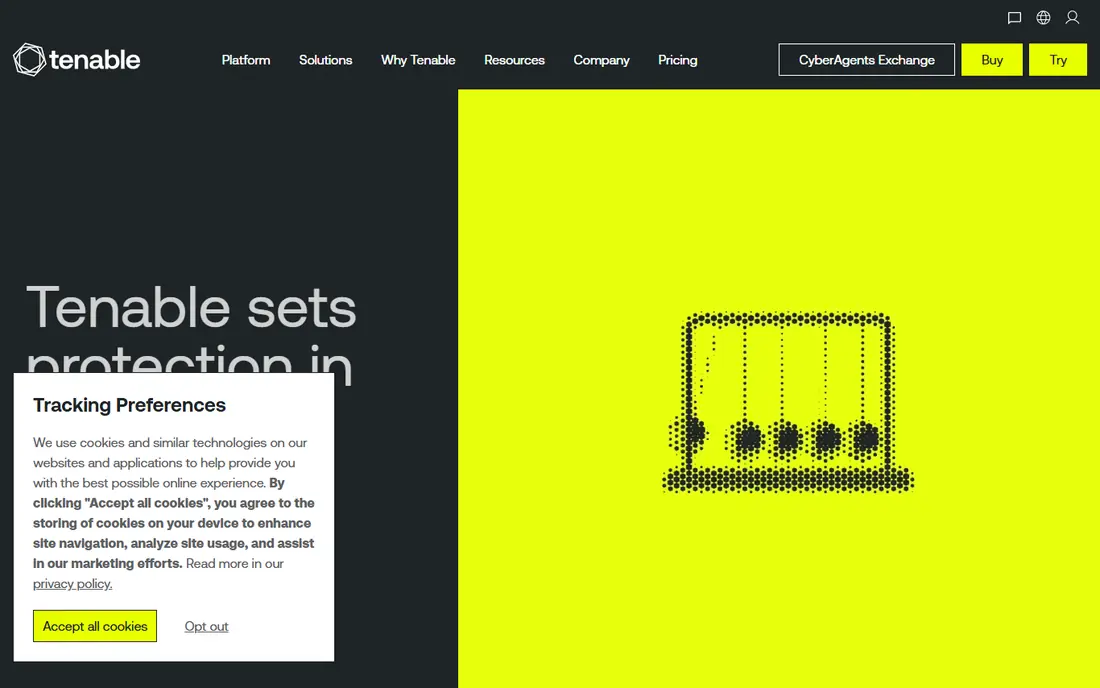
Tenable Nessus is the scanner many teams learn first, and it still earns its place for broad coverage. Plugin depth helps it spot misconfigurations and known flaws across servers, network devices, and cloud workloads. Teams can run scheduled scans, credentialed checks, and agent-based collection where network scanning is hard. The catch is scale, since the full Tenable One platform is quote-only and large estates need careful scan windows and prioritisation. For teams that want a proven scanner with room to grow into a platform, Nessus is a solid start.
- Wide plugin coverage
- Long track record
- Flexible scanning options
- Full platform pricing is quote-only
- Large estates need tuning to cut noise
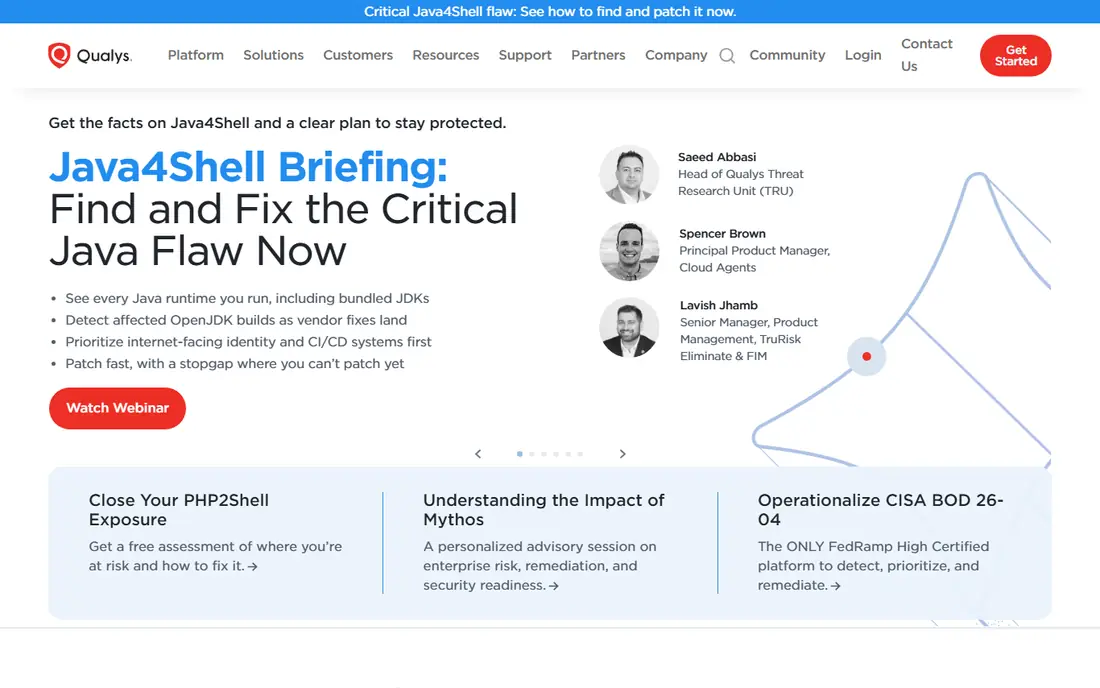
Qualys VMDR ties discovery, assessment, prioritisation, and patching into a single workflow, which helps teams close the gap between finding and fixing. Agent, network, and cloud collection cover hybrid estates, and compliance templates support common frameworks. That breadth comes with a learning curve, and pricing is quote-only, so budget planning needs a sales conversation and an accurate asset count. For organisations that want vulnerability work and patch deployment tracked together, Qualys is a strong enterprise pick.
- Scanning plus patching in one workflow
- Broad asset coverage
- Compliance reporting
- Quote-only pricing
- Setup can feel complex for small teams
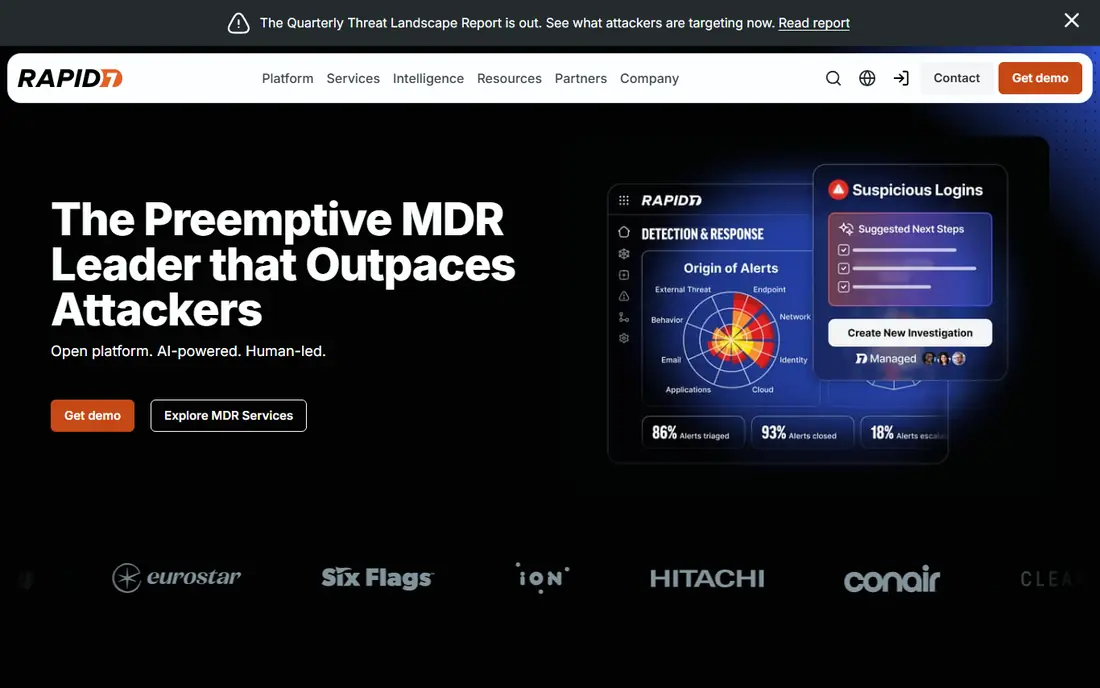
Rapid7 InsightVM stands out for pricing transparency in a market where most rivals hide prices behind quotes. Its published starting figure helps smaller teams model costs, and remediation tracking shows which fixes reduce risk most. Risk scoring and dashboards help security and IT teams agree on what to patch first. Costs still scale with assets, and agent coverage needs planning for short-lived cloud workloads. If you want a predictable per-asset model and a clear fix list, InsightVM deserves a pilot.
- Published per-asset starting price
- Risk scoring tied to remediation
- Clear dashboards
- Costs rise with asset count
- Some advanced features sit on higher tiers
Wiz connects through cloud APIs and builds a graph of resources, identities, and exposures, so teams see which combinations create a real attack path. That view matters in cloud estates, where a public bucket alone is less risky than a public bucket tied to a workload with a known flaw. Deployment is fast because no agent is needed for core posture work. Pricing is quote-only, and a team with one small cloud account may find the platform larger than needed. For multi-cloud teams drowning in findings, Wiz helps focus on the few that matter.
- Agentless multi-cloud visibility
- Attack-path graphs
- Fast time to first findings
- Quote-only pricing
- Small single-cloud teams may not need the full platform
Orca Security appeals to teams that want cloud visibility without installing agents on every workload. Its SideScanning reads cloud configuration and workload data from outside, which speeds deployment and cuts operational friction. Contextual scoring then highlights issues that combine exposure, vulnerability, and sensitive data. Runtime protection is thinner without the optional sensor, so teams needing live workload defence should test that add-on. If agent rollout is your blocker, Orca removes it.
- Agentless SideScanning
- Quick deployment
- Contextual risk scoring
- Quote-only pricing
- Runtime depth needs an optional sensor
CrowdStrike Falcon Exposure Management brings threat context to vulnerability work, linking exposure data with endpoint telemetry and adversary intelligence. That helps teams prioritise flaws that attackers actually exploit over flaws that only look severe on paper. The platform suits organisations already running Falcon, since data and workflows stay in one console. Pricing is quote-only, and teams without Falcon will face a larger platform decision. For threat-led teams, the intelligence link is the main draw.
- Adversary intelligence context
- Ties to endpoint telemetry
- Broad platform coverage
- Quote-only pricing
- Best value for existing Falcon customers
Microsoft Defender Vulnerability Management
Great for: Microsoft endpoint estates
Microsoft Defender Vulnerability Management fits estates that already run Windows and Microsoft 365. Findings flow into Defender consoles and Intune remediation workflows, so IT teams can push fixes without learning a separate tool. Core capabilities come with Endpoint Plan 2, with premium features as an add-on. Teams outside the Microsoft stack will get less value, and pricing depends on existing licensing. If your estate is Microsoft-centred, check what you already own before buying another scanner.
- Built into Defender and Intune workflows
- Remediation tracking
- Core features in Endpoint Plan 2
- Deepest value needs Microsoft licensing
- Non-Windows coverage is thinner
Snyk takes a different angle by putting scanning where developers already work. It checks open-source dependencies, code, containers, and infrastructure as code, then suggests fixes that developers can apply in their normal workflow. A free tier makes it easy for small projects to start, while paid tiers add team controls and reporting. It does not replace a full infrastructure scanner for servers and network devices. For teams that want developers fixing flaws early, Snyk pairs well with a platform scanner.
- Free tier for small projects
- Code, dependency, and image scanning
- Fix guidance in developer tools
- Paid tiers are per developer
- Infrastructure coverage is narrower than full VM platforms
Intruder suits small and midsize teams that want continuous scanning without running their own scanner infrastructure. Setup is quick, scans run on a schedule, and findings come with guidance on what to fix first. That simplicity helps teams with limited security staff keep up with new cloud resources and public-facing services. Larger enterprises with complex hybrid estates may need deeper asset and patch workflows. For a lean team that needs steady coverage, Intruder is a practical choice.
- Continuous cloud scanning
- Simple setup
- Clear remediation guidance
- Quote and plan details need a trial
- Less depth for large enterprise estates
How we picked these
We compared official pricing pages, feature pages, and public review coverage for tools that scan cloud and hybrid estates, prioritise findings, and track remediation. We kept only tools that exist and work in October 2026. Where vendors publish no list price, we wrote See website rather than repeating third-party estimates as fact.
What to check before you buy
Start by counting what you will scan, including cloud accounts, servers, endpoints, containers, and short-lived workloads. That count drives price and scan design more than any feature list. Run a pilot on real accounts, and judge tools by the fix list they produce, not by raw finding counts. Check agent and agentless coverage, patch and ticketing integrations, and how risk scores handle internet exposure and exploit activity. Confirm scan permissions in writing, set scan windows that avoid production impact, and agree on remediation owners before the first full scan.
Also check how each platform handles asset discovery for short-lived cloud resources, since a scanner that misses a new bucket or container leaves a gap. Ask whether findings can be assigned, tracked, and closed in your ticketing tool, and whether scan reports can be filtered by team or business unit. Those workflow details decide whether a platform gets used daily or only at audit time, and they matter as much as raw coverage.
Frequently asked questions
What are the best-rated cloud vulnerability management tools?
Tenable, Qualys, and Rapid7 lead for broad infrastructure work, while Wiz and Orca Security lead for cloud-first prioritisation. Snyk and Intruder suit smaller or developer-led teams that need a faster start.
What are the best cloud vulnerability management tools for a small team?
Intruder and Snyk are good starting points for small teams, with Rapid7 InsightVM as a next step when per-asset pricing and remediation tracking matter. Start with a pilot on your real estate and check asset counts.
Do I need permission to scan cloud systems?
Yes. Scan only systems you own or have clear written permission to test, and follow your organisation's change policy. Unauthorised scanning can break services and breach contracts or law.
How often should vulnerability scans run?
Continuous or daily scanning suits cloud estates where resources change often, while weekly scans may suit stable infrastructure. Pair scanning with patch windows so findings turn into fixes rather than reports.
Is a scanner enough for cloud security?
No. Scanning finds known flaws and misconfigurations, but it does not replace identity controls, logging, patching, and incident response. Use it as one part of a wider cloud security programme.
Sources
See where you really rank - block by block
ProMapRanker scans Google Maps across a grid of your service area. Simple monthly plans from $19, white-label on every plan.
Start freeKeep reading
 worlds best local seo company
8 Worlds Best Local SEO Companies for Map Pack Growth in 2026
Compare the worlds best local seo company options for Google Business Profile work, citations, reviews, and multi-location rankings and reporting in 2026.
Read → world's best web hosting company
World's Best Web Hosting Company in 2026
Searching for the world's best web hosting company? We compared 10 hosts on price, renewal rates, speed, and support to help you choose well today in 2026.
Read → who's got the best nanny tax services
Who's Got the Best Nanny Tax Services in 2026
We answer who's got the best nanny tax services, comparing full filing, back taxes, software, and pricing so families can handle nanny taxes correctly.
Read →