 ProMapRanker
Best Cloud Service Providers in 2026

Key takeaways
- The big three offer the widest service range, but their bills grow fast once storage, bandwidth, and managed services are added.
- DigitalOcean, Vultr, Linode, and Hetzner offer simpler, more predictable pricing for small teams and single applications.
- Egress charges are a major cost difference, so check outbound traffic pricing before you pick a hyperscaler for a public-facing app.
- Free tiers and credits help with testing, but they do not replace a cost estimate at your real traffic and storage levels.
- Pick the provider your team can operate well, since a simple platform you run correctly beats a powerful platform you misconfigure.
Quick comparison
| Pick | Great for | Pricing starts at | Free tier | |
|---|---|---|---|---|
 Amazon Web Services | Widest service range | See website | Free trial | Visit |
 Microsoft Azure | Microsoft and enterprise shops | See website | Free trial | Visit |
 Google Cloud | Data and AI workloads | See website | Free trial | Visit |
 DigitalOcean | Simple developer cloud | $4 per month | No | Visit |
 Vultr | Low-cost global compute | $2.50 per month | No | Visit |
 Linode | Predictable developer hosting | $5 per month | No | Visit |
 Oracle Cloud | Database and enterprise apps | See website | Free trial | Visit |
 Hetzner Cloud | Low-cost European hosting | See website | No | Visit |
The best cloud service providers
We compared cloud providers on service range, pricing clarity, global coverage, managed services, and ease of use, using vendor pricing pages, documentation, and published 2026 price comparisons.

Amazon Web Services, known as AWS, remains the broadest cloud platform available. It covers compute, storage, databases, networking, AI, analytics, and developer tools at a scale few rivals match, with regions and availability zones across the world. For a company that needs many managed services under one account, or that must meet strict compliance requirements, that breadth is a real advantage.
The platform also offers a free tier for many services, which helps with learning and small tests. Documentation, community answers, and third-party integrations are extensive, so most common problems already have a published solution.
The catch is cost control. Pay-as-you-go pricing is flexible, but storage, bandwidth, data transfer, and managed services can push a bill well above the compute price alone. Teams need budgets, alerts, and regular cost reviews. For a simple app, a smaller provider may deliver the same result for less money and less admin work.
- Largest service catalog
- Global region coverage
- Mature security and compliance options
- Billing is complex
- Egress and managed service costs add up quickly
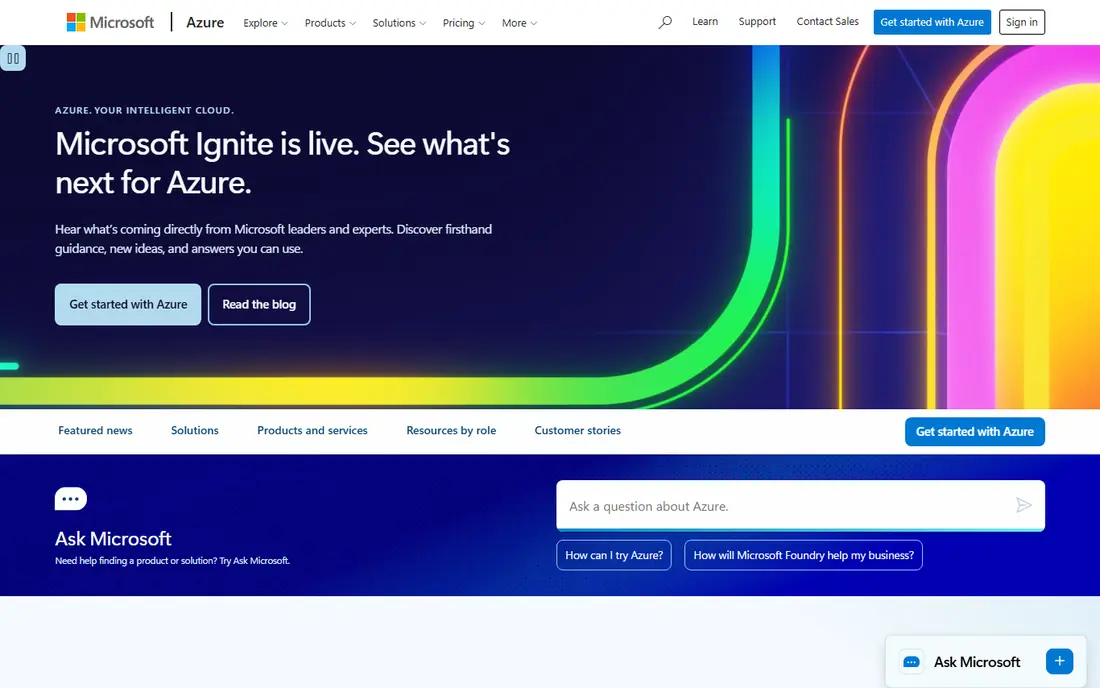
Microsoft Azure is the natural pick for companies already running Windows Server, Active Directory, Microsoft 365, or .NET applications. Identity, security, and management tools line up with the Microsoft stack, and hybrid options help companies that keep some systems on site while moving other workloads to the cloud. That fit reduces migration friction for many enterprise teams.
Azure also covers the full cloud range, from virtual machines and containers to databases, AI, and analytics, with global regions and compliance programs for regulated industries. Free credits and a free tier help new accounts test core services before committing to a larger spend.
The trade-off is complexity. With hundreds of services and many pricing dimensions, a new team can overprovision or pick the wrong tier. Cost management tools help, but they need regular attention. For a Microsoft-centered company, the integration value usually outweighs that learning curve.
- Strong Microsoft 365 and Windows integration
- Enterprise identity and compliance tools
- Hybrid cloud options
- Service catalog can feel complex
- Pricing varies by region and service tier

Google Cloud, often called GCP, suits teams that work heavily with data, analytics, and machine learning. BigQuery, its data warehouse, and its AI platform, including Vertex AI, are core strengths, and its global network supports fast, reliable delivery for public apps. Kubernetes, which Google helped create, runs well here through Google Kubernetes Engine.
For developers, the console and APIs feel clean, and free credits plus an always-free tier help with testing. Pricing is pay-as-you-go, with sustained-use and committed-use discounts for steady workloads, which can lower costs for predictable apps.
The limits are fit and cost detail. Companies that need a specific enterprise integration may find AWS or Azure a closer match, and outbound traffic charges still matter for high-traffic public sites. For data-heavy and AI-heavy work, Google Cloud is a strong, credible choice.
- Strong data analytics and AI tooling
- Global network
- Kubernetes roots
- Smaller enterprise sales footprint than AWS or Azure in some sectors
- Egress pricing needs care
DigitalOcean is our pick for small teams and solo developers who want a cloud without a large learning curve. Its Droplets, managed databases, App Platform, and object storage cover the needs of most web apps, APIs, and small SaaS products, with flat monthly pricing that is easy to forecast. A 4 dollar per month entry Droplet suits a hobby project or a small site, with larger sizes scaling up from there.
Documentation and tutorials are a real strength. Many common setups, from a basic server to a managed database, have a clear, step-by-step guide, which shortens the time from signup to a working app. Support and community resources are geared to developers rather than enterprise procurement teams.
The trade-off is range. DigitalOcean does not match AWS, Azure, or Google Cloud on specialized AI, analytics, or enterprise services, and some advanced workloads will need another provider. For a standard web app, that limit rarely matters, and the simplicity is worth it.
- Clear flat pricing
- Simple control panel
- Good documentation and tutorials
- Smaller service catalog than the big three
- Fewer global regions for some services
Vultr suits developers and small businesses that want low-cost compute in many locations. Entry cloud compute plans start at 2.50 dollars per month, with larger optimized instances for production apps, plus block storage, object storage, managed databases, and GPU instances for AI inference and training. That mix covers a wide range of projects at a predictable monthly price.
Global coverage is a strength, with data centers in many cities, which helps teams serve users close to their location. Billing is hourly with a monthly cap on many plans, so a short test does not turn into a large bill.
The limit is managed depth. Vultr offers managed databases and Kubernetes, but it does not match the big three on the full catalog of enterprise and AI services. Teams that can run their own stack will find good value here. Teams that need a fully managed service for every layer should compare DigitalOcean and the hyperscalers too.
- Low entry price
- Many global locations
- GPU options for AI work
- Managed services are thinner than hyperscalers
- Support is geared to self-serve users
Linode, now part of Akamai, is a developer-focused cloud with a reputation for clear pricing and reliable performance. Shared and dedicated CPU plans start at 5 dollars per month, with managed databases, Kubernetes, object storage, and load balancing for production apps. Pricing is published per plan, which makes forecasting easier than with usage-based hyperscaler bills.
Akamai ownership adds network and security depth, including content delivery and edge options that suit public-facing apps. Documentation and support are geared to developers who want to run their own stack without a large platform team.
The trade-off is scope. Linode does not offer the same breadth of AI, analytics, and enterprise services as AWS, Azure, or Google Cloud. For standard hosting, APIs, and small SaaS products, that is rarely a problem. For a company that needs many managed services, a hyperscaler may fit better.
- Transparent pricing
- Solid performance
- Akamai network and security backing
- Service catalog is narrower than hyperscalers
- Enterprise features are less deep
Oracle Cloud Infrastructure, known as OCI, is a strong pick for companies running Oracle Database, Oracle applications, or enterprise workloads that need high database performance. It offers compute, storage, networking, databases, and AI services, with a free tier that includes always-free resources for testing and small projects. That free tier is more generous than many rivals for basic compute and database use.
Pricing on some workloads, especially database-heavy and egress-heavy jobs, can compare well with the big three, thanks in part to a large free outbound transfer allowance on many accounts. For a company already licensed for Oracle software, the platform fit can also reduce migration work.
The limit is ecosystem. Community tutorials, third-party integrations, and developer tooling are thinner than for AWS or Azure, and service names take time to learn. For Oracle-centered teams, OCI is worth a serious look. For a general startup, a simpler provider may move faster.
- Strong Oracle Database performance
- Generous free tier
- Competitive pricing on some workloads
- Smaller developer ecosystem than AWS or Azure
- Service naming can confuse newcomers
Hetzner Cloud suits price-sensitive teams, especially in Europe, that want solid virtual servers without hyperscaler pricing. Shared and dedicated CPU servers, block storage, load balancers, and Kubernetes support cover most web hosting and app needs, with traffic allowances that help public sites. Published comparisons in 2026 put Hetzner among the cheapest options for comparable CPU and memory specs.
The platform is straightforward, with a clean control panel, API, and snapshot and backup options. For a small business, a personal project, or a European audience, the value is hard to beat, and US locations now extend that value to North American users too.
The limits are geography and managed depth. Regions outside Europe and the US are limited, and specialized AI and enterprise services are thinner than at the big three. If your users are global and you need many managed services, compare DigitalOcean, Vultr, or a hyperscaler. If cost and European hosting matter most, Hetzner is a strong pick.
- Very competitive pricing
- Dedicated CPU options
- European data centers
- Fewer global regions outside Europe and the US
- Managed services are limited
How we picked these
We compared vendor pricing pages, service documentation, and published 2026 price comparisons for providers active in October 2026. We favored providers with clear pricing, global or regional coverage suited to US and European buyers, managed database and storage options, and a track record of stable operation. We used See website where pricing is usage-based and varies by service, region, and configuration. We did not claim hands-on testing we did not do. Our method rests on official pages and published comparisons, so run a cost estimate for your exact workload before you commit.
How to choose the right provider
Start with your workload, not the brand. A static site, a small API, and a data warehouse have very different needs, and the cheapest provider for one can be expensive for another. List your compute, storage, database, bandwidth, and managed service needs, then price that exact list on two or three shortlisted providers. Include egress, backups, and support, since those items often decide the real monthly total.
Simplicity versus service range
A simple provider saves admin time and reduces the risk of a misconfigured bill or security setting. A hyperscaler saves integration time when you need many managed services, compliance programs, or global regions. If your team is small, favor simplicity and add a second provider later only if a specific service forces the move.
Check support, regions, and exit costs
Confirm that a provider has a region near your users, support hours that match your team, and clear terms for moving data out. Test backups and restores early, set billing alerts on day one, and keep infrastructure code portable where possible, so a future move is a project, not a rebuild.
Frequently asked questions
What is the best cloud service provider for most small businesses?
DigitalOcean is a sensible default for a standard web app, thanks to flat pricing and a simple panel. Vultr and Linode are close alternatives on price and coverage. Choose a hyperscaler only when you need its wider managed services or compliance programs.
What are the best rated cloud service providers for enterprises?
AWS, Microsoft Azure, and Google Cloud lead on service range, global regions, and compliance coverage, with Azure a strong fit for Microsoft-centered companies. Oracle Cloud suits Oracle Database workloads. Compare total cost, including egress and managed services, before you pick.
What is the best cloud storage service for a small team?
For app storage, object storage from DigitalOcean, Vultr, Linode, or a hyperscaler all work well, and the choice usually follows your compute provider. For file sharing and backups, a dedicated storage product may be simpler than raw cloud storage. Price storage, transfer, and retrieval together, not just the per-gigabyte storage rate.
How much do cloud providers cost?
Entry virtual servers can start near 2.50 to 5 dollars a month on smaller providers, while hyperscaler bills are usage-based and vary widely by service, region, and traffic. A small production app often costs tens of dollars a month on a simple provider, while a larger, data-heavy workload can reach hundreds or thousands a month on any platform.
Can I switch cloud providers later?
Yes, but plan for it. Use portable tools, standard databases, and infrastructure code where possible, and test a data export early. Moving compute is usually easy. Moving large stored data and managed databases takes more time and can incur transfer charges, so check exit terms before you store large volumes.
Sources
See where you really rank - block by block
ProMapRanker scans Google Maps across a grid of your service area. Simple monthly plans from $19, white-label on every plan.
Start freeKeep reading
 zscaler alternatives
Best Zscaler Alternatives in 2026
Looking for zscaler alternatives? We compare 9 SASE and zero trust platforms on architecture, data protection, pricing, and fit for your network and team.
Read → zapier alternatives free
Best Zapier Alternatives Free in 2026
Nine automation tools for zapier alternatives free in 2026, all with genuinely free tiers, plus free plan limits, starting prices and upgrade paths explained.
Read → which platform is best for online reputation
Which Platform Is Best for Online Reputation in 2026
Wondering which platform is best for online reputation? We compare 8 review, listing, and response tools for small and multi-location businesses and agencies.
Read →