 ProMapRanker
Best Cloud Security Posture Management Tools in 2026

Key takeaways
- Most CSPM buying in 2026 happens inside broader cloud security platforms, so compare the full platform, not just the posture checklist.
- Wiz and Orca Security lead for agentless visibility and attack path analysis, while Palo Alto Networks Cortex Cloud suits large estates that want one vendor.
- Microsoft Defender for Cloud is the natural starting point for Azure heavy teams, and Prowler is the strongest free and open option for smaller estates.
- Enterprise CSPM pricing is usually quoted, so budget by workload count, cloud accounts, and modules, not by a single headline price.
Quick comparison
| Pick | Great for | Pricing starts at | Free tier | |
|---|---|---|---|---|
 Wiz | Agentless multi-cloud risk prioritization | See website | Free trial | Visit |
 Orca Security | Agentless side scanning coverage | See website | Free trial | Visit |
 Palo Alto Networks Cortex Cloud | Large enterprise breadth | See website | No | Visit |
 Microsoft Defender for Cloud | Azure heavy teams | See website | Yes | Visit |
 CrowdStrike Falcon Cloud Security | Falcon endpoint customers | See website | Free trial | Visit |
 Check Point CloudGuard | Compliance focused multi-cloud security | See website | Free trial | Visit |
 Sysdig Secure | Kubernetes and container runtime depth | See website | Free trial | Visit |
 Trend Micro Cloud One | Hybrid workload and compliance coverage | See website | Free trial | Visit |
 Prowler | Free open source posture checks | Free | Yes | Visit |
The best cloud security posture management tools
These are the best cloud security posture management tools we found for finding misconfigurations, exposed storage, risky permissions, and compliance gaps across AWS, Azure, and Google Cloud. We compared vendor product pages, documentation, and recent independent comparisons, and we focused on tools that still offer CSPM or cloud posture features inside a live platform in October 2026.

Wiz connects to cloud accounts through APIs and scans workloads, containers, and Kubernetes without installing agents everywhere. Its security graph is the key idea. Instead of a long list of separate findings, it shows how a misconfiguration, a vulnerability, and an overprivileged identity could combine into a path an attacker could follow. That helps small security teams fix the few issues that matter most first. Google completed its acquisition of Wiz in March 2026, according to public reporting, and Wiz remains a standalone cloud security platform. The main drawback is access. Pricing is quote based, and the platform is aimed at organizations with enough cloud estate to justify an enterprise evaluation.
- Agentless scanning across clouds
- Security graph links risks into attack paths
- Broad workload and code coverage
- Enterprise pricing is quoted
- Smaller teams may pay for breadth they do not use
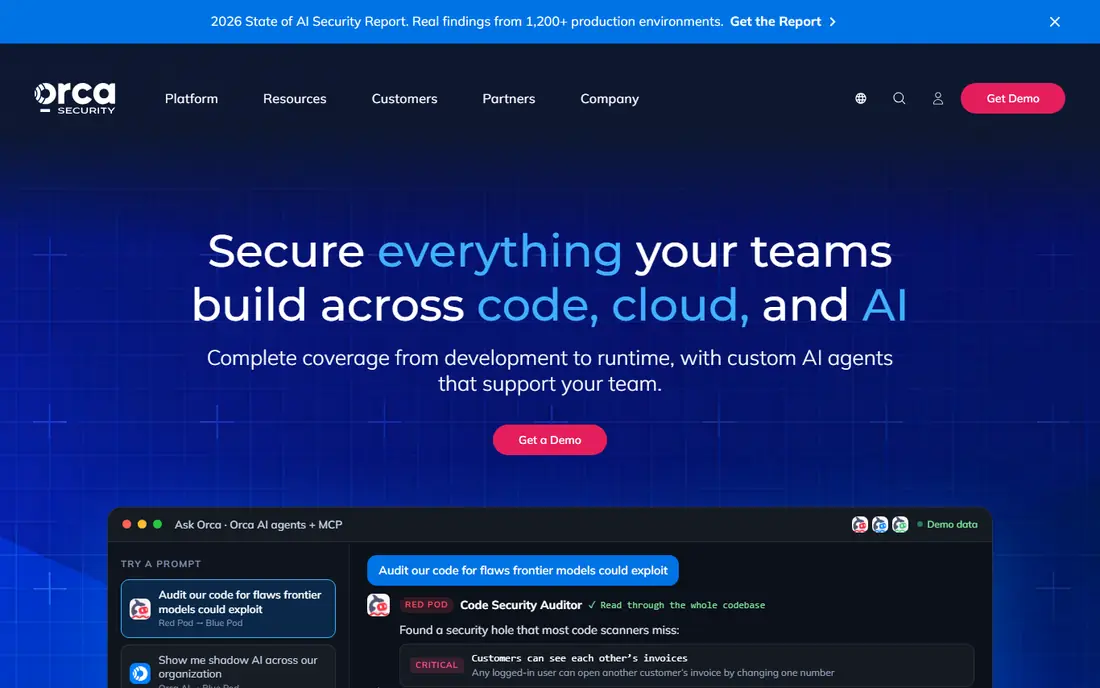
Orca Security uses SideScanning to read cloud workload disks from outside the workload, which gives detailed visibility without agents on every virtual machine. That approach suits teams that cannot easily deploy agents across many accounts, or that want fast coverage of a new cloud estate. Its risk prioritization also links findings into attack paths, so teams can tell a theoretical misconfiguration from a reachable risk. Orca is often compared directly with Wiz for agentless coverage, and the choice usually comes down to existing vendor relationships, workload mix, and commercial terms. Expect a sales led evaluation rather than a simple self serve signup for larger estates.
- SideScanning avoids agent deployment
- Deep workload visibility
- Attack path analysis
- Quote based pricing
- Runtime features vary by plan and deployment

Palo Alto Networks renamed Prisma Cloud to Cortex Cloud in February 2025, and the platform now covers posture management, workload protection, code security, and related cloud modules in one place. For a large enterprise that already uses Palo Alto Networks products, that breadth is the appeal. One vendor, one console, and consistent policy across clouds and code pipelines can cut tool sprawl. The trade-off is effort. Deployment, tuning, and ongoing operation take real staff time, and smaller teams may find the platform heavier than a focused posture tool. Treat it as a platform decision, not a quick checklist purchase.
- Very broad CNAPP coverage
- Code to cloud scanning
- Strong compliance reporting
- Complex to deploy and operate
- Cost and breadth can overwhelm small teams
Microsoft Defender for Cloud is the most practical starting point for teams with a large Azure footprint or existing Microsoft security investment. It assesses cloud resources, flags misconfigurations, and maps findings to compliance standards, with integration into Microsoft Sentinel for investigation. A free foundational tier covers basic posture features, while paid Defender plans add workload protection and deeper threat detection. Multi-cloud coverage for AWS and Google Cloud is included, but Azure native services get the tightest integration. If your estate is mostly Azure, start here before buying a separate CSPM platform.
- Deep Azure integration
- Multi-cloud posture coverage
- Free foundational tier
- Deepest value sits inside Microsoft estates
- Advanced plans are paid per resource
CrowdStrike Falcon Cloud Security extends the Falcon platform from endpoints into cloud workloads, containers, and posture management. For teams already running Falcon on laptops and servers, adding cloud security in the same console reduces training and keeps detection data together. Runtime detection and threat intelligence are strengths, especially for teams with a security operations centre already built around Falcon. Teams with no Falcon footprint should compare it on posture features alone, because the consolidation benefit will not apply. Pricing depends on modules and workload count, so get a scoped quote for your actual estate.
- Unified agent with endpoint protection
- Strong runtime detection
- Familiar console for Falcon users
- Best value depends on existing Falcon use
- Pricing is module based
Check Point CloudGuard combines posture management with workload protection and threat prevention across AWS, Azure, and Google Cloud. Its compliance features suit regulated teams that need to show alignment with standards such as CIS benchmarks and PCI DSS, with reports they can hand to auditors. Policy as code options help teams enforce the same rules across accounts instead of fixing the same misconfiguration by hand each month. The platform is broad, so the first deployment needs clear scope. Decide which clouds, accounts, and compliance frameworks matter first, then expand modules, rather than turning everything on at once.
- Unified posture and threat prevention
- Compliance policy templates
- Multi-cloud coverage
- Interface and module choices take time to learn
- Pricing is quote based for larger estates
Sysdig Secure stands out when containers and Kubernetes are the main risk, not just one workload type among many. It pairs posture findings with runtime detection built on Falco, so teams can see what actually runs inside a container, not only what an image scan predicted. That runtime view helps cut noise, because a vulnerability in an unused package looks different from one in a running process. Teams with mostly virtual machines and little Kubernetes use will get less value from that depth. For platform teams running production Kubernetes, though, the combination of posture, vulnerability, and runtime data in one place is a genuine advantage.
- Deep Kubernetes runtime visibility
- Falco based detection
- Posture plus runtime in one platform
- Strongest for container estates
- Less suited to teams with few containers
Trend Micro Cloud One, now part of Trend Micro broader cloud security offering, covers posture management alongside workload protection for hybrid estates that still run servers outside public cloud. That hybrid reach matters for organizations migrating slowly, or running regulated workloads that cannot move yet. Compliance monitoring and automated checks help teams keep a steady baseline across cloud and data centre resources. Compared with Wiz and Orca, its attack path presentation feels less central, and module pricing means two quotes can look different even for similar estates. It fits best where hybrid coverage and Trend Micro history already exist.
- Hybrid cloud and on premises coverage
- Compliance monitoring
- Workload protection options
- Module based pricing can confuse comparisons
- Newer CNAPP rivals lead on attack path visuals
Prowler is the strongest free starting point for cloud posture work. It runs hundreds of open source checks mapped to frameworks such as CIS benchmarks, and it covers AWS, Azure, and Google Cloud. Small teams, solo cloud engineers, and security learners can get a real posture report without an enterprise contract. The trade-off is ownership. You host it, schedule it, triage findings, and build remediation into your own workflows, and a paid cloud offering exists for teams that want managed features. Prowler will not replace a full CNAPP platform for a large estate, but it is an honest, useful baseline, and a good way to prove the value of posture work before buying.
- Free and open source checks
- CIS and NIST mapped findings
- Works across major clouds
- Needs your own hosting and triage
- No vendor managed remediation workflow out of the box
How we picked these
We compared vendor product and documentation pages plus recent independent CSPM and CNAPP comparisons, and we kept tools with live posture features in October 2026 across at least one major cloud. We favoured multi-cloud coverage, agentless options, compliance reporting, and a mix of enterprise platforms and a free open source tool. We did not claim hands-on testing, and we used quote based pricing honestly where vendors do not publish a price.
What to check before you buy
Start with coverage, not the demo. List every cloud account, Kubernetes cluster, and workload type you run, then ask each vendor which of those it scans agentlessly and which need agents. Next, test prioritization on your own findings. A tool that lists thousands of issues without showing which ones are reachable will waste team time. Then check remediation. Some tools open tickets, some offer one click fixes, and some only report, so match that to how your team actually fixes cloud issues. Finally, scope the commercial quote on the same estate for every vendor, including modules, workload counts, and data retention, or the cheapest quote may simply cover less.
Compliance and reporting needs
If auditors ask for evidence, confirm the exact frameworks each tool supports and how reports are exported. CIS, PCI DSS, HIPAA, and GDPR mappings differ by vendor and plan, and a tool that checks a framework in name may not produce the report format your auditor wants. Ask for a sample report during the trial, and check how long historical posture data is kept.
Frequently asked questions
What is cloud security posture management software?
It continuously checks cloud configurations against security best practice and compliance rules, and flags problems such as public storage, open ports, and overprivileged identities. Good CSPM tools also prioritize findings by reachability and risk, so teams fix exploitable issues first instead of working through a flat list.
What is the best cloud security posture management platform?
Wiz is a strong default for multi-cloud agentless coverage and attack path prioritization, while Orca Security is the closest alternative on the same model. Large enterprises already using Palo Alto Networks often choose Cortex Cloud, and Azure heavy teams usually start with Microsoft Defender for Cloud.
Is there a free cloud security posture management tool?
Yes. Prowler is free and open source, with checks mapped to common frameworks, and Microsoft Defender for Cloud has a free foundational tier. Free tools need more of your own time for hosting, triage, and remediation, while paid platforms add managed scanning, prioritization, and reporting.
How is CSPM different from CNAPP?
CSPM is one part of a cloud native application protection platform, focused on configuration and compliance posture. CNAPP is the broader platform that adds workload protection, code security, vulnerability management, and runtime detection around that posture core. Most vendors in this list now sell CNAPP platforms with CSPM inside.
How much does CSPM cost?
Most enterprise CSPM pricing is quoted and based on workload count, cloud accounts, and modules, so there is no single reliable price to quote here. Smaller teams can start free with Prowler or a foundational cloud native tier, then use a scoped trial to get comparable quotes before committing.
Do I need agents for CSPM?
Not always. Wiz and Orca use agentless scanning for much of their posture coverage, while runtime protection and deeper workload data often still benefit from agents. Ask each vendor what you lose without agents for your specific workload types, rather than assuming agentless means identical coverage.
Sources
- https://www.wiz.io
- https://orca.security
- https://www.paloaltonetworks.com/cortex/cloud
- https://azure.microsoft.com/en-us/products/defender-for-cloud
- https://www.crowdstrike.com/en-us/products/cloud-security/
- https://www.checkpoint.com/quantum/cloudguard/
- https://sysdig.com
- https://www.trendmicro.com/en_us/business/products/hybrid-cloud.html
- https://prowler.com
See where you really rank - block by block
ProMapRanker scans Google Maps across a grid of your service area. Simple monthly plans from $19, white-label on every plan.
Start freeKeep reading
 zscaler alternatives
Best Zscaler Alternatives in 2026
Looking for zscaler alternatives? We compare 9 SASE and zero trust platforms on architecture, data protection, pricing, and fit for your network and team.
Read → zapier alternatives free
Best Zapier Alternatives Free in 2026
Nine automation tools for zapier alternatives free in 2026, all with genuinely free tiers, plus free plan limits, starting prices and upgrade paths explained.
Read → which platform is best for online reputation
Which Platform Is Best for Online Reputation in 2026
Wondering which platform is best for online reputation? We compare 8 review, listing, and response tools for small and multi-location businesses and agencies.
Read →