 ProMapRanker
Comparing 6 Cloud Security DAST Software Options in 2026


AppSec programs combining SAST and DAST · Pricing starts at: See website
Key takeaways
- The list opens with Veracode, aimed at AppSec programs combining SAST and DAST.
- No starting price is published for Veracode, Invicti, StackHawk and others; expect a quote.
- Detectify fits teams wanting attack-surface monitoring plus app scans.
- One limit worth knowing about Veracode: DAST alone is not its standout.
- A free plan is available from 2 of the 6 tools: OWASP ZAP, Burp Suite.
Direct answer
Veracode leads the list, best for AppSec programs combining SAST and DAST. OWASP ZAP is the stronger choice for budget-conscious teams adding DAST to CI, while Invicti suits enterprises consolidating web and API scanning. The other 3 tools in the list cover narrower or pricier cases.
Quick comparison
| Pick | Great for | Pricing starts at | Free tier | |
|---|---|---|---|---|
| Veracode | AppSec programs combining SAST and DAST | See website | Free trial | Visit |
 OWASP ZAP | Budget-conscious teams adding DAST to CI | Free (open source) | Yes | Visit |
 Invicti | Enterprises consolidating web and API scanning | See website | Free trial | Visit |
 StackHawk | Development teams scanning inside CI/CD | See website | Free trial | Visit |
 Burp Suite | Manual penetration testing and security researchers | See website | Yes | Visit |
 Detectify | Teams wanting attack-surface monitoring plus app scans | See website | Free trial | Visit |
Every option for cloud security DAST software explained
ProMapRanker put together this guide to cloud security DAST software for readers who want a clear shortlist without reading every vendor page. It compares 6 tools on starting price, free plans, who each one suits and where each one falls short.
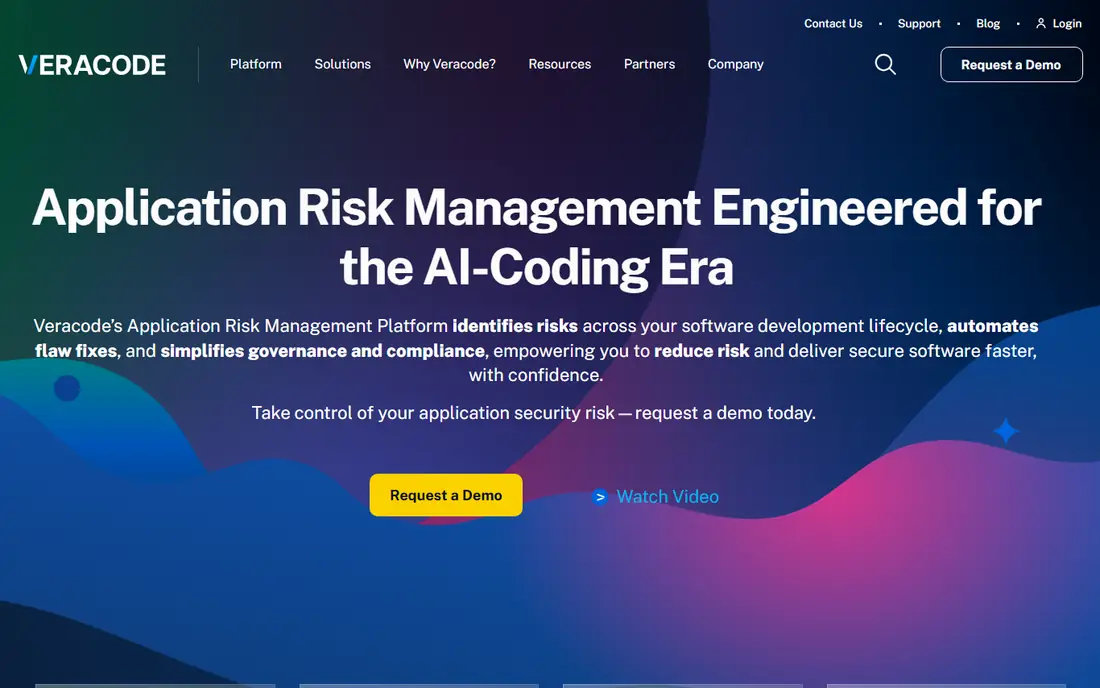
Where Veracode fits: AppSec programs combining SAST and DAST. Veracode sells an application security product, not just a scanner, and DAST is one module alongside static analysis and open source risk scanning. Compliance-driven buyers in finance and healthcare frequently land here for exactly that reason.
Beyond that, the trade is that Veracode's DAST is good instead of best-in-class on its own. Beyond that, a team buying only dynamic scanning will find sharper tools elsewhere. Check the vendor site for Veracode pricing; none is listed in this comparison. On free options: Free trial.
Points against: Pricing is enterprise-grade across the board. Main advantages: Unified system for static, dynamic; Solid policy and reporting for compliance.
- Software composition analysis
- Mature enterprise support
- DAST alone is not its standout
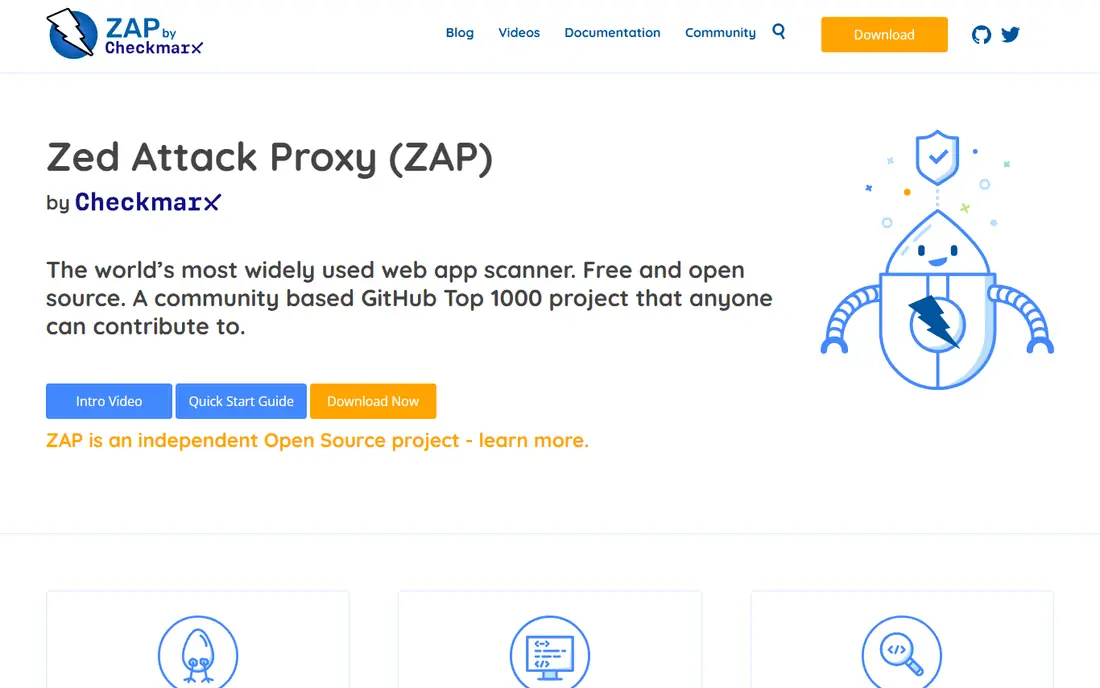
OWASP ZAP serves budget-conscious teams adding DAST to CI. Used blindly, it produces long reports nobody reads. In daily use, used by a competent engineer, it punches far above its price.
Downsides: Results need a knowledgeable operator to interpret.
Beyond that, OWASP ZAP is maintained by a global community under the OWASP umbrella. It is the reason small teams can do DAST at all. It spiders your application, runs active attacks against the pages it finds, and plugs into CI servers through its automation framework. So every build can get a baseline security scan without a license discussion. From a buyer's view, for the price of some setup time, you get coverage that would have cost six figures a decade ago. OWASP ZAP starts at: Free. OWASP ZAP includes a free tier.
- Fully free with no scan limits
- Automation framework made for pipelines
- The interface feels dated next to commercial tools
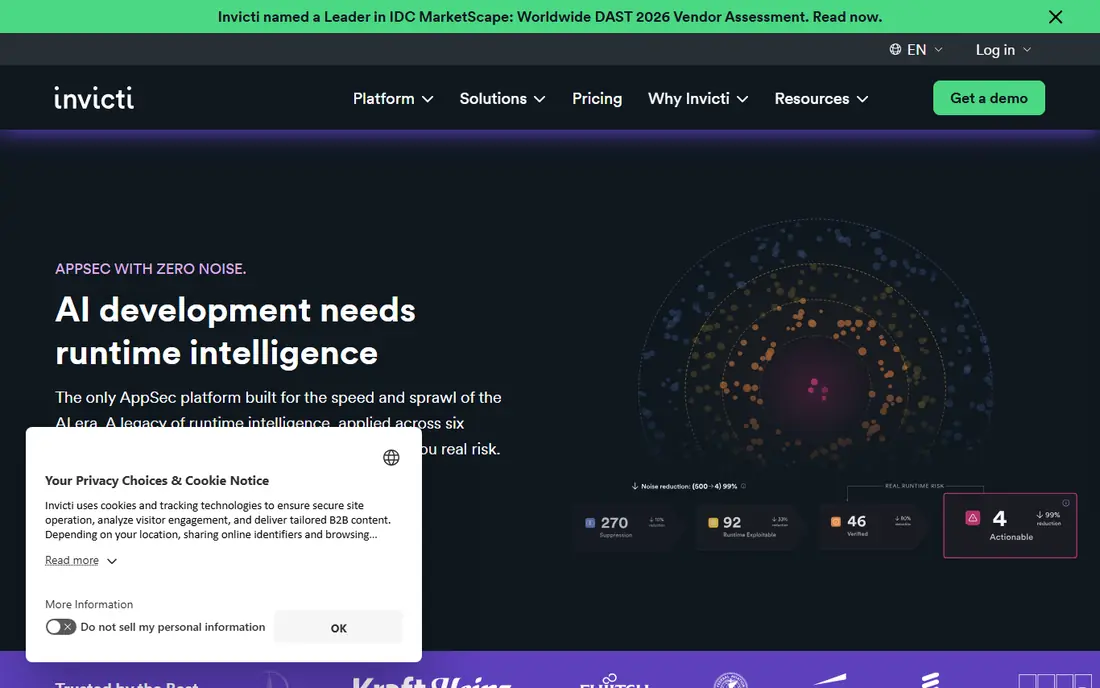
Pick Invicti if this describes you: enterprises consolidating web and API scanning. Its headline feature is proof-based scanning: when it reports a vulnerability, it attempts to confirm it safely. So your developers spend less time chasing false alarms.
Pricing is quote-based, and the numbers land in enterprise territory, which puts it out of reach for small teams. From a buyer's view, for security teams that route findings to busy engineering backlogs, that accuracy is worth more than raw scan speed. More specifically, if you run a security program with dedicated staff and a large application portfolio, Invicti is the scanner to beat. On top of that, the system manages modern single-page applications and APIs, including authenticated areas behind complicated login flows. Check the vendor site for Invicti pricing; none is listed in this comparison. Trial and free access: Free trial.
Limits to weigh: Smaller teams may find the feature set more than they need.
- Solid authenticated scanning
- Proof-based scanning re-verifies findings to cut false positives
- Pricing is quote-based and sits at the enterprise end
StackHawk makes the most sense for development teams scanning inside CI/CD. StackHawk takes the position that developers should run security scans themselves, in the pipeline, before code merges. It is deliberately narrower than Invicti or Burp Suite: the focus is automatic scanning of web apps and APIs in CI, not deep manual testing or sprawling enterprise portfolios.
Limits to weigh: Pricing levels can surprise as scan volume grows.
Teams that scan dozens of legacy apps with exotic authentication may hit limits. Beyond that, for a modern engineering org that deploys commonly and wants security feedback at pull-request speed, StackHawk suits the workflow better than tools aimed at security teams. No starting price is listed for StackHawk here; confirm pricing on the vendor site. Trial and free access: Free trial.
- Reasonable ramp-up time for developers
- Built API-first for pipeline integration
- Less depth than enterprise scanners on complicated apps
Choose Burp Suite for manual penetration testing and security researchers. When a company hires a penetration tester, this is almost certainly what they open first.
That human is also the requirement. No starting price is listed for Burp Suite here; confirm pricing on the vendor site. Burp Suite includes a free tier.
Where it falls short: Automatic scanning is weaker than its manual tooling.
- The industry-standard toolkit for human testers
- Unmatched proxy and repeater workflow
- The free edition is deliberately restricted
Detectify serves teams wanting attack-surface monitoring plus app scans. Detectify's strength is breadth and currency: knowing about every internet-facing asset and testing each against current attack techniques. In practice, setup is quick, and the entire thing feels aimed at teams without a dedicated AppSec engineer.
Drawbacks to consider: Pricing can climb with asset counts.
In daily use, depth is the compromise. For thorough testing of complicated authenticated applications, Invicti or Burp Suite go further. Worth adding: small and mid-sized businesses with cloud-hosted apps and lean security staffing get the most from it. Detectify does not show a starting price in this comparison, so check the vendor site for current pricing. Free options: Free trial.
- Crowdsourced payloads from ethical hackers keep tests current
- Merges external surface discovery with app scanning
- Depth is lighter than dedicated enterprise scanners
How we compared the tools
Pricing pages, product documentation and feature lists were the main sources, and every entry carries at least one honest drawback. Plan names, prices and limits change often. Treat the figures here as a starting point and verify them with the vendor. The sequence is a judgement call: typical use case first, then pricing transparency, then free access. Use the profiles to check fit.
Questions to settle before buying
- Confirm the entry price on the vendor page. For Veracode, Invicti, StackHawk and others that means a quote rather than a fixed price.
- Look at free plan limits closely: OWASP ZAP and Burp Suite have one, and the caps decide whether it is usable for real work.
- Run a trial of Veracode, Invicti, StackHawk and Detectify with real work before paying for a year; your own workflow is the best test.
- Before choosing Veracode, weigh its main limit: DAST alone is not its standout.
- Pick one real project and run it in Burp Suite first; a small pilot shows fit faster than a checklist.
- Ask Veracode which support channels and response times come with the plan you would buy.
Frequently asked questions
How are the tools for cloud security DAST software ordered?
The order follows typical fit for cloud security DAST software, with Veracode first and Detectify last, then price clarity and free access. It is editorial judgement, not a score, so another team could rank the tools differently.
Can I try these options before paying?
Often, yes. OWASP ZAP and Burp Suite have a free plan and Veracode, Invicti, StackHawk and Detectify offer a free trial. Use your own data and a real task during the test, and check what the free tier or trial limits before you rely on it.
Is Veracode the right pick for everyone comparing cloud security DAST software?
No single tool suits every team. Veracode comes first because it fits AppSec programs combining SAST and DAST, while OWASP ZAP suits budget-conscious teams adding DAST to CI and Invicti suits enterprises consolidating web and API scanning. Match the tool to your own size, budget and workflow before deciding.
What causes false positives in DAST?
Scanners infer vulnerabilities from application responses, and unusual but harmless behavior can look like a flaw. Expect to spend some triage time on any scanner, and budget for it in the first month.
Do these tools publish their prices?
Not all of them. Veracode, Invicti, StackHawk and others publish no starting price, so expect a quote request for those. The rest, OWASP ZAP included, show a starting price, though seats and billing terms still change the final cost.
Sources
See where you really rank - block by block
ProMapRanker scans Google Maps across a grid of your service area. Simple monthly plans from $19, white-label on every plan.
Start freeKeep reading
 zoho inventory alternatives
6 Alternatives to Zoho Inventory, Compared on Price and Fit
Zoho Inventory alternatives: 6 tools compared on price, free plans and fit. Katana leads the list for manufacturers. Fit and flaws are laid out for each entry.
Read → zoho crm alternatives
Best Zoho CRM Alternatives (2026)
Need Zoho CRM alternatives? We compare 7 tools on cost, free access and who each suits. Every pick gets a straight assessment. Built for quick decisions.
Read → zelle alternatives
Best Zelle Alternatives in 2026
Compare the best Zelle alternatives for sending money to friends, paying sellers and moving funds abroad, with honest notes on fees, speed and safety in 2026.
Read →