 ProMapRanker
5 Top Cloud Platform as a Service Providers Compared (2026)

Container PaaS with per request pricing · Pricing starts at: See website
Direct answer
Start with Google Cloud Run if you need Container PaaS with per request pricing. For a different need, Railway covers fastest path from code to deployed app and Heroku covers the original PaaS experience and add on market. The remaining 2 options are covered below with prices and limits.
Key takeaways
- Number one here is Google Cloud Run, a fit for Container PaaS with per request pricing.
- The main caution on Render: fewer regions than the hyperscalers and Fly.io's edge map, the add on ecosystem is its own services instead of a marketplace.
- Pricing across the list, from Google Cloud Run to Fly.io, is by quote only.
- Fly.io suits containers close to users, worldwide.
- 2 of 5 tools offer a free plan: Google Cloud Run, Render.
Quick comparison
| Pick | Great for | Pricing starts at | Free tier | |
|---|---|---|---|---|
| Google Cloud Run | Container PaaS with per request pricing | See website | Yes | Visit |
 Railway | Fastest path from code to deployed app | See website | No | Visit |
 Heroku | The original PaaS experience and add on market | See website | No | Visit |
 Render | Modern all round PaaS for web apps and services | See website | Yes | Visit |
 Fly.io | Containers close to users, worldwide | See website | No | Visit |
Cloud Platform as a Service Providers, one by one
ProMapRanker compared 5 cloud platform as a service providers. The goal is a practical shortlist: published prices, free plan facts, best-fit use cases and honest limits for every entry.
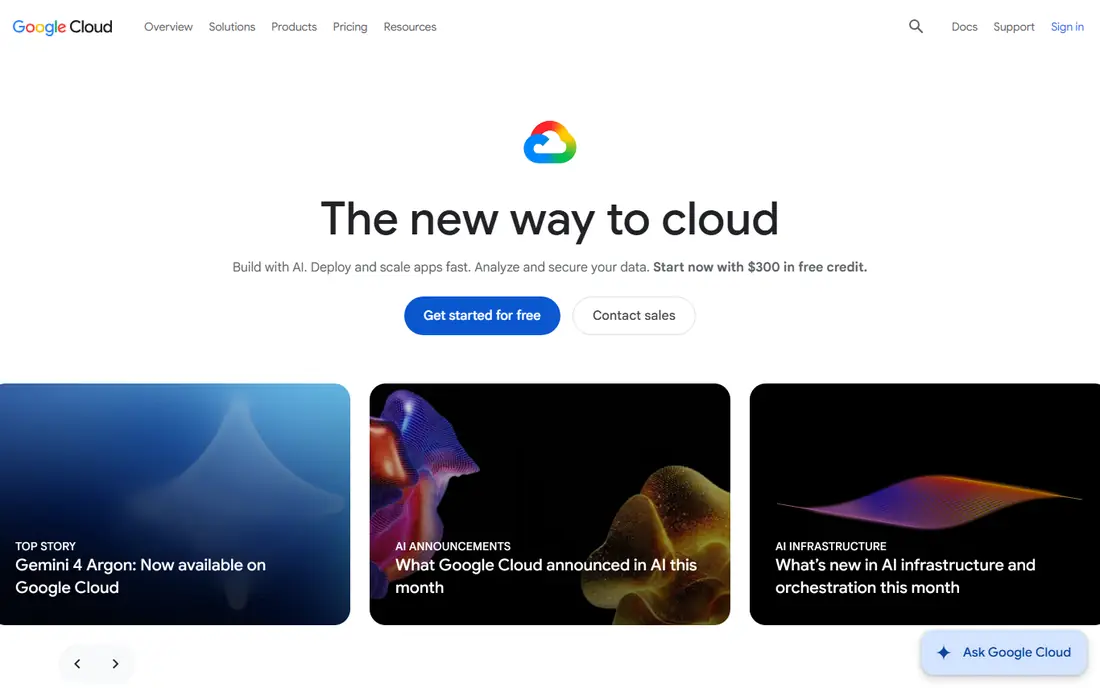
Google Cloud Run is a good fit for Container PaaS with per request pricing. Cloud Run is where the PaaS idea meets hyperscaler economics, and for container comfortable teams it is a formidable answer: a service that costs nearly nothing whereas nobody calls it and scales without a page when everybody does. Its free allowance makes experimentation cheap in a way the dyno era never offered.
What to check first: cold starts and concurrency tuning are concepts your team will meet; It is a hyperscaler's product: identity.
Where Google Cloud Run stands out: a free level with monthly allowances; Google's container system: deploy an image.
In daily use, the tax is Google's: the console, the IAM model, the billing account labyrinth. For everyday use, teams already inside Google Cloud should consider it their default PaaS. Teams outside should weigh Render's simplicity against Run's pricing curve with their real traffic in hand. This comparison lists no price for Google Cloud Run; ask the vendor. Google Cloud Run has a free plan.
- The economics for spiky and quiet services are the best in this list
- Get an URL
- Billing and console complexity come with the building
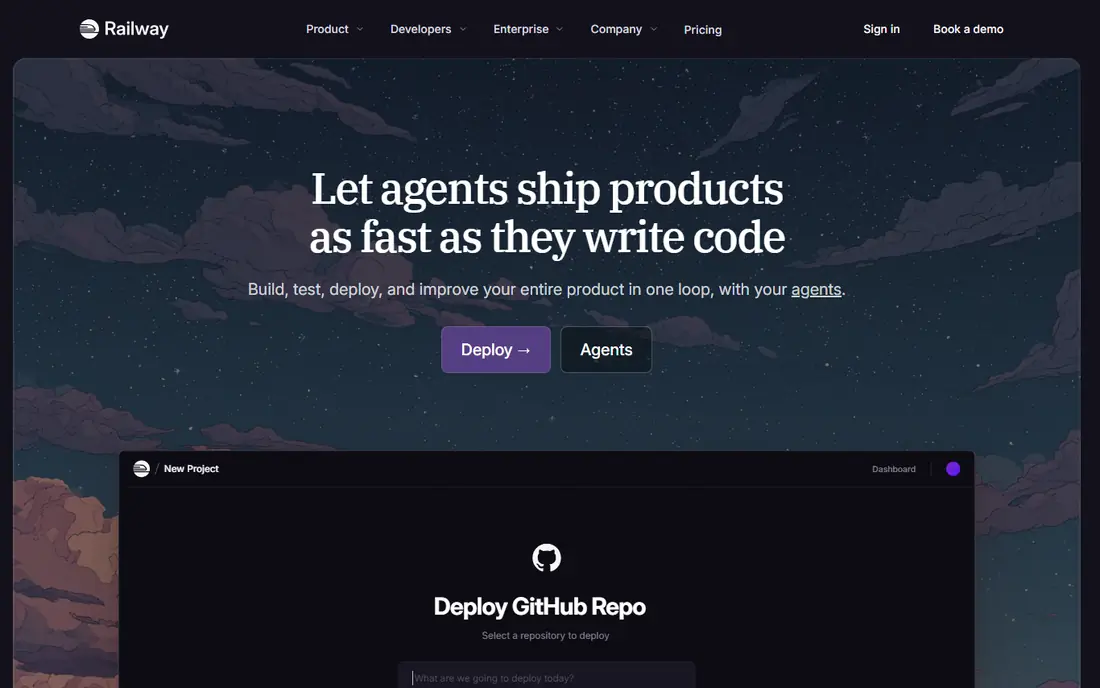
Railway makes the most sense for fastest path from code to deployed app. That speed fits prototypes, internal tools and young products perfectly.
Points against: Usage pricing's other face: a runaway process or a traffic spike writes its own invoice, enterprise controls.
The discipline it demands is cost watching: usage based billing rewards the attentive and bills the distracted, so set the alerts Railway gives you and read the first month's invoice like a contract negotiation, since it is one. Check the vendor site for Railway pricing; none is listed in this comparison. Railway does not include a free plan.
- Beloved by indie developers and small teams for iteration velocity
- A canvas style project view that makes multi service architectures legible
- Regions and compliance depth trail the larger names
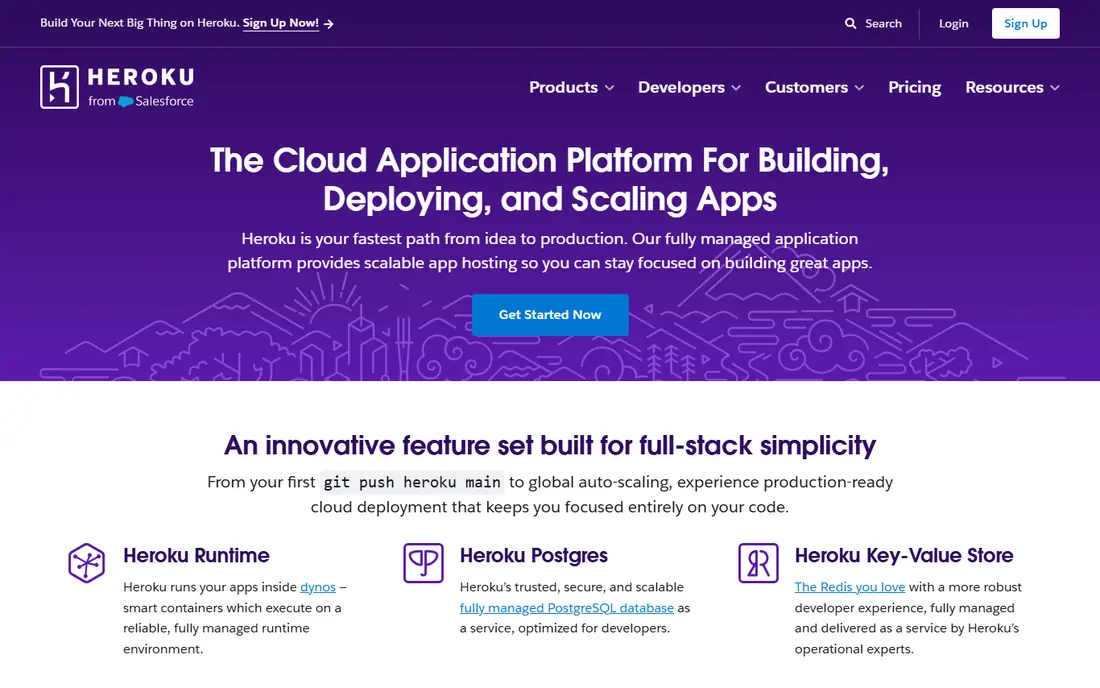
Heroku is a good fit for the original PaaS experience and add on market. The honest caveat is trajectory and price: you pay for the polish, and the newcomers have spent a decade learning from it.
This comparison lists no price for Heroku; ask the vendor. There is no free plan with Heroku.
Downsides: The free level ended in 2022, so the student era is over: entry pricing is real money; cost at scale is the category's premium end.
- The system that defined the category: git push deploys
- A buildpack system every rival imitates
- Dyno pricing surprises expanding apps, under Salesforce
Render was built for modern all round PaaS for web apps and services. Render wins the recommendation for an usual web product in 2026: it feels like Heroku grew up, kept the kindness, and fixed the invoice. In practice, if you are choosing a first PaaS today without a special constraint, start the trial here.
As for the details, teams migrate for the pricing clarity and stay for the completeness: Postgres, Redis compatible keeps, workers and preview environments without assembling a cloud account's worth of parts. Its limits are the honest ones of a focused company, regions and exotic compliance, and for the vast middle of applications those limits never come into view. Check the vendor site for Render pricing; none is listed in this comparison. Render includes a free tier.
The main drawbacks: Fewer regions than the hyperscalers and Fly.io's edge map.
- Background workers, cron
- Free levels for small services and static sites keep the on ramp open
- The add on ecosystem is its own services instead of a marketplace
Pick Fly.io if this describes you: containers close to users, worldwide. Choose Fly when geography or container control is your actual requirement, and accept the additional concepts as the price of a product that hides less from you.
The main drawbacks: persistent storage and databases need more thought than the one click rivals.
From a buyer's view, Fly.io is the PaaS for teams who outgrew the first abstraction but refuse to adopt a cloud: you bring containers, Fly puts them on real small computers in thirty plus regions and bills you like an utility. No starting price is listed for Fly.io here; confirm pricing on the vendor site. There is no free plan with Fly.io.
- Fly can run
- Capable for latency sensitive, multiplayer
- Support and polish are an engineer's, not a concierge's
How we chose
Selection started from tools commonly considered for cloud platform as a service providers, then narrowed to 5 that have clear pricing information or a clear quote process. Figures are shown as the vendors publish them. Billing terms, seat minimums and add-ons can change the real cost. We ordered the tools by general fit, then by how clearly pricing is shown, then by free access. A buyer with unusual needs may reorder them.
A buyer's checklist
- Confirm the entry price with every vendor: no tool from Google Cloud Run to Fly.io shows a fixed starting price.
- Read the fine print on the free plans from Google Cloud Run and Render; seat, project and feature caps differ.
- Find out whether the entry plan of Google Cloud Run covers your must-haves or only a trimmed-down version.
- Compare total cost, not headline price: for Render, add extra seats, add-ons and any usage-based charges.
- Check how data leaves Heroku: formats, limits and whether exports are available on every plan.
Frequently asked questions
Is Google Cloud Run the right pick for everyone comparing cloud platform as a service providers?
No single tool suits every team. Google Cloud Run comes first because it fits Container PaaS with per request pricing, while Railway suits fastest path from code to deployed app and Heroku suits the original PaaS experience and add on market. Match the tool to your own size, budget and workflow before deciding.
Can I try these tools before paying?
Often, yes. Google Cloud Run and Render have a free plan. Use your own data and a real task during the test, and check what the free tier or trial limits before you rely on it.
Can a PaaS deal with a large, high traffic application?
Yes: every provider here runs production applications at serious scale, and the hyperscaler choices scale furthest of all. Numerous large businesses run a hybrid: PaaS for most services, hand managed infrastructure for the few workloads whose shape justifies it.
How are the tools for cloud platform as a service providers ordered?
The order follows typical fit for cloud platform as a service providers, with Google Cloud Run first and Fly.io last, then price clarity and free access. It is editorial judgement, not a score, so another team could rank the tools differently.
What happens to my data if I leave a PaaS?
Your code was always yours, and standard databases, Postgres and MySQL especially, export cleanly from every provider here. The friction lives in product specific services: proprietary queues, storage and add ons whose data models do not travel.
Do these tools publish their prices?
No. None of the tools, from Google Cloud Run to Fly.io, shows a fixed starting price here, so budget time for quotes.
Sources
See where you really rank - block by block
ProMapRanker scans Google Maps across a grid of your service area. Simple monthly plans from $19, white-label on every plan.
Start freeKeep reading
 zoho inventory alternatives
6 Alternatives to Zoho Inventory, Compared on Price and Fit
Zoho Inventory alternatives: 6 tools compared on price, free plans and fit. Katana leads the list for manufacturers. Fit and flaws are laid out for each entry.
Read → zoho crm alternatives
Best Zoho CRM Alternatives (2026)
Need Zoho CRM alternatives? We compare 7 tools on cost, free access and who each suits. Every pick gets a straight assessment. Built for quick decisions.
Read → zelle alternatives
Best Zelle Alternatives in 2026
Compare the best Zelle alternatives for sending money to friends, paying sellers and moving funds abroad, with honest notes on fees, speed and safety in 2026.
Read →