 ProMapRanker
Best Cloud Cost Management Platforms in 2026

Key takeaways
- Vantage is the best starting point for small and mid-size teams, with a free tier and flat monthly pricing.
- CloudZero leads when you need cost per customer, per feature or per team as a business metric.
- Kubecost is the best choice for Kubernetes cost allocation, with a free tier for smaller clusters.
- IBM Apptio Cloudability and Broadcom CloudHealth suit large enterprises with chargeback and governance needs.
- Harness CCM and Datadog CCM suit teams that already run those platforms for delivery or observability.
Quick comparison
| Pick | Great for | Pricing starts at | Free tier | |
|---|---|---|---|---|
 CloudZero | unit economics | See website | No | Visit |
 Vantage | multi-cloud visibility | $30 per month | Yes | Visit |
 Finout | multi-cloud allocation | See website | No | Visit |
 IBM Apptio Cloudability | enterprise chargeback | See website | No | Visit |
 Kubecost | Kubernetes allocation | Free | Yes | Visit |
 Harness CCM | cost control in delivery | See website | Yes | Visit |
 Broadcom CloudHealth | enterprise governance | See website | No | Visit |
 Datadog CCM | observability plus cost | See website | No | Visit |
 Infracost | cost estimates in code reviews | Free | Yes | Visit |
The best cloud cost management platforms
These platforms help teams see, allocate, forecast and control cloud spend across providers, services and engineering teams.
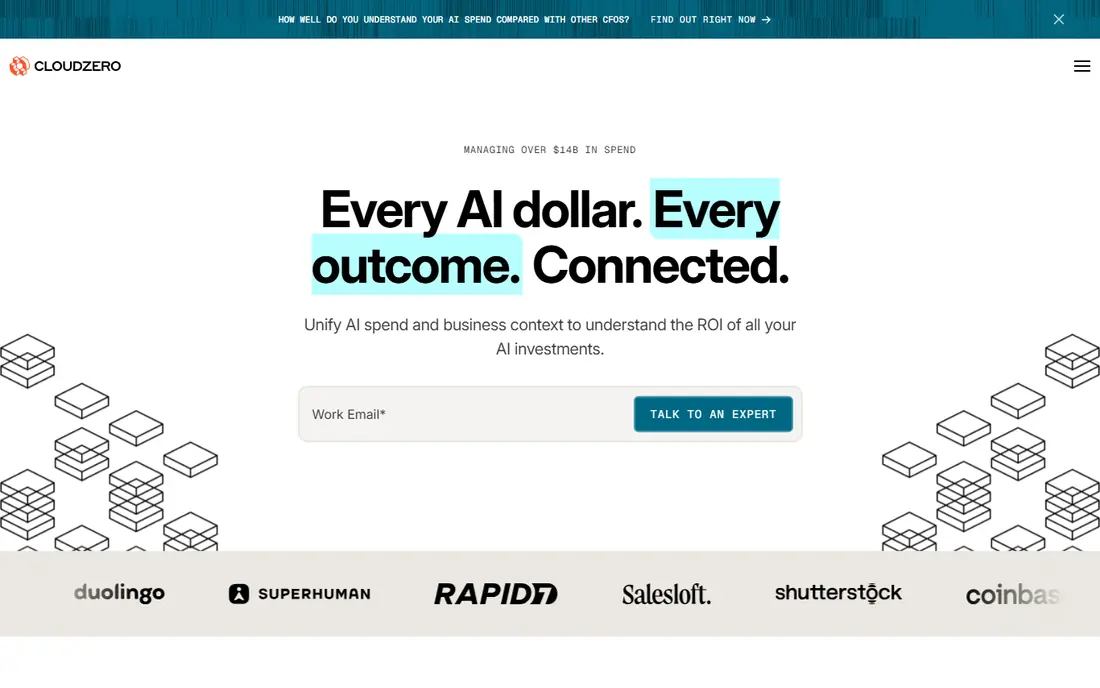
CloudZero is built for a business question, not just a billing question. It maps cloud spend to customers, features, teams and products, so finance and engineering can talk about margin rather than raw totals. That unit economics view is why larger SaaS companies choose it despite the sales-led pricing.
The trade-off is effort and cost. Allocation rules need care, especially when tags are inconsistent, and the platform is priced by quote rather than a public tier. If your main need is a simple bill dashboard, a cheaper tool will do, but if cost per customer drives decisions, CloudZero is the strongest fit.
- Cost per customer, feature and team views
- Allocation across cloud, SaaS and AI spend
- Anomaly alerts
- Quote-based pricing with no public entry price
- Setup takes time for complex allocations
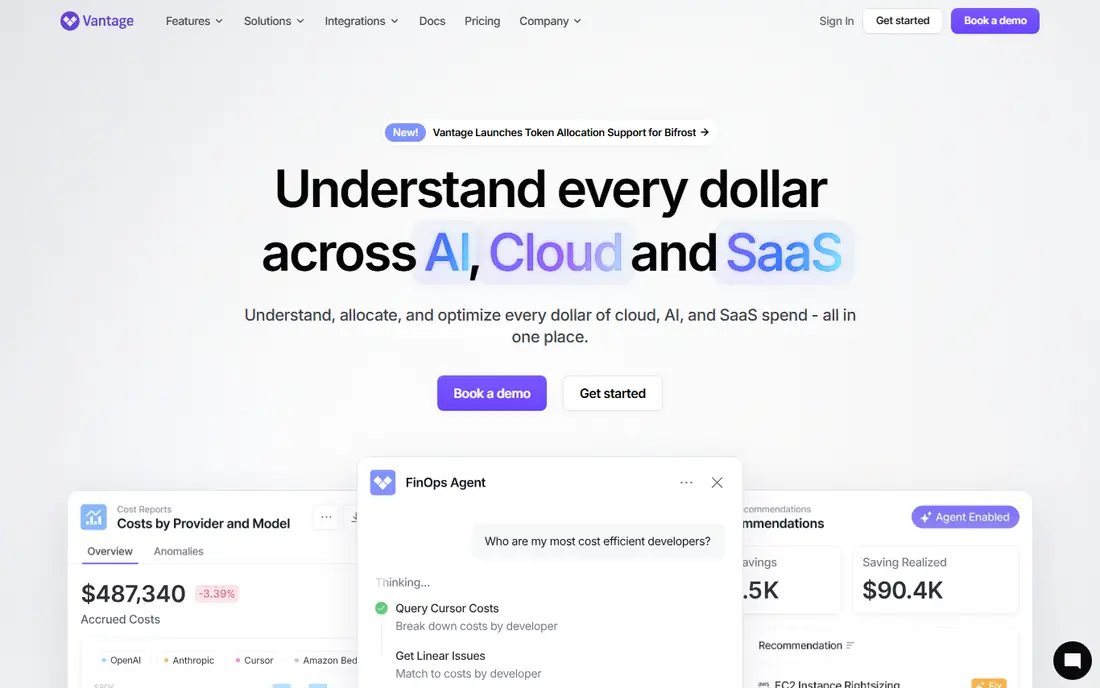
Vantage is the easiest platform on this list to start with. The free tier covers small monthly spend, and paid tiers use flat monthly prices rather than a percentage of spend. Reports cover AWS, Azure, Google Cloud, Snowflake, Datadog and other providers, which helps teams with a mixed stack.
Kubernetes cost detail is useful but not as deep as a dedicated Kubernetes tool, so larger Kubernetes users often pair Vantage with Kubecost. For a startup or mid-size team that wants a working dashboard without a procurement cycle, Vantage is the default starting point.
- Free tier for small spend
- Flat monthly tiers
- Reports across many cloud and SaaS providers
- Kubernetes depth is lighter than Kubecost
- Enterprise features need higher tiers
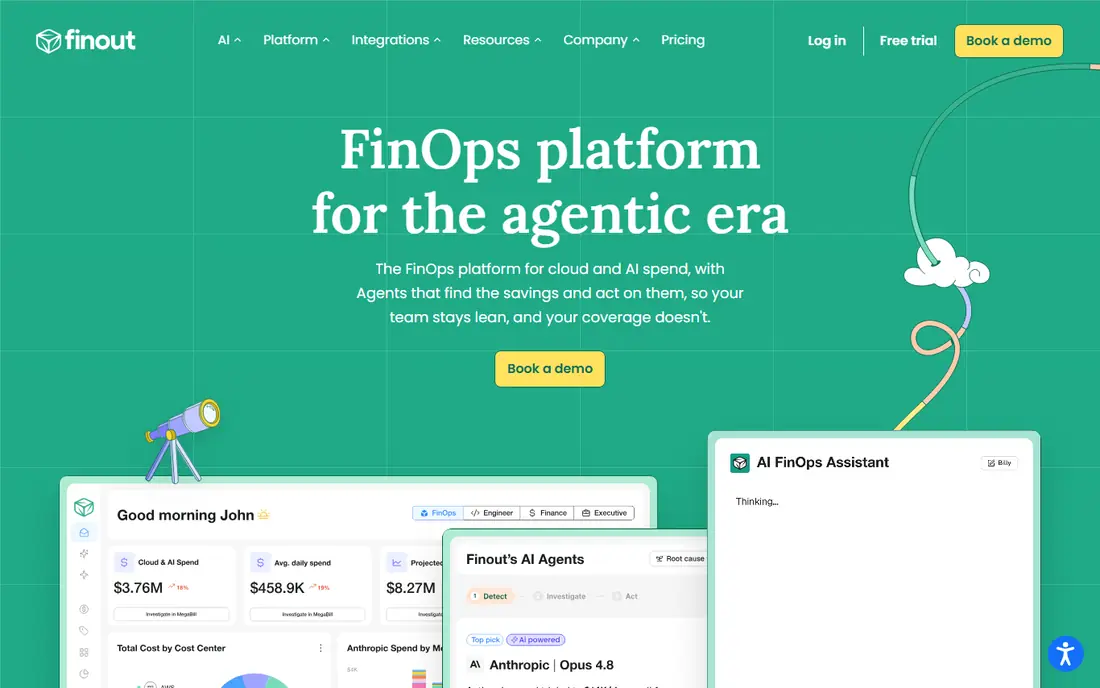
Finout suits teams whose bills arrive from many places and do not line up neatly. It consolidates cloud, Kubernetes and SaaS spend into one view and uses virtual tagging to allocate costs even when native tags are missing. That helps finance teams that need clean team or project totals from messy source data.
Pricing is quote-based, so small teams may find the sales process heavy for their spend level. Larger teams with fragmented bills and higher monthly spend are the better fit. Check which providers and SaaS tools are covered before a trial, since coverage drives the value.
- Consolidates fragmented multi-cloud and SaaS bills
- Virtual tagging for untagged resources
- Cost allocation by team and project
- Quote-based pricing
- Setup effort grows with the number of providers
IBM Apptio Cloudability is the enterprise standard for many large organizations. It supports detailed reporting, forecasting, showback and chargeback across cloud providers, which finance teams need when internal teams are billed for their usage. The product has a long history in FinOps, and that maturity shows in its reporting depth.
That depth comes with enterprise pricing and a heavier setup. Small teams will find it too much tool and too much process. For a large company with formal FinOps governance, the structure is a benefit rather than a burden.
- Mature enterprise reporting and forecasting
- Showback and chargeback for large organizations
- Broad cloud coverage
- Quote-based enterprise pricing
- Implementation and governance effort is high
Kubecost is the standard answer for Kubernetes cost questions. It allocates cluster costs down to namespaces, workloads and pods, so engineering teams can see which services drive spend. The free tier covers smaller clusters, which makes it easy to test on a real workload before paying.
It is not a full multi-cloud billing platform, so teams that need SaaS and non-Kubernetes costs will pair it with Vantage or CloudZero. For any team running Kubernetes at meaningful scale, Kubecost is close to essential, even if another tool handles the wider bill.
- Detailed pod and workload cost allocation
- Free tier for smaller clusters
- Built on the open source OpenCost project
- Kubernetes only, so it does not cover full multi-cloud bills
- Paid tiers start at a higher monthly price
Harness Cloud Cost Management connects cost data to the delivery work that creates it. Engineering teams can see spend by service and pipeline, and AutoStopping can shut down idle non-production resources to cut waste. That link between delivery and cost is the main reason to choose it over a standalone dashboard.
Pricing based on a share of cloud spend makes small deployments cheap and large deployments costly, so model the cost at your actual spend level. Teams already using Harness for continuous delivery get the most value, since cost data sits next to deployment data.
- Cost visibility tied to delivery pipelines
- AutoStopping for idle resources
- Kubernetes cost detail for engineering teams
- Pricing is tied to cloud spend
- Best value comes inside a wider Harness deployment
Broadcom CloudHealth, formerly VMware CloudHealth, serves large enterprises that need governance across many accounts and providers. Policy controls, rightsizing recommendations and centralized reporting help central FinOps teams enforce standards. Its history with large customers means it handles complex account structures well.
Smaller teams will find the pricing model and setup heavy, since cost often tracks a share of managed spend. For a large organization with many cloud accounts and formal controls, that structure fits the governance need.
- Enterprise multi-cloud governance and reporting
- Policy and rightsizing recommendations
- Long track record with large customers
- Quote-based pricing tied to tracked spend
- Interface and setup feel enterprise heavy
Datadog Cloud Cost Management makes sense when Datadog is already the observability standard. Cost data sits beside metrics, traces and logs, so engineers can connect a spend spike to a service change without switching tools. Allocation by team and service supports chargeback conversations inside engineering.
Teams that do not use Datadog should not adopt it for cost alone, since the value depends on the wider platform. Pricing as an add-on also needs modeling at your host count. For Datadog shops, the combined view can replace a separate cost dashboard.
- Cost data next to infrastructure and application metrics
- Allocation by team, service and environment
- Anomaly detection
- Requires Datadog as the observability platform
- Pricing is an add-on per host and related units
Infracost shifts cost checks earlier in the workflow. When an engineer opens a Terraform pull request, Infracost shows the estimated cost change for the proposed infrastructure, so expensive choices surface before deployment. That early signal helps teams avoid surprises that only appear in the monthly bill.
It does not replace a full cost management platform, since it estimates code changes rather than tracking live bills. Teams that use Terraform heavily get the most value, while teams that provision resources by hand will see less benefit. Pair it with a billing platform for full coverage.
- Cost estimates inside Terraform pull requests
- Open source core
- Helps engineers catch costly changes before deployment
- Estimates infrastructure code costs, not full cloud bills
- Needs Terraform or similar workflows to pay off
How we picked these
We compared official product pages, pricing pages and current 2026 FinOps comparisons for platforms that track real cloud bills, not just estimates. We favored tools with multi-cloud or Kubernetes coverage, allocation and forecasting, and we included native and code-level tools where they clearly help a FinOps workflow. We noted where pricing is flat, spend-based or quote-based, since that difference shapes the total cost.
We did not claim hands-on testing that did not happen. Our comparison rests on published features, pricing and public reviews. Cloud bills and pricing models change often, so confirm current tiers, spend thresholds and provider coverage before signing.
How to choose a cloud cost platform
Start with the question you need answered. A simple visibility question suits Vantage, a Kubernetes allocation question suits Kubecost, and a cost per customer question suits CloudZero. Buying an enterprise governance platform for a visibility question wastes money, just as buying a dashboard for a chargeback question leaves finance without the numbers it needs.
Next, check tag and account hygiene before you buy. No platform can allocate costs cleanly if tags are missing or accounts are shared without rules. A short cleanup of tags, accounts and cost centers before a trial will make every candidate look better and will show which platform handles your real data best.
Finally, model total cost at your spend level, not just the entry price. Flat tiers, spend percentages and quote-based contracts behave very differently as spend grows. Include implementation time and the staff time needed to maintain allocation rules, since those costs often exceed the subscription itself.
Frequently asked questions
What is the best cloud cost management software?
Vantage is the best starting point for small and mid-size teams, CloudZero leads for unit economics, and Kubecost leads for Kubernetes. IBM Apptio Cloudability and Broadcom CloudHealth suit large enterprises with chargeback needs. The best choice depends on your main question and your spend level.
What are the best cloud cost management tools for Kubernetes?
Kubecost is the best dedicated Kubernetes cost tool, with pod-level allocation and a free tier for smaller clusters. Harness CCM and Datadog CCM also offer Kubernetes cost detail, but they work best inside their wider platforms. Many teams pair Kubecost with a multi-cloud dashboard for full coverage.
Is there a free cloud cost management tool?
Yes. Vantage offers a free tier for small monthly spend, Kubecost offers a free tier for smaller clusters, and Infracost offers a free open source core. Native tools such as AWS Cost Explorer also provide free basic visibility for a single cloud, though they lack multi-cloud allocation.
How is cloud cost management pricing usually charged?
Pricing varies by vendor. Some tools charge flat monthly tiers, some charge a percentage of tracked cloud spend, and many enterprise tools use quote-based contracts. Always model the cost at your actual spend level, since a spend-based fee can grow faster than a flat tier.
Do I need a FinOps platform if I use AWS Cost Explorer?
AWS Cost Explorer is a good free baseline for AWS-only visibility, but it lacks multi-cloud reporting, detailed allocation and chargeback features. Keep it as a baseline, and add a FinOps platform when you run multiple clouds, need team-level allocation or want forecasting and anomaly alerts.
Sources
See where you really rank - block by block
ProMapRanker scans Google Maps across a grid of your service area. Simple monthly plans from $19, white-label on every plan.
Start freeKeep reading
 zoho inventory alternatives
6 Alternatives to Zoho Inventory, Compared on Price and Fit
Zoho Inventory alternatives: 6 tools compared on price, free plans and fit. Katana leads the list for manufacturers. Fit and flaws are laid out for each entry.
Read → zoho crm alternatives
Best Zoho CRM Alternatives (2026)
Need Zoho CRM alternatives? We compare 7 tools on cost, free access and who each suits. Every pick gets a straight assessment. Built for quick decisions.
Read → zelle alternatives
Best Zelle Alternatives in 2026
Compare the best Zelle alternatives for sending money to friends, paying sellers and moving funds abroad, with honest notes on fees, speed and safety in 2026.
Read →