 ProMapRanker
7 Strong Cloud Container Security Software Options in 2026


Organizations consolidating container security into a wide CNAPP · Pricing starts at: See website
Direct answer
For organizations consolidating container security into a wide CNAPP, Prisma Cloud is where this list starts. If your case is different, Snyk suits developer-first organizations shifting container security left and Sysdig suits teams prioritizing Kubernetes runtime security and threat detection. All 7 tools are compared below on price, free plan and limits.
Key takeaways
- Prisma Cloud takes the first slot, best suited to organizations consolidating container security into a wide CNAPP.
- Only Snyk offers a free plan among these 7 tools.
- Sysdig comes with a trade-off: VM and Windows coverage thinner.
- CrowdStrike Falcon is the one to check for organizations consolidating container runtime on their endpoint product.
- Every tool from Prisma Cloud to CrowdStrike Falcon works by quote, with no list price shown.
Quick comparison
| Pick | Great for | Pricing starts at | Free tier | |
|---|---|---|---|---|
| Prisma Cloud | Organizations consolidating container security into a wide CNAPP | See website | No | Visit |
 Snyk | Developer-first organizations shifting container security left | See website | Yes | Visit |
 Sysdig | Teams prioritizing Kubernetes runtime security and threat detection | See website | Free trial | Visit |
 Aqua Security | Container-first teams wanting the deepest build-to-run coverage | See website | Free trial | Visit |
 Wiz | Teams wanting agentless visibility with graph-based attack path analysis | See website | No | Visit |
 Red Hat Advanced Cluster Security | OpenShift and Kubernetes-native organizations | See website | Free trial | Visit |
 CrowdStrike Falcon | Organizations consolidating container runtime on their endpoint system | See website | Free trial | Visit |
Cloud Container Security Software compared in detail
Choosing cloud container security software usually comes down to price, fit and limits. This ProMapRanker guide sets 7 tools side by side on those three points, with the facts kept short and checkable.
Prisma Cloud
Great for: Organizations consolidating container security into a wide CNAPP

Prisma Cloud is a good fit for organizations consolidating container security into a broad CNAPP. For organizations consolidating security vendors, the system story is compelling: one agent architecture, one policy framework, one incident view across cloud and containers. Palo Alto's Prisma Cloud brings container security into the broadest cloud-native application protection system: posture, workload protection, network security, data security and code security correlated on one graph.
Downsides: Container depth less than specialists.
Compliance reporting spans the estate. But when the strategy is consolidation, Prisma Cloud's breadth wins. No starting price is listed for Prisma Cloud here; confirm pricing on the vendor site. Prisma Cloud does not include a free plan.
What Prisma Cloud does well: Solid compliance.
- Palo Alto ecosystem
- Broadest CNAPP coverage
- Premium pricing
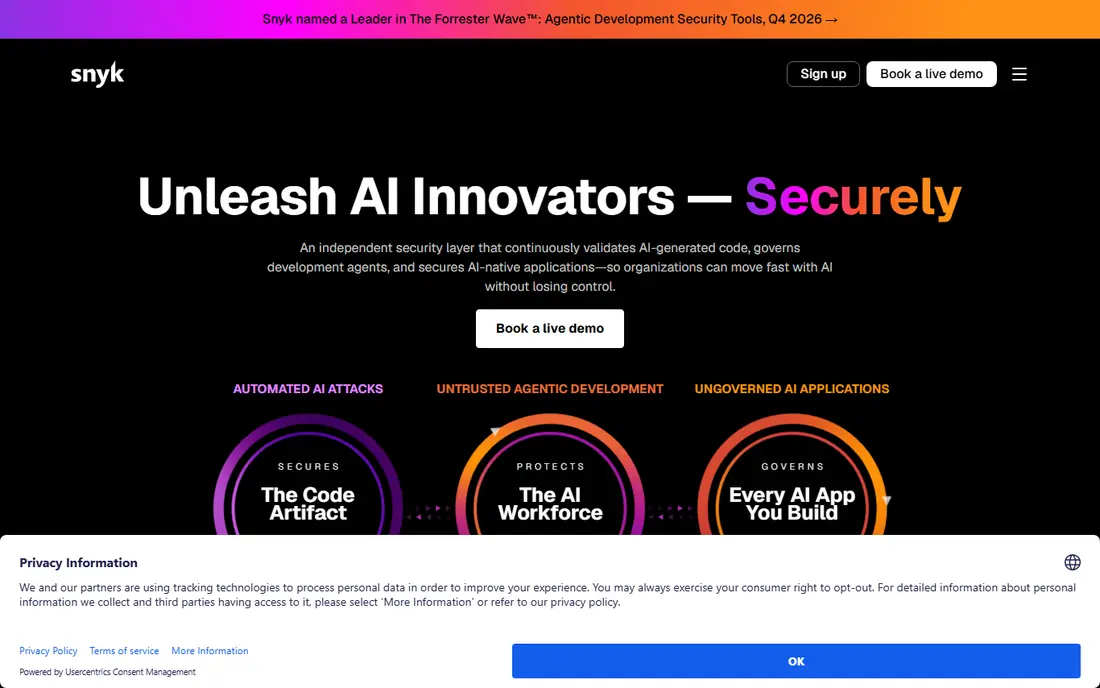
Snyk was built for developer-first organizations shifting container security left. Snyk meets developers where they work: container image scanning in CI, IaC and Helm chart checks in pull requests, with fix advice that tells developers exactly what to change.
Strengths: Ample free level.
Runtime protection is not Snyk's strength; pair it with a runtime specialist for production defense. But for preventing vulnerable containers from shipping, Snyk is the developer's choice. Check the vendor site for Snyk pricing; none is listed in this comparison. You can start on Snyk without paying.
The main drawbacks: Enterprise features need higher levels.
- Scans containers
- Best developer workflow
- Runtime depth restricted
Sysdig
Great for: Teams prioritizing Kubernetes runtime security and threat detection
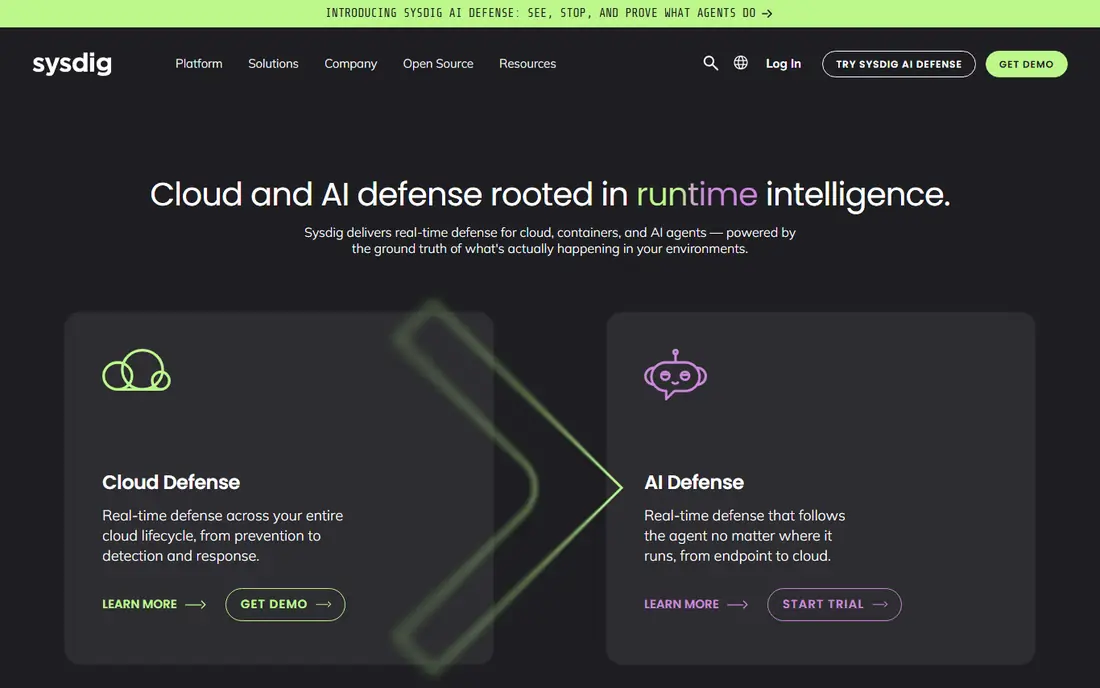
Sysdig serves teams prioritizing Kubernetes runtime security and threat detection. Sysdig's heritage is runtime: born from the Falco open-source project, it sees what containers actually do at the kernel level and spots threats, drift and policy violations in real time. As for the details, coverage outside containers is thinner than the CNAPP systems, and posture management needs complementing.
But for runtime and Kubernetes as the priority, Sysdig is the specialist's choice. From a buyer's view, the product correlates runtime signals with cloud context, so alerts carry the identity, posture and exposure information responders need. Sysdig shows no starting price here, so confirm the cost on the vendor site. Free options: Free trial.
Watch-outs: Runtime focus needs complementary posture tools. Strengths: Deep Kubernetes context.
- Falco open-source lineage
- Best-in-class runtime detection
- VM and Windows coverage thinner
Aqua Security
Great for: Container-first teams wanting the deepest build-to-run coverage
For Container-first teams wanting the deepest build-to-run coverage, Aqua Security is a natural candidate. Its open-source tools, including Trivy for vulnerability scanning, provide teams a free on-ramp that commercial competitors cannot match. On top of that, Kubernetes-native controls deal with admission, network policy and runtime in cluster terms.
Drawbacks to consider: Broader cloud features thinner than CNAPPs.
Beyond that, the interface carries the weight of its breadth, and broader cloud security features trail the CNAPP systems. But when containers are the estate, Aqua's specialization displays. Policies follow workloads from CI through registries into production, with runtime enforcement catching drift and malicious behavior. Check the vendor site for Aqua Security pricing; none is listed in this comparison. On free options: Free trial.
Upsides: Mature container focus.
- Deepest scan-assure-run lifecycle
- Open-source on-ramp with Trivy
- Pricing enterprise-grade
In short, Wiz is for teams wanting agentless visibility with graph-based attack path analysis. Its security graph correlates container vulnerabilities with misconfigurations, exposed identities and network paths, showing the attack paths that matter rather than vulnerability lists. More specifically, Runtime protection is newer and less deep than Sysdig or Aqua; agentless architecture has inherent runtime limits.
Honest limits: Premium pricing.
What users get: Feature-rich security graph. For container security, that context is capable: a critical CVE in an unreachable container is noise, whereas a medium CVE on an internet-facing workload with excessive permissions is the priority. In daily use, Wiz's UX makes that triage easy-to-learn. This comparison lists no price for Wiz; ask the vendor. Wiz has no free plan.
- Quick agentless deployment
- Very good UX
- Runtime sensors newer and less deep
Red Hat Advanced Cluster Security
Great for: OpenShift and Kubernetes-native organizations
Choose Red Hat Advanced Cluster Security for OpenShift and Kubernetes-native organizations. Red Hat Advanced Cluster Security, from the StackRox acquisition, is built Kubernetes-native: policy-as-code enforcement, admission control, runtime detection and vulnerability management designed around how Kubernetes actually works.
Downsides: Enterprise pricing.
Value concentrates inside Red Hat and Kubernetes-native environments; multi-cloud CNAPP buyers get more elsewhere. This comparison lists no price for Red Hat Advanced Cluster Security; ask the vendor. Free plan details: Free trial.
- Capable policy-as-code
- Kubernetes-centric design
- Broader cloud features restricted
CrowdStrike Falcon
Great for: Organizations consolidating container runtime on their endpoint system
Choose CrowdStrike Falcon for organizations consolidating container runtime on their endpoint platform. CrowdStrike extended its Falcon product into containers, bringing the detection quality that made it an endpoint leader to container runtime protection. More specifically, Container-native features trail the specialists, and the value relies on Falcon commitment.
But for endpoint-consolidated estates, CrowdStrike's container story is coherent. In daily use, for organizations already standardized on Falcon, adding container workload protection keeps one agent, one console and one threat intelligence feed. CrowdStrike Falcon does not show a starting price in this comparison, so check the vendor site for current pricing. As for free access: Free trial.
Reasons to shortlist it: Capable threat intelligence. Where it falls short: Product commitment.
- Single agent story
- Container runtime inside Falcon
- Premium pricing
A closer look at cloud container security software
Workloads are ephemeral, images bundle dependencies with known vulnerabilities, Kubernetes RBAC misconfigurations open doors, and runtime drift means a running container may no longer match what was deployed. In practice, traditional endpoint and network tools were not made for this.
Selection criteria
Selection started from tools commonly considered for cloud container security software, then narrowed to 7 that have clear pricing information or a clear quote process. Plan names, prices and limits change often. Treat the figures here as a starting point and verify them with the vendor. The ranking is editorial: typical fit first, then clear pricing, then free access. If your needs are unusual, read the profiles rather than relying on position.
Pre-purchase checklist
- Ask each vendor, from Prisma Cloud to CrowdStrike Falcon, for a written quote; none of them publishes a starting price.
- Test the free plan from Snyk against your real workload before relying on it.
- Run a trial of Sysdig, Aqua Security, Red Hat Advanced Cluster Security and CrowdStrike Falcon with real work before paying for a year; your own workflow is the best test.
- Read the limits listed for Prisma Cloud first: heavyweight UX.
- Pick one real project and run it in Wiz first; a small pilot shows fit faster than a checklist.
- List the apps you already depend on and check that Snyk supports each one on the plan you would buy.
Frequently asked questions
What is the difference between Aqua and Sysdig?
Aqua spans the full container lifecycle from build to runtime with the deepest breadth. Sysdig concentrates on runtime detection and Kubernetes with Falco-lineage depth.
Which options for cloud container security software have a free plan?
Snyk is the only tool in this list with a free plan. Free plans usually cap users, projects or features, so check the limits on the vendor page. Several others offer a trial instead.
Is open-source container security enough?
For baseline coverage, frequently yes: Trivy for scanning, Falco for runtime, Kubescape for posture and Calico for network policy are production-grade. On top of that, commercial products add correlation, management, support and advanced features that matter at scale.
Is Prisma Cloud the right pick for everyone comparing cloud container security software?
No single tool suits every team. Prisma Cloud comes first because it fits organizations consolidating container security into a broad CNAPP, while Snyk suits developer-first organizations shifting container security left and Sysdig suits teams prioritizing Kubernetes runtime security and threat detection. Match the tool to your own size, budget and workflow before deciding.
What is container security?
Security for containerized applications across their lifecycle: scanning images and infrastructure-as-code at build, controlling registries and admission at deploy time, detecting threats and drift at runtime, and maintaining supply-chain integrity with SBOMs and image signing.
Do these tools publish their prices?
No. None of the tools, from Prisma Cloud to CrowdStrike Falcon, shows a fixed starting price here, so budget time for quotes.
Sources
See where you really rank - block by block
ProMapRanker scans Google Maps across a grid of your service area. Simple monthly plans from $19, white-label on every plan.
Start freeKeep reading
 zoho inventory alternatives
6 Alternatives to Zoho Inventory, Compared on Price and Fit
Zoho Inventory alternatives: 6 tools compared on price, free plans and fit. Katana leads the list for manufacturers. Fit and flaws are laid out for each entry.
Read → zoho crm alternatives
Best Zoho CRM Alternatives (2026)
Need Zoho CRM alternatives? We compare 7 tools on cost, free access and who each suits. Every pick gets a straight assessment. Built for quick decisions.
Read → zelle alternatives
Best Zelle Alternatives in 2026
Compare the best Zelle alternatives for sending money to friends, paying sellers and moving funds abroad, with honest notes on fees, speed and safety in 2026.
Read →