 ProMapRanker
Best Cloud-Based Inventory Management Software in 2026

Key takeaways
- Zoho Inventory is the best low cost starting point for small sellers, with a free plan and paid plans from $29 per month.
- Cin7 Core suits multichannel brands that need purchasing, warehousing and manufacturing depth in one cloud system.
- Katana suits makers and light manufacturers, while inFlow suits wholesale and B2B sellers with showrooms and invoicing.
- Sortly suits teams that mainly need to track items visually, while Ordoro suits e-commerce sellers who ship and stock in one place.
- Check order limits, user limits and integration costs, since those caps decide total cost more than the headline plan price.
Quick comparison
| Pick | Great for | Pricing starts at | Free tier | |
|---|---|---|---|---|
 Zoho Inventory | Low cost small sellers | $29 per month | Yes | Visit |
 Cin7 Core | Multichannel brands | $349 per month | Free trial | Visit |
 Katana | Light manufacturers | $299 per month | Yes | Visit |
 inFlow | Wholesale and B2B sellers | $99 per month | Free trial | Visit |
 Ordoro | E-commerce shipping and stock | $349 per month | Free trial | Visit |
 Sortly | Visual item tracking | $49 per month | Yes | Visit |
 Fishbowl | QuickBooks warehouses | $229 per month | Free trial | Visit |
 Odoo Inventory | Flexible modular inventory | Free | Yes | Visit |
 Square for Retail | Stores already on Square | See website | Yes | Visit |
The best cloud-based inventory management software
We compared cloud access, order and stock tracking, purchasing, multichannel sync, barcode and mobile tools, accounting links and pricing. Each tool below fits a different kind of product business, so the best pick depends on how you sell and where stock lives.
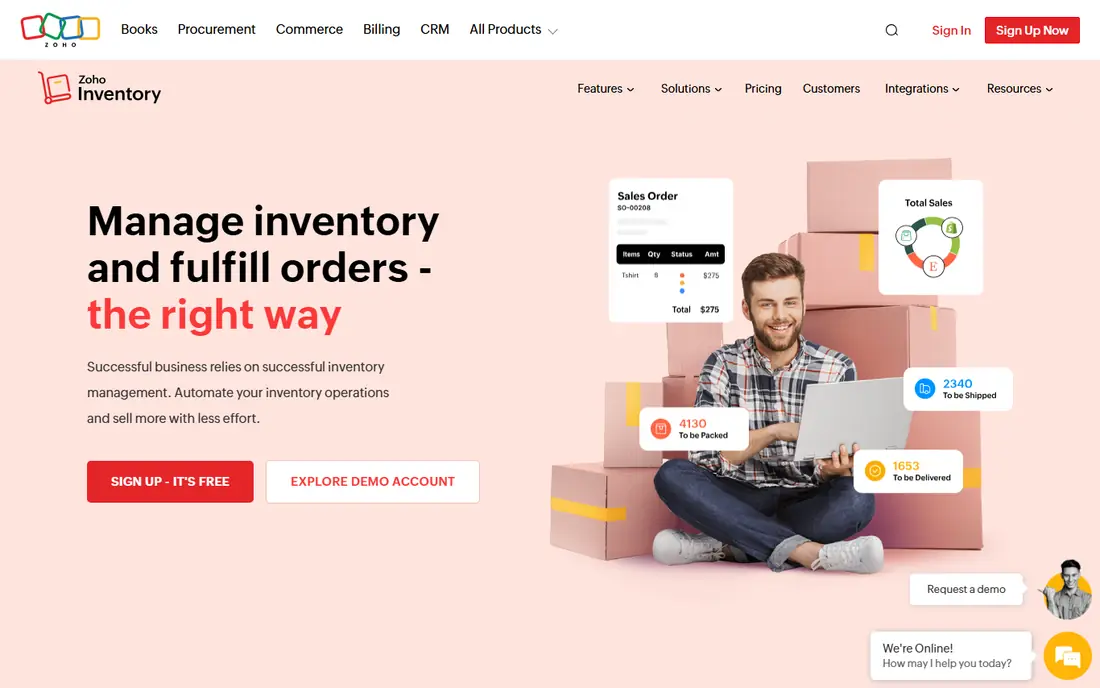
Zoho Inventory is our pick for small sellers watching every dollar. The free plan covers a small number of orders per month, and paid plans start at $29 per month on annual billing, which undercuts most rivals with similar multichannel features. It tracks stock across warehouses, syncs orders from major sales channels, handles purchase orders, batch and serial tracking, and connects with Zoho Books and other Zoho apps. For a seller starting out, that range at that price is hard to beat.
Order caps are the limit to watch. Lower tiers limit monthly orders, so a growing seller will need to move up a tier as volume rises, and manufacturing features are lighter than Katana or Cin7. Zoho Inventory suits online and multichannel sellers with a modest catalog who want cloud stock control without a large monthly bill. If you manufacture complex products, compare Katana before committing.
- Genuine free plan
- Affordable paid tiers
- Strong Zoho app integration
- Order caps on lower tiers
- Manufacturing depth is limited
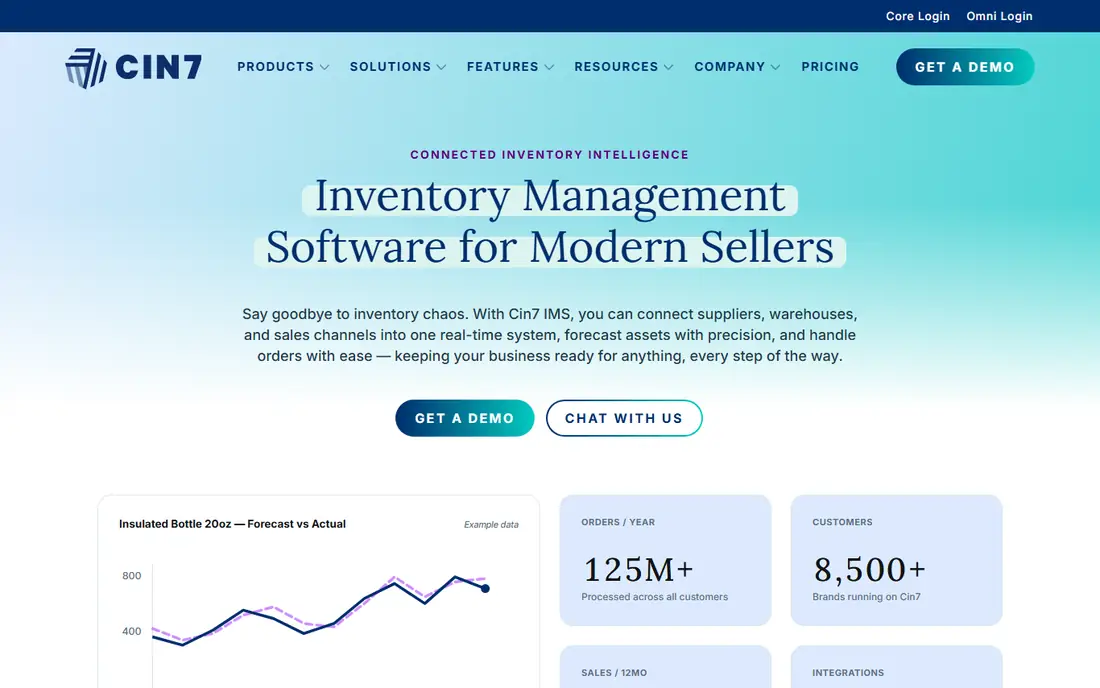
Cin7 Core, formerly DEAR Systems in part of its history, is built for product businesses that have outgrown basic stock tools. It syncs inventory across sales channels, manages purchase orders, suppliers, warehouses and fulfilment, and adds manufacturing on higher tiers. Its integration range covers major e-commerce, marketplace, accounting and shipping tools, which helps a brand that sells in many places at once. Demand forecasting and reporting help teams plan purchasing instead of reacting to stockouts.
Price and setup are the trade offs. Core starts at $349 per month, with a 14 day free trial, so it suits businesses with real revenue, not a first time seller testing an idea. Implementation also takes planning, especially for warehouse locations, costing and channel mapping. Cin7 Core is best for a scaling multichannel brand that needs one cloud system for stock, purchasing and fulfilment, and that can invest time in setup.
- Deep multichannel sync
- Purchasing and warehouse tools
- Wide integration range
- High starting price
- Setup needs time and planning
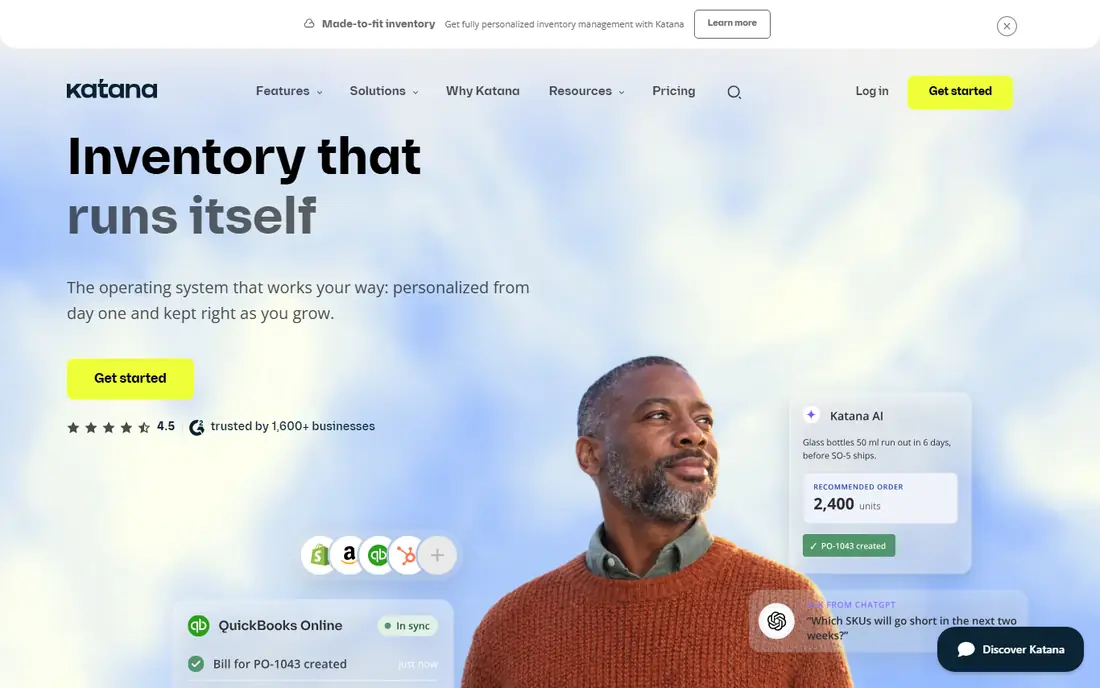
Katana is built for businesses that make or assemble products, not just resell them. It tracks raw materials through production to finished goods, with bill of materials, production planning and stock allocation in one view. Sales orders from Shopify, WooCommerce and other channels sync into the same system, so a maker can see what to produce, what is in stock and what is already promised. A free plan covers a small number of SKUs, and paid plans start at $299 per month, with manufacturing features that pure inventory tools lack.
The price and focus are the limits. Pure resellers who never manufacture will pay for production tools they do not use, and the paid tiers are expensive for a very small maker. Katana suits small manufacturers, workshops and craft brands that need to plan production and track materials accurately. If you only buy and resell finished goods, Zoho Inventory or Cin7 Core will fit better and cost less.
- Clear production planning
- Bill of materials tracking
- Multichannel sales sync
- High paid price
- Overkill for pure resellers
inFlow suits wholesale, distribution and B2B product businesses that sell to other companies as well as to consumers. Its B2B showroom lets trade customers browse, order and see pricing online, while invoicing, purchase orders and stock tracking sit in the same cloud system. Multi level bill of materials supports light manufacturing, and paid plans include unlimited orders, which helps wholesalers with high order counts. Pricing is listed from $99 per month on annual billing, with a 14 day free trial.
Entry cost is higher than Zoho Inventory or Sortly, and e-commerce channel depth is thinner than Cin7 for a brand selling mainly through marketplaces. inFlow is best for a B2B or wholesale business that needs showrooms, invoicing and structured stock control, and that values unlimited orders over marketplace breadth. Retail only sellers may prefer a more e-commerce focused tool.
- B2B showroom and invoicing
- Multi level bill of materials
- Unlimited orders on paid plans
- Higher entry cost than basic tools
- E-commerce depth is thinner than Cin7
Ordoro combines inventory management with shipping and order fulfilment, which suits e-commerce sellers who want one system for stock and dispatch. Orders from multiple channels flow into one queue, stock levels update as orders ship, and automated rules can route orders to the right warehouse or supplier. Forecasting tools help sellers plan reorders, and shipping label tools reduce manual work for a busy store. A 15 day free trial lets a seller test the workflow with real orders.
Pricing is the barrier. The inventory app starts at $349 per month, so Ordoro suits established e-commerce brands, not a new seller with a handful of orders. Manufacturing support is also limited compared with Katana. Ordoro is best for a multichannel e-commerce seller that ships daily, wants stock and shipping together, and can justify the monthly cost through time saved on fulfilment.
- Shipping and inventory in one place
- Automated order routing
- Forecasting tools
- Inventory pricing starts high
- Manufacturing support is limited
Sortly is the simplest tool in this list, and that simplicity is its strength for many small teams. It tracks items visually, with photos, barcodes and QR codes, locations and quantities, and a mobile app for scanning items in and out. A free plan covers a limited number of items, and paid plans start at $49 per month. Businesses tracking equipment, supplies, materials or a small product range often find Sortly faster to adopt than a full inventory system, since staff can learn it in an afternoon.
High volume selling is the limit. Sortly lacks the order, purchasing and multichannel depth of Zoho, Cin7 or Ordoro, and some features such as purchase orders sit on higher plans. It suits teams that mainly need to know what is where, who has it and when stock is low, rather than teams processing hundreds of sales orders a day. For simple tracking, Sortly is an excellent and low friction pick.
- Simple visual tracking
- Mobile barcode and QR scanning
- Easy check in and out
- Less suited to high volume sales
- Purchase orders and counts are limited on lower plans
Fishbowl is built for manufacturers and distributors who run their accounts on QuickBooks. It adds warehouse management, manufacturing, order management and real time stock tracking around QuickBooks, keeping stock movements and accounting in sync. Essentials starts at $229 per month on annual billing, and higher tiers add advanced manufacturing and warehouse features. For a QuickBooks business with a warehouse, that integration avoids double entry and reconciliation errors that creep in when stock and accounts live in separate systems.
The limits are cost structure and tier depth. Pricing is annual, and the most advanced manufacturing features sit on higher tiers, so a small maker should check tier features carefully. Fishbowl is less suited to a business that does not use QuickBooks, since its main advantage is that link. For a QuickBooks warehouse operation, Fishbowl remains a strong and proven choice.
- Deep QuickBooks integration
- Warehouse and manufacturing tools
- Real time stock tracking
- Price is annual
- Manufacturing depth needs higher tiers
Odoo Inventory is part of the modular Odoo business suite, and it can be used as a single free app or as part of a wider system covering sales, purchasing, accounting and manufacturing. It handles multi warehouse stock, barcode scanning, forecasting, replenishment rules and traceability, and its modular design lets a business add only the apps it needs. That flexibility suits businesses that want one vendor for several functions, or that want to start with inventory and add modules later as they grow.
Configuration is the trade off. Odoo rewards teams that invest time in setup, workflows and training, and the full suite is priced per user, so total cost depends on team size and modules chosen. A business that wants a ready made inventory tool with minimal setup may prefer Zoho Inventory. A business that wants a flexible, modular system and can invest in configuration will find Odoo Inventory powerful and adaptable.
- Free single app option
- Modular design
- Forecasting and automated purchase rules
- Setup and configuration take time
- Full suite pricing is per user
Square for Retail suits brick and mortar stores already using Square for payments and point of sale. Inventory, sales and stock counts share the same system, so a sale at the till updates stock at once, and multi location tracking helps a retailer with more than one shop. A free point of sale tier covers basic inventory, and paid retail plans add advanced inventory, purchase orders and reporting. Setup is simple for a retailer, since staff already use Square hardware and software at the counter.
Warehouse and manufacturing depth are limited compared with Cin7, Fishbowl or Katana, and the best value sits inside the Square ecosystem. A pure online seller, or a wholesaler with complex purchasing, will find a dedicated inventory platform a better fit. For a retail store that wants point of sale and stock in one cloud system, Square for Retail is a practical and low friction choice.
- Point of sale and inventory in one system
- Multi location stock
- Simple setup for retailers
- Advanced warehouse features are limited
- Best value inside Square ecosystem
How we picked these
We compared official pricing pages, feature guides and integration lists for cloud inventory tools that small and mid sized product businesses use today. We favoured tools with real cloud access, barcode or mobile support, accounting or channel integrations, and published pricing or trial options. Where pricing varies by billing term or tier, we used the published entry figure and noted caps, so readers can compare total cost at their own order volume.
How to choose cloud inventory software
Start with how you sell. An online only seller should shortlist Zoho Inventory, Cin7 Core and Ordoro, and compare channel sync and order limits. A maker should shortlist Katana and Fishbowl, and compare bill of materials and production planning. A wholesaler should shortlist inFlow, and a retailer should shortlist Square for Retail. A team that only tracks items should shortlist Sortly, and a team that wants modular flexibility should shortlist Odoo.
Next, test with your real catalog. Import a sample of SKUs, record a purchase order, receive stock, sell an item and run a stock count, and check that quantities, costs and channel stock all update correctly. Confirm barcode scanning works on your phones or scanners, and that your accounting tool syncs without manual exports. Check user limits, order limits and support hours, since those details cause most surprises after purchase. A short trial with real data tells you more than a feature checklist.
Costs to check before you buy
Check order caps, SKU limits, user limits, warehouse limits and barcode or mobile app charges. Check whether implementation, training or data migration costs extra, and whether annual billing is required for the advertised price. Add those costs to the plan price for a true monthly total, and compare that total at your expected volume in six months, not just at launch volume.
Frequently asked questions
What is the best cloud-based inventory management platform?
Zoho Inventory is the best low cost general pick for small sellers, Cin7 Core is best for multichannel brands, Katana is best for light manufacturers, and inFlow is best for wholesale sellers. The best platform follows how you sell, what you make and how many orders you process each month.
Is there free cloud inventory software?
Yes, in limited form. Zoho Inventory offers a free plan with order limits, Sortly offers a free plan with item limits, Katana offers a free plan with SKU limits, and Odoo Inventory can be used as a single free app. Free plans suit testing and very small catalogs, while growing businesses usually move to a paid plan for higher limits and integrations.
How much does cloud inventory software cost?
Small sellers can start at $29 to $49 per month, while established multichannel and e-commerce tools such as Cin7 Core and Ordoro start at $349 per month. Costs rise with orders, users, warehouses and modules, so compare total cost at your expected volume, including accounting and channel integrations.
Do I need inventory software if I use Shopify or Square?
Shopify and Square both track basic stock, which is enough for a very small store with one location. Dedicated inventory software becomes useful when you sell on multiple channels, manage several warehouses, need purchase orders and forecasting, or manufacture products. At that point, a dedicated tool prevents overselling and stock errors that basic tracking misses.
What is the difference between inventory software and an ERP?
Inventory software focuses on stock, orders, purchasing and fulfilment, while an ERP covers inventory plus accounting, human resources, manufacturing and wider business planning in one system. Small product businesses usually start with inventory software and move to an ERP only when wider planning and finance needs outgrow separate tools.
Sources
See where you really rank - block by block
ProMapRanker scans Google Maps across a grid of your service area. Simple monthly plans from $19, white-label on every plan.
Start freeKeep reading
 zscaler alternatives
Best Zscaler Alternatives in 2026
Looking for zscaler alternatives? We compare 9 SASE and zero trust platforms on architecture, data protection, pricing, and fit for your network and team.
Read → zapier alternatives free
Best Zapier Alternatives Free in 2026
Nine automation tools for zapier alternatives free in 2026, all with genuinely free tiers, plus free plan limits, starting prices and upgrade paths explained.
Read → which platform is best for online reputation
Which Platform Is Best for Online Reputation in 2026
Wondering which platform is best for online reputation? We compare 8 review, listing, and response tools for small and multi-location businesses and agencies.
Read →