 ProMapRanker
Best Class Camp Management Software in 2026


Class and camp providers selling sessions to families · Pricing starts at: See website
Key takeaways
- Sawyer and ClassForKids suit class and camp providers that sell sessions to families, while CampMinder and CampBrain suit larger residential camps.
- Registration, payment plans, and parent communication matter more than a long feature list for most small programs.
- Quote-only pricing is common for larger camp systems, so ask for the total cost including payment processing before you decide.
- Health records and check-in tools deserve extra checks when you run overnight camps or care for children with medical needs.
- A short trial with a real session, roster, and refund case shows more than a sales demo.
Quick comparison
| Pick | Great for | Pricing starts at | Free tier | |
|---|---|---|---|---|
| Sawyer | Class and camp providers selling sessions to families | See website | Free trial | Visit |
 Amilia | Recreation programs, camps, and memberships | See website | Free trial | Visit |
 CampMinder | Medium and large residential camps | See website | No | Visit |
 CampBrain | Day and overnight camps | See website | No | Visit |
 UltraCamp | Camps and nonprofits that want per-registration pricing | See website | Free trial | Visit |
 Regpack | Camps with complex forms and payment plans | See website | Free trial | Visit |
 CampDoc | Camps where health records come first | See website | Free trial | Visit |
 Jumbula | Multi-type camps and activity providers | See website | Free trial | Visit |
 ClassForKids | Class and camp providers that want a simple booking system | See website | Free trial | Visit |
The best class camp management software
We compared nine systems that handle classes, day camps, and residential camps, with a focus on registration, payments, rosters, and parent communication.
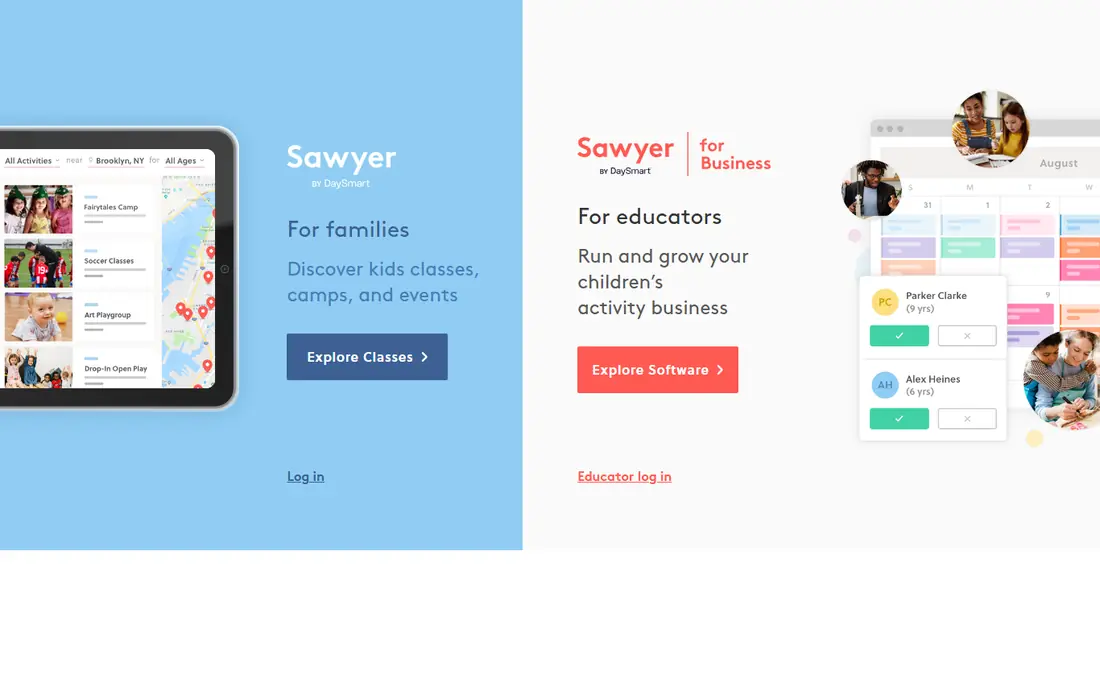
Sawyer is a strong option in this list. Sawyer brings classes, camps, and activities into one booking flow, so families can search, register, and pay without a separate form for each session. Its tools for schedules, rosters, and customer messages help a small team keep a busy term organized.
In our view, the main trade-off is this: its published pricing is hard to pin down from the public site alone, so a quote and a processing-fee check are needed before budgeting. That matters most when your volume, team size, or budget changes, so test the setup you will use every week before you commit.
- Online registration and payments
- Parent booking tools
- Class and camp scheduling
- Pricing is not published on the main pricing page
- Some advanced tools sit on higher plans
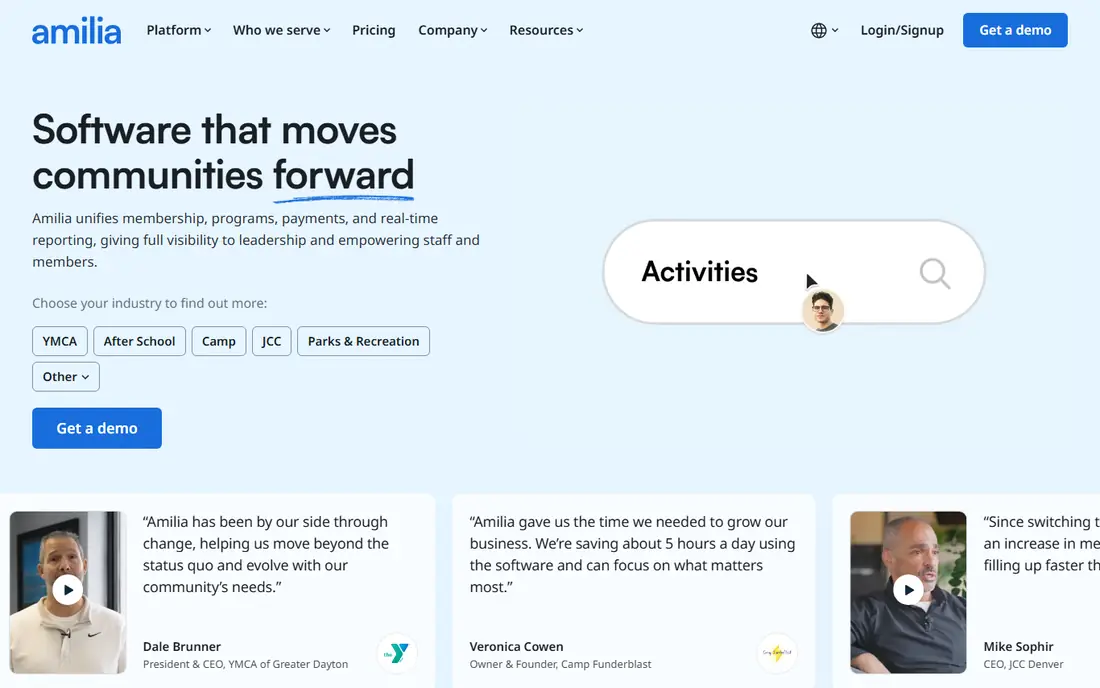
For many buyers, Amilia is a practical place to start. Amilia covers registration, payments, memberships, and facility bookings, which suits parks, recreation departments, and multi-program providers. Its SmartRec setup links a program catalog to online registration, so families see availability in one place.
The honest catch is the range of modules can make the first setup longer than a single-purpose booking tool, so allow time for catalog and payment setup. Before you sign up, run one real task through it and check the result against your current process.
- Registration for programs and memberships
- Facility and schedule tools
- Online payments
- Pricing varies by plan and add-ons
- Setup can take time for large catalogs
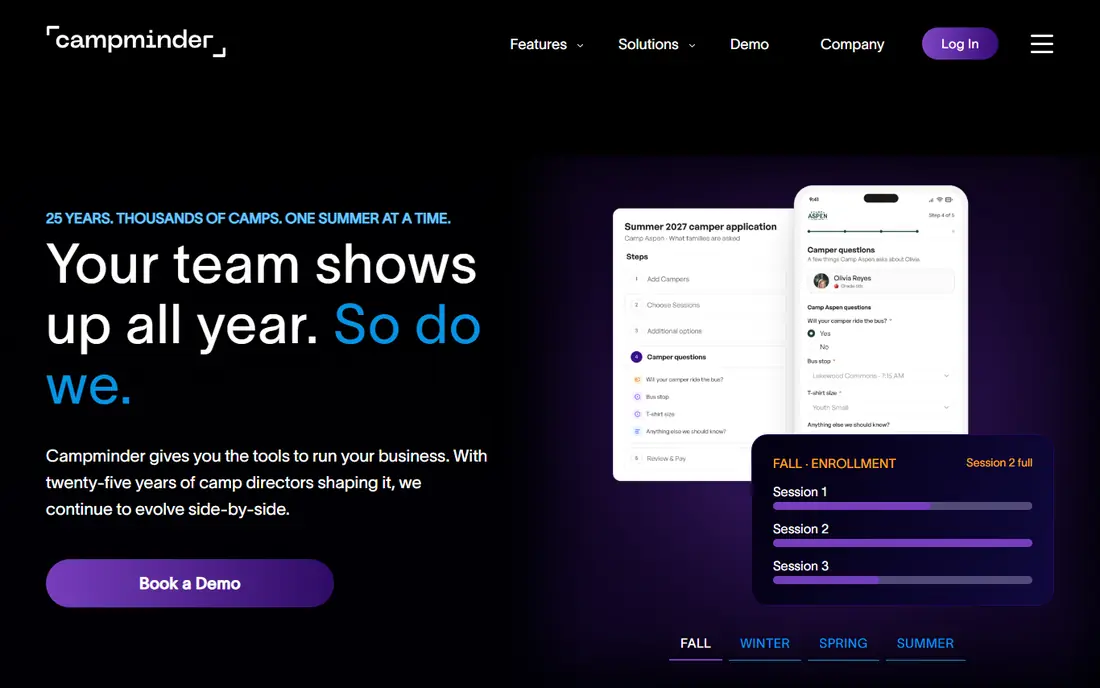
CampMinder takes a different approach in this category. CampMinder is built for residential camps that need registration, billing, health records, staff tools, and parent communication in one system. Its depth helps when cabins, groups, activities, and medical notes all need to stay tied to one camper record.
We would weigh this point carefully: the full suite can feel heavy for a small day camp, and pricing is by quote, so smaller programs should compare the total annual cost first. A short trial with your own data tells you more than a feature page, so use it before you move a whole workflow across.
- Registration, billing, and health tools
- Staff management
- Parent communication
- Quote-only pricing
- Depth can mean a longer learning curve
CampBrain deserves a close look before you decide. CampBrain covers camper registration, payment collection, scheduling, and camper records from one central system. Its support focus and clear admin layout make it a common choice for camps that want a full suite without a highly technical setup.
In our view, the main trade-off is this: some functions arrive as separate modules, so check which parts are included in the quote you receive. That matters most when your volume, team size, or budget changes, so test the setup you will use every week before you commit.
- Camper registration and payments
- Scheduling and records
- Staff scheduling
- Quote-only pricing
- Some tools are sold as separate modules
UltraCamp is a strong option in this list. UltraCamp pairs camp registration and billing with donor tools, which helps nonprofit camps that also track supporters. Its per-reservation approach, with an annual minimum described in comparisons, can suit camps that prefer paying closer to actual registrations.
The honest catch is the interface is less modern than some newer tools, so a trial with your own forms is worth the time. Before you sign up, run one real task through it and check the result against your current process.
- Registration and billing
- Donor management
- Health and medication logs
- Interface can feel dated in places
- Setup time varies by camp size
For many buyers, Regpack is a practical place to start. Regpack stands out for forms with conditional questions, deposits, and installment plans, which matter when families need flexible payment options. Its automated billing and reporting reduce follow-up work once a form and payment plan are set up well.
We would weigh this point carefully: the admin screens can feel dense at first, and the fee structure needs a clear read before you compare it with a flat monthly plan. A short trial with your own data tells you more than a feature page, so use it before you move a whole workflow across.
- Conditional registration forms
- Automated billing and installments
- Reporting tools
- Admin interface can feel dense
- Pricing includes a license plus transaction fees in comparisons
CampDoc takes a different approach in this category. CampDoc focuses on health and safety records, including medical forms, allergy notes, and medication tracking for campers. Its check-in and health tools help nurses and camp leaders find the right record quickly during a busy arrival period.
In our view, the main trade-off is this: it is narrower as a full operations system than CampMinder or CampBrain, so camps that need deep scheduling may need a second tool. That matters most when your volume, team size, or budget changes, so test the setup you will use every week before you commit.
- Electronic health records
- Medication tracking
- Registration and check-in
- Less complete as a full camp operations suite
- Pricing is by quote in comparisons
Jumbula deserves a close look before you decide. Jumbula offers a modern registration and scheduling flow for camps, classes, and other activity types. Its email and text tools help providers confirm bookings and remind families without a separate messaging product.
The honest catch is its financial and health features are lighter than those in larger camp suites, so check them against your must-have list. Before you sign up, run one real task through it and check the result against your current process.
- Online registration and scheduling
- Email and text messages
- Quick setup
- Financial tools are less deep than larger suites
- Health tools are limited
ClassForKids
Great for: Class and camp providers that want a simple booking system
ClassForKids is a strong option in this list. ClassForKids is aimed at providers that run classes and camps and want booking, payments, and parent messages in one place. Its listing and learning resources add value for smaller providers that also want help reaching new families.
We would weigh this point carefully: it is simpler than a residential camp suite, so large overnight camps should test whether its health and staffing tools cover their needs. A short trial with your own data tells you more than a feature page, so use it before you move a whole workflow across.
- Class and camp bookings
- Parent communication
- Business growth resources
- Advanced camp operations tools are limited
- Pricing is by quote in comparisons
How we picked these
We compared official product pages, pricing pages, and public comparison reviews for class and camp tools. We kept only tools that are still offered for camp or class registration in October 2026, and we used See website where a vendor does not publish a clear starting price. We did not claim hands-on testing, and we weighed registration depth, payment options, roster and schedule tools, and parent communication more than extra features that most small programs rarely use.
Check the full cost, not just the monthly fee
Start with your busiest week, not your wish list. List the sessions, age groups, staff, and payment plans you actually run, then test that exact setup. Ask how payment processing fees are charged, what happens when a family cancels or switches sessions, and how refunds and waitlists work. For overnight camps, ask how health forms, medication logs, and authorized pickup are handled, and who can see a child health record. Finally, check data export: you should be able to take your rosters, contacts, and payment history with you if you change systems later.
Frequently asked questions
What is class camp management software?
It is software that handles registration, payments, schedules, rosters, and parent communication for classes and camps. Some tools also cover health records, staff scheduling, and donor tracking, while simpler tools focus on booking and payments.
How much does camp management software cost?
Costs vary widely. Small class tools may publish a monthly price, while larger camp suites often price by quote based on camp size and modules. Always ask for payment processing fees and any annual minimum, since those change the total cost.
Do I need health record tools for a day camp?
Day camps still collect allergy notes, emergency contacts, and authorized pickup details, so a clear health form matters even without overnight stays. Overnight camps need stronger medication tracking and access controls, which is why CampDoc and CampMinder score well there.
Can families pay in installments?
Many of these tools support deposits and installment plans, and Regpack is a strong example for complex payment plans. Check whether installments are automatic, what happens on a failed payment, and whether you can change a plan after registration.
Should a small provider pick a large camp suite?
Not always. A large suite can add setup time and cost that a small class provider does not need. Start with a simpler booking tool, and move to a larger suite when rosters, health records, or staff scheduling become hard to manage in separate tools.
Sources
See where you really rank - block by block
ProMapRanker scans Google Maps across a grid of your service area. Simple monthly plans from $19, white-label on every plan.
Start freeKeep reading
 worlds best local seo company
8 Worlds Best Local SEO Companies for Map Pack Growth in 2026
Compare the worlds best local seo company options for Google Business Profile work, citations, reviews, and multi-location rankings and reporting in 2026.
Read → world's best web hosting company
World's Best Web Hosting Company in 2026
Searching for the world's best web hosting company? We compared 10 hosts on price, renewal rates, speed, and support to help you choose well today in 2026.
Read → who's got the best nanny tax services
Who's Got the Best Nanny Tax Services in 2026
We answer who's got the best nanny tax services, comparing full filing, back taxes, software, and pricing so families can handle nanny taxes correctly.
Read →