 ProMapRanker
Best Church Payroll Services in 2026


Church-specific payroll expertise · Pricing starts at: See website
Key takeaways
- Church payroll is different from standard payroll because of clergy tax rules, housing allowance, and ministerial exemptions.
- A church-specific provider helps most when your team lacks a payroll specialist and needs guidance on those rules.
- General payroll platforms can work well for churches, especially if they already use the same accounting software.
- Compare pricing by pay frequency and staff count, because per-run and per-person models give very different totals.
Quick comparison
| Pick | Great for | Pricing starts at | Free tier | |
|---|---|---|---|---|
| MinistryWorks | Church-specific payroll expertise | See website | No | Visit |
 Gusto | Small churches wanting simple payroll | See website | Free trial | Visit |
 QuickBooks Payroll | Churches using QuickBooks accounting | See website | Free trial | Visit |
 Patriot Software | Low-cost church payroll | See website | Free trial | Visit |
 SurePayroll by Paychex | Affordable full-service payroll | See website | No | Visit |
 Paychex Flex | Larger churches and multi-site teams | See website | No | Visit |
 ADP RUN | Established payroll with HR tools | See website | No | Visit |
 OnPay | Small teams wanting plain pricing | See website | Free trial | Visit |
 Clergy Financial Resources | Clergy-focused payroll and tax help | See website | No | Visit |
The best church payroll services
Church payroll involves more than paying staff on time. Ministers may have a housing allowance, dual tax status, and exemptions that do not apply to other employees, and mistakes there can create tax problems later. The services below include church-specific providers that handle those rules directly, plus general payroll platforms that many churches use successfully.
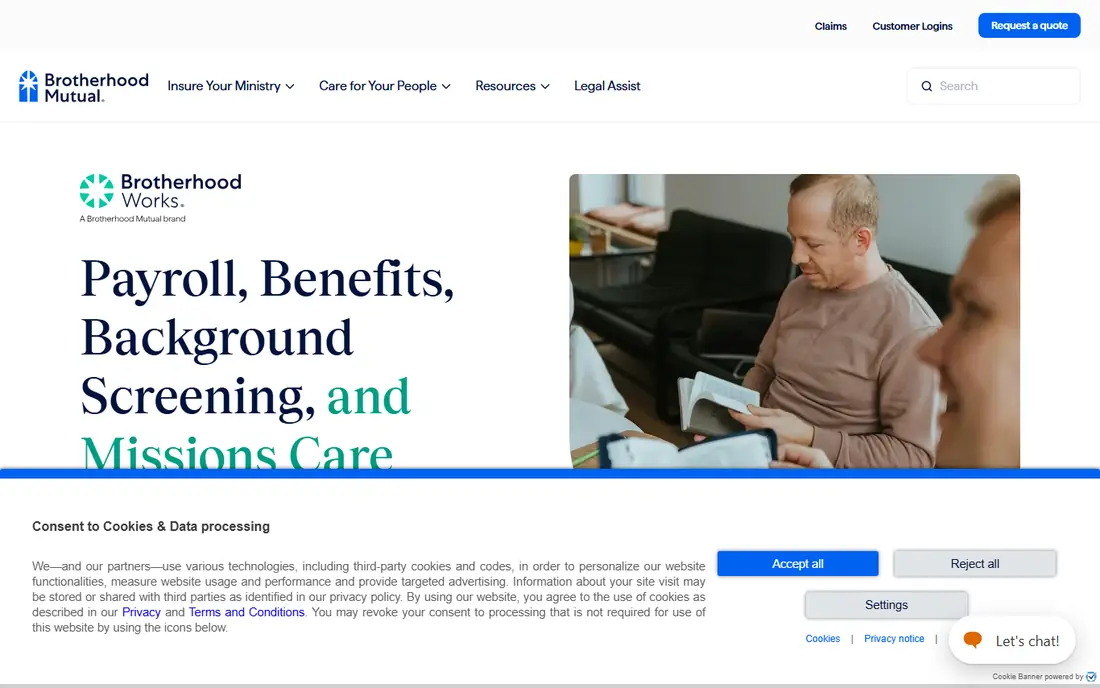
MinistryWorks is the most church-specific service in this list, and that focus is its main strength. It handles payroll, tax filing, time and attendance, and benefits for churches, religious schools, and ministries, with staff who understand clergy compensation rules. Churches get a dedicated payroll specialist, which helps when a question about housing allowance or ministerial status comes up.
Pricing is charged per pay run rather than a flat monthly fee, and the total depends on staff count and pay frequency, so you need a quote based on your own team. Integrations are fewer than on a general platform such as Gusto or QuickBooks. We would pick MinistryWorks first when clergy tax handling and specialist help matter more than a large integration library.
- Built for churches and ministries
- Clergy tax and housing allowance handling
- Dedicated payroll specialists
- Pricing is per pay run and needs a quote
- Fewer third-party integrations than general platforms
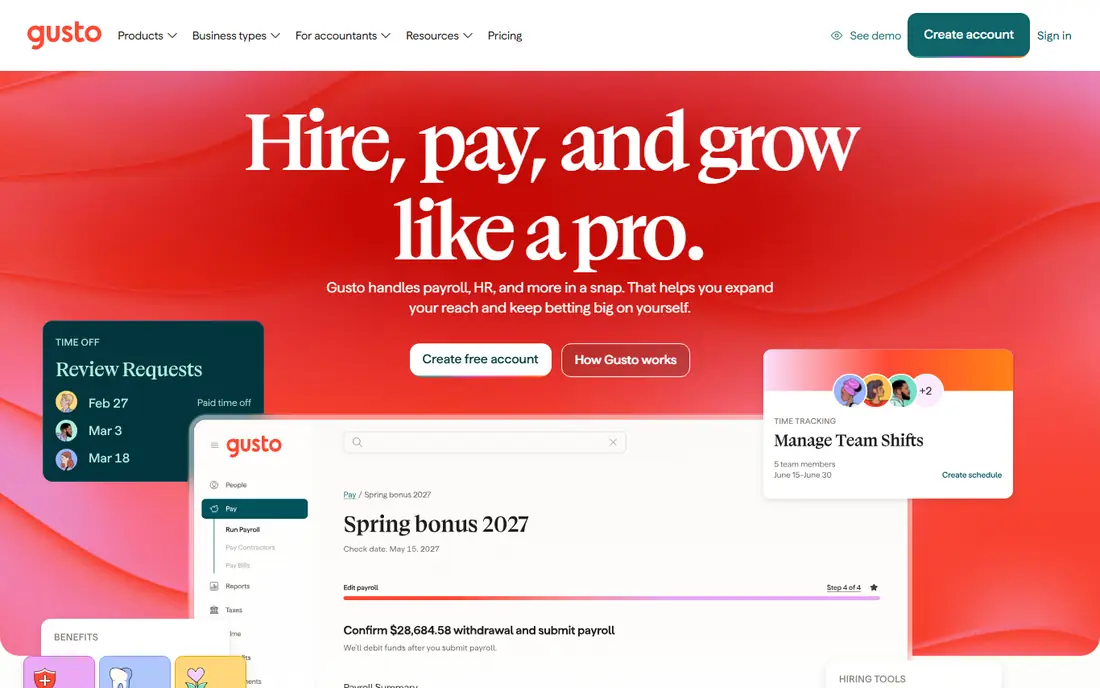
Gusto is a popular general payroll platform that many small churches use because it is easy to run. It handles payroll runs, direct deposit, tax filing, and employee onboarding in a clean interface, and staff can view pay stubs and tax forms themselves. Benefits administration is also available, which helps churches that offer health or retirement benefits.
It is not built only for churches, so setting up clergy pay, housing allowance, and exemptions needs attention during onboarding. Support can help, but the church-specific knowledge is not as deep as MinistryWorks. We recommend Gusto for small churches with a straightforward team and a volunteer or part-time administrator who wants payroll to take as little time as possible.
- Simple interface
- Automatic tax filing
- Employee self-service and benefits tools
- Not church-specific, so clergy setup needs care
- Some HR features sit on higher tiers
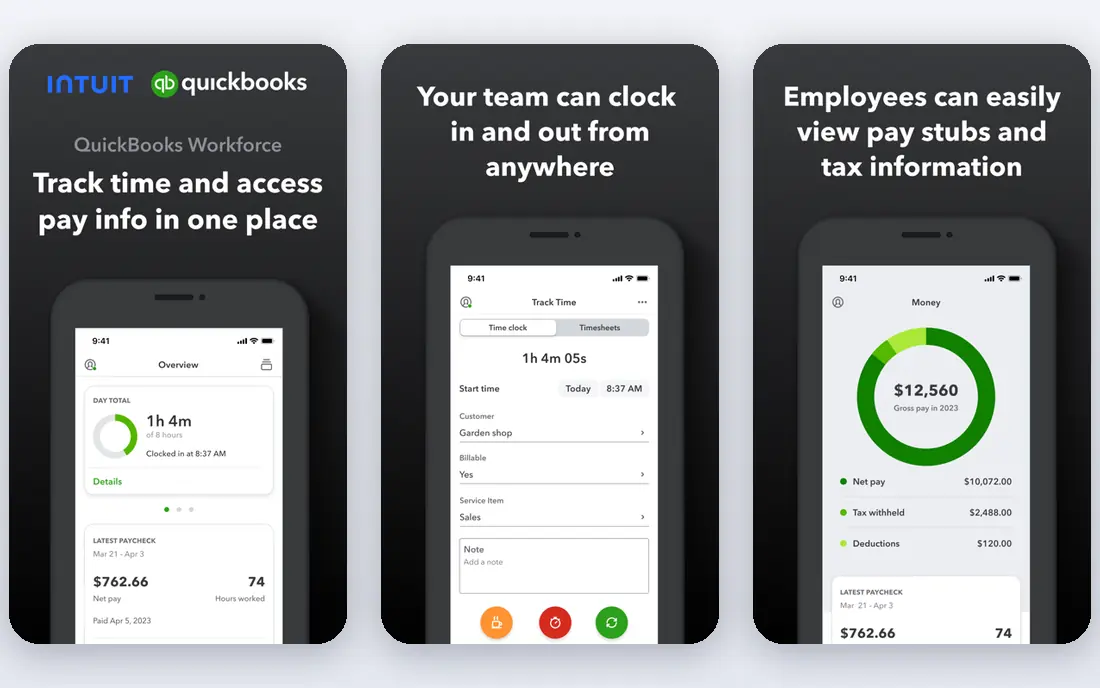
QuickBooks Payroll makes sense for churches that already run their accounts in QuickBooks. Payroll entries flow into the same books, which saves the double entry and reconciliation work that comes with a separate system. Tax filing, direct deposit, and contractor payments are covered, and many church treasurers already know the QuickBooks layout.
As with Gusto, it is a general platform, so clergy-specific setup needs care and checking. Higher tiers add HR and benefits tools that smaller churches may not need. We would pick QuickBooks Payroll when your church already uses QuickBooks and wants payroll and accounting in one place.
- Tight link to QuickBooks accounting
- Tax filing included
- Familiar to many church treasurers
- Payroll features vary by tier
- Clergy setup still needs care
Patriot Software is a low-cost payroll option that church management software providers have long recommended for small churches. It offers a basic self-service plan and a full-service plan where Patriot files taxes for you, with direct deposit and pay stub access in both. US-based support is a plus for churches that want help by phone.
It does not offer the same depth of HR or benefits tools as larger platforms, and its clergy handling is general rather than specialist. For a small church with a few staff and a tight budget, though, that simplicity is often enough. We recommend Patriot when cost is the main constraint and the payroll itself is straightforward.
- Low starting cost
- Self-service and full-service options
- US-based support
- Fewer advanced HR features
- Clergy handling is less specialised than MinistryWorks
SurePayroll by Paychex offers a full-service payroll plan at a price that suits small and mid-size churches. It handles payroll runs, tax filing on the full-service plan, direct deposit, and online pay stubs, with unlimited runs so extra or corrected payrolls do not add a run fee. That flexibility helps churches with variable staff, such as seasonal or part-time workers.
Time tracking is not built in, and some services, including certain year-end forms, can carry extra fees. Check the full-service versus basic plan carefully, because tax filing is the key difference. We would pick SurePayroll for churches that want full-service filing without the price of a large enterprise platform.
- Affordable full-service option
- Unlimited payroll runs
- Direct deposit and online pay stubs
- No built-in time tracking
- Extra fees for some services such as W-2 handling
Paychex Flex suits larger churches, multi-site churches, and church-affiliated schools that need payroll plus HR in one system. It covers payroll, tax filing, time and attendance, benefits, and reporting, with compliance support for multi-state teams. That breadth matters when a church has staff across sites or a mix of full-time, part-time, and seasonal workers.
For a very small church, Paychex Flex can be more platform than is needed, and pricing is quoted. Setup also takes longer than on a simple small-business tool. We recommend it when your church is growing, runs multiple sites, or needs HR and benefits alongside payroll.
- Scalable for larger teams
- HR, benefits, and time tools in one platform
- Strong compliance support
- Pricing is quoted and can be higher for small churches
- Setup takes longer
ADP RUN is the small-business version of one of the largest payroll providers, and it brings established tax filing, compliance, and reporting tools to churches that want a known name. Payroll, direct deposit, tax filing, and HR features are covered, with support for multi-state teams. Its reporting tools help treasurers and boards review payroll costs clearly.
Pricing is quoted, and the platform can feel more formal than Gusto or Patriot for a tiny team. It is also a general platform, so clergy setup needs the same care as on other general tools. We would pick ADP RUN for mid-size churches that value an established provider and strong compliance support.
- Long-established payroll provider
- HR and compliance tools
- Good reporting
- Pricing is quoted
- Interface can feel formal for small teams
OnPay is known for plain pricing: one monthly fee plus a per-person fee, with payroll, benefits, and HR tools included rather than split across many tiers. That clarity helps church boards budget without decoding a tier table. Setup is straightforward, and the platform covers tax filing, direct deposit, and contractor payments.
It lacks the enterprise depth of Paychex Flex or ADP RUN, and its integration range is smaller. For a small or mid-size church, that trade-off is usually fine. We recommend OnPay when you want simple, predictable pricing and a single plan that covers the basics well.
- Plain monthly pricing
- Payroll, benefits, and HR in one plan
- Easy setup
- Smaller provider than ADP or Paychex
- Fewer enterprise features
Clergy Financial Resources focuses specifically on clergy compensation, tax, and payroll for churches and ministers. That niche focus means its guidance on housing allowance, ministerial tax status, and related questions is more targeted than a general payroll provider can offer. For a small ministry without a payroll specialist, that advice can prevent costly errors.
Its scale is smaller than Gusto, ADP, or Paychex, and its software range is narrower. Pricing is quoted. We would shortlist it alongside MinistryWorks when clergy tax questions are your main worry, especially for a small church or a single-minister ministry.
- Focus on clergy tax and compensation
- Payroll plus tax guidance
- Suited to small ministries
- Smaller scale than general platforms
- Pricing needs a quote
How we picked these
We compared official pricing and feature pages, plus church payroll roundups checked in October 2026, for services live and available to US churches. We favoured services with tax filing, direct deposit, and either church-specific clergy handling or a strong general payroll track record. We used See website for pricing because most providers quote by staff count, pay frequency, or plan tier, and a single published rate would not match most churches.
Clergy payroll basics to get right
Housing allowance is the most common area where churches make mistakes. The allowance must be designated in advance, in writing, by the church board, and it must be used for actual housing costs. A minister's housing allowance is generally excluded from income tax but not from self-employment tax, unless an exemption applies. Check the current IRS guidance and your provider's setup before the first payroll of the year.
Dual tax status also matters: ministers are generally treated as employees for income tax and self-employed for Social Security and Medicare purposes. That affects withholding and reporting, so confirm how your provider handles it. Finally, keep clear records for each minister, including allowance designations, pay rates, and any exemptions, so year-end W-2 reporting is accurate.
Questions to ask before you sign
Ask whether the provider handles clergy housing allowance setup, how it reports minister pay on W-2 forms, and whether tax filing covers federal, state, and local filings for your area. Ask about direct deposit, paper checks, and how corrections are handled. Also ask who you contact when a clergy tax question comes up, and whether that help is included in the plan.
Budgeting for church payroll software
Compare total annual cost, not just the monthly headline. A per-run model can cost more for weekly payroll than for monthly payroll, while a per-person model rises with every hire. Include year-end form fees, setup fees, and any benefits administration charges in your comparison, and ask for a quote based on your actual staff count and pay frequency.
Frequently asked questions
What makes church payroll different from regular payroll?
Churches must handle clergy-specific rules, including housing allowance, dual tax status for ministers, and certain exemptions. A minister may be an employee for income tax but self-employed for Social Security purposes. General payroll software can handle the basics, but church-specific providers build those rules into their setup and support.
Do churches need to pay payroll taxes?
Churches generally must withhold and report payroll taxes for non-minister employees, and handle minister pay under the special clergy rules. Some religious organisations may qualify for certain exemptions, but those depend on specific IRS criteria. A payroll provider with church experience can help you check what applies to your church.
What is a housing allowance?
A housing allowance is an amount designated by a church board, in advance and in writing, to cover a minister's housing costs. It is generally excluded from income tax when used for actual housing expenses, but it is usually still subject to self-employment tax. The designation must be made before the pay period it covers.
Can a general payroll service handle church payroll?
Yes, many churches use Gusto, QuickBooks Payroll, Patriot, or similar platforms successfully. The key is to set up clergy pay, housing allowance, and exemptions correctly at the start, and to check W-2 reporting at year end. If your team is unsure about those rules, a church-specific provider may be safer.
How much does church payroll software cost?
Costs depend on staff count, pay frequency, and whether tax filing is included. Small churches may pay a low monthly base fee plus a per-person fee, while per-run models charge each time payroll is processed. Always ask for a quote based on your real team size and pay schedule.
Should a small church outsource payroll or do it in-house?
Outsourcing to a payroll service usually saves time and reduces tax error risk, especially for clergy pay. In-house payroll can work for a very small team with simple pay, but it puts the burden of tax filing and clergy rules on a volunteer or staff member. Most churches find a service worth the cost once staff numbers grow beyond a handful.
Sources
See where you really rank - block by block
ProMapRanker scans Google Maps across a grid of your service area. Simple monthly plans from $19, white-label on every plan.
Start freeKeep reading
 zoro.to alternatives
Best Zoro.to Alternatives in 2026
We compare the best zoro.to alternatives in 2026, listing only legal licensed anime streaming services, from Crunchyroll to free options for fans today.
Read → zip alternatives
Best Zip Alternatives in 2026
We compare the best zip alternatives for buy now, pay later in 2026, covering pay-in-4 plans, fees, spending limits, and credit reporting options today.
Read → yesware alternatives
Best Yesware Alternatives in 2026
Compare the best yesware alternatives for sales email tracking, templates, and sequences, with current pricing and honest tradeoffs for small sales teams.
Read →