 ProMapRanker
Best Chatbot Development Company in 2026


High volume messaging and contact centers · Pricing starts at: See website
Key takeaways
- Specialist chatbot studios suit focused builds, while larger firms suit regulated enterprise programs with many integrations.
- Ask for a live bot in production that solves a problem like yours, not only a demo or a slide deck.
- Confirm who owns the code, prompts, and training data after launch before you sign.
- Post launch tuning matters as much as the build, since real users break scripted flows quickly.
- Platform firms charge subscriptions, while custom studios usually price by project, so compare total cost over two years.
Quick comparison
| Pick | Great for | Pricing starts at | Free tier | |
|---|---|---|---|---|
| Master of Code Global | High volume messaging and contact centers | See website | No | Visit |
 BotsCrew | Custom builds without platform lock in | See website | No | Visit |
 Innowise | Scaling an AI team quickly | See website | No | Visit |
 LeewayHertz | Document based AI and LLM builds | See website | No | Visit |
 Intellectsoft | Regulated enterprise projects | See website | No | Visit |
 Markovate | Mid market LLM and retrieval builds | See website | No | Visit |
 Yellow.ai | Enterprise platform deployment | See website | No | Visit |
 Kore.ai | Enterprise platform with governance | See website | No | Visit |
 Cognigy | Omnichannel contact center assistants | See website | No | Visit |
The best chatbot development companies
We compared firms on production experience, integration depth, compliance documentation, and the clarity of their engagement models. The list below covers custom studios and platform vendors, since the right choice depends on whether you want a team to build for you or a platform your team runs.
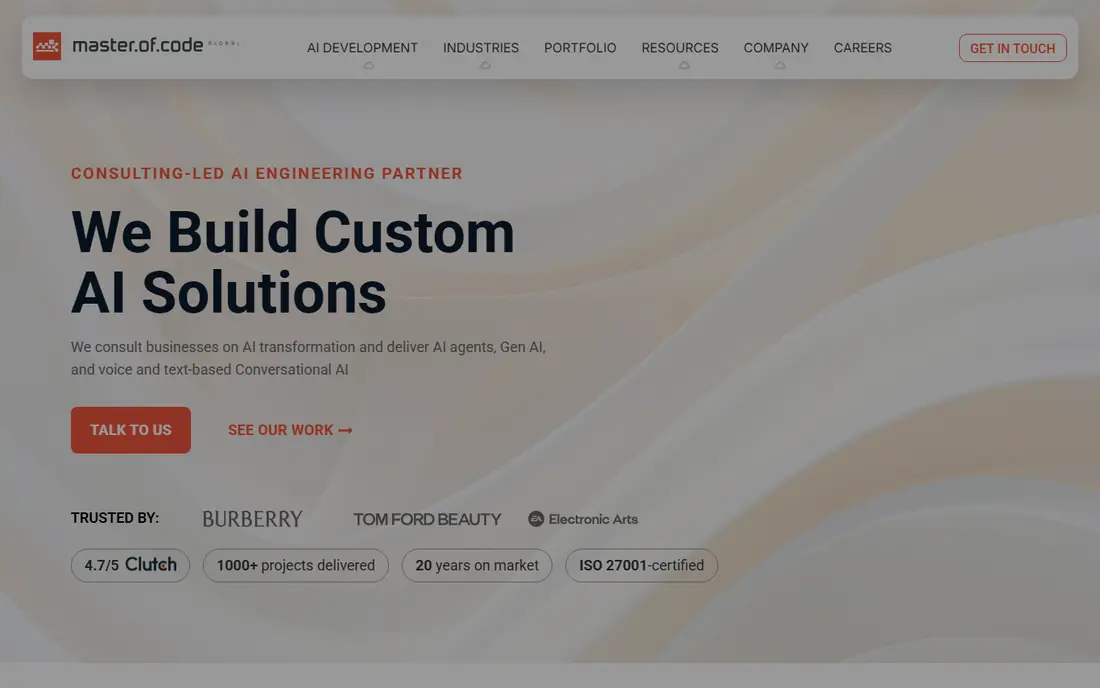
Master of Code Global is a conversational AI specialist with a long record in retail, telecom, and travel. Its work covers customer service automation, messaging bots, and contact center AI, often built on platforms such as Google Contact Center AI and LivePerson. That background suits companies with high message volumes and strict service targets.
The firm is best approached with a clear use case and a realistic budget. Custom enterprise builds are quoted per project, and costs rise with the number of systems the bot must connect to. Ask for a production example in your sector and a plan for ongoing tuning, since contact center bots need regular updates as products and policies change.
- Deep experience with messaging channels and contact center AI
- Partnerships with major conversational platforms
- Retail, telecom, and travel client work
- Enterprise focus means smaller budgets may not fit
- Pricing is quote based
- Timelines depend on integration scope
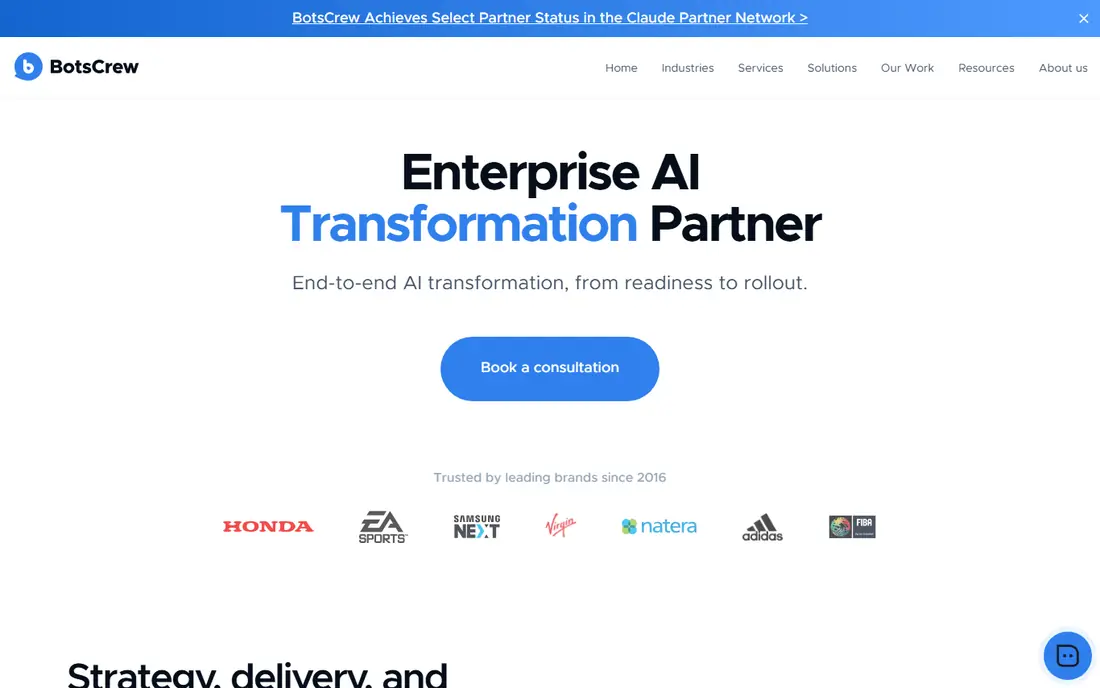
BotsCrew builds custom chatbots and voice assistants, and it is known for starting with discovery rather than jumping to a build. That approach helps buyers who know they have a problem but have not yet defined the exact conversations the bot must handle. Its client work spans ecommerce support, health care, and legal services.
The appeal here is control. Because the build is custom, you are less tied to one vendor platform, though you still need a team to maintain the bot. Smaller firms often prefer this model, since it keeps the scope tight and the ownership clear. Confirm maintenance terms upfront, including who retrains the bot when answers go stale.
- Discovery first process
- Custom builds with no forced platform
- Experience in ecommerce, health care, and legal work
- Smaller team than global consultancies
- Enterprise scale programs may need added partners
- Pricing is quote based
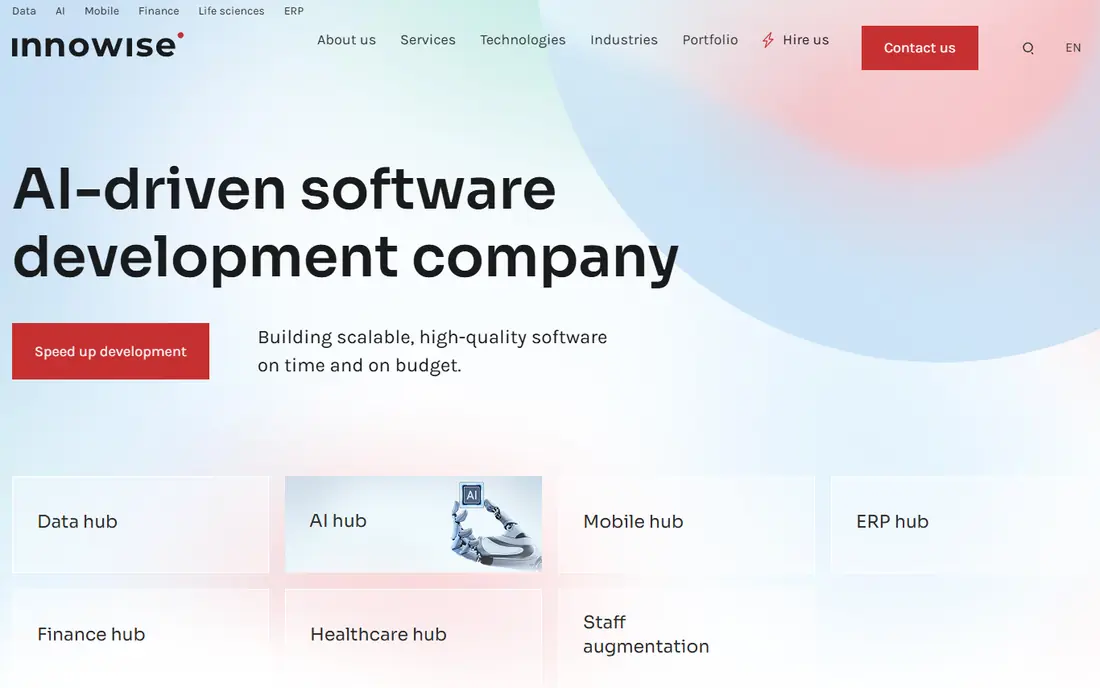
Innowise is a large custom software firm with a strong AI practice, and it suits companies that need to add engineers quickly. If your chatbot is part of a wider product build, or you need help across web, mobile, and AI at once, that breadth is useful. Its sector work includes health care, fintech, and ecommerce.
The risk with a generalist firm is fit. Ask who will lead the conversational work day to day, and whether that lead has shipped bots in production. A large bench helps with speed, but the project still needs a conversation designer and a plan for testing against real user questions.
- Large engineering team for fast staffing
- Broad software and AI practice
- Health care, fintech, and ecommerce experience
- Chatbots are one practice among many
- Quality depends on the assigned team
- Pricing is quote based
LeewayHertz builds custom AI software with a clear focus on generative AI, retrieval over internal documents, and system integration. That makes it a good fit when the bot must answer from your own documents, policies, or manuals, rather than from generic knowledge. Its work in health care and finance also means it is used to handling sensitive data with care.
Expect a structured engagement with discovery, model selection, and integration phases. That rigor costs more than a simple FAQ bot, but it pays off when wrong answers carry real risk. Ask how the bot handles questions it cannot answer, and how it cites or grounds answers in source documents.
- Strength in retrieval based document AI and LLM integration
- Health care, manufacturing, and finance experience
- Voice assistant work as well
- Mid to enterprise pricing
- Smaller FAQ bots may be more than needed
- Timelines grow with compliance needs
Intellectsoft is a US based software engineering firm with enterprise clients in regulated sectors. Its chatbot work sits inside wider digital product programs, which suits companies that need a bot connected to legacy systems, strict security reviews, and formal delivery processes. If procurement, security, and compliance reviews are a large part of your project, that experience matters.
Small companies may find the process heavy. Discovery, documentation, and governance add time before any build starts. For a large organization, that same process reduces risk. Ask for references from a regulated client and confirm how the firm handles data residency and access controls.
- Long enterprise track record
- Experience with regulated industries
- Full product engineering alongside chatbot work
- Enterprise pricing and process
- Slower start for small projects
- Best for larger programs
Markovate focuses on generative AI chatbots that move from a minimum viable product to a production system. That path suits mid market companies that want to prove value with a limited bot first, then expand to more topics and integrations. Its health care and retail work gives it useful context for support and product questions.
The key question is scale. A successful MVP creates demand for more coverage, more integrations, and more tuning. Agree on what production support looks like after the MVP, including response time for fixes and a schedule for retraining on new questions.
- Focus on LLM and retrieval builds for mid market firms
- Health care and retail experience
- MVP to production path
- Smaller than global firms
- Enterprise scale needs careful scoping
- Pricing is quote based
Yellow.ai sells a dynamic AI agent platform rather than a one off build. Companies use it to deploy chat and voice assistants across web, messaging, and phone channels, with connections to systems such as Salesforce, Zendesk, and ServiceNow. That suits enterprises that want one platform for many bots and many languages.
The trade off is lock in and subscription cost. You gain speed and a managed platform, but you pay an ongoing fee and your bots live inside that platform. Compare the two year total, including licenses, implementation, and support, against a custom build before you commit.
- Omnichannel platform for voice and chat
- Multilingual deployment
- Integrations with major CRM and helpdesk systems
- Platform subscription on top of build costs
- Less custom than a studio build
- Migration away from the platform takes work
Kore.ai offers an enterprise conversational AI suite for customer and employee assistants, with governance, security, and integration features that large organizations require. Its platform covers contact centers, IT helpdesks, and HR assistants, and it connects to major enterprise systems. That breadth helps companies that plan to run many assistants under one set of controls.
Smaller buyers should be honest about scope. A full platform can be more than a single support bot needs, and the value comes when several teams use it. Ask for a phased rollout plan, and confirm which features are included in the base license and which cost extra.
- Enterprise platform with built in governance
- Contact center and employee assistants
- Strong compliance documentation
- Enterprise pricing
- Implementation needs internal ownership
- Smaller teams may not use the full platform
Cognigy builds conversational AI for contact centers, with assistants that work across chat, voice, and messaging channels. It suits companies whose main goal is to deflect routine contact center volume while handing complex cases to human agents with context. Its enterprise integrations support that handoff, which is where many bots fail.
A Cognigy project still needs good conversation design and a maintenance plan. The platform can handle scale, but it cannot fix unclear policies or missing answers. Start with the top ten contact reasons, measure deflection and customer satisfaction, and expand only when those numbers hold up.
- Strong contact center focus
- Omnichannel deployment across chat and voice
- Enterprise integrations
- Best for contact center use cases
- Pricing is quote based
- Needs a clear conversation design to succeed
How we picked these
We compared firms listed across multiple 2026 roundups and vendor pages, and we favored firms with documented production deployments, clear integration experience, and compliance documentation. We included both custom studios and platform vendors, since buyers need both models. We did not test any bot ourselves, and we did not rely on star ratings alone, since most firms in this field cluster in a narrow rating band.
How to choose a chatbot partner
Start by defining the job in one sentence: what the bot must do, for whom, and what success looks like in numbers. A support deflection bot, a sales qualification bot, and an internal HR bot need different designs, integrations, and success measures. Write down the top twenty questions the bot must answer, and check whether the answers live in documents you control.
Next, test the vendor on the hard questions. Ask for a live bot you can use today, ask who owns the code and training data, and ask what happens in month three when users ask unexpected questions. Ask how the bot escalates to a human, how it handles personal data, and how often it is retrained. A vendor that answers these plainly is usually safer than one that leans on demos and buzzwords.
Finally, compare total cost and control. A platform subscription may look cheap in year one and grow in year two, while a custom build may cost more upfront and less to run. Get maintenance, hosting, model, and license costs in writing, and agree on an exit plan that leaves you with your conversations, data, and documentation.
Frequently asked questions
How much does a chatbot development company cost?
Costs vary widely with scope. Published agency ranges in 2026 put simple custom bots near 10,000 dollars and enterprise builds with deep integrations well above 50,000 dollars, while platform vendors charge ongoing subscriptions. Get a fixed price for a defined scope, and a separate quote for maintenance, so the two year total is clear.
How long does it take to build a chatbot?
A focused minimum viable product can ship in four to eight weeks, while a production ready bot with integrations, testing, and escalation logic often takes two to four months. Timelines grow when the bot must connect to several internal systems or pass security and compliance reviews.
Should I choose a custom studio or a platform vendor?
Choose a custom studio when you need a tailored build, full code ownership, and no platform subscription. Choose a platform vendor when you need to run many bots across channels and languages under one set of controls, and your team can manage the platform day to day.
What should I ask before signing?
Ask for a live production bot, a clear ownership statement for code and data, a maintenance and retraining plan, and a handoff process for questions the bot cannot answer. Also ask how personal data is stored, who can access it, and how you can export your conversations if you leave.
Do chatbots replace human support teams?
No, they handle routine questions and gather context so human agents can solve harder cases faster. The best programs measure deflection, resolution, and customer satisfaction together, and keep a clear path to a human for anything urgent, sensitive, or outside the bot scope.
Sources
- https://litslink.com/blog/ai-chatbot-development-companies
- https://www.wildnetedge.com/blogs/top-ai-chatbot-development-companies-in-usa
- https://rtslabs.com/best-ai-chatbot-development-company
- https://masterofcode.com
- https://botscrew.com
- https://innowise.com
- https://www.leewayhertz.com
- https://www.intellectsoft.net
- https://yellow.ai
- https://www.kore.ai
- https://www.cognigy.com
See where you really rank - block by block
ProMapRanker scans Google Maps across a grid of your service area. Simple monthly plans from $19, white-label on every plan.
Start freeKeep reading
 zoro.to alternatives
Best Zoro.to Alternatives in 2026
We compare the best zoro.to alternatives in 2026, listing only legal licensed anime streaming services, from Crunchyroll to free options for fans today.
Read → zip alternatives
Best Zip Alternatives in 2026
We compare the best zip alternatives for buy now, pay later in 2026, covering pay-in-4 plans, fees, spending limits, and credit reporting options today.
Read → yesware alternatives
Best Yesware Alternatives in 2026
Compare the best yesware alternatives for sales email tracking, templates, and sequences, with current pricing and honest tradeoffs for small sales teams.
Read →