 ProMapRanker
Best Certificate Lifecycle Management Software in 2026


Public plus private PKI · Pricing starts at: See website
Key takeaways
- DigiCert, Sectigo, and GlobalSign combine public certificate issuance with lifecycle management in one platform.
- Keyfactor, Venafi, and AppViewX suit large estates that need policy control across many certificate authorities.
- Shorter certificate lifetimes make automation a necessity, not a nice extra, for most organizations.
- Smaller teams can start with AWS Certificate Manager, ManageEngine, or Smallstep before buying an enterprise platform.
Quick comparison
| Pick | Great for | Pricing starts at | Free tier | |
|---|---|---|---|---|
| DigiCert Trust Lifecycle Manager | Public plus private PKI | See website | No | Visit |
 Sectigo Certificate Manager | CA-agnostic enterprise CLM | See website | Free trial | Visit |
 Keyfactor Command | PKI plus lifecycle automation | See website | Free trial | Visit |
 Venafi Control Plane | Large regulated estates | See website | No | Visit |
 AppViewX CERT+ | Device and load-balancer estates | See website | Free trial | Visit |
 Entrust | High-assurance certificates | See website | No | Visit |
 GlobalSign Atlas | High-volume issuance | See website | No | Visit |
 ManageEngine Key Manager Plus | Smaller teams and budgets | $495 per year | Yes | Visit |
 AWS Certificate Manager | AWS workloads | Free | Yes | Visit |
 Smallstep | Internal private PKI | Free | Yes | Visit |
The best certificate lifecycle management software
We compared certificate lifecycle tools on discovery, issuance, renewal automation, policy control, integrations, and price. The best fit depends on estate size, certificate authorities in use, and how much automation your team can run safely.
DigiCert Trust Lifecycle Manager centralizes discovery, inventory, issuance, monitoring, renewal, and revocation for servers, devices, users, and cloud workloads. It covers both public trust certificates and private PKI, which helps teams that manage both in one estate. Integrations with cloud providers, Microsoft CA, and secrets tools support automation across mixed environments.
Pricing uses seat-based tiers, so count servers, sites, and users carefully before you budget. Smaller teams may find the platform more than they need. For enterprises that want DigiCert trust plus governance in one system, it is a leading choice.
- Public and private PKI under one policy layer
- Discovery and automation
- Broad integrations
- Enterprise pricing is quote based
- Seat licensing needs careful counting
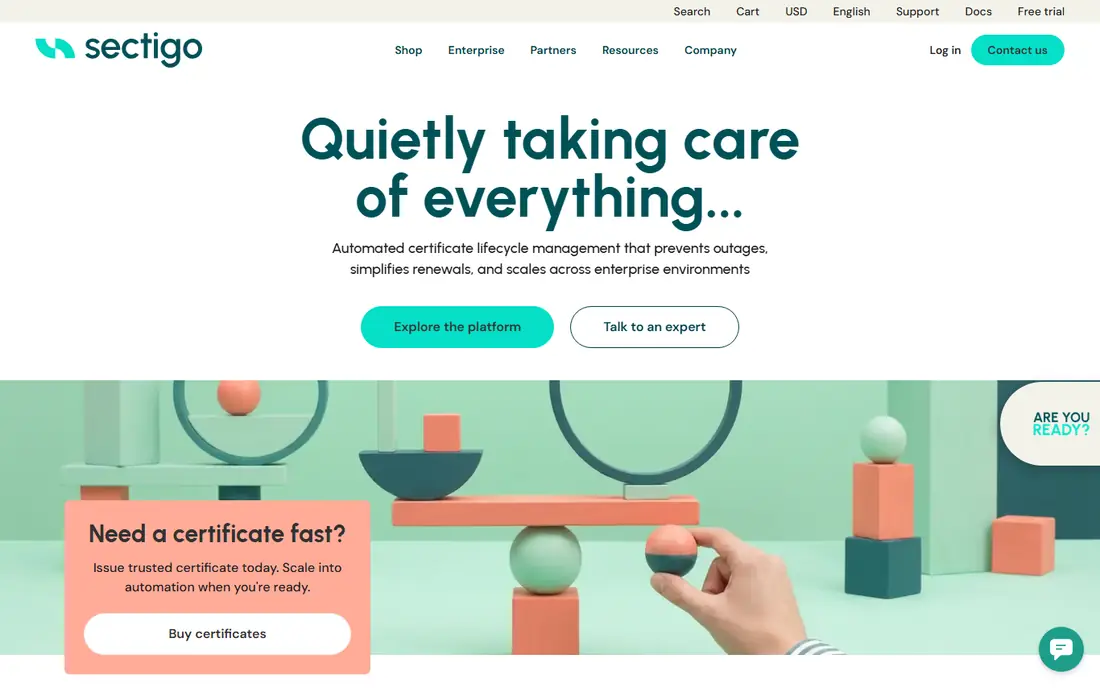
Sectigo Certificate Manager manages certificates from Sectigo and other authorities, which suits estates that grew through mergers or mixed vendors. Discovery, automation, and policy controls help teams find unknown certificates before they expire. A 30-day free trial lets teams test core workflows.
Enterprise pricing is not published, so expect a quote based on estate size and features. PKI knowledge still matters for policy design and automation rules. For cost-conscious enterprises that want a CA-neutral control plane, Sectigo is a strong contender.
- Works across many certificate authorities
- Cloud-native design
- Automation focus
- Pricing is not public for enterprise plans
- Setup needs PKI knowledge
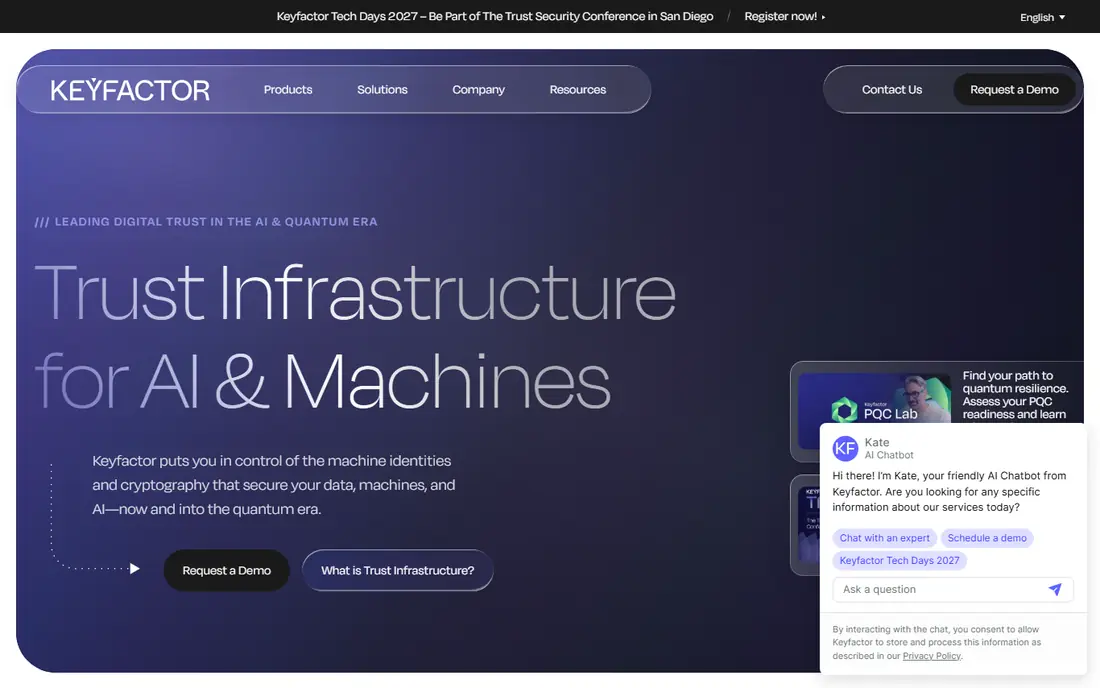
Keyfactor Command discovers, manages, issues, and automates certificates across enterprise, cloud, and hybrid environments. Its private PKI heritage, through EJBCA, gives teams control over internal certificate authorities as well as public certificates. More than 100 integrations cover common platforms, load balancers, and DevOps tools.
The platform is enterprise-oriented, with tiered quote-based pricing and a 30-day test drive. Teams without PKI specialists should plan training or partner support. For organizations that want one vendor for PKI and lifecycle automation, Keyfactor offers a unified path.
- Discovery plus orchestration at scale
- Private PKI strength
- Many integrations
- Quote-based pricing
- Needs specialist PKI skill
Venafi Control Plane, now part of CyberArk, focuses on machine identity protection at large scale. It provides central policy control for TLS certificates and other machine identities across cloud, on-premises, and hybrid estates. That governance angle suits regulated industries where audit trails and policy enforcement matter as much as renewal automation.
Pricing is custom and implementation can be a major project, so it fits large estates rather than small teams. Teams should map certificate owners and policy rules before rollout. For the largest and most regulated estates, Venafi remains a benchmark platform.
- Central policy control
- Machine identity focus
- Broad platform support
- Enterprise pricing is custom
- Implementation can be large
AppViewX CERT+ automates certificate lifecycle tasks across servers, load balancers, network devices, and cloud workloads. Its strength is deployment reach, especially where certificates live on infrastructure that other tools struggle to update. Policy controls and reporting help teams prove compliance and avoid expiry outages.
Pricing is tiered and not public, so a quote is needed. Smaller estates may find the platform complex. For teams with heavy load-balancer or device sprawl, AppViewX offers automation depth that general CLM tools may lack.
- Broad deployment reach
- Automation for network devices
- Policy controls
- Tiered pricing is not public
- Complexity for small estates
Entrust provides certificate and PKI solutions with a focus on high-assurance use cases, including hardware security module support and strict issuance controls. That heritage suits governments, banks, and other organizations where trust and ceremony around keys matter. Lifecycle management sits alongside identity and encryption products in the wider Entrust portfolio.
Pricing is quote based and the platform targets enterprises, so smaller teams should look elsewhere first. Implementation also needs PKI planning. For high-assurance estates, Entrust offers controls that lighter tools cannot match.
- High-assurance PKI heritage
- HSM support
- Strong compliance fit
- Quote-based pricing
- Enterprise focus
GlobalSign Atlas focuses on high-throughput certificate issuance through APIs, including managed TLS, S/MIME, and IoT identity. It suits device fleets and programs that issue many certificates programmatically. ACME support helps automate public web certificates without manual handling.
Dedicated lifecycle depth, such as discovery across a messy estate, is thinner than in Keyfactor or Venafi. Pricing varies by volume, so get a quote tied to issuance counts. For volume issuance programs, Atlas offers scale and API simplicity.
- API-first issuance at volume
- IoT and S/MIME support
- ACME support
- Estate management depth trails dedicated CLM platforms
- Volume pricing varies
ManageEngine Key Manager Plus centralizes certificates and SSH keys in one console, with discovery, expiry alerts, and renewal workflows. A free tier covers up to five keys, and paid plans start at $495 per year in published comparisons. That price point makes it accessible to small IT teams that cannot justify an enterprise CLM contract.
Automation depth and cloud-native features trail the enterprise leaders, so very large estates may outgrow it. For a small or mid-size team that mainly needs visibility and expiry control, Key Manager Plus offers strong value.
- Low entry price
- Certificates plus SSH keys
- Free tier for small use
- Less enterprise automation depth
- On-premises focus in some setups
AWS Certificate Manager provisions and renews public and private certificates for AWS-integrated services at no charge for the certificates themselves. Automatic renewal removes expiry risk for load balancers, distributions, and APIs inside AWS. That native fit makes it the default first step for AWS-heavy teams.
Outside AWS, the value drops sharply, and private CA and export options carry charges. Teams with mixed clouds still need a broader CLM tool. For AWS-first workloads, start here before buying a separate platform.
- No cost for integrated AWS services
- Automatic renewal
- Native AWS integration
- Limited outside AWS
- Export and private CA costs apply
Smallstep provides a private certificate authority for internal workloads, with ACME support and short-lived certificates for service-to-service security. The open-source version is free to self-host, which suits engineering teams building internal mTLS. Hosted options are available by quote for teams that want managed operations.
Running a private CA still needs care around root key protection, revocation, and audit. Smallstep is not a public certificate manager, so pair it with a public CA tool for external websites. For internal PKI, it offers a modern and developer-friendly path.
- Open-source private CA
- ACME support
- Good for internal mTLS
- Hosted pricing is quote based
- Needs engineering time
How we picked these
We compared official product pages, pricing pages, and public documentation for tools that discover, issue, renew, and revoke certificates at scale. We favored tools with live automation features in 2026, and we wrote See website where enterprise pricing is quote based. Pure certificate sellers without lifecycle management were left out.
What to check before you choose
Start with discovery. Run a scan of your estate before you buy, and compare the count you find with the count you expected. Most teams find more certificates than they track, including test systems, load balancers, and IoT devices. A tool that cannot discover your full estate will not prevent the next expiry outage.
Next, test automation end to end. Issue a test certificate, renew it automatically, deploy it to a real endpoint, and revoke it, all under policy controls. Check ACME, SCEP, and API support for your platforms, and confirm who approves changes. Automation without approval and audit trails creates risk as well as speed.
Finally, plan for shorter lifetimes. Public TLS lifetimes are shrinking, which means renewal frequency will rise. Choose a pricing model that stays affordable as renewal counts grow, and confirm how the vendor handles bulk renewal windows. A platform that works for yearly renewals may strain under 47-day cycles.
Frequently asked questions
What is certificate lifecycle management?
Certificate lifecycle management covers discovery, issuance, renewal, deployment, revocation, and expiry monitoring for digital certificates. It replaces manual spreadsheets with automation and policy controls. The goal is to prevent outages from expired certificates and to keep issuance consistent across an organization.
Why do certificates expire so often now?
Public TLS certificate lifetimes have shortened over time to reduce risk from compromised keys, and further shortening is planned in the industry. Shorter lifetimes mean more renewals, which makes manual tracking unsafe. Automation is now the practical way to keep certificates current.
Do I need CLM if I use Let's Encrypt?
You may still need lifecycle visibility, even with free automated certificates. ACME automation handles issuance and renewal for public web servers, but it does not always cover internal systems, devices, or mixed authorities. A CLM tool adds discovery, policy, and reporting across the full estate.
What is the difference between a CA and a CLM platform?
A certificate authority issues certificates, while a lifecycle platform manages them across many authorities. DigiCert and Sectigo do both, while Keyfactor and Venafi focus on management across authorities. Many teams use a CLM platform on top of one or more CAs.
How much does certificate lifecycle software cost?
Costs range from free for AWS Certificate Manager inside AWS and Smallstep open source, to $495 per year for ManageEngine, to custom enterprise quotes for DigiCert, Keyfactor, and Venafi. Per-certificate and seat-based models vary, so model your estate size before you compare.
Can CLM software manage private PKI too?
Yes, several tools here manage private PKI alongside public certificates. Keyfactor, DigiCert, and Smallstep support private authorities, while AWS Certificate Manager supports private CA options. Check private CA support if your internal systems use certificates that are not publicly trusted.
Sources
See where you really rank - block by block
ProMapRanker scans Google Maps across a grid of your service area. Simple monthly plans from $19, white-label on every plan.
Start freeKeep reading
 zoro.to alternatives
Best Zoro.to Alternatives in 2026
We compare the best zoro.to alternatives in 2026, listing only legal licensed anime streaming services, from Crunchyroll to free options for fans today.
Read → zip alternatives
Best Zip Alternatives in 2026
We compare the best zip alternatives for buy now, pay later in 2026, covering pay-in-4 plans, fees, spending limits, and credit reporting options today.
Read → yesware alternatives
Best Yesware Alternatives in 2026
Compare the best yesware alternatives for sales email tracking, templates, and sequences, with current pricing and honest tradeoffs for small sales teams.
Read →