 ProMapRanker
Best Cell Phone Service Plans in 2026

Key takeaways
- The cheapest plan is not always the best value, because premium data, hotspot limits, and taxes change the real monthly cost.
- Check coverage at your home, work, and commute before you switch, because national maps do not show every dead zone.
- Prepaid brands often use the same networks as major carriers at lower prices, with fewer perks and less in-store help.
- Multi-line and internet-bundle discounts can change the ranking completely for families and households.
Quick comparison
| Pick | Great for | Pricing starts at | Free tier | |
|---|---|---|---|---|
 Visible | Simple cheap unlimited | $25 per month | No | Visit |
 Mint Mobile | Prepaid unlimited on a budget | $15 per month | No | Visit |
 US Mobile | Flexible network choice | $10 per month | No | Visit |
 T-Mobile | Premium perks and coverage | $55 per month | No | Visit |
 Verizon | Widest reliable coverage | $75 per month | No | Visit |
 AT&T | Balanced major-carrier plan | $60 per month | No | Visit |
 Google Fi | Flexible data and travel | $20 per month | No | Visit |
 Metro by T-Mobile | In-store prepaid help | $40 per month | No | Visit |
 Cricket Wireless | AT&T network with stores | $35 per month | No | Visit |
 Consumer Cellular | Simple plans for lighter users | $20 per month | No | Visit |
The best cell phone service plans
Plan prices below are single-line starting prices from recent October 2026 plan comparisons, with autopay discounts where noted by carriers. Taxes, fees, and multi-line discounts vary, so check the carrier page for your exact total before you switch.

Visible is the simplest route to cheap unlimited service in 2026. One base plan at $25 per month, taxes included, gives you unlimited data on the Verizon network, with no multi-line requirement and no annual prepay. That clarity suits single users who want a low bill without tracking promotions.
The trade-offs are support and perks. Visible has no retail stores, so help comes through the app and online channels. The base plan also limits hotspot speed, and it lacks the streaming bundles and travel perks of premium major-carrier plans. If you need in-person help or heavy hotspot use, look at Visible's higher plan or a major carrier instead.
- Unlimited data with taxes included
- Simple online signup
- Runs on Verizon network
- Online and app support only
- Hotspot speeds are limited on the base plan
- Fewer perks than major carriers
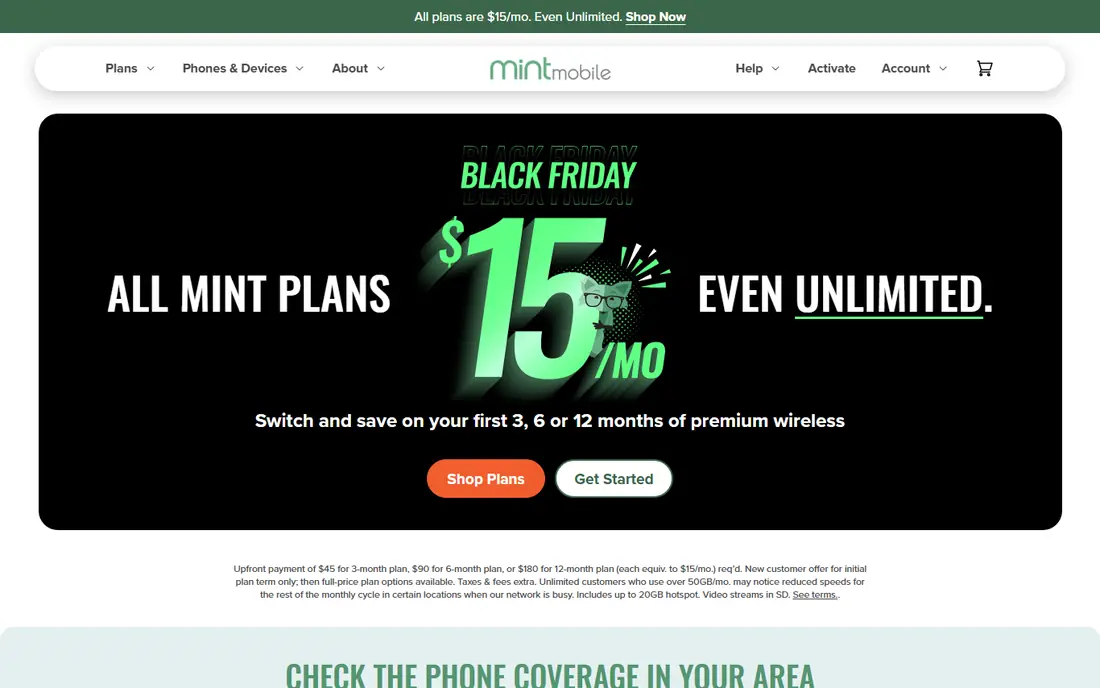
Mint Mobile suits buyers who are comfortable paying for several months upfront in exchange for a lower monthly rate. Its small data plans start low, and its unlimited plan costs $30 per month on a 12-month prepay plan, with higher monthly rates on shorter terms. The service runs on the T-Mobile network, so coverage and speeds depend on T-Mobile in your area.
The catch is commitment and taxes. A 12-month prepay locks you in, and taxes and fees are added to the advertised rate, unlike Visible. If you are unsure about T-Mobile coverage at your address, test it with a short plan first, or check Mint's trial options before you prepay for a year.
- Low prepaid prices
- Runs on T-Mobile network
- Unlimited plan available
- Best prices need multi-month prepay
- Taxes are added
- Support is mainly online
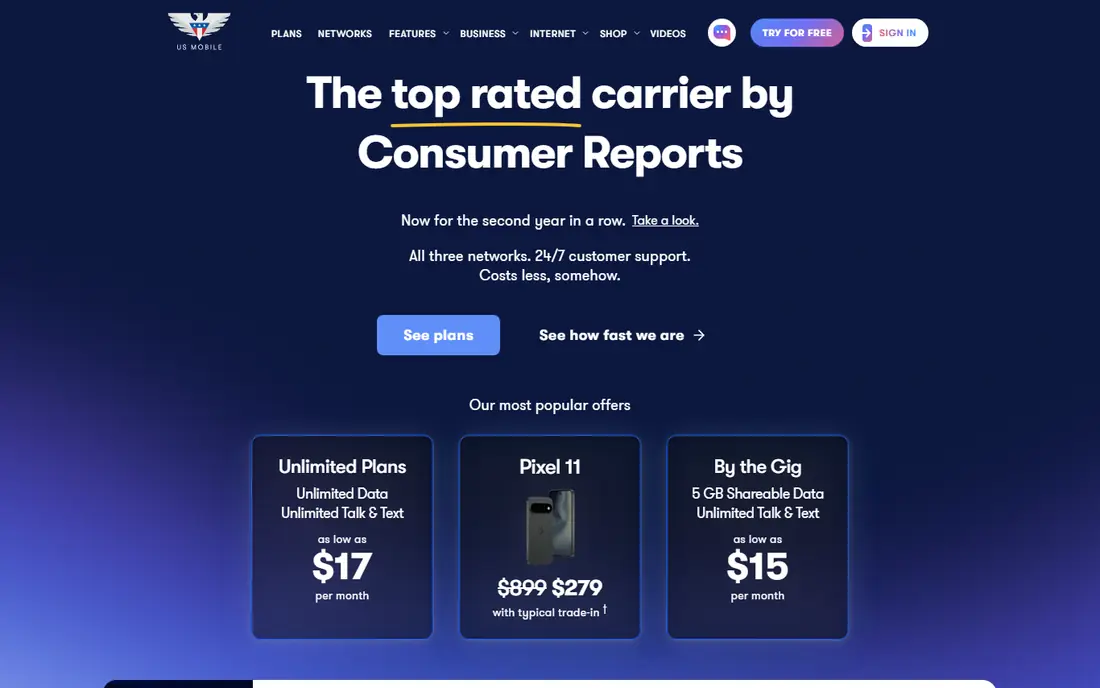
US Mobile stands out because you can choose which major network your plan runs on, which helps if one carrier covers your home better than another. Light plans start at $10 per month, and its Unlimited Premium plan at $44 per month offers a large premium data and hotspot allowance for the price. Taxes are included in many US Mobile prices, which makes comparison easier.
The complexity is that data and hotspot allowances can vary by the network you choose, so read the plan details for your selected network, not just the headline. US Mobile is also online-first, so buyers who want a store visit may prefer Metro, Cricket, or a major carrier instead.
- Choice of major networks
- Low-cost light plans
- Premium unlimited plan with large hotspot allowance
- Plan details vary by network
- Online-first support
- Perks are limited
T-Mobile suits users who want premium service, perks, and strong 5G, and who are willing to pay more than a prepaid brand. Its Essentials Saver plan starts at $55 per month for a single line in recent comparisons, while premium Experience plans add more hotspot data, streaming perks, and travel benefits. Multi-line plans bring the per-line cost down a lot for families.
Check the exact plan name before you buy, because T-Mobile has renamed plans several times, and older guides may list retired names. Ask for the total with taxes and fees, the premium data limit, and the hotspot allowance, because those details differ sharply between entry and premium plans.
- Strong 5G coverage in many areas
- Streaming perks on premium plans
- Multi-line discounts
- Taxes and fees are added
- Premium plans cost more than prepaid rivals
- Plan names change often
Verizon remains the pick for users who prioritize coverage, especially outside large cities. Its Unlimited Welcome plan starts at $75 per month for a single line in recent comparisons, with lower prices on multi-line plans and with autopay. Higher plans add premium data, hotspot allowances, and perks for heavy users and families.
The price is the main drawback. A single-line Verizon plan costs far more than Visible, which also runs on Verizon, though Visible gives up perks and in-store support. Choose Verizon direct when you need premium data priority, store help, or bundle discounts, and choose Visible when price matters more than perks.
- Broad and reliable coverage, including rural areas
- Premium unlimited options
- Strong network performance
- Higher single-line prices
- Taxes and fees are added
- Entry plan has no hotspot in some cases
AT&T offers a middle path among major carriers, with a Value plan starting at $60 per month for a single line in recent comparisons, and premium plans above it for heavy users. Its network coverage is strong in most of the country, and its plans suit users who want a major carrier without paying Verizon's top prices.
The Value plan is not unlimited in the same way as premium plans, so check its data limit and hotspot allowance before you choose it for a heavy user. Families should compare multi-line totals, because AT&T's per-line price falls with more lines, and bundle deals with home internet can change the math further.
- Solid nationwide coverage
- Range of plans from value to premium
- Multi-line savings
- Taxes and fees are added
- Value plan has limited data
- Premium plans are costly for one line
Google Fi suits light users and travelers who want flexibility. Its Flexible plan starts at $20 per month plus $10 per gigabyte, so a light user can pay far less than an unlimited plan, while heavier users can switch to an unlimited plan. Fi also includes international features that appeal to frequent travelers, though terms vary by plan.
Heavy data users should do the math before choosing Flexible, because data charges can quickly pass the cost of an unlimited plan. Check phone compatibility too, because some Fi features work best on phones designed for Fi, and network switching features vary by device.
- Flexible plan for light users
- International features
- Easy plan changes
- Data costs add up for heavy users
- Coverage depends on partner networks
- Phone compatibility matters
Metro by T-Mobile is a good prepaid choice for buyers who want a store to visit. Its unlimited plans start at $40 per month in recent comparisons, with taxes included on many plans, and it runs on the T-Mobile network. In-store help with setup, transfers, and device issues is a real advantage over online-only brands.
The limits are data priority and perks. Metro plans may slow after a data threshold on congested networks, and they lack the streaming and travel bundles of T-Mobile's premium postpaid plans. If you need a store and a simple unlimited plan, Metro fits, but heavy users should check the premium data terms.
- T-Mobile network
- Retail stores for in-person help
- Taxes included on many plans
- Data may slow after a threshold
- Fewer premium perks
- Prices vary by plan and promotion
Cricket Wireless suits buyers who want AT&T coverage with the help of a retail store and a prepaid price. Its plans start at $35 per month for a limited-data plan in recent comparisons, with unlimited plans above that, and taxes are included on many plans. Family plans bring the per-line cost down, which helps households that want one carrier.
Check data speed caps and hotspot limits, because Cricket plans differ on both. A plan that suits light browsing may feel slow for video or hotspot work. Visit a store or check the plan page for your exact plan, and compare the total for your household, not just the single-line price.
- AT&T network
- Retail stores
- Taxes included on many plans
- Family discounts
- Data speeds may be capped on some plans
- Premium features cost more
- Hotspot limits vary
Consumer Cellular suits lighter users who want a simple plan, clear support, and no complex promotions. Its basic plan starts at $20 per month with autopay in recent comparisons, and it uses major carrier networks for coverage. The brand is popular with older users and with households that use modest data and want help by phone.
Heavy users should compare carefully, because Consumer Cellular's unlimited plan costs more than Visible or Mint unlimited. If you stream a lot of video or use a hotspot daily, a budget unlimited brand will usually save money, even if support is online-only.
- Simple plans for light users
- Runs on major networks
- US-based support reputation
- Unlimited plan costs more than budget rivals
- Taxes are added
- Less suited to heavy data users
How we picked these
We compared carrier and prepaid plan pages and recent October 2026 plan comparisons that list single-line prices, networks, taxes, and hotspot terms. We favored plans with current availability, clear pricing, and a distinct use case, from cheap unlimited to premium major-carrier service. We left out plans with no clear current price, retired plan names, or coverage that could not be tied to a major network.
What to check before you switch
Start with coverage where you live, work, and travel. Ask friends on each network about dead zones, or test a prepaid SIM for a month before you port your main number. A plan that is perfect on paper is useless if calls drop at your home or office.
Compare the total monthly cost, not just the advertised rate. Major carriers add taxes and fees, while some prepaid brands include them. Add device payments, insurance, and add-ons to the total, and check whether an autopay discount requires a bank account rather than a card.
Check data priority, hotspot, and video terms. Premium data means full-speed data up to a limit, after which speeds may slow on busy towers. Hotspot allowances vary from none to 100GB, and video may be capped at standard definition on cheaper plans. Match those limits to how you actually use your phone.
Switching without losing your number
Do not cancel your old plan before the new carrier ports your number, because canceling can release the number. Keep your account number and transfer PIN ready, and port on a day when you can test calls and data. Check that voicemail, messaging, and two-factor codes work after the switch, before you rely on the new plan for work.
Frequently asked questions
What are the best cell phone service plans?
Visible suits cheap unlimited service, Mint Mobile suits prepaid buyers who will prepay, and US Mobile suits users who want to choose a network. T-Mobile, Verizon, and AT&T suit premium users and families, while Metro, Cricket, and Consumer Cellular suit users who want stores or simple plans.
What is the best cell phone plan for one person?
For one line, Visible at $25 per month is hard to beat for unlimited data, if Verizon coverage works for you. Mint Mobile and US Mobile are strong alternatives on the T-Mobile network or with network choice. Compare taxes, hotspot needs, and coverage before you choose on price alone.
What is the best service plan for cell phones for families?
Families usually save with multi-line plans from T-Mobile, Verizon, or AT&T, or with family plans from Cricket and Metro. Compare the total for all lines, including taxes, device payments, and perks, because a cheap single-line price does not always mean a cheap family total.
Are prepaid plans as good as major carrier plans?
Prepaid plans often use the same networks, so coverage is similar, but data priority, perks, and support can differ. Major carrier plans may keep full speeds longer on busy towers and include streaming or travel perks. Prepaid plans win on price and simplicity for many users.
Can I keep my phone and number when I switch?
In most cases, yes, if your phone is not tied to a carrier and compatible with the new network. Check compatibility on the new carrier's site, get your transfer PIN from your old carrier, and port the number during activation. Do not cancel the old plan until the port is complete.
Sources
See where you really rank - block by block
ProMapRanker scans Google Maps across a grid of your service area. Simple monthly plans from $19, white-label on every plan.
Start freeKeep reading
 zscaler alternatives
Best Zscaler Alternatives in 2026
Looking for zscaler alternatives? We compare 9 SASE and zero trust platforms on architecture, data protection, pricing, and fit for your network and team.
Read → zapier alternatives free
Best Zapier Alternatives Free in 2026
Nine automation tools for zapier alternatives free in 2026, all with genuinely free tiers, plus free plan limits, starting prices and upgrade paths explained.
Read → which platform is best for online reputation
Which Platform Is Best for Online Reputation in 2026
Wondering which platform is best for online reputation? We compare 8 review, listing, and response tools for small and multi-location businesses and agencies.
Read →