 ProMapRanker
Best Cell Phone Service for Small Business in 2026


Reliable nationwide coverage · Pricing starts at: $65 per line per month
Key takeaways
- Verizon, T-Mobile, and AT&T business plans suit teams that need nationwide coverage, hotspot data, and devices on a carrier account.
- T-Mobile often offers the best value for heavy data users, while Verizon suits field teams that need reliability, and AT&T suits teams that want built-in security features.
- US Mobile, Tello, Visible, and Mint Mobile can cut costs sharply for small teams, but they need more comfort with online management and bring-your-own devices.
- Google Voice is not a carrier plan, but it is a useful low-cost business number layer on top of phones your team already has.
- Compare the price per line at your actual line count, with autopay and taxes included, because headline prices often assume several lines and discounts.
Quick comparison
| Pick | Great for | Pricing starts at | Free tier | |
|---|---|---|---|---|
| Verizon Business | Reliable nationwide coverage | $65 per line per month | No | Visit |
 T-Mobile for Business | Heavy data and large 5G coverage | $60 per line per month | No | Visit |
 AT&T Business | Security features for growing teams | $50 per line per month | No | Visit |
 US Mobile | Flexible networks for small teams | $8 per month | No | Visit |
 Tello Business | Low-cost custom lines | $6 per month | No | Visit |
 Visible | Simple unlimited on Verizon network | $25 per month | No | Visit |
 Mint Mobile | Low-cost unlimited for small teams | $15 per month | No | Visit |
 Cricket Wireless | In-store support on AT&T network | $30 per month | No | Visit |
 Google Voice | Low-cost business numbers on existing phones | $10 per user per month | No | Visit |
The best cell phone services for small business
A small business cell plan is different from a personal plan. You need predictable billing, coverage where your team works, hotspot data for laptops and tablets, and a way to add or remove lines as staff change. We compared official carrier business pages and public business plan guides, and we kept only services active in the United States in 2026 that a small business can buy today, including major carriers, budget carriers, and a business number app.
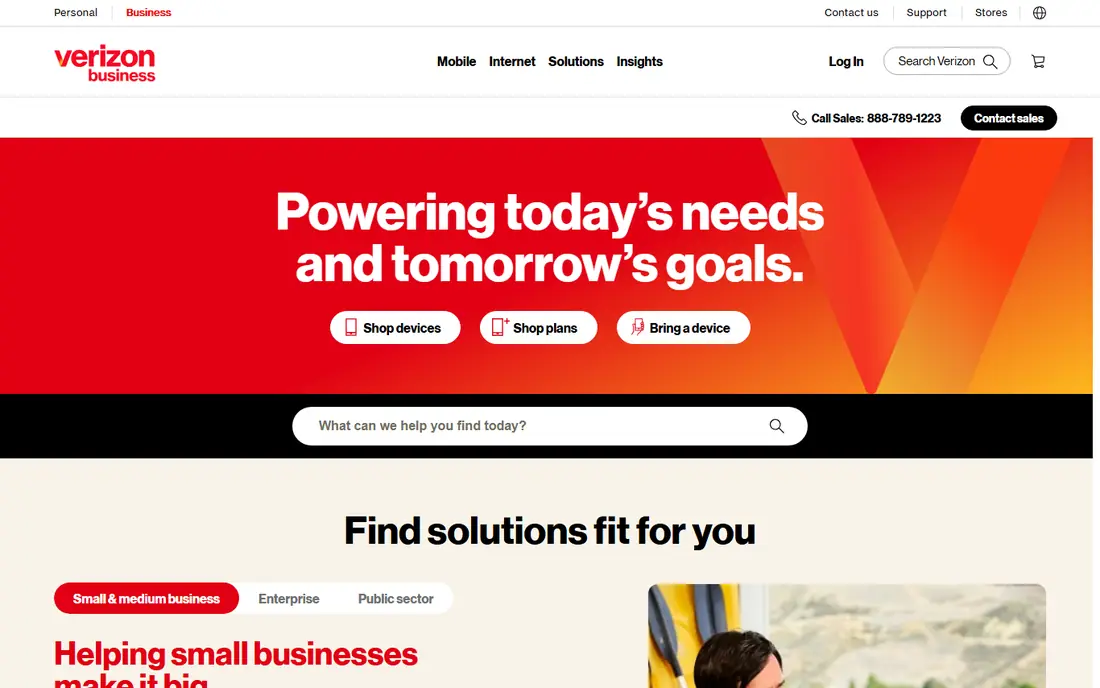
Verizon Business offers unlimited plans for small businesses with nationwide coverage, mobile hotspot data, and business security features such as Business Mobile Internet Security on some plans. Field teams, delivery drivers, and service technicians often value Verizon for call reliability in areas where other networks struggle. Some plans also offer a multi-year price lock, which helps a growing business budget with less surprise.
The catch is price. Starting prices in public comparisons sit around $65 per line per month, and the best per-line rates usually require several lines, autopay, and paperless billing. Device financing is separate in most cases, so add handset payments to the service price. If reliability where your team works matters more than the lowest bill, Verizon is a strong first choice.
- Strong network reputation
- Business hotspot options
- Three-year price lock on some plans
- Security features included on many plans
- Higher starting price than rivals in many comparisons
- Per-line price falls mainly with more lines
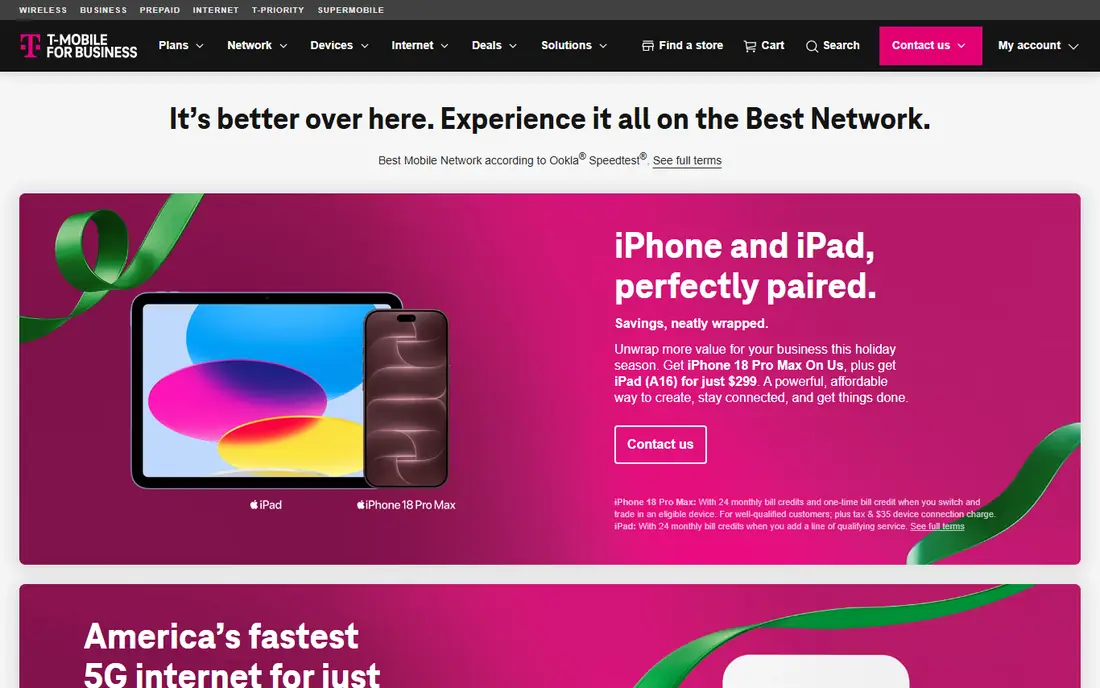
T-Mobile for Business suits teams that use a lot of data, tether laptops, or work in areas with limited wired internet. Business plans offer unlimited data, scam protection, and large hotspot allowances on higher tiers, with some plans offering hundreds of gigabytes of hotspot data for field work. The 5G network is large, and satellite coverage features help in some dead zones where traditional towers do not reach.
The trade-off is coverage variation. T-Mobile is strong in many cities and suburbs, but some rural areas still favour Verizon or AT&T, so test coverage on your actual routes. Per-line pricing also improves with more lines, so a one- or two-line business should check the single-line price carefully. For a data-heavy small team, T-Mobile often gives the most data for the money.
- Large nationwide 5G network
- Unlimited premium data on many plans
- Scam Shield protection
- Satellite coverage features in some areas
- Rural coverage varies by area
- Best per-line prices need several lines and autopay
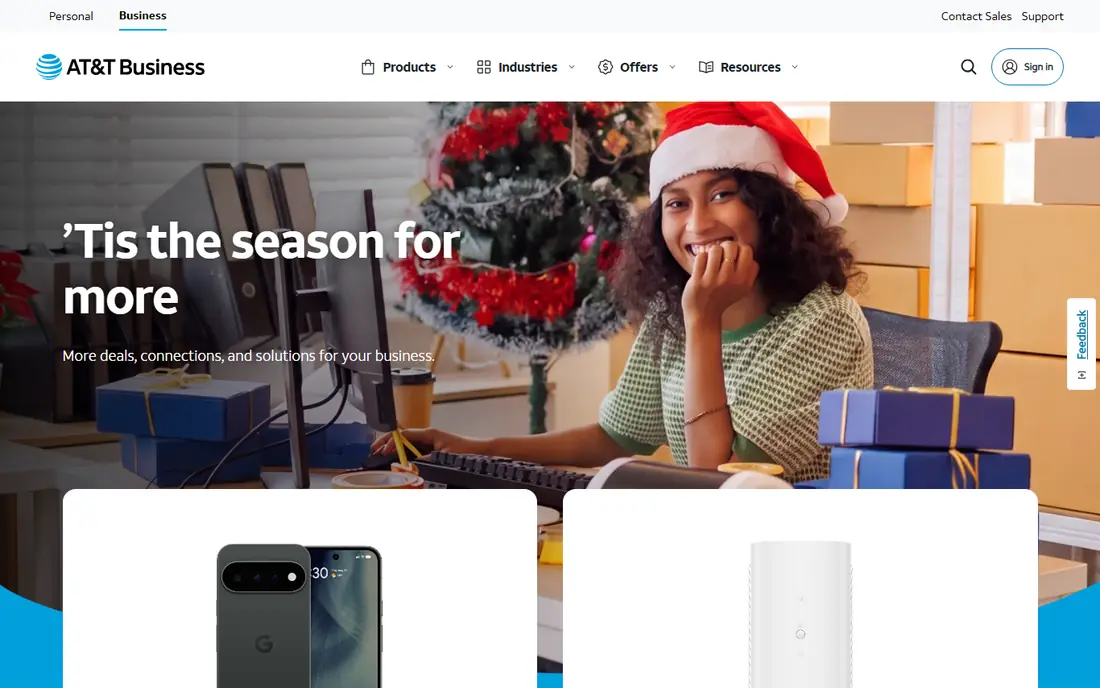
AT&T Business offers unlimited plans with built-in security through ActiveArmor, which helps block spam and fraud calls, and network prioritisation through AT&T Turbo for Business on some plans. That combination suits a growing team that handles customer data and wants security without buying a separate mobile security app. AT&T also offers bundles with business internet and, in some cases, landline-style phone services, which can simplify billing for an office.
The catch is hotspot data. On comparable tiers, AT&T hotspot allowances are often smaller than T-Mobile, so a team that tethers laptops all day should compare tiers closely. Per-line prices also vary by line count and autopay, so the headline price may assume a larger team. For a security-conscious small business on the AT&T network, this is a balanced choice.
- ActiveArmor security features
- Turbo prioritisation on some business plans
- Unlimited texting to many countries
- Bundle options with internet
- Hotspot allowances are smaller than T-Mobile on comparable tiers in many cases
- Best prices need several lines
US Mobile lets a small business choose among major networks in many cases, set different data levels per line, and change plans as needs change. That flexibility helps a team with mixed needs: a field worker who needs unlimited data, an office worker who needs a small plan, and a part-time worker who needs a light line. Pricing starts low for light plans, and multi-line savings can bring the average cost down further.
The trade-off is support. US Mobile is mainly managed online, so a business that wants a store or a dedicated account manager may prefer a major carrier. The range of networks and tiers can also confuse a first-time buyer, so assign one person to manage the account and test coverage on each network before moving the whole team. For a cost-conscious, tech-comfortable team, US Mobile is excellent value.
- Choice of major networks in many cases
- Flexible data tiers
- Easy to add or remove lines
- No contract
- Online management only in most cases
- Plan choice can feel complex for first-time buyers
Tello Business, through its build-your-own plans, lets a small business give each line its own minutes and data level, starting as low as $6 per month for a light plan. That suits a business with part-time staff, seasonal workers, or a second line for a specific job, where an unlimited carrier plan would waste money. There is no contract, and you can raise or lower a line as work changes.
The limit is network and support. Tello runs on the T-Mobile network, so coverage follows T-Mobile, and help is mainly online. It also does not offer the same device financing, in-store setup, or business account management as Verizon, T-Mobile, or AT&T. For a small team that brings its own phones and wants the lowest possible line cost, Tello is hard to beat.
- Very low entry price
- Custom minutes and data per line
- Up to 10 lines with different plans in many cases
- No contract
- Runs on T-Mobile network only
- Online support
- No carrier store or device financing in the same way as major carriers
Visible offers a simple unlimited plan on the Verizon network, with a flat monthly price that includes taxes and fees in many cases. For a small business that wants Verizon coverage without a complex carrier contract, that simplicity is appealing. You bring compatible phones, activate online, and pay the same rate each month, which makes budgeting easy for a two- to five-person team.
The trade-off is business support. Visible is a consumer-focused online carrier, so there is no store team or dedicated business manager, and hotspot use and data priority vary by plan. A field team that needs large hotspot allowances should check the higher Visible plan before choosing. For a small, confident team that wants Verizon coverage at a budget price, Visible is a clean option.
- Simple flat-rate unlimited
- Taxes and fees included in many cases
- Runs on Verizon network
- No contract
- Online-only support
- Hotspot and priority data limits vary by plan
- No business account manager in the same way as major carriers
Mint Mobile offers low-cost plans on the T-Mobile network, with unlimited talk and text and data tiers that suit small teams on a budget. The headline prices are among the lowest in this list, especially for a team that can prepay for several months at a time. That makes Mint a good choice for a startup, a seasonal business, or a team that wants to keep fixed costs low.
The catch is prepayment and taxes. Standard Mint plans require buying three, six, or twelve months upfront, so cash flow matters, and taxes and fees add to the advertised price. Support is online, and coverage follows T-Mobile. If your team is comfortable with prepayment and online management, Mint saves a lot. If you need monthly billing and in-person help, a major carrier plan may be worth the extra cost.
- Low monthly price
- Runs on T-Mobile network
- Simple unlimited and data plans
- No contract in the usual carrier sense
- Standard plans require multi-month prepayment
- Taxes add to the headline price
- Online support only
Cricket Wireless, owned by AT&T, offers simple no-contract plans on the AT&T network, with stores across the United States where staff can help with activation and device setup. That in-store help is a real advantage for a small business owner who does not want to manage everything online. Plans start at $30 per month for a basic data plan in many comparisons, with unlimited options available for heavier users.
The trade-off is priority and business depth. Cricket is a prepaid brand, so data priority and some business features differ from AT&T postpaid business plans. It also lacks the same account management, device financing, and hotspot bundles as a major carrier business plan. For a small team that wants AT&T coverage, a store to visit, and a simple bill, Cricket is a practical middle ground.
- Runs on AT&T network
- Thousands of retail stores
- No contract
- Simple plans for small teams
- Data speeds and priority can differ from AT&T postpaid
- Business features are simpler than major carrier business plans
Google Voice is not a mobile carrier, but it solves a common small business problem: giving each team member a business number without buying a new carrier line for everyone. For $10 per user per month on the Starter plan, a Google Workspace team gets calling, texting, and voicemail transcription across devices, using existing mobile data or Wi-Fi. That suits remote teams, freelancers working together, and businesses that already pay for phones personally.
The limit is that Google Voice does not provide mobile data, coverage, or devices. Your team still needs a carrier plan or Wi-Fi for connectivity, and Google Voice lacks carrier business features such as fleet management or device deals. Treat it as a business number layer, not a replacement for a carrier plan, and pair it with a low-cost carrier line where needed.
- Low cost per user
- Works on phones your team already has
- Voicemail transcription
- Simple setup for Google Workspace teams
- Requires Google Workspace
- Not a carrier data plan
- Fewer business carrier features such as device financing and network priority
How we picked these
We compared official carrier business pages, plan pricing, and public business plan guides, and we kept only services active in the United States in 2026 that a small business can buy today. We mixed major carrier business plans with budget carriers and a business number app, because a five-person field team and a remote two-person startup need different tools. We did not claim hands-on testing, and where pricing varies by line count, autopay, or taxes we noted that rather than presenting one figure as universal.
How to choose without overpaying
Start by counting lines and data honestly. List each team member, how much mobile data they actually use, how much hotspot data they need, and whether they travel internationally. A team with two heavy data users and three light users should not buy five unlimited premium lines. Mix tiers where the carrier allows it, or use a flexible carrier such as US Mobile or Tello for light lines.
Next, test coverage where work happens. Check carrier maps for job sites, client offices, and home offices, and ask team members about dead zones on their current network. A cheaper plan that drops calls on a job site costs more in lost work than a slightly higher carrier bill. If possible, trial one line for a month before moving the whole team.
Finally, add up the true monthly cost. Include service, device payments, insurance, taxes, and fees, and confirm whether autopay, paperless billing, and a line count are required for the advertised price. For Mint, add prepayment to the cash flow plan. For major carriers, add device financing separately. The total per month for the whole team, not the single-line headline price, is the number to compare.
Devices and contracts
Decide whether to buy phones outright, finance through a carrier, or let staff bring their own devices. Carrier financing spreads cost but ties lines to a term, while bring-your-own-device keeps flexibility and lowers the bill. If you finance, check what happens when a staff member leaves, because the remaining device balance can become a surprise cost.
Frequently asked questions
Should a small business use a major carrier or a budget carrier?
A major carrier suits field teams, teams that need hotspot data and device financing, and businesses that want in-store or account support. A budget carrier suits small, tech-comfortable teams that bring their own phones and want the lowest bill. Many businesses mix both: major carrier lines for field staff, budget lines for office or part-time staff.
How many lines do I need for the best price?
Major carrier business prices usually improve with more lines, autopay, and paperless billing, so a five-line team often pays less per line than a one-line team. Budget carriers such as US Mobile, Tello, and Mint price per line more simply, so a small team can still get a low rate. Always price your actual line count, not the advertised multi-line example.
Can employees use their personal phones for business?
Yes, with a business number app such as Google Voice, or with a separate carrier line on a personal device where the carrier allows it. Agree who pays for data, how business calls are separated, and what happens to the business number when an employee leaves. A business-owned number protects customer contacts when staff change.
What hotspot data does a small team actually need?
It depends on the work. Office staff on Wi-Fi need little hotspot data, while field staff who tether laptops, tablets, or card readers may need tens of gigabytes per month. T-Mobile business plans often offer the largest hotspot allowances, while budget carriers offer smaller hotspot limits. Check the hotspot cap, not just the unlimited data label.
Sources
See where you really rank - block by block
ProMapRanker scans Google Maps across a grid of your service area. Simple monthly plans from $19, white-label on every plan.
Start freeKeep reading
 zoro.to alternatives
Best Zoro.to Alternatives in 2026
We compare the best zoro.to alternatives in 2026, listing only legal licensed anime streaming services, from Crunchyroll to free options for fans today.
Read → zip alternatives
Best Zip Alternatives in 2026
We compare the best zip alternatives for buy now, pay later in 2026, covering pay-in-4 plans, fees, spending limits, and credit reporting options today.
Read → yesware alternatives
Best Yesware Alternatives in 2026
Compare the best yesware alternatives for sales email tracking, templates, and sequences, with current pricing and honest tradeoffs for small sales teams.
Read →