 ProMapRanker
Best Cell Phone Company for Seniors in 2026


Best overall senior value · Pricing starts at: $20 per month
Key takeaways
- Consumer Cellular is the strongest all-round pick for many seniors, with low-cost plans, no contracts, and phone-based support.
- Lively is the best choice for seniors who want a simple phone with an urgent response button and health and safety features.
- T-Mobile Essentials 55+ and Verizon 55+ suit seniors who want a major carrier network and unlimited data, with age and location rules to check.
- Mint Mobile, Tello, and Visible give the lowest monthly prices, but they suit seniors comfortable with online signup and prepaid billing.
- Check coverage at home, data use, and whether a senior discount needs an age check or an AARP membership before signing up.
Quick comparison
| Pick | Great for | Pricing starts at | Free tier | |
|---|---|---|---|---|
| Consumer Cellular | Best overall senior value | $20 per month | No | Visit |
 Lively | Simple phones and safety features | $19.99 per month | No | Visit |
 T-Mobile Essentials 55+ | Unlimited data on a major network | $45 per month | No | Visit |
 Verizon 55+ | Verizon network for eligible seniors | See website | No | Visit |
 AT&T 55+ | AT&T network and travel benefits | See website | No | Visit |
 Mint Mobile | Lowest prepaid prices | $15 per month | No | Visit |
 Tello | Custom low-cost plans | $10 per month | No | Visit |
 Visible | Simple flat-rate unlimited | $25 per month | No | Visit |
The best cell phone company for seniors
We compared official plan pages, senior discounts, network coverage, device options, and support routes for companies that serve older adults in the US. Prices are for a single line unless stated, and taxes and fees may apply on top of the figures shown. A senior plan is not always the cheapest plan, since a low-cost general plan can beat a senior-branded plan for a light data user.
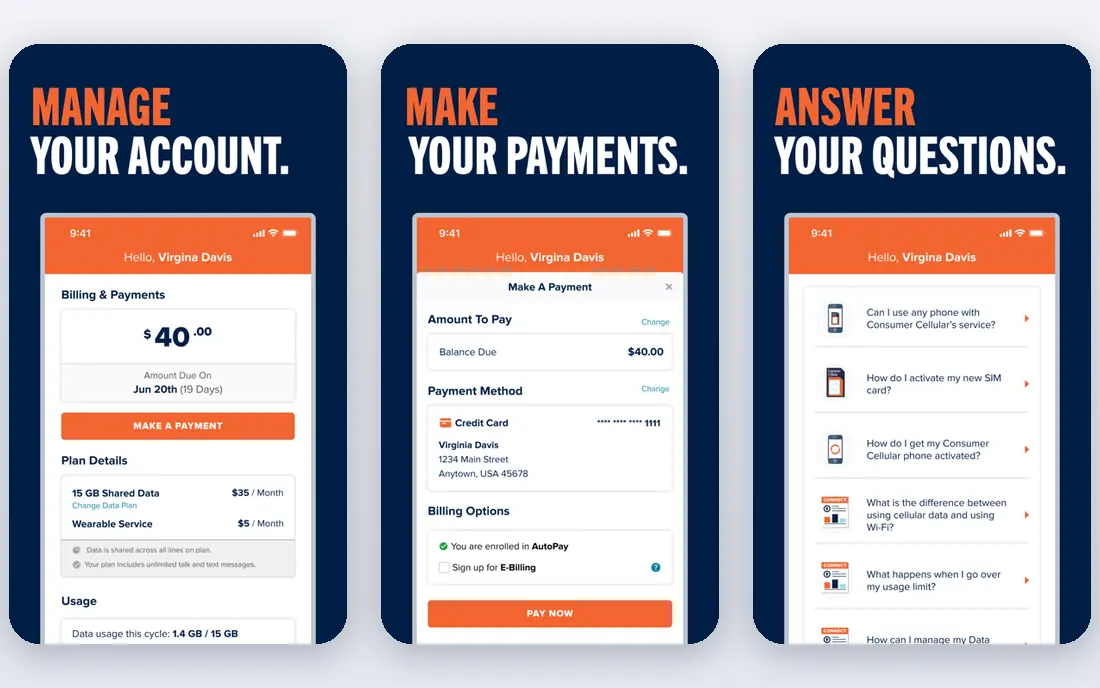
Consumer Cellular is our pick for most seniors. Plans start at 20 dollars per month for a limited data plan, with an unlimited plan at 35 dollars per month for one line, and AARP members can save a further 5 percent. There are no annual contracts, and support is phone-first, which suits seniors who prefer to talk to a person rather than use chat or an app. The company runs on AT&T and T-Mobile networks, so coverage is broad in most areas.
The trade-off is data priority and plan size. Cheaper plans suit light users who mainly call, text, and use Wi-Fi at home, but heavy streamers may hit limits or slower speeds. Seniors who stream video daily on mobile data should look at the unlimited plan or a major carrier plan instead. For most everyday use, Consumer Cellular gives the best balance of price, simplicity, and support.
- Low-cost plans with no annual contracts
- US-based phone support
- AARP member discount available
- Data allowances on cheaper plans are limited
- Premium data priority is lower than direct carrier plans

Lively, formerly GreatCall, is the best choice when simplicity and safety matter most. Its Jitterbug phones have large buttons, clear menus, and an urgent response button that connects to help. Plans start at 19.99 dollars per month plus taxes and fees, with data added as needed. Optional health and safety packages add fall detection, nurse lines, and caregiver tools for an extra monthly charge.
The catch is total cost and device lock-in. A safety package on top of a plan can push the monthly bill above a basic carrier plan, and Lively phones are the main device option. For a senior who wants a phone that is easy to use and a button that summons help, that trade is often worth it. For a confident smartphone user, a general carrier may offer more choice for less money.
- Phones designed for seniors, including flip phones
- Urgent response button and optional health and safety packages
- Verizon network coverage
- Plans and safety packages together can cost more than a basic plan
- Smartphone choice is limited to Lively devices
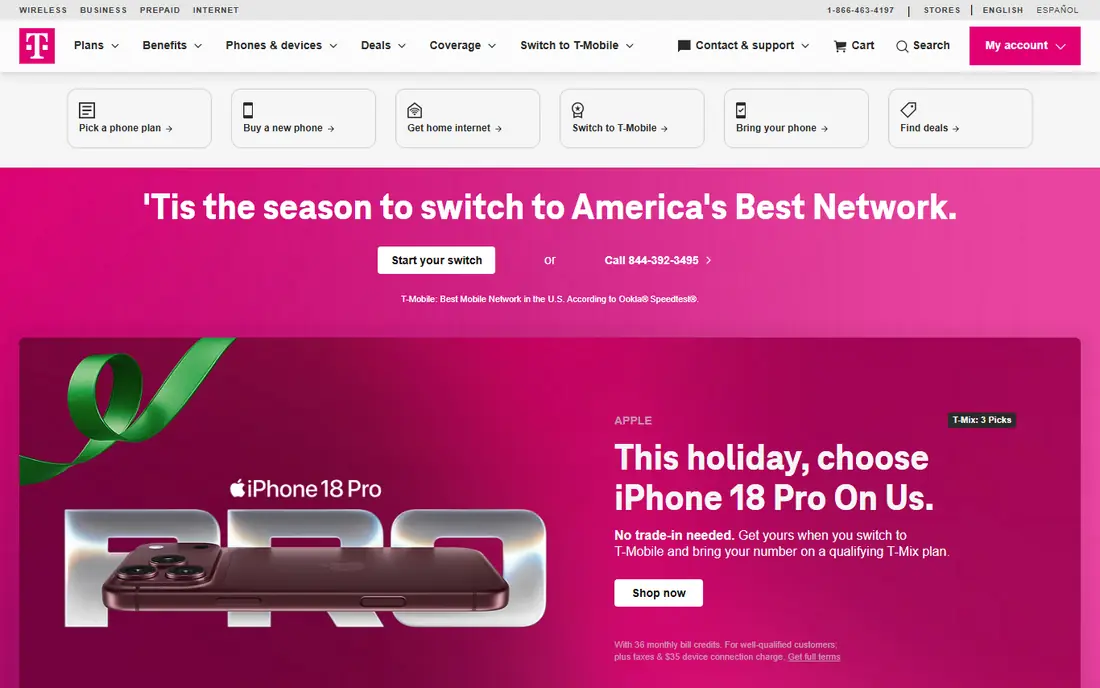
T-Mobile Essentials 55+ suits a senior who wants unlimited data without a family plan. One line costs 45 dollars per month plus taxes and fees, with unlimited talk, text, and data and a set amount of premium data before speeds may slow. The plan is available nationwide to customers aged 55 and over, which makes it simpler than state-limited senior plans. Hotspot data is included at a basic speed.
The downside is price compared with budget carriers. A senior who uses little mobile data will pay more than needed on an unlimited plan. Seniors who stream, use maps, and video call away from Wi-Fi will get better value here, especially on the T-Mobile 5G network. Check coverage at home first, since network strength still varies by area.
- Unlimited talk, text, and data for customers aged 55 and over
- Nationwide T-Mobile network
- No annual contract on this plan type
- Price is higher than budget senior plans
- Premium data allowance is lower than higher T-Mobile tiers
Verizon 55+ is a strong option for seniors who already trust Verizon coverage, but eligibility needs checking. The senior plan is limited to certain states, with Florida the best-known example, and the account holder must meet the age rule. For eligible seniors, it gives unlimited talk, text, and data on the Verizon network, with in-store help available in many towns.
The main drawback is that limitation. A senior outside an eligible state cannot buy this plan and must look at Verizon's standard plans or another carrier. Price is also higher than budget senior plans. For an eligible senior in a rural area where Verizon coverage leads, the plan is worth a quote despite the higher cost.
- Verizon network coverage and reliability
- Unlimited plans for eligible customers
- In-store support in many areas
- Senior plan availability is limited by state, notably Florida
- Price can be higher than budget rivals
AT&T 55+ suits seniors who travel in North America or who want a major carrier with store support. Plans include unlimited talk, text, and data on the AT&T network, with some plans adding use in Mexico and Canada and security features. That travel benefit matters for seniors who visit family across the border or take regular trips.
The catch is cost and clarity. AT&T senior pricing sits above budget options, and the exact plan, age rule, and benefits should be confirmed with AT&T, since details change. Seniors who rarely travel and use little data will likely save money with Consumer Cellular or Tello. Seniors who want AT&T coverage and travel perks will find the premium easier to justify.
- AT&T network coverage
- Benefits for travel in Mexico and Canada on some plans
- In-store and phone support
- Senior pricing is higher than budget carriers
- Plan details and eligibility vary and need a direct check
Mint Mobile is the cheapest route for a senior comfortable with prepaid billing. Plans start at 15 dollars per month for a limited data plan when paid for a year in advance, with larger data and unlimited options available. The service runs on the T-Mobile network, so coverage matches T-Mobile in most areas. Signup and account management happen online, which keeps costs down.
The trade-off is payment and support style. Paying for three, six, or twelve months upfront shifts cash flow, and help is mainly online rather than by phone. That suits a tech-comfortable senior who wants the lowest bill. A senior who prefers phone support or month-to-month billing should choose Consumer Cellular instead, even at a slightly higher monthly price.
- Very low monthly cost when paid in advance
- Runs on the T-Mobile network
- Simple online signup
- Requires prepaying for several months at once
- Support is mainly online, not phone-first
Tello is ideal for a light user who mainly calls and texts. A starter plan with unlimited talk and text plus 2GB of high-speed data costs 10 dollars per month, with taxes and fees included in the quoted figure on its site. Plans can be changed month to month, and there is no contract. That flexibility helps a senior who is unsure how much data they will use.
The limits are network and support. Tello uses the T-Mobile network, so coverage should be checked at home before switching. Support is online-first, so seniors who want phone help for every question may prefer Consumer Cellular. For a budget-conscious senior with light data use, Tello is one of the best values available.
- Custom plans with chosen minutes and data
- No contracts
- Very low starting price for light users
- Runs on the T-Mobile network only
- Support is online-first, which may not suit every senior
Visible suits a senior who wants unlimited data without a complicated plan menu. The base plan costs 25 dollars per month with taxes and fees included, giving unlimited talk, text, data, and hotspot at a capped speed. There is one flat price, no contract, and signup happens online. For a senior who streams and uses maps often, that simplicity and price are hard to beat.
The catch is support and priority. Visible runs on Verizon, but data can be slowed during congestion compared with direct Verizon plans. Help is mainly through the app and chat, not a phone call to a store. A senior comfortable with app-based support will find Visible excellent value. A senior who wants phone support should weigh that against the saving.
- Unlimited talk, text, and data for a flat monthly price
- Taxes and fees included
- No annual contract
- Runs on the Verizon network with deprioritization possible
- Support is mainly through app and chat
How we picked these
We compared official plan pages, senior discounts, age rules, network coverage, device options, and support routes for carriers serving older adults. We kept only companies with a live US plan and a clear price or quote route. We mixed senior-branded plans, major carrier plans, and low-cost general plans, since the best plan for a senior is not always the one with senior in its name. We favored companies with clear pricing and a support route a senior can actually use.
How to choose a senior phone plan
Start with coverage at home and in places you visit often. Ask neighbors which network works well, and check each carrier's coverage map for your address. A cheap plan on a weak network is poor value, since missed calls and slow data frustrate daily use. If you already have a phone you like, check that it works on the new carrier before switching, since some phones are locked to a carrier.
Next, match data to real use. If you are on Wi-Fi at home most of the day and mainly call and text, a limited data plan at 10 to 20 dollars per month is enough. If you stream video, use maps, and video call away from home, an unlimited plan is safer. Look at your current data use for two or three months rather than guessing, since that figure settles the plan size question quickly.
Then weigh support against price. Phone-first support costs more, but it can be worth it for a senior who wants help with setup, contacts, and voicemail. Online-first carriers are cheaper, but they expect you to manage the account in an app. Finally, check senior discounts properly. Some need an age check, some need AARP membership, and some are limited to certain states, so confirm eligibility before counting on a discount.
Devices for seniors
A simple flip phone suits seniors who mainly call and text, and Lively and Consumer Cellular both sell easy-to-use models. A simplified smartphone suits seniors who want apps, photos, and video calls with larger text and clearer menus. Whichever device you pick, set up large text, voicemail, and emergency contacts before the old phone is switched off.
Saving more on a senior plan
Check Lifeline, the federal program that discounts phone service for low-income households, since eligible seniors may qualify for a further reduction. Ask about multi-line discounts if a partner or family member joins the same account. Finally, review the plan once a year, since prices and senior offers change and a better plan may have appeared.
Frequently asked questions
What is the best cell phone plan for seniors?
Consumer Cellular is the best all-round pick for many seniors, thanks to low prices, no contracts, and phone support. Lively is best for simplicity and safety features, while T-Mobile Essentials 55+ is best for unlimited data on a major network. The right pick depends on data use, coverage at home, and how much support you want.
Do seniors get a discount on cell phone plans?
Yes, several carriers offer senior plans or discounts. T-Mobile and Verizon offer 55+ plans with age and location rules, AT&T offers a 55+ plan, and Consumer Cellular offers an AARP member discount. Low-cost carriers such as Mint Mobile and Tello do not need a senior discount to be cheap, since their standard prices are already low.
What is the cheapest cell phone plan for seniors?
Tello plans start at 10 dollars per month for light users, and Mint Mobile starts at 15 dollars per month when prepaid for a longer term. Consumer Cellular starts at 20 dollars per month with phone support included. The cheapest plan is only good value if coverage at home is solid and the data allowance fits real use.
Can seniors keep their phone number when switching?
Yes, in most cases. US carriers support number porting, so you can move your existing number to a new carrier. Do not cancel the old plan before the number has moved, since cancelling first can lose the number. The new carrier will guide you through the porting steps during signup.
Are senior phones different from normal smartphones?
Senior phones often have larger buttons, louder speakers, clearer menus, and an urgent response button. Lively Jitterbug phones are built for that purpose, while Consumer Cellular sells simple flip phones and smartphones with senior-friendly settings. A standard smartphone with large text and simplified settings can also work well.
Is Verizon 55+ available everywhere?
No. Verizon 55+ availability is limited by state, with Florida the best-known example, and the account holder must meet the age rule. Seniors outside eligible states should look at Verizon standard plans, T-Mobile 55+, Consumer Cellular, or Visible instead.
Sources
See where you really rank - block by block
ProMapRanker scans Google Maps across a grid of your service area. Simple monthly plans from $19, white-label on every plan.
Start freeKeep reading
 zoro.to alternatives
Best Zoro.to Alternatives in 2026
We compare the best zoro.to alternatives in 2026, listing only legal licensed anime streaming services, from Crunchyroll to free options for fans today.
Read → zip alternatives
Best Zip Alternatives in 2026
We compare the best zip alternatives for buy now, pay later in 2026, covering pay-in-4 plans, fees, spending limits, and credit reporting options today.
Read → yesware alternatives
Best Yesware Alternatives in 2026
Compare the best yesware alternatives for sales email tracking, templates, and sequences, with current pricing and honest tradeoffs for small sales teams.
Read →