 ProMapRanker
Best CDP Platforms in 2026

Key takeaways
- The best CDP platform depends on who owns the data work: engineers favor pipeline-first tools, while marketers favor tools with built-in audiences.
- Pricing is usually based on profiles or tracked users, so a free tier does not tell you what a full rollout will cost.
- Consent, access controls, and data retention rules matter as much as integrations, especially for regulated teams.
- A warehouse-first option can be the cheapest path if your data already lives in a warehouse and your team can model it there.
Quick comparison
| Pick | Great for | Pricing starts at | Free tier | |
|---|---|---|---|---|
 Twilio Segment | Developer-led data pipelines | Free | Yes | Visit |
 Tealium Customer Data Hub | Consent and enterprise governance | See website | No | Visit |
 mParticle | Mobile-first consumer apps | See website | No | Visit |
 Salesforce Data Cloud | Salesforce-native teams | See website | No | Visit |
 Adobe Real-Time CDP | Adobe ecosystem teams | See website | No | Visit |
 Hightouch | Warehouse-first activation | See website | No | Visit |
 RudderStack | Warehouse-first pipelines | See website | No | Visit |
 BlueConic | Marketer-led audience building | See website | No | Visit |
The best CDP platforms
We compared platforms on profile building, integrations, consent handling, and who does the day-to-day work, so you can match the tool to your team rather than to a feature list.
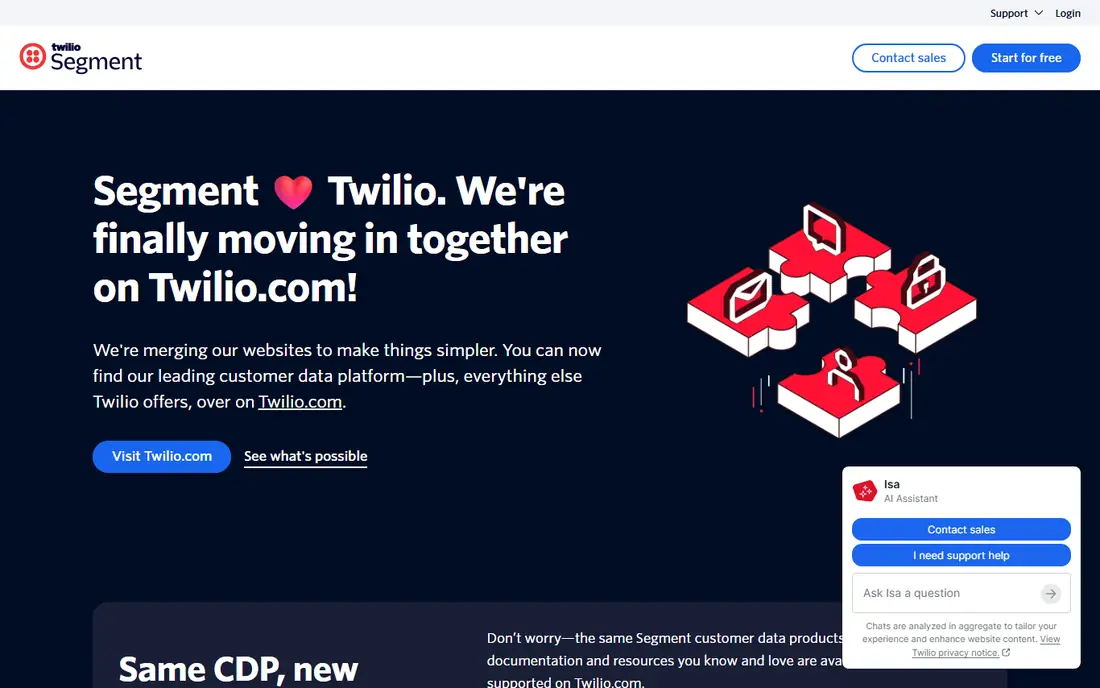
Segment is the default starting point for engineering-led teams. It collects events from websites and apps, applies a tracking plan to keep naming consistent, and sends clean data to analytics and marketing tools. That structure helps when many teams send events and nobody wants to clean up messy data later.
The catch is volume pricing. The free tier covers up to 1,000 monthly tracked users in published guides, and paid plans scale from there, so model your real user count before you commit. Privacy handling also needs care: set retention, access, and consent rules early, and check which destinations receive personal data. For teams with engineers to own the pipeline, Segment is a strong, practical pick.
- Clear tracking plan and data quality controls
- Wide integration catalog
- Free tier for small volumes
- Costs rise with tracked users
- Full CDP features sit on higher tiers
- Pricing for large volumes is quoted
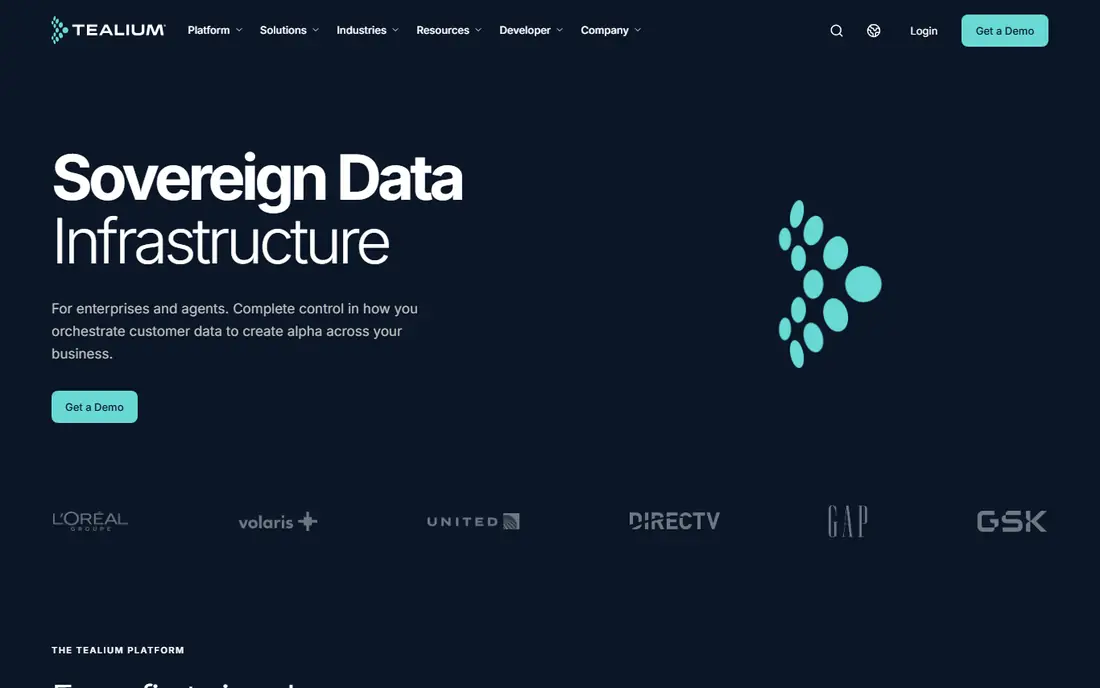
Tealium suits organizations where consent and governance are not optional extras. Its Customer Data Hub builds profiles from web, app, and offline sources, while its consent tools help control what is collected and shared. That combination matters for teams in regulated sectors or with strict privacy policies.
The downside is weight. Tealium is priced by quote and usually needs implementation help, so it is not a quick self-serve trial for a small team. If your main need is a simple pipeline, Segment or a warehouse tool will be faster. If your main risk is getting consent and data handling wrong at scale, Tealium is worth the longer evaluation.
- Strong consent and tag management heritage
- Vendor-neutral integrations
- Built for regulated teams
- Enterprise pricing and implementation effort
- Setup takes specialist time
- Smaller teams may find it heavy
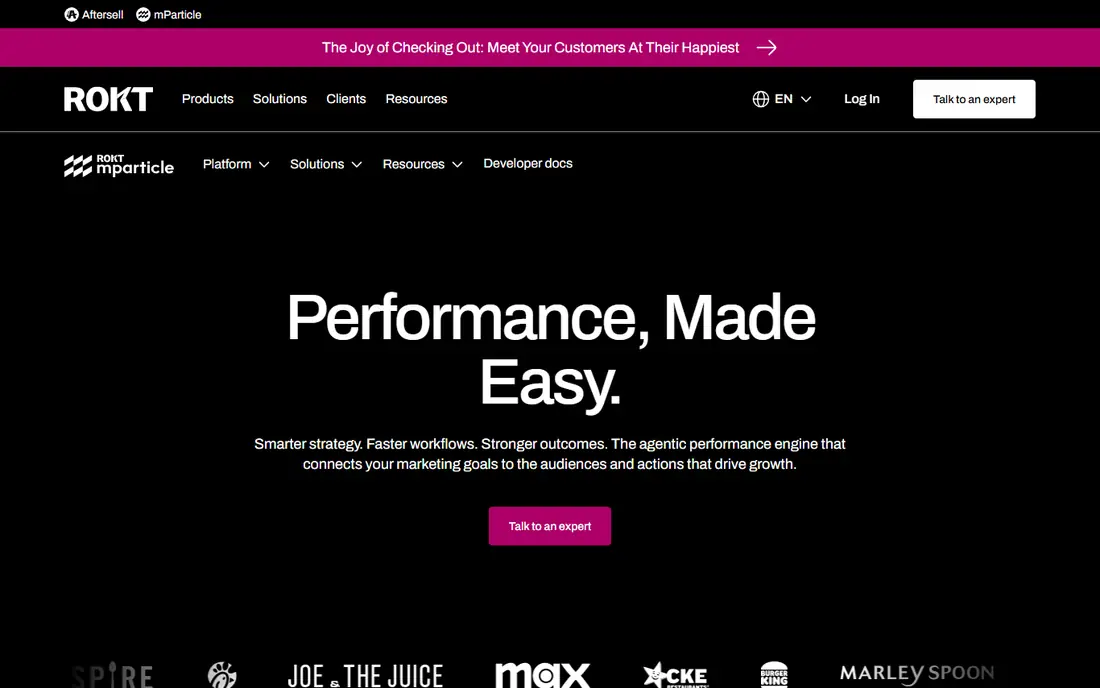
mParticle is built for apps with large, mobile-heavy audiences. It unifies customer data from mobile, web, and other sources, builds profiles, and forwards audiences to marketing tools in real time. Teams with high event volumes and complex identity rules, such as matching devices to accounts, will find its model a good fit.
The trade-off is cost and complexity. Pricing is quoted, and a full rollout needs data and engineering time to get identity and event design right. Smaller teams with one website and one app may not need this depth. For consumer brands at scale, mParticle is a serious enterprise option.
- Strong mobile SDKs and identity handling
- Real-time audience building
- Built for large consumer volumes
- Quote-only enterprise pricing
- Needs engineering and data resources
- Overkill for a small website
Salesforce Data Cloud, also described as Data 360 in some Salesforce material, makes most sense if your company already runs on Salesforce. It pulls customer data into unified profiles that sales, service, and marketing teams can use without building a separate data layer. That native fit can save integration work and keep reporting consistent.
Outside Salesforce, the value drops. Pricing is quoted, implementation can be involved, and teams that do not use Salesforce may get a cleaner result from a vendor-neutral CDP. If Salesforce is already your system of record, start here and compare it directly with Segment on integration effort and total cost.
- Native fit with Salesforce CRM and marketing tools
- Unified profiles for sales and service
- Strong enterprise controls
- Best value only inside Salesforce
- Pricing and setup are complex
- Smaller non-Salesforce teams gain less
Adobe Real-Time CDP is aimed at large marketing organizations that already use Adobe tools. It builds real-time customer profiles and activates them across Adobe and third-party channels, which helps teams run personalized campaigns without waiting for nightly batch jobs. For an Adobe-centered stack, that integration is a real advantage.
The catch is the same as with Salesforce: the best value comes inside its own ecosystem. Pricing is quoted, setup needs specialists, and a small team without Adobe experience will face a steep learning curve. Compare it with Tealium if governance is your main concern, and with Segment if engineering control matters more.
- Real-time profiles and activation
- Strong fit with Adobe Experience Platform
- Built for large marketing teams
- Enterprise pricing and complexity
- Needs Adobe expertise
- Not a light tool for small teams
Hightouch takes a different route: instead of storing a second copy of customer data, it reads from your data warehouse and syncs audiences to advertising, email, and CRM tools. That approach keeps the warehouse as the source of truth and can reduce duplicate data stores. Marketers gain self-serve audience building once the warehouse models are ready.
The limit is obvious. If you do not have a warehouse, or your warehouse models are messy, Hightouch will expose those gaps rather than fix them. You also need data team time to build and maintain the models. For warehouse-ready teams, it is often the fastest and most governable way to activate customer data.
- Syncs audiences from your warehouse to marketing tools
- Marketers can build audiences without new pipelines
- Good data control
- Needs a warehouse already in place
- Modeling quality decides results
- Pricing is quoted for most teams
RudderStack is a good fit for engineering teams that want control over event collection and warehouse delivery. It collects events, routes them to warehouses and tools, and supports customer data workflows built around the warehouse. Teams that already invest in data engineering will appreciate the flexibility and the ability to keep data in their own stack.
The honest weakness is ownership. RudderStack is not a set-and-forget marketing tool, and a team without data engineering capacity will struggle to get value from it. Pricing is quoted for most commercial plans, so ask for a clear quote based on event volume and destinations. For warehouse-first engineering teams, it is a strong alternative to Segment.
- Open-source roots and warehouse focus
- Flexible event pipelines
- Strong engineering control
- Needs engineering ownership
- CDP features vary by plan
- Support and implementation depend on tier
BlueConic suits marketing-led teams that want to build profiles and audiences without waiting on engineers for every change. Its timeline view shows customer activity in one place, and its segmentation tools help teams act on that data in campaigns. That self-serve model is useful for mid-size brands with a marketing team that owns the customer data work.
The trade-off is pipeline depth. If your main need is a developer-controlled event pipeline with strict schema enforcement, Segment or RudderStack will feel stronger. BlueConic is also priced by quote, so get a written estimate based on profiles and channels. For marketer-led teams, it is a practical middle ground between a full enterprise CDP and a simple email tool.
- Marketer-friendly profiles and segments
- Good for teams without heavy engineering
- Timeline view of customer activity
- Quote-only pricing
- Less developer pipeline depth than Segment
- Enterprise implementation still takes planning
How we picked these
We compared official product pages, pricing pages, and public comparison guides, and we favored platforms that are live in 2026, cover different ownership models, and handle consent and governance in a clear way. We did not claim hands-on testing, and we wrote See website where pricing is quoted rather than inventing a figure. Privacy notes reflect published product positioning, not a legal review of any vendor.
How to choose the best CDP platform for your team
Start with the data you already have. List your sources, such as website, app, CRM, and support tools, and list where the data must go, such as email, ads, and analytics. If that list is short and your team is small, a pipeline tool with a free tier is enough to start. If the list is long and spans regions, governance and consent handling should rank above extra integrations.
Next, decide who owns the work. Engineer-owned teams do well with Segment or RudderStack, marketer-owned teams do well with BlueConic, and warehouse teams do well with Hightouch. Regulated teams should shortlist Tealium and test consent flows early, not after launch. Always run a small pilot with real data volumes, and check profile counts, event counts, and destination behavior before signing a long contract.
Finally, plan the privacy work. Document what personal data you collect, why you collect it, how long you keep it, and who can access it. Use the CDP access controls, set retention limits, and review destination settings on a schedule. A CDP centralizes customer data, so a weak privacy setup here affects every tool downstream.
Frequently asked questions
What is the best CDP platform for a small business?
A small team should start with a tool that has a free tier and a clear pipeline, such as Segment, and only move to an enterprise CDP when volume or governance needs demand it. A warehouse tool only makes sense if you already have a warehouse and someone to maintain it.
What are customer data platform best practices?
Start with a tracking plan, agree on naming, limit personal data to what you need, set consent and retention rules, and test destinations before a full rollout. Review access and data flows regularly, since a CDP sends data to many tools and small errors spread quickly.
What is the best CDP software for marketing teams?
Marketer-led teams often prefer BlueConic or Hightouch, depending on warehouse readiness, because both let marketers build audiences without a new engineering project for each campaign. Engineer-led teams usually prefer Segment for pipeline control and data quality.
How much does a CDP cost?
Most enterprise CDPs are priced by quote based on profiles, events, or tracked users, so published starting prices rarely reflect a full rollout. Model your real volumes, ask what counts toward the bill, and ask about overages, implementation, and support before you compare quotes.
Is a CDP the same as a CRM?
No. A CRM stores sales and service records for known contacts, while a CDP unifies behavioral and profile data from many sources into profiles for activation. Many teams use both, with the CDP feeding audiences and insights into the CRM and marketing tools.
What is the best customer data management software for privacy-focused teams?
Privacy-focused teams should shortlist Tealium for consent and governance, and test any vendor on access controls, retention, deletion, and destination controls. No CDP removes your own duty to follow privacy law, so document your legal basis and data flows before launch.
Sources
See where you really rank - block by block
ProMapRanker scans Google Maps across a grid of your service area. Simple monthly plans from $19, white-label on every plan.
Start freeKeep reading
 outreach alternatives
Outreach Alternatives in 2026
Compare outreach alternatives for 2026, from Salesloft and Apollo to HubSpot and Lemlist, with pricing, channels, features, limits, and honest trade-offs.
Read → best web conference tools
Best Web Conference Tools in 2026
Compare the best web conference tools for meetings, webinars and team calls, with current pricing, free plans and honest limits for each option here today.
Read → best voice cloning tools
Best Voice Cloning Tools in 2026
Compare the best voice cloning tools in 2026, from ElevenLabs and Descript to Resemble and Cartesia, with consent rules, pricing, licenses, and limits.
Read →