 ProMapRanker
Best Career Pathing Software in 2026

Key takeaways
- Fuel50 leads for employee-led growth, with a visual career marketplace that shows many possible next roles, not just one ladder.
- TalentGuard suits teams that want clear role expectations, skill gaps, and multi-path planning in a focused platform.
- Eightfold AI and Phenom suit large employers that need skills inference and governed pathways across many job families.
- Lattice and Leapsome tie pathing to performance, goals, and check-ins, which suits companies that run growth inside review cycles.
- Workday and SAP SuccessFactors make sense mainly when you already run those suites, since pathing then sits on existing HR data.
Quick comparison
| Pick | Great for | Pricing starts at | Free tier | |
|---|---|---|---|---|
 Fuel50 | Employee-led career growth | See website | No | Visit |
 TalentGuard | Clear role and skill pathways | See website | No | Visit |
 Eightfold AI | Skills-based internal mobility | See website | No | Visit |
 Lattice | Growth tied to performance | See website | No | Visit |
 Gloat | Internal talent marketplace | See website | No | Visit |
 Phenom | Governed career frameworks | See website | No | Visit |
 Workday | Pathing inside Workday HCM | See website | No | Visit |
 SAP SuccessFactors | Pathing inside SAP HCM | See website | No | Visit |
 Leapsome | Mid-size growth and feedback | See website | Free trial | Visit |
The best career pathing software
Career pathing software shows employees what roles they could move into, what skills those roles need, and what steps close the gap. Good tools make that picture honest: they show lateral moves and skill-building projects, not just promotions, and they give managers a shared view of readiness. We compared vendor product pages and public buyer guidance to pick platforms that serve real pathing work in 2026.
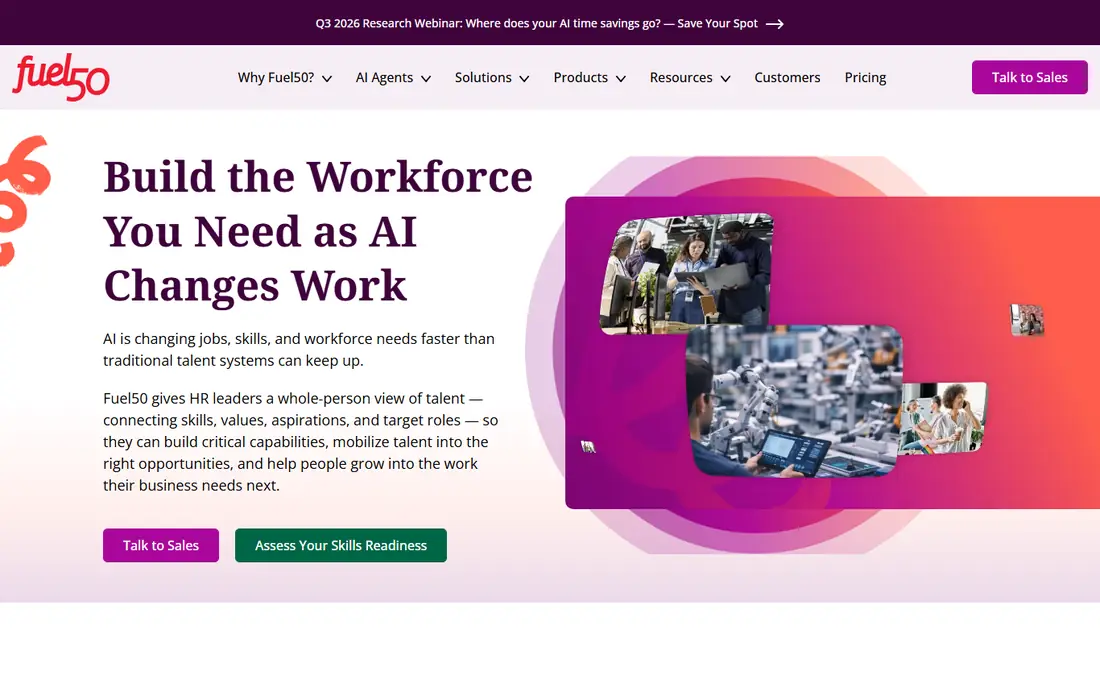
Fuel50 built its name on making career growth feel like exploration rather than a form to fill in. Employees see a marketplace of possible roles, including lateral moves, and a visual canvas that maps skills, values, and drivers to each path. AI matching suggests roles an employee might not have considered, alongside the skill gaps to close and learning to complete. That employee-led feel helps engagement, since people return to a tool that shows them options instead of one narrow ladder.
The trade-offs are familiar for specialist tools. Pricing is quoted, reporting for complex or dotted-line structures can need vendor help, and very small companies may find the platform broader than they need. Some users also note that data transfer still leans on older methods in places. For mid-size and large employers whose main goal is retention through visible growth, Fuel50 remains our first recommendation.
- Engaging career marketplace
- Visual career canvas
- AI-matched roles and skills
- Strong HRIS and LMS integrations
- Pricing is quoted only
- Reporting depth can feel limited for complex orgs
- May be broad for very small teams
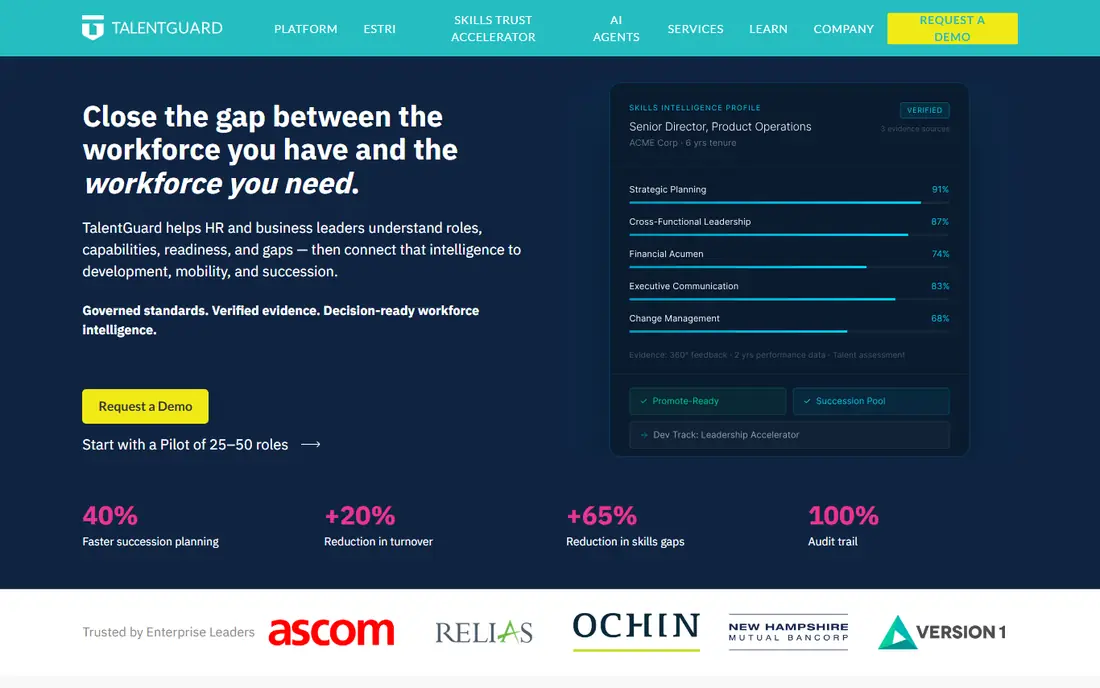
TalentGuard takes a structured approach that managers appreciate. Career paths show the competencies, skills, and steps each role requires, and employees can plan several paths at once rather than betting everything on one promotion. Skill gap tracking turns a vague goal into a list of learning and experience to complete, while Career GPS and a visual canvas keep progress visible. Mentor matching and an internal marketplace add human help and real opportunities to the plan.
Vendor scale is smaller than Workday or SAP, so global enterprises should check support coverage and integration depth for their regions. Analytics depth also depends on the package chosen. For organizations that want transparent, structured paths without buying a full HCM suite, TalentGuard is a focused and practical choice, especially for mid-size employers building their first formal pathing program.
- Clear role expectations and competencies
- Multi-path planning
- Skill gap tracking
- Mentor matching and talent marketplace
- Pricing is quoted only
- Smaller vendor profile than suite rivals
- Analytics depth varies by package
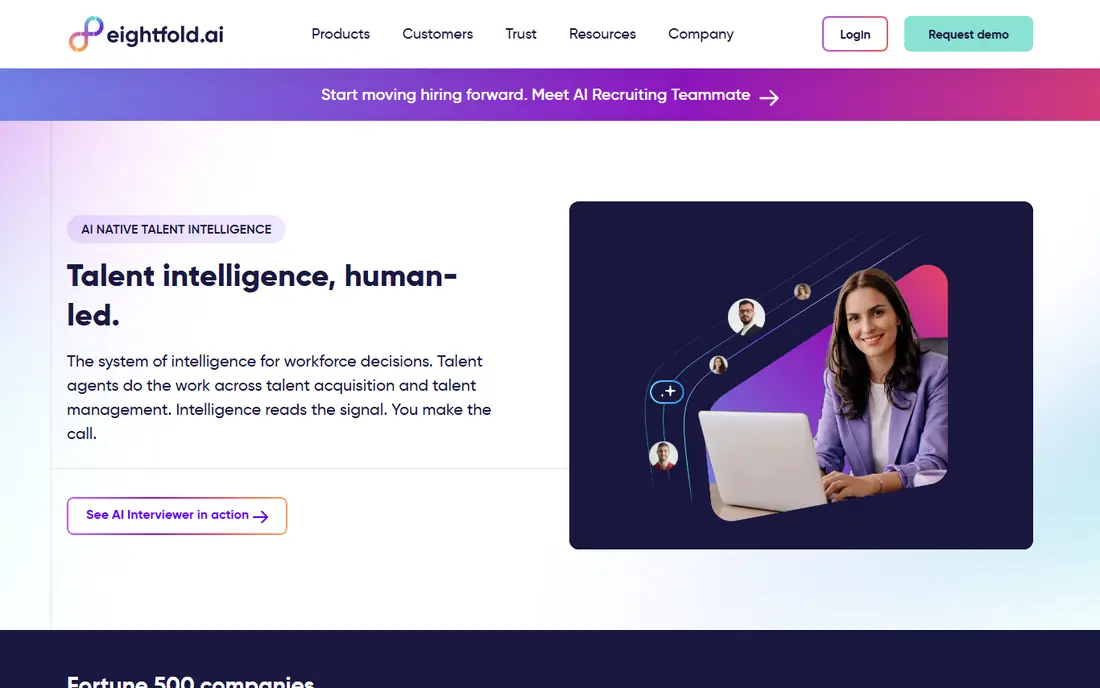
Eightfold AI suits large employers that do not actually know what skills their workforce holds. Its AI infers skills from resumes, profiles, and work history, then maps people to roles, projects, and learning across job families. Governed pathways keep that matching consistent, and audit logging helps HR teams explain why a path or recommendation appeared. Internal mobility workflows connect a career plan to real openings, mentoring, and projects rather than leaving it as a document.
That power needs governance. Data quality, bias review, and integration with existing HR systems all need attention before rollout, and pricing is quoted for enterprise deals. Small companies will find the platform oversized for a simple pathing need. Choose Eightfold when skills visibility across thousands of employees is the core problem, and when you can staff the data and governance work properly.
- AI-inferred skills from profiles and resumes
- Governed pathways across job families
- Internal mobility workflows
- Audit logging for decisions
- Pricing is quoted only
- Implementation needs data governance
- Smaller teams may find it oversized
Lattice works best for companies that already run growth conversations inside performance cycles. Career frameworks define levels and expectations, employees build growth plans against them, and managers track progress through goals, check-ins, and review history in the same system. The employee experience is clean, which helps adoption, and managers get a shared view of readiness without opening a separate tool. That closeness is why high-growth tech companies adopt it early.
Pathing depth is lighter than Fuel50 or TalentGuard when you need complex multi-path architectures across many job families. The performance linkage also demands aligned review configuration, or growth plans and review data can pull in different directions. Pick Lattice when engagement, manager conversations, and a unified people platform matter most. If you need deep career architecture first, start with a specialist.
- Career paths linked to goals and reviews
- Clear growth frameworks
- Manager check-ins
- Easy employee experience
- Pricing is quoted by plan
- Pathing depth is lighter than specialists
- Strong performance linkage needs aligned review setup
Gloat pioneered the internal talent marketplace idea: employees find short projects, gigs, mentorships, and full roles inside the company, building skills through real work rather than courses alone. AI matching connects people to opportunities based on skills and aspirations, and managers can staff short-term needs without external hiring. That agility appeals to large employers facing changing skill demands, since it turns career growth into movement, not just planning.
A marketplace needs supply to work. If internal project demand is thin, employees will see the same few listings and lose interest, so HR teams must seed opportunities and encourage managers to post work. Career visuals are also lighter than Fuel50 visual canvas approach. Choose Gloat when you want immediate agility and project-based growth inside a large company. For rebuilding a full career architecture from scratch, a specialist pathing tool fits better.
- Internal projects and gigs for skill building
- AI-matched opportunities
- Strong agility for large employers
- Career and mobility workflows
- Pricing is quoted only
- Marketplace success needs enough internal demand
- Pathing visuals are lighter than Fuel50
Phenom helps large employers standardize progression guidance across the company. Admins configure job families, career levels, and proficiency expectations, so employees in different teams see consistent criteria for moving up or sideways. Development planning then ties to those role profiles, and the wider Phenom platform connects career content to hiring, onboarding, and internal mobility. That governance matters when fairness and consistency are under scrutiny.
The platform is broad, so buyers who only need pathing may pay for more than they use, and pricing is quoted. Framework quality also decides the outcome: a vague or outdated career framework will produce vague guidance no matter how good the software is. Pick Phenom when you need controlled, consistent pathways across many roles and locations, and when you are ready to invest in the framework itself.
- Configurable job families and levels
- Proficiency expectations
- Consistent role guidance
- Strong talent experience platform
- Pricing is quoted only
- Full platform is broad
- Pathing value depends on framework quality
Workday makes sense for career pathing when Workday already holds your HR truth. Career planning then draws on worker records, role data, and talent processes without a separate integration project, and security and compliance controls follow the same model as payroll and core HR. Global companies benefit from consistent data, language, and reporting across countries. Managers and employees work inside a system they may already use for time, pay, and reviews.
Pathing is a module, not a specialist product, so its depth and employee experience differ from Fuel50 or TalentGuard, and configuration still takes effort. Buying Workday purely for pathing would be a mistake. Choose it when you already run Workday HCM and want pathing native to that data, with one vendor and one security model for the whole people stack.
- Career planning on existing HCM records
- Unified HR, payroll, and talent data
- Strong security and compliance
- Global scale
- Pricing is quoted only
- Pathing is one module among many
- Configuration effort is significant
SAP SuccessFactors suits enterprises already committed to SAP for HR and business systems. Its talent tools cover development plans, career worksheets, mentoring, and opportunity recommendations, with succession management for leadership pipelines. Large global employers value its compliance, language, and scale support, and SAP ecosystem customers can keep HR data inside one vendor family. Career content connects to learning and performance modules when those are also in use.
Setup can feel heavy, and the experience depends on which modules are licensed and how well they are configured. Pricing is quoted, and smaller companies will find the suite oversized. Pick SuccessFactors when SAP is your enterprise standard and you want pathing inside that stack. If you want a best-of-breed pathing experience on top of SAP, a specialist integration may serve employees better.
- Development plans and opportunity recommendations
- Succession and career tools
- Strong global enterprise support
- SAP ecosystem fit
- Pricing is quoted only
- Interface and setup can feel heavy
- Pathing depth varies by module and configuration
Leapsome gives mid-size companies a single platform for performance reviews, engagement, learning, and career growth. Growth frameworks define levels and expectations, employees set development goals, and managers support them through feedback, check-ins, and reviews in the same place. That combination suits companies that want one people tool rather than several point solutions, and the interface is friendly enough for regular use.
Specialist pathing depth is lighter here than with Fuel50 or TalentGuard, especially for complex multi-family career architectures. Pricing is quoted, though a trial helps testing. Choose Leapsome when you are a growing mid-size company that wants growth, feedback, and learning together, and when manager conversations matter as much as the framework itself. For deep career architecture alone, a specialist will go further.
- Performance, engagement, and learning in one platform
- Growth frameworks
- Feedback and review tools
- Good mid-size fit
- Pathing depth is lighter than specialists
- Pricing is quoted
- Larger enterprise scale needs scoping
How we picked these
We compared vendor product pages and public buyer guidance current in October 2026, keeping platforms that offer real career frameworks, skill gap views, and development planning, not just performance reviews alone. We included suite modules where buyers realistically use them for pathing, and we marked those cases plainly. We left out generic learning platforms, job boards, and resume tools, since they do not manage internal progression.
What to check before you buy career pathing software
Start with your career framework, not the demo. If job families, levels, and skill expectations are vague, no software will make them clear, so budget time to define them with managers and HR. Test the employee view with real roles from two or three families, including a lateral move and a move that needs new skills, and check whether skill gaps and learning links appear honestly. Ask how skills data is inferred or entered, who can change progression criteria, and how changes affect plans already in progress.
Check integration and governance early. Pathing needs clean HRIS data, learning records, and ideally internal openings, so confirm connectors for your systems and how often data syncs. Review reporting for managers, HR, and employees separately, since each group needs a different view. Finally, pilot with one department, measure whether employees return after the first month, and only expand when managers can point to real conversations and moves the tool supported.
Frequently asked questions
What is career pathing software?
It is software that shows employees possible next roles, the skills those roles require, and the steps to close skill gaps through learning, projects, or experience. Good tools cover lateral moves as well as promotions.
Which career pathing tool is best for employee engagement?
Fuel50 is the strongest pick for engagement, thanks to its visual career marketplace and employee-led exploration. Lattice and Leapsome also do well when growth is tied to regular manager conversations.
Do I need a specialist tool or a suite module?
Choose a specialist such as Fuel50, TalentGuard, or Eightfold AI when career architecture and internal mobility are the main goal. Choose a suite module when you already run Workday or SAP SuccessFactors and want pathing on existing HR data.
How does AI help with career pathing?
AI can infer skills from profiles and resumes, match people to roles and projects, and suggest learning to close gaps. Results still need human review, since inferred skills can be wrong and recommendations should be checked for fairness.
How long does implementation take?
Specialist tools can pilot in weeks, while suite modules and large enterprise rollouts can take months, especially when career frameworks and HR data need cleaning first. Start with a department pilot before a company-wide launch.
Sources
See where you really rank - block by block
ProMapRanker scans Google Maps across a grid of your service area. Simple monthly plans from $19, white-label on every plan.
Start freeKeep reading
 zoro.to alternatives
Best Zoro.to Alternatives in 2026
We compare the best zoro.to alternatives in 2026, listing only legal licensed anime streaming services, from Crunchyroll to free options for fans today.
Read → zip alternatives
Best Zip Alternatives in 2026
We compare the best zip alternatives for buy now, pay later in 2026, covering pay-in-4 plans, fees, spending limits, and credit reporting options today.
Read → yesware alternatives
Best Yesware Alternatives in 2026
Compare the best yesware alternatives for sales email tracking, templates, and sequences, with current pricing and honest tradeoffs for small sales teams.
Read →