 ProMapRanker
Best Card Collector App in 2026

Key takeaways
- Ludex and CollX suit collectors who hold both sports cards and trading card games, while Collectr and PriceCharting suit Pokemon-focused collectors.
- Scan-based prices are estimates from market sales, not guaranteed sale prices, so check recent sold listings before you buy or sell.
- Free tiers differ: some cap collection size or scans, while others cap price history and export.
- A good collector app should organize by set, grade, and game, and let you export your list if you switch apps.
Quick comparison
| Pick | Great for | Pricing starts at | Free tier | |
|---|---|---|---|---|
 Ludex | Sports and TCG scanning | Free | Yes | Visit |
 Card Ladder | Sports and Pokemon price tracking | Free | Yes | Visit |
 Collectr | Pokemon collection tracking | Free | Yes | Visit |
 TCGplayer | Buying, selling, and price checks | Free | Yes | Visit |
 PriceCharting | Price history and collection value | Free | Yes | Visit |
 CollX | Sports card scanning and selling | Free | Yes | Visit |
 Pokellector | Pokemon set checklists | Free | Yes | Visit |
 Cardly | Fast TCG and sports scanning | Free | Yes | Visit |
 NexVend | Card show inventory and profit | Free | Yes | Visit |
The best card collector app
These apps scan, identify, price, and organize physical trading cards, including sports cards, Pokemon, Magic, and other games. We compared official feature pages, app store listings, and public reviews, with a focus on scanning, price sources, collection tools, and price.
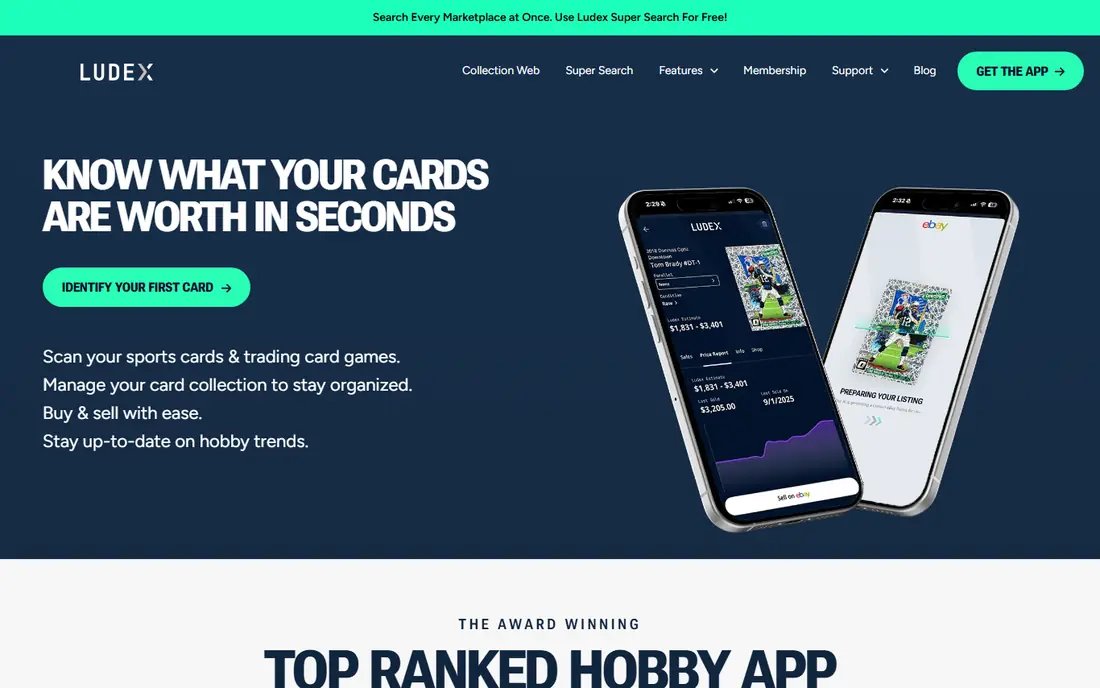
Ludex is our pick for collectors who split time between sports cards and trading card games. You can scan a card, see an identification and market value based on marketplace sales, and add it to a collection binder with filters for player, team, set, and grade. Sports coverage includes baseball, basketball, football, soccer, and hockey, beside Pokemon, Magic, and Yu-Gi-Oh in published summaries.
The free tier lets you scan and add up to 60 cards in published summaries, with Lite at $4.99 per month, Standard at $9.99, and Pro at $24.99 for wider selling and collection tools. That tiering means casual collectors can test scanning free, while sellers need a paid plan for many eBay listings. Treat Ludex values as a starting point, and check recent sold listings for high-value cards before you price them.
- Covers sports and many TCG games in one app
- Scan, value, and list tools
- Collection binders and set tracking
- Free collection size is capped
- Higher tiers needed for full selling tools
- Market values are estimates
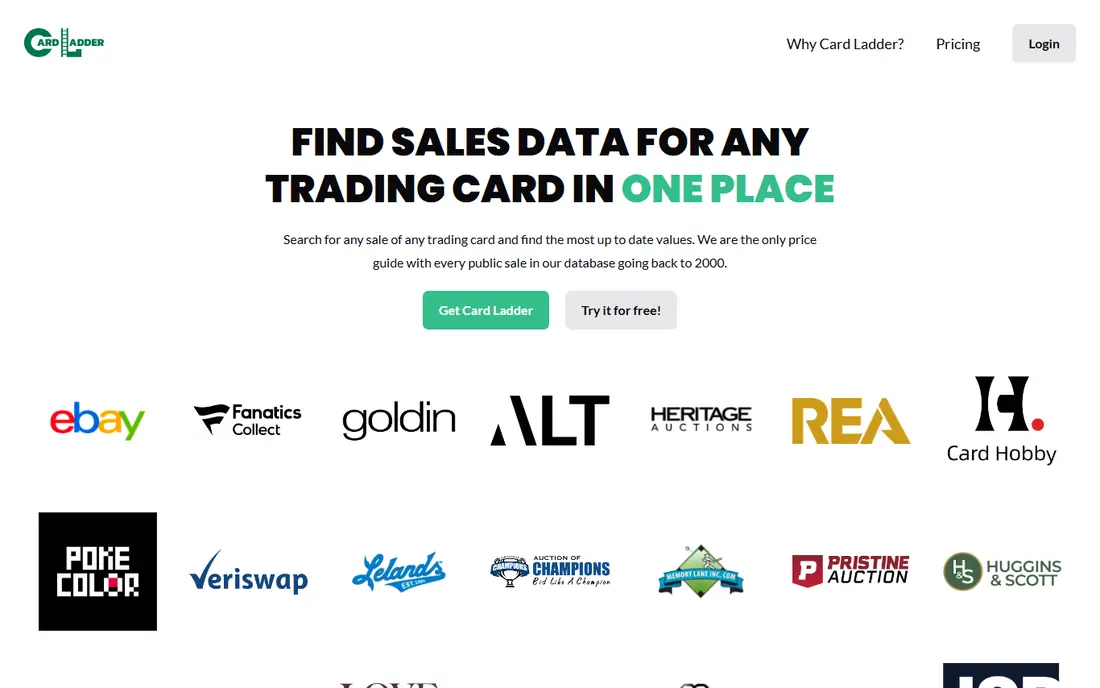
Card Ladder suits collectors who care most about value tracking over time. The free tier covers a price guide, marketplace search, daily hobby news, and market indexes, while Pro adds sales history, collection upload with daily value estimates, price alerts, and custom indexes. Pro is listed at $20 per month or $200 per year, with a 7-day free trial in published summaries.
That price is high for a casual collector, but it makes sense if you track a large collection or follow player markets closely. Card Ladder covers sports and Pokemon cards with sales data from major marketplaces, which helps you see trends rather than a single list price. For a small collection, the free price guide may be enough. For a serious portfolio, Pro history and alerts justify the cost.
- Price guide and sales history
- Collection value tracking
- Price alerts on Pro
- Pro costs $20 per month
- Full sales history needs Pro
- Values are estimates, not offers
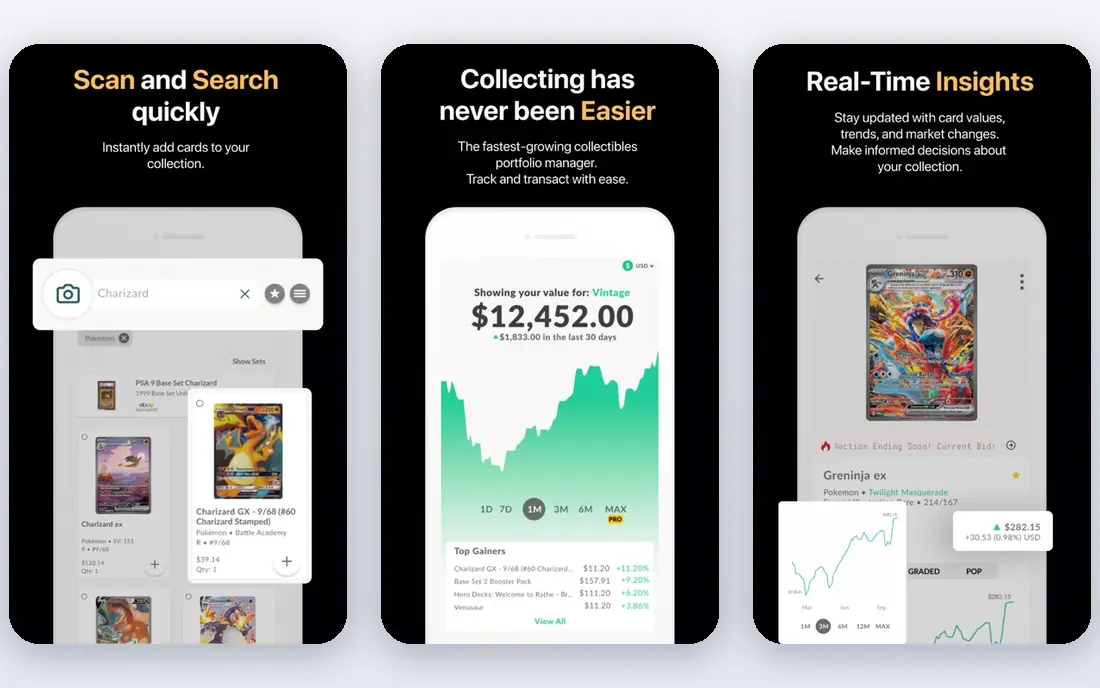
Collectr is a strong choice for Pokemon collectors who want a clean collection view without sports card tools they will never use. You can scan cards, track a portfolio, view sets, and follow price changes, with Pro adding unlimited scanning, longer price history, and export in published summaries. Pro is listed at $7.99 per month or $59.99 per year.
The main question is the free scan limit, which is not published in the summaries we reviewed, so test it with your own collection before you rely on it. Collectr prices track closely to TCGplayer market prices in independent tests cited in recent summaries, but they remain estimates. If you collect Pokemon only, Collectr is focused and easy to use. If you also collect sports cards, Ludex or Card Ladder will cover more ground.
- Pokemon-focused collection tools
- Scanning and price tracking
- Set and portfolio views
- Free scan limit is not published
- Pro needed for full history and export
- Pokemon focus limits sports collectors
TCGplayer is the best companion app if you buy, sell, or play trading card games, because its market prices come from its own large marketplace. The app lets you scan and track a collection, check market prices, and list cards for sale, which makes it practical for players who also trade. Pokemon, Magic, Yu-Gi-Oh, Lorcana, and other games are covered, with prices that reflect real marketplace activity.
The limit is sports coverage. TCGplayer does not replace a sports card price guide, so sports collectors should pair it with Ludex or Card Ladder. Selling also involves marketplace fees, which reduce your net return. For TCG collectors who want prices tied to a place they can actually sell, TCGplayer is the most grounded option here.
- Large marketplace with market prices
- Collection tracking in the app
- Useful for players as well as collectors
- Price focus is TCG, not sports
- Selling involves marketplace fees
- App is tied to the marketplace
PriceCharting suits collectors who want to research a card price before they buy, rather than scan a pile quickly. The site and app track prices across sports and TCG categories, with collection tools that show total value and price changes over time. A Collector plan is listed at $5.99 per month in recent summaries, while basic price checks are free.
Independent tests cited in recent summaries found PriceCharting prices within 10 percent of real sales on most test cards, which is a useful sign, though no price guide can guarantee a sale price. The experience feels more like a research tool than a visual binder, so collectors who want a beautiful gallery may prefer Collectr or Ludex. For buying decisions and portfolio checks, PriceCharting is a strong, low-cost research pick.
- Long price history
- Collection tracking
- Prices close to real sales in independent tests
- Collector plan needed for full tools
- Interface is more data-focused than visual
- Scanning is less central than Ludex
CollX is a good fit for sports card collectors who want to scan, value, and sell in one app. You can scan a card, see a value based on historical auction prices, build a collection with checklists, and list cards on the CollX marketplace. Buyer protection holds payment until the card arrives, which helps both sides in a peer sale. Pro is listed at $10 per month or $100 per year, with unlimited collection size, marketplace credit, and CSV export.
The sports focus is both a strength and a limit. CollX covers sports cards deeply, with player and set tools, but TCG collectors will find Ludex or TCGplayer more complete. If your collection is mainly baseball, basketball, or football cards, CollX scanning speed and marketplace tools make it a practical daily app.
- Fast sports card scanning
- Marketplace with buyer protection
- Collection export on Pro
- Pro costs $10 per month
- Sports focus limits TCG depth
- Marketplace fees apply on sales
Pokellector suits Pokemon collectors who care most about completing sets. The app lists English and Japanese sets, lets you mark cards you own and cards you still need, and supports card search and scanning. That checklist view helps when you are trading at a show or buying singles to finish a set, because you can see gaps at a glance.
The limit is scope and price depth. Pokellector is Pokemon only, and its price tools are less central than Collectr, Card Ladder, or PriceCharting. For a collector who wants a simple set tracker beside a price app, Pokellector is a useful, free companion. For a collector who wants scanning, pricing, and portfolio value in one place, start with Collectr or Ludex instead.
- English and Japanese Pokemon sets
- Set checklists
- Card search and scanner tools
- Pokemon only
- Older app design in some summaries
- Price data is less central than Collectr
Cardly is a fast scanner for collectors who want to identify a pull quickly and check its market range. You can photograph a card, see name, set, rarity, and card number, and view lowest and average market prices with grading references for PSA, BGS, and SGC cards. The app covers Pokemon, Magic, Yu-Gi-Oh, Digimon, and sports cards in published summaries, with a gallery view for your collection.
As a newer app, Cardly has less long-term price history than Card Ladder or PriceCharting, and full feature pricing varies by app store listing, so check the current in-app terms before you pay. For quick identification at a show or in a shop, Cardly speed is useful. For a high-value sale, confirm the price with recent sold listings on a marketplace before you set a price.
- Fast card recognition
- Live price and grading references
- Collection gallery and favorites
- Pricing for full features varies by store
- Newer app with less long-term price history
- Values are estimates
NexVend is different from the other apps here, because it is built for sellers at card shows rather than casual collectors. You can track inventory by game, grader, and grade, use a deal checker that factors in eBay, TCGplayer, Mercari, and Whatnot fees, and mark sales with profit at the table. The app works offline at shows and syncs when you reconnect, which matters when venue signal is weak.
The free tier covers 2 shows and 50 cards with unlimited deal checker use in published summaries, while Pro costs $9.99 per month with a 7-day free trial, or $199 for lifetime access. For a casual collector, that vendor focus will feel like extra work. For a dealer who sells at shows, the fee-aware profit view and offline inventory make NexVend a practical business tool.
- Built for card show vendors
- Deal checker with marketplace fees
- Offline use at shows
- Vendor focus, not casual collecting
- Pro needed for unlimited shows and cards
- Web app rather than a store app in some summaries
How we picked these
We compared official feature pages, app store listings, and public reviews, and we kept only apps that still operate in October 2026 and truly scan, price, or organize physical cards. We included sports-focused, Pokemon-focused, and mixed apps, plus a vendor tool, so readers can match the app to their collection type. Where store pricing varied or a free limit was unpublished, we noted that rather than inventing a figure.
How to use prices without overpaying
Treat every app price as an estimate, not a promise. Check recent sold listings for the same card, set, condition, and grade, and pay attention to whether the price reflects raw cards, graded cards, or a mix. For graded cards, the grade and grading company change value sharply, so a PSA 10 price does not apply to a PSA 9 card. Keep photos, grade labels, and purchase records with your collection list, and export your data regularly.
Organizing a collection that grows
Start with a simple structure: one list per game, then sets, then grades. Use favorites and duplicates flags to avoid buying a card you already own, and set price alerts only for cards you would actually buy or sell. A clean export matters more than a pretty gallery when your collection grows, because it lets you move apps, insure cards, or sell a lot without re-entering hundreds of entries.
Frequently asked questions
What is the best card collector app for Pokemon?
Collectr is the best focused Pokemon collector app, with scanning, set views, and portfolio tracking, while TCGplayer is best for market prices and selling. Pokellector suits set completion, and PriceCharting suits price research. If you also collect sports cards, Ludex covers both in one app.
What is the best card collector app for sports cards?
Ludex and CollX are the best starting points for sports cards, with scanning, collection tools, and marketplace links. Card Ladder is best for value tracking and price history, especially for a larger collection. Check the free collection caps on Ludex and CollX before you import a large collection.
Are card prices in these apps accurate?
Prices are estimates based on marketplace sales and price guides, not guaranteed sale prices. They are useful for spotting trends and avoiding a large overpay, but you should check recent sold listings for the same card, condition, and grade before you buy or sell. High-value cards deserve extra checks, including grading company and population data.
Can I sell cards from a collector app?
Yes, several apps here support selling, including TCGplayer, CollX, Ludex, and NexVend, though marketplace fees apply and terms differ. Ludex and CollX link to eBay or their own marketplace, while NexVend tracks profit after fees. Always read fee, payout, and return terms before you list a high-value card.
Do card collector apps work offline?
Some tools work offline for viewing and adding cards, notably NexVend at card shows, while most scanners need a connection to identify cards and fetch prices. If you collect at shows with weak signal, choose an app with offline inventory and sync, and download your collection list before you go.
Sources
See where you really rank - block by block
ProMapRanker scans Google Maps across a grid of your service area. Simple monthly plans from $19, white-label on every plan.
Start freeKeep reading
 zscaler alternatives
Best Zscaler Alternatives in 2026
Looking for zscaler alternatives? We compare 9 SASE and zero trust platforms on architecture, data protection, pricing, and fit for your network and team.
Read → zapier alternatives free
Best Zapier Alternatives Free in 2026
Nine automation tools for zapier alternatives free in 2026, all with genuinely free tiers, plus free plan limits, starting prices and upgrade paths explained.
Read → which platform is best for online reputation
Which Platform Is Best for Online Reputation in 2026
Wondering which platform is best for online reputation? We compare 8 review, listing, and response tools for small and multi-location businesses and agencies.
Read →