 ProMapRanker
Best Brokerage Platforms for Beginner Investors in 2026


Overall beginners and retirement savers · Pricing starts at: $0 commission on US stocks and ETFs
Key takeaways
- All major brokers on this list charge $0 commission on online US stock and ETF trades, so the real differences are education, account types, and extra fees.
- Fractional shares help beginners start with small amounts, but they do not remove risk, and prices can still fall.
- This article is general information only, not financial advice, and it does not promise returns. Trading and investing carry risk, including loss of money.
- A broker with strong education and simple order screens suits most beginners better than a broker built for frequent active trading.
- Check options fees, margin rates, cash interest, and fund fees before choosing, since those costs vary even when stock commissions are $0.
Quick comparison
| Pick | Great for | Pricing starts at | Free tier | |
|---|---|---|---|---|
| Fidelity | Overall beginners and retirement savers | $0 commission on US stocks and ETFs | Yes | Visit |
 Charles Schwab | Education and practice trading | $0 commission on US stocks and ETFs | Yes | Visit |
 Vanguard | Low-cost long-term fund investors | $0 commission on US stocks and ETFs | Yes | Visit |
 Robinhood | Simple mobile-first investing | $0 commission on US stocks and ETFs | Yes | Visit |
 E*TRADE | Research and education for newer traders | $0 commission on US stocks and ETFs | Yes | Visit |
 Webull | Mobile charting and practice trading | $0 commission on US stocks and ETFs | Yes | Visit |
 SoFi Invest | One app for banking and investing | $0 commission on US stocks and ETFs | Yes | Visit |
 Public | Simple multi-asset investing | $0 commission on US stocks and ETFs | Yes | Visit |
 Merrill Edge | Bank of America customers | $0 commission on US stocks and ETFs | Yes | Visit |
The best brokerage platforms for beginner investors
A beginner broker should make the first steps clear: open an account, fund it, place a simple order, and learn what each investment means. The brokers below all offer $0 online US stock and ETF commissions, no account minimum in most cases, and education for new investors. This is general information only, not financial advice, and no return is guaranteed. Prices can fall as well as rise, and you can lose money you invest.
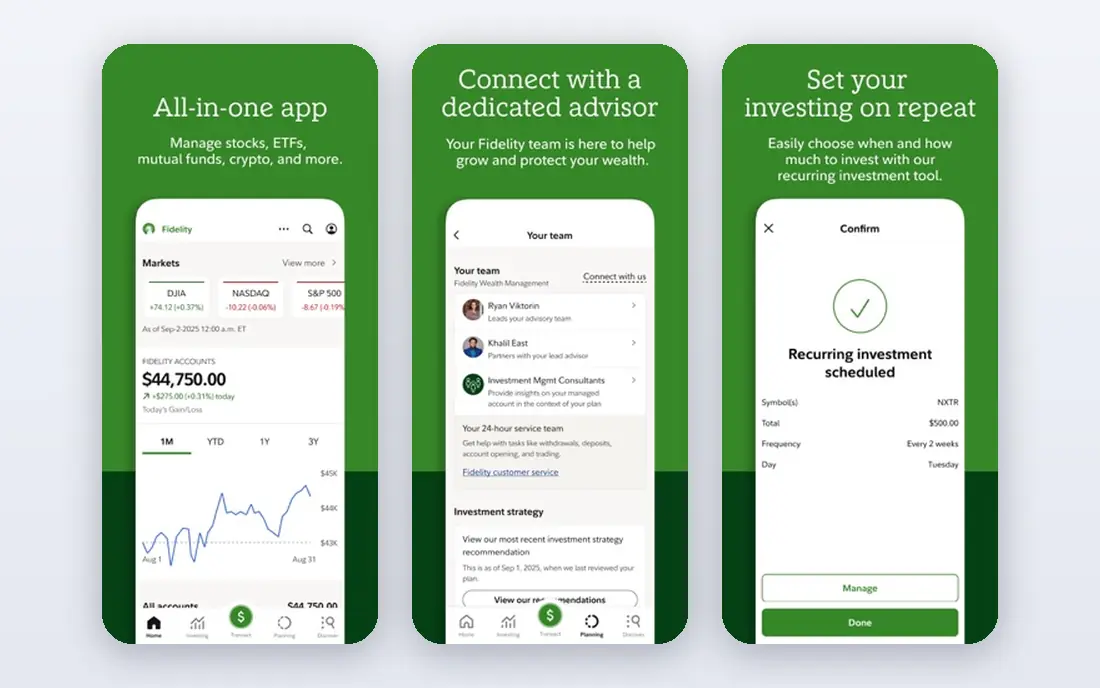
Fidelity is our overall pick for beginners because it pairs a simple start with room to grow. A new investor can open an account with no minimum, buy fractional shares from $1, and use education material that covers basics through to retirement planning. Individual retirement accounts sit beside brokerage accounts, so a beginner can build long-term saving and taxable investing in one place.
The platform is large, and that size can feel busy on a first visit. Beginners should start with the mobile app or the simplified web view, then explore research tools slowly. Options trades carry a per-contract fee in recent comparisons, so check that cost before trading options. For most beginners, Fidelity offers the best mix of cost, education, and support.
- No account minimum
- Fractional shares from $1
- Broad education and retirement accounts
- 24/7 support in recent comparisons
- The full platform can feel large at first
- Some advanced tools take time to learn
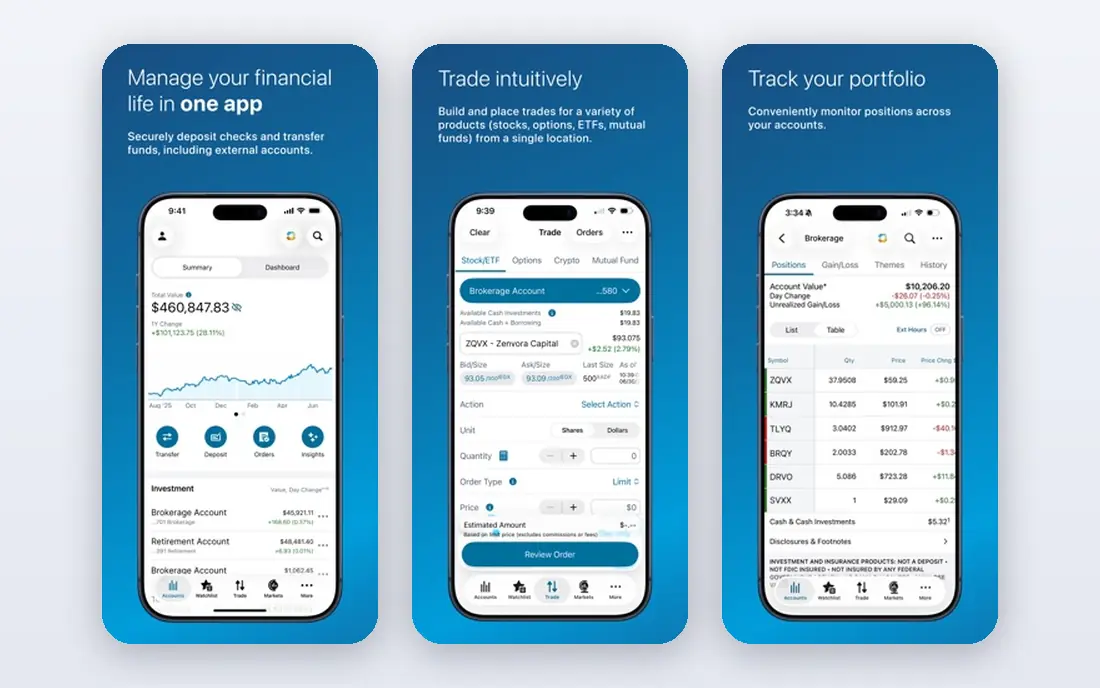
Charles Schwab suits beginners who want to learn by doing, with a safety net. Its thinkorswim platform includes paper trading, so a new investor can practise orders with virtual money before risking real funds. Education material, research, and retirement planning tools are broad, and support is available around the clock in recent comparisons.
The main drawback is choice. Schwab offers several apps and platforms, and a beginner may not know which one to open first. Start with the main Schwab app for simple investing, and move to thinkorswim only when charting or practice trading becomes useful. For education and practice, Schwab is a strong all-round pick.
- No account minimum
- Thinkorswim platform with paper trading
- Broad research and education
- The range of platforms can confuse a first-time user
- Some tools suit active traders more than beginners
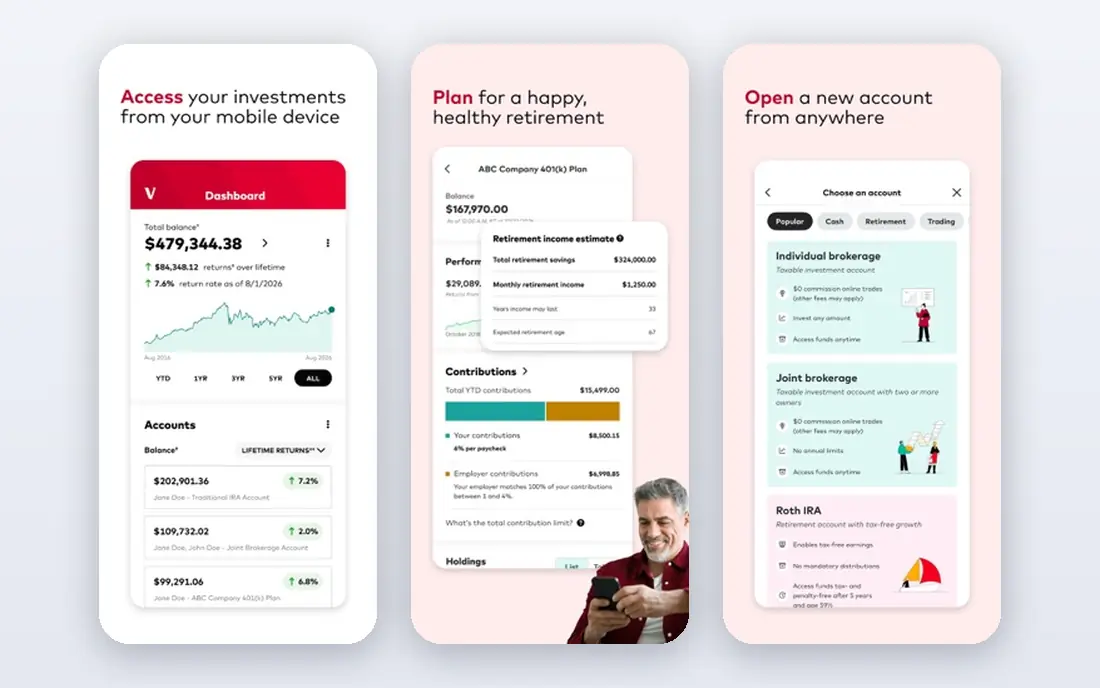
Vanguard is the pick for beginners who plan to invest for the long term in low-cost funds. Its index funds and ETFs are known for low expense ratios, and its retirement accounts suit people building savings over decades. The approach is simple: pick a broad fund, invest regularly, and avoid frequent trading.
That simplicity is also a limit. The app and website are plainer than Fidelity or Schwab, and active traders will miss advanced charting and options tools. Some mutual funds carry minimums, though ETFs do not in recent comparisons. For a beginner focused on steady, long-term fund investing, Vanguard keeps costs low and choices clear.
- Very low-cost proprietary index funds and ETFs
- Strong retirement accounts
- Simple buy-and-hold approach
- App and website feel plainer than rivals
- Less suited to frequent active trading
Robinhood is the easiest broker here to open and use on a phone. The order screen is short, fractional shares start from $1, and recurring investments let a beginner invest a set amount on a schedule. That simplicity helps a first-time investor place a first trade without learning a complex platform.
The risk is behavioral. A clean, fast app can make frequent trading feel easy, and frequent trading can raise costs and losses over time, even with $0 commissions. Research, education, and retirement planning are lighter than at Fidelity, Schwab, or Vanguard. Beginners who use Robinhood should set a plan, invest regularly, and avoid checking prices every hour.
- Very simple mobile order screen
- Fractional shares from $1
- Recurring investments
- No account minimum
- Simple design can encourage frequent trading
- Research and retirement tools are lighter than Fidelity or Schwab
ETRADE, part of Morgan Stanley, suits beginners who want research and education behind a simple start. The main app covers basic investing, while Power ETRADE adds charting and options tools for users who grow into them. Paper trading and webinars help new investors learn before committing larger sums.
New users may find the choice between the main app, the web platform, and Power ETRADE confusing at first. Start with the main app, and only move to Power ETRADE when you need its tools. For beginners who value research and a path from simple to advanced trading, E*TRADE is a solid pick.
- No account minimum
- Power E*TRADE platform
- Paper trading and education including webinars
- The platform range can feel complex
- Options carry a per-contract fee in recent comparisons
Webull appeals to beginners who want to learn charting and active trading on a phone. Its mobile app offers detailed charts, market data, and paper trading at no commission for US stocks and ETFs, with fractional shares available. That toolkit helps a new investor learn how markets move without paying for a desktop platform.
The focus on active trading is also a warning. Webull is less suited to a simple retirement fund plan, and it does not offer mutual funds in recent comparisons. Beginners should use paper trading first, keep position sizes small, and remember that charting skill does not remove market risk. For mobile-first learners, Webull is a strong, low-cost classroom.
- Free charting and market data on mobile
- Paper trading
- $0 commission on many options trades in recent comparisons
- Less suited to simple retirement fund plans
- No mutual funds in recent comparisons
- Tools can tempt overtrading
SoFi Invest suits beginners who already bank or borrow with SoFi, or who want one app for money tasks. Self-directed investing sits beside automated investing, so a beginner can choose their own stocks and ETFs or let an automated portfolio handle allocation. Fractional investing starts from $5 in recent comparisons, which keeps first steps small.
Research depth and trading tools are lighter than at Fidelity, Schwab, or E*TRADE, so active traders may outgrow SoFi quickly. For a beginner who wants investing to sit beside checking, savings, and loans, with a simple interface, SoFi Invest is a convenient all-in-one start. Keep an eye on fees for any automated or premium features.
- Investing beside banking and loans in one app
- Self-directed and automated accounts
- Fractional shares from $5
- Research and trading tools are lighter than specialist brokers
- No paper trading in recent comparisons
Public is a clean pick for beginners who want several asset types in one simple app. Stocks, ETFs, bonds, and Treasuries can be held together, with recurring investment plans for steady saving. Fractional stock purchases start from $5 in recent comparisons, which suits small regular contributions.
Fees need a check, since some plans, subscriptions, and asset types carry separate charges even though stock and ETF commissions are $0. Research tools are also lighter than at larger brokers. For a beginner who wants a simple, multi-asset app without a complex platform, Public is an easy place to start, provided the fee page is read first.
- Stocks, ETFs, bonds, and Treasuries in one app
- Recurring plans
- Simple fractional investing
- Some plans and asset types carry separate fees
- Research is lighter than larger brokers
Merrill Edge is the natural pick for Bank of America customers, since banking and investing can be viewed together and rewards links may apply for qualifying customers. It offers $0 online stock and ETF commissions, research, and retirement accounts, with a more traditional platform feel than Robinhood or Webull.
For people who do not bank with Bank of America, the advantage fades, and a broker such as Fidelity or Schwab may offer a stronger app and education library. Fractional shares are also more limited than at some rivals in recent comparisons. For existing Bank of America customers who want investing beside their bank accounts, Merrill Edge is a practical choice.
- $0 stock and ETF commissions
- Links to Bank of America banking
- Research and retirement accounts
- Less compelling for non-Bank of America customers
- Platform feels more traditional than mobile-first rivals
How we picked these
We compared official feature pages, pricing pages, app store listings, privacy policies, and public reviews for brokerages used by beginner investors. We kept only brokers that are live, regulated in their home market, and offering $0 online US stock and ETF commissions with a simple account opening path. We favored education, fractional shares, retirement accounts, and clear fee pages, and we noted where options, margin, or fund fees still apply. We did not claim hands-on trading, and this article is general information only, not financial advice.
Choosing a brokerage as a beginner
Start with your goal, not with the app that looks most exciting. A retirement saver, a long-term fund investor, and a person learning to trade need different tools, even though all three start with $0 commissions.
Set a simple plan before your first trade
Decide how much you can afford to invest regularly, how long you plan to leave it invested, and how much loss you could handle without changing the plan. A simple plan, such as regular contributions to a broad fund, suits most beginners better than frequent stock picking. Avoid margin borrowing and complex options until you fully understand the added risk.
Compare the fees that still apply
Stock and ETF commissions may be $0, but options per-contract fees, margin interest, mutual fund transaction fees, and cash interest rates still vary. Check the broker fee schedule, not just the headline commission, and ask how uninvested cash is handled. A small difference in cash interest or fund fees can matter over years.
Use education and practice tools first
Work through beginner education material, try paper trading where offered, and place a small first order to learn the process. Keep position sizes small while you learn, and review your plan on a set schedule rather than reacting to daily price moves. If a platform makes you want to trade constantly, that is a reason to slow down, not a feature to chase.
Frequently asked questions
What is the best brokerage for beginner investors?
Fidelity is the best overall pick for most beginners, since it combines $0 commissions, fractional shares from $1, broad education, and retirement accounts. Charles Schwab is a close alternative for education and practice trading, while Vanguard suits long-term fund investors.
How much money do I need to start investing?
Most brokers on this list have a $0 account minimum, and fractional shares let you start from $1 to $5 depending on the broker. Start with an amount you can afford to leave invested for the long term, and remember that all investing carries risk of loss.
Is investing risky for beginners?
Yes. Prices can fall, and you can lose money, including the money you invest. Diversified funds, regular contributions, and a long time horizon can reduce some risks, but they do not remove risk. This article is general information only, not financial advice, and it does not promise returns.
Should beginners trade options or use margin?
Most beginners should not. Options and margin can amplify losses as well as gains, and they need a clear understanding of how they work. Learn the basics, practise with paper trading where available, and seek independent financial advice if you are unsure.
Can I open more than one brokerage account?
Yes, in most cases, and some investors hold a retirement account at one broker and a taxable account at another. Keep track of fees, tax documents, and overall allocation across accounts, since splitting accounts can make portfolio tracking harder.
Sources
- https://www.fidelity.com
- https://www.schwab.com
- https://www.investor.vanguard.com
- https://www.robinhood.com
- https://www.etrade.com
- https://www.webull.com
- https://www.sofi.com/invest
- https://www.public.com
- https://www.merrilledge.com
- https://rankite.com/blog/best-app-to-buy-stocks
- https://walletinvestor.com/news/trading-news/what-are-the-best-trading-platforms-for-beginners-in-2026/
See where you really rank - block by block
ProMapRanker scans Google Maps across a grid of your service area. Simple monthly plans from $19, white-label on every plan.
Start freeKeep reading
 worlds best local seo company
8 Worlds Best Local SEO Companies for Map Pack Growth in 2026
Compare the worlds best local seo company options for Google Business Profile work, citations, reviews, and multi-location rankings and reporting in 2026.
Read → world's best web hosting company
World's Best Web Hosting Company in 2026
Searching for the world's best web hosting company? We compared 10 hosts on price, renewal rates, speed, and support to help you choose well today in 2026.
Read → who's got the best nanny tax services
Who's Got the Best Nanny Tax Services in 2026
We answer who's got the best nanny tax services, comparing full filing, back taxes, software, and pricing so families can handle nanny taxes correctly.
Read →