 ProMapRanker
Best Brand Protection Software in 2026


Phishing and impersonation takedowns · Pricing starts at: See website
Key takeaways
- Netcraft and Bolster lead for fast phishing takedowns, while Red Points leads for high-volume marketplace counterfeits.
- BrandShield and ZeroFox suit broad, multi-channel abuse, including social, domains, apps, and dark web sources.
- BrandVerity is the focused pick for paid search and affiliate abuse, not for general brand threats.
- Most enterprise pricing is quote based, so compare takedown speed, channel coverage, and included enforcement hours.
- Detection without enforcement is only half a product, so check who files takedowns and how success is reported.
Quick comparison
| Pick | Great for | Pricing starts at | Free tier | |
|---|---|---|---|---|
| Netcraft | Phishing and impersonation takedowns | See website | No | Visit |
 BrandShield | Broad multi-channel protection | See website | No | Visit |
 Red Points | Marketplace counterfeit enforcement | See website | No | Visit |
 ZeroFox | External risk and executive protection | See website | No | Visit |
 Bolster | Fast automated phishing removal | See website | No | Visit |
 Corsearch | Trademark and IP enforcement | See website | No | Visit |
 Doppel | AI impersonation detection | See website | No | Visit |
 BrandVerity | Paid search and affiliate compliance | See website | No | Visit |
 CSC | Domain-led brand protection | See website | No | Visit |
The best brand protection software
Brand protection software monitors websites, marketplaces, social media, app stores, domains, and dark web sources for misuse of a company name, logo, or identity, then helps remove that abuse. The best software for brand protection depends on your main threat: phishing, counterfeits, impersonation, trademark abuse, or affiliate fraud. We compared platforms across those threats.
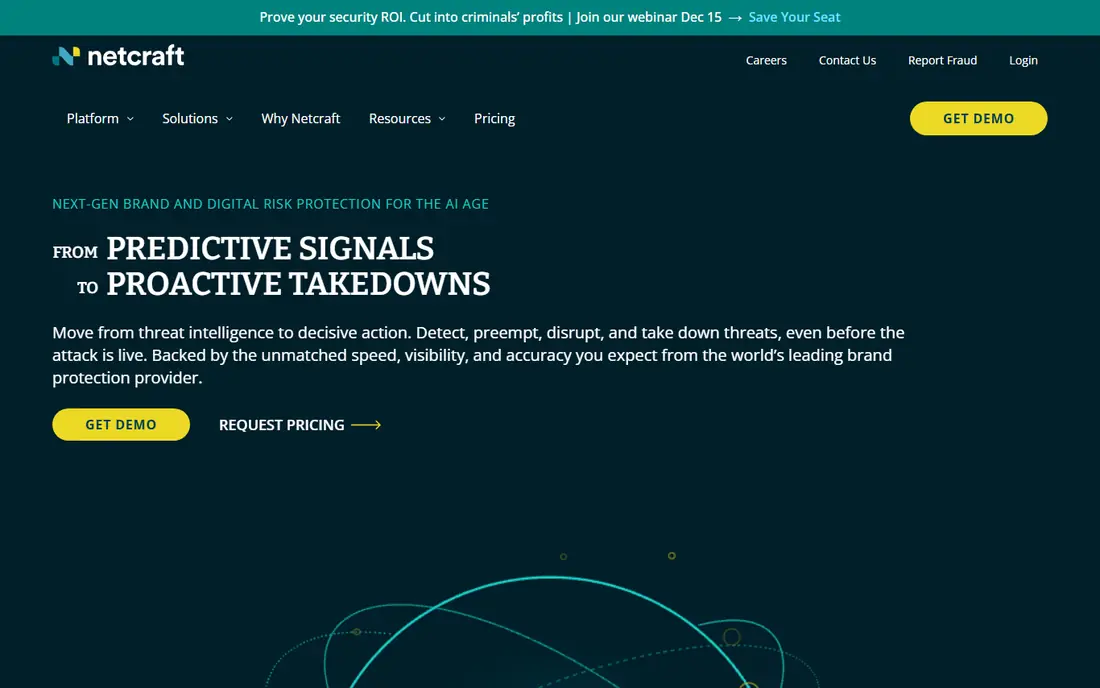
Netcraft fits financial services, technology, and other frequently phished brands that need rapid removal. It detects lookalike domains, phishing kits, and impersonation sites, then uses registrar and hosting relationships to pursue takedowns. That enforcement path matters, because a phishing site that stays live for days can cause real customer harm even after detection.
The catch is that Netcraft is an enterprise platform, not a self-serve monitor. Expect a sales process, scoped pricing, and onboarding with your security team. For brands with steady phishing volume, that structure pays off in speed. For a small brand with rare incidents, a lighter monitor may be enough to start.
- Fast phishing takedown workflow
- Broad domain and infrastructure intelligence
- Strong fit for frequently targeted brands
- Enterprise pricing is quote based
- Setup and tuning need security team time

BrandShield fits enterprises facing abuse across many channels at once. It monitors domains, websites, social profiles, marketplaces, and apps, and maps linked abuse networks rather than treating each fake listing as a separate case. That network view helps when one actor runs many impersonation sites or seller accounts.
The trade-off is scope. If you only need marketplace counterfeit removal, a focused tool may move faster for that single channel. If your threat spans phishing, social impersonation, and counterfeits, BrandShield gives a single enforcement workflow that is easier to govern than three separate tools.
- Wide channel coverage across web, social, and marketplaces
- Network analysis for organised abuse
- Managed enforcement options
- Pricing is quote based
- Broad scope can mean longer setup for narrow use cases
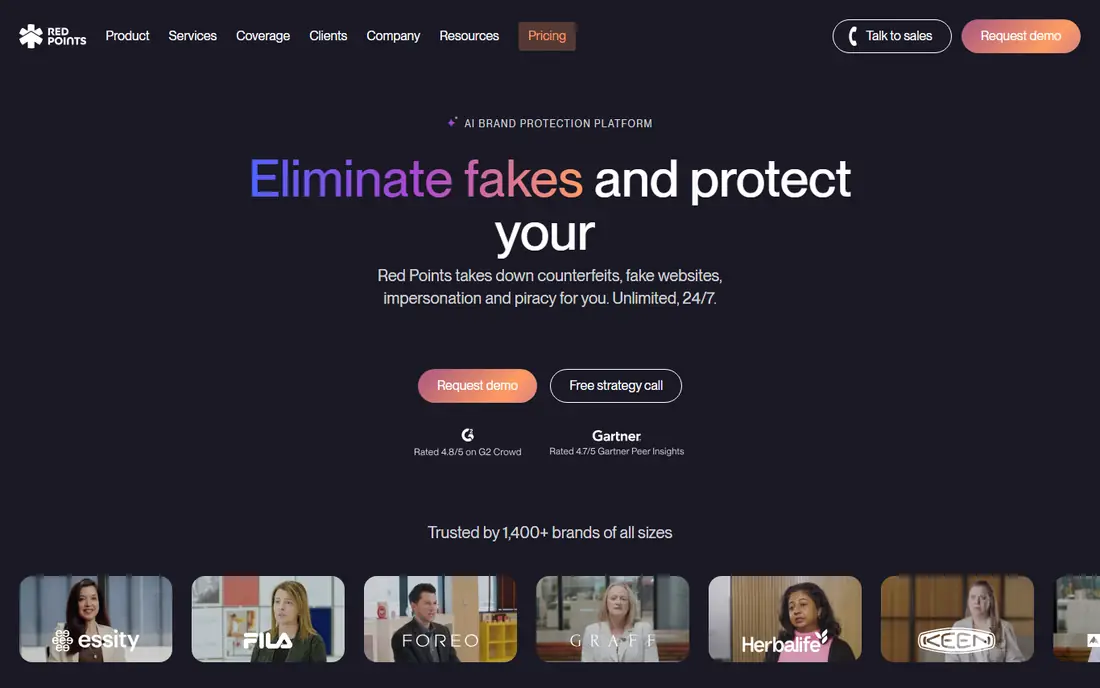
Red Points fits consumer brands with steady counterfeit listings across marketplaces and social commerce. Its model suits high-volume enforcement, because pricing on some plans does not rise with every takedown. That predictability matters when infringement spikes around product launches or sales events.
The honest catch is that smaller brands with low volume may pay for capacity they rarely use. Check how detection, seller prioritisation, and reporting work for your main marketplaces before signing. For brands with hundreds of listings to remove each month, Red Points is a strong shortlist entry.
- High-volume marketplace detection
- Flat-fee model with unlimited takedowns on some plans
- Domestic Chinese marketplace coverage
- Pricing is quote based
- Best value at high infringement volume
ZeroFox fits large organisations that need brand protection inside a wider external risk programme. It monitors social media, domains, dark web sources, and app stores, with takedown workflows and intelligence context for security teams. Executive impersonation protection is a clear strength for high-profile leaders.
The limit is scope and cost. Teams that only need domain takedowns may find the full platform more than they need. Teams that already manage external risk, fraud, and executive protection in one programme will get more value from the combined coverage.
- Broad external monitoring across many platforms
- Executive and social impersonation focus
- Managed takedown services
- Enterprise pricing is quote based
- Full platform scope exceeds pure brand protection needs
Bolster fits security engineering teams that want fast, automated removal of phishing and impersonation threats. Its platform detects lookalike domains, phishing pages, and brand abuse, then automates evidence collection and takedown steps where possible. That speed helps when phishing campaigns rotate domains quickly.
The catch is tuning. Automation that is too aggressive can flag legitimate sites, while automation that is too cautious loses speed. Plan a tuning period with your security team, review flagged cases early, and set clear rules for automatic versus manual enforcement.
- Automated detection and takedown workflow
- Dark web and domain coverage
- API-first design for security teams
- Pricing is quote based
- Automation needs tuning to limit false positives
Corsearch fits IP and legal teams that manage trademarks, copyright, and counterfeit enforcement as a legal process. It combines online monitoring with trademark management and investigation support, which helps teams that need evidence, case tracking, and enforcement records for legal action.
The trade-off is speed profile. Corsearch is strong for structured IP enforcement, while Netcraft or Bolster may move faster on live phishing sites. Many large brands use both types: a security-led tool for phishing, and Corsearch for trademark and counterfeit case work.
- Strong trademark and IP workflow
- Online and offline investigation support
- Legal and IP team focus
- Pricing is quote based
- Less focused on real-time phishing response than security-led tools
Doppel fits brands facing social impersonation, fake ads, and AI-generated clones. Its platform scans social platforms, domains, app stores, and ad placements for impersonation, then supports takedown workflows. That breadth helps when attackers copy executive profiles, run fake ads, and register lookalike domains in the same campaign.
The honest catch is vendor maturity relative to long-established rivals. Ask for customer references in your sector, takedown success rates by channel, and data retention terms. For social-led impersonation, Doppel is a credible modern option to test alongside ZeroFox and BrandShield.
- AI-led detection across social, domains, and ads
- Fast impersonation alerts
- Modern dashboard for security teams
- Pricing is quote based
- Newer vendor than some enterprise rivals
BrandVerity fits brands that lose sales or pay extra commissions because affiliates or competitors bid on trademarked terms. It monitors paid search, shopping ads, and affiliate activity for trademark misuse, geo-targeting abuse, and policy breaches, with evidence that helps enforce partner agreements.
The limit is scope, and it is important to be clear about it. BrandVerity does not replace a phishing or counterfeit platform. Buy it when paid search abuse is a measured problem, and pair it with a broader platform if phishing and counterfeits also matter.
- Focused paid search monitoring
- Affiliate and trademark bidding detection
- Clear evidence for partner enforcement
- Narrow scope, not a full brand protection platform
- Pricing is tiered and quote based for larger plans
CSC, formerly CSC Digital Brand Services, fits enterprises with large domain portfolios that need registration, security, and monitoring in one place. Its brand protection work builds on domain expertise: portfolio control, DNS security, lookalike monitoring, and enforcement support. That domain-first view helps teams that manage hundreds or thousands of domains.
The catch is that CSC is best as a domain partner, not as a standalone social or marketplace monitor. If your main threat is marketplace counterfeits, pair it with a marketplace tool. If domain abuse and portfolio risk drive your programme, CSC is a strong foundation.
- Large domain portfolio management
- Domain security and monitoring
- Strong fit for enterprises with many domains
- Pricing is quote based
- Protection features sit inside a wider domain service
How we picked these
We compared official product pages, pricing models, channel coverage, takedown workflows, and public reviews for brand protection platforms active in October 2026. We kept only platforms with live detection and enforcement capability, not social listening tools alone. We included phishing, counterfeit, trademark, domain, and affiliate tools, because brand protection covers several distinct threats.
We did not claim hands-on testing that did not happen. Where a vendor does not publish a starting price, we wrote See website rather than guessing. Takedown times vary by channel and host, so treat vendor speed claims as a starting point and ask for results by channel during a trial.
What to check before you choose
Name your main threat first
Phishing, counterfeits, social impersonation, and affiliate abuse need different tools. Rank your top two threats by volume and harm, then shortlist tools that lead on those threats. A broad platform that is average everywhere can lose to a focused tool on your main threat.
Ask who does the enforcement work
Some platforms offer managed takedowns, some provide tools for your team to file, and some mix both. Ask how many enforcement hours are included, which channels are covered, and how success is counted. A detection dashboard without a clear enforcement owner will leave cases open.
Check coverage by channel and region
Marketplace coverage, social platform coverage, and Chinese marketplace access vary widely. List your top ten channels and top five markets, then ask each vendor to confirm coverage in writing. A gap in one key marketplace can undermine an otherwise strong platform.
Test with real cases
Run a pilot with a set of known fake listings, domains, or profiles. Measure time to detection, time to takedown, and false positive rate. That pilot gives a better comparison than a sales demo, and it shows how each vendor handles evidence and reporting.
Frequently asked questions
What is the best brand protection software overall?
The best brand protection software overall depends on threat type. Netcraft leads for phishing takedowns, Red Points leads for high-volume marketplace counterfeits, and BrandShield and ZeroFox lead for broad multi-channel abuse. Start from your main threat, not from a single overall winner.
What is the best software for brand protection against counterfeits?
The best software for brand protection against counterfeits is Red Points for high-volume marketplace enforcement, with Corsearch as a strong option for trademark-led case work. Check marketplace coverage for your products, seller prioritisation, and whether takedowns are unlimited or billed per case.
What are the best brand protection tools for phishing?
The best brand protection tools for phishing are Netcraft and Bolster, thanks to fast detection and takedown workflows for lookalike domains and phishing sites. Ask for median takedown time by channel, not just an average, since slow cases cause the most harm.
What are the best online brand protection tools for social impersonation?
The best online brand protection tools for social impersonation are ZeroFox, BrandShield, and Doppel, which monitor social profiles, fake ads, and executive impersonation. Check which social platforms are covered in your markets and how quickly impersonation reports are filed.
How much does brand protection software cost?
Most enterprise brand protection software is quote based, with annual pricing that varies by brand size, channel count, and enforcement volume. Smaller focused tools may publish tiered pricing, while broad platforms scope price after a threat assessment. Budget for enforcement hours as well as software, since managed takedowns are part of the real cost.
Is brand monitoring the same as brand protection?
No. Brand monitoring tracks mentions and sentiment, while brand protection detects abuse and removes it. Social listening tools help marketing teams understand opinion, but they do not file takedowns for phishing sites or counterfeit listings. If removal matters, buy a protection platform with enforcement capability.
Sources
See where you really rank - block by block
ProMapRanker scans Google Maps across a grid of your service area. Simple monthly plans from $19, white-label on every plan.
Start freeKeep reading
 zscaler alternatives
Best Zscaler Alternatives in 2026
Looking for zscaler alternatives? We compare 9 SASE and zero trust platforms on architecture, data protection, pricing, and fit for your network and team.
Read → zapier alternatives free
Best Zapier Alternatives Free in 2026
Nine automation tools for zapier alternatives free in 2026, all with genuinely free tiers, plus free plan limits, starting prices and upgrade paths explained.
Read → which platform is best for online reputation
Which Platform Is Best for Online Reputation in 2026
Wondering which platform is best for online reputation? We compare 8 review, listing, and response tools for small and multi-location businesses and agencies.
Read →