 ProMapRanker
Best Brain Training Apps That Actually Work in 2026

Key takeaways
- Brain training apps most reliably improve the exact skills they train, such as memory span, processing speed, or mental maths.
- BrainHQ has the strongest research leaning of the consumer apps here, while Lumosity and Peak offer broader daily variety.
- Elevate is the most practical pick for everyday reading, writing, and maths, rather than abstract puzzles alone.
- Free tiers are useful for testing a habit, but full libraries and adaptive plans usually sit behind a subscription.
Quick comparison
| Pick | Great for | Pricing starts at | Free tier | |
|---|---|---|---|---|
 Lumosity | Broad daily brain games | See website | Yes | Visit |
 Elevate | Everyday reading, writing, and maths | See website | Yes | Visit |
 Peak | Polished gamified daily training | See website | Yes | Visit |
 BrainHQ | Research backed processing speed work | $14 per month | Yes | Visit |
 CogniFit | Detailed cognitive assessment | $19.99 per month | Yes | Visit |
 NeuroNation | Memory and concentration focus | See website | Yes | Visit |
 Impulse | Focus and attention exercises | See website | Yes | Visit |
 MindPal | Free starting point | Free | Yes | Visit |
 Anki | Spaced repetition for real material | Free | Yes | Visit |
The best brain training apps that actually work
A straight answer helps here. These apps can sharpen specific skills with regular practice, but they do not turn an average person into a genius, and gains on one game often stay close to that game. We judged each app on whether its exercises match a real skill, whether it adapts to your level, and whether you can keep using it long enough for practice to matter.
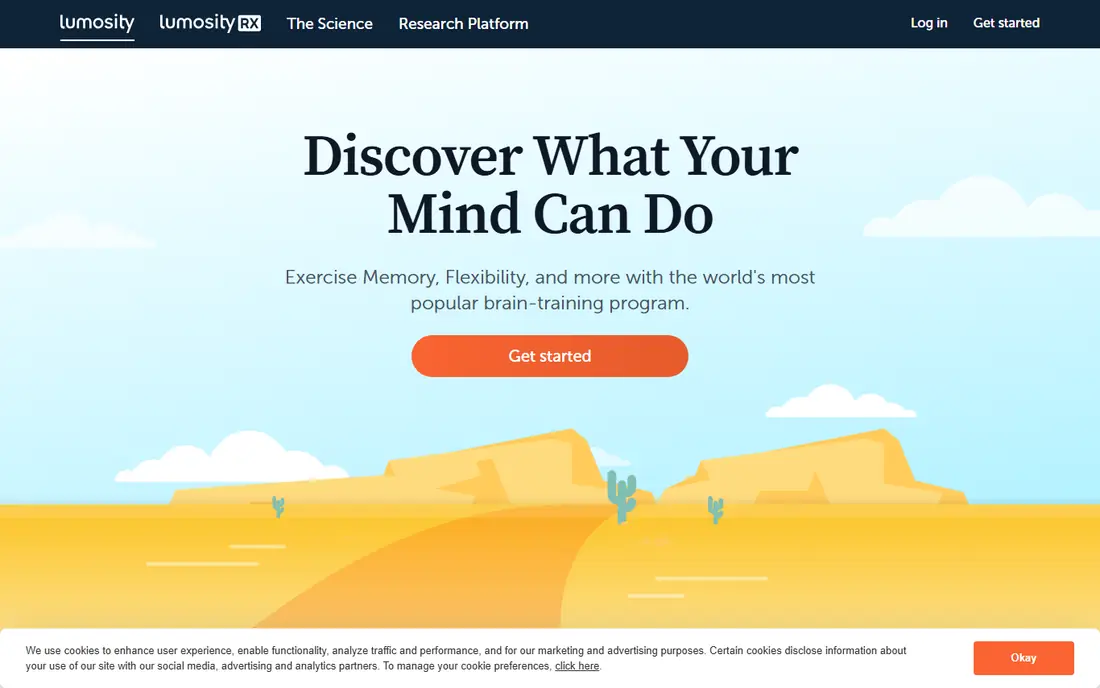
Lumosity offers a wide set of short games covering memory, attention, speed, flexibility, and problem solving. A daily workout keeps sessions short, which helps people who want a habit rather than a long study session. Progress charts show how scores change over time on each game type.
The honest limit applies to Lumosity and to most apps in this list. Getting better at a memory game usually means getting better at that memory game, not at every memory task in life. Use it for focused practice and enjoyment, not as a promise of a higher general intelligence score.
- Large game library
- Short daily workouts
- Clear progress tracking
- Transfer to unrelated tasks is limited
- Full library needs a subscription
Elevate stands out because its training maps to skills people use at work and school. Games cover reading comprehension, writing clarity, maths, and processing speed, with a personalised programme that adjusts to strengths and gaps. That practical focus makes progress easier to notice outside the app, for example when reading a dense report or doing quick mental maths.
It is less suited to people who want pure memory or visual puzzle training. The free tier gives a limited daily set, so regular users will likely need the paid plan for the full programme. Still, for a daily habit with visible everyday value, Elevate is our pick for most people.
- Practical skills for work and study
- Personalised daily programme
- Clean design
- Less focus on abstract memory puzzles
- Full programme needs a subscription
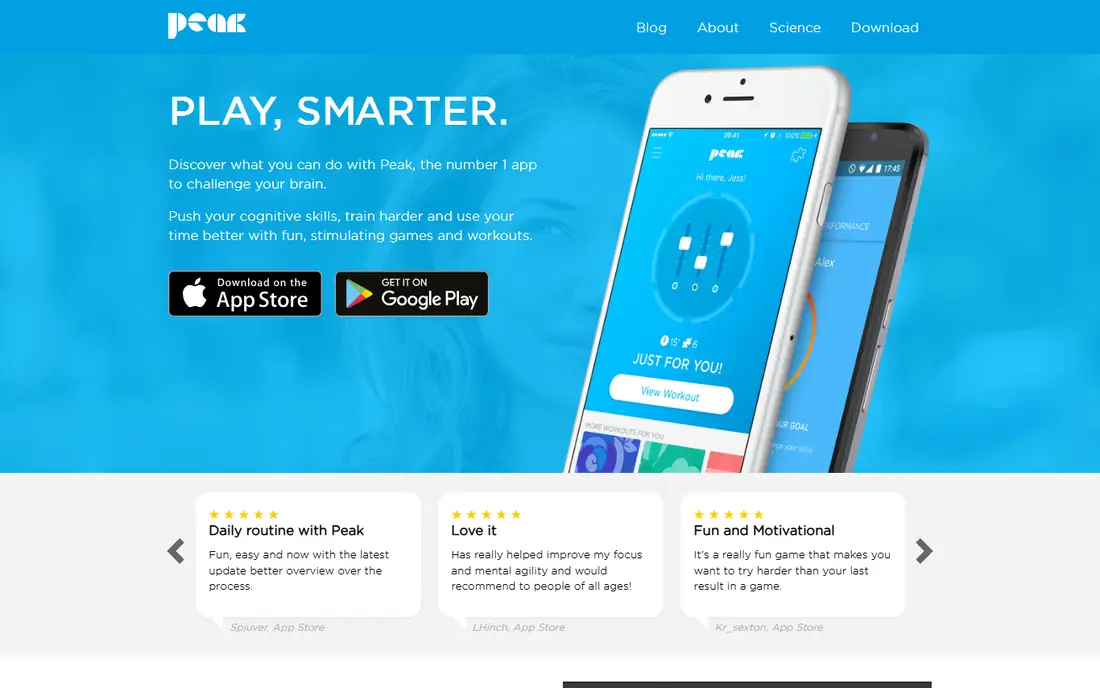
Peak combines a large game library with a polished, game like feel. Daily workouts, challenges, and progress tracking make it easy to return each day, which is half the battle with any training habit. Games cover memory, focus, mental agility, language, and problem solving.
Some games feel deeper than others, and the most useful tracking and training plans require payment. Peak works best for people who want variety and a pleasant daily routine. People with a specific goal, such as processing speed after a clinician recommendation, may prefer a more research focused app.
- Attractive design
- Wide game range
- Daily workout structure
- Depth varies by game
- Advanced features sit behind a subscription
BrainHQ takes a more serious tone than most brain game apps. Its exercises were designed with input from neuroscience researchers, and many focus on processing speed and attention, areas where training studies have shown clearer results than broad claims about intelligence. Difficulty adapts as you improve, so sessions stay challenging rather than repetitive.
The trade is fun. BrainHQ feels more like training than play, and the game library is narrower than Lumosity or Peak. A free tier includes a daily exercise, while full access is listed at about $14 per month or $96 per year. For users who care most about evidence, that focus is a strength, not a flaw.
- Exercises designed with researchers
- Adaptive difficulty
- Focus on speed and attention
- Less game variety for casual users
- Monthly price is higher than some rivals
CogniFit starts with an assessment that maps strengths and weaknesses across areas such as memory, attention, reasoning, and coordination. That profile then shapes a training plan, and reports track change over time in more detail than a simple game score. It suits people who want measurement, not just a daily puzzle.
The price reflects that clinical positioning, with plans listed from $19.99 per month. The design is functional rather than playful, so casual users may find it dry. For families or professionals who want a structured assessment plus training, CogniFit offers more depth than most rivals.
- Detailed assessment and reports
- Wide exercise library
- Training plans by cognitive area
- Higher monthly price
- Interface feels clinical rather than playful
NeuroNation focuses on memory, concentration, and logical thinking, with a personalised plan built from an initial assessment. Sessions are short and structured, and progress analysis shows which areas are improving. That clear focus helps users who know their weak spot and want to work on it directly.
It is not the best choice for broad everyday skills such as writing or mental maths, where Elevate fits better. The free tier covers core exercises, while the full library and detailed analysis require payment. For steady memory and focus work, NeuroNation is a solid, no nonsense option.
- Structured memory and concentration training
- Personalised plans
- Progress analysis
- Fewer language and maths games
- Full access needs a subscription
Impulse keeps brain training simple. It offers short exercises aimed at focus, attention, memory, and mental agility, with a daily structure that does not demand a long session. That simplicity suits beginners who feel put off by large libraries and complex dashboards.
The smaller library is the limit. Users who train for months may repeat exercises sooner than they would in Lumosity or Peak. Reporting is also lighter, so people who want detailed cognitive profiles should look at CogniFit or BrainHQ instead. As a low pressure starting point, Impulse does its job well.
- Short focus exercises
- Simple daily structure
- Free tier is usable
- Smaller library than leading apps
- Less detailed reporting
MindPal is a useful first stop for anyone who wants to test brain training without paying. It offers a broad set of games across memory, attention, maths, and language, with a simple layout that needs little setup. That low barrier makes it easy to find out whether a daily brain game habit suits you at all.
It does not match BrainHQ on research depth or Elevate on practical skill design. Adaptive training and detailed reporting are lighter here. Treat MindPal as a free trial of the whole idea. If the habit sticks and you want deeper training, move to a paid app with a clearer focus.
- Free to use
- Broad game set
- Easy to start without payment
- Less research backing than BrainHQ
- Fewer adaptive features
Anki is not a game app, and that is why it earns a place here. It uses spaced repetition, showing flashcards just before you are likely to forget them, which is one of the best supported methods for long term learning. You can study vocabulary, medical facts, exam material, or anything else you put into decks.
The design is plain, and building good decks takes effort, though many shared decks exist. Anki is free on Android and desktop, with a one time purchase on iOS. If your goal is to remember real material rather than to raise a game score, Anki is likely to give you more lasting value than any puzzle app.
- Proven spaced repetition method
- Works for any subject
- Large shared deck library
- Plain design
- Setup takes more effort than a game app
How we picked these
We compared official app pages, pricing pages, and app store listings, and weighed published research claims against what each app actually trains. We favoured apps that are actively maintained in 2026, that adapt to user level, and that describe their limits honestly. We left out apps that were no longer available, that made broad intelligence claims without a matching training method, or that offered only a single simple game.
How to get real value from brain training
Pick one skill and train it on purpose. Memory, processing speed, reading, and maths are different skills, and a general game mix will improve each one only a little. If you want better mental maths, choose an app with maths games and use it daily. If you want to remember study material, spaced repetition will beat abstract puzzles.
Keep sessions short and regular. Ten to fifteen minutes a day beats an hour once a week, because the benefit comes from repeated practice and gradual difficulty. Track one outside measure too, such as how fast you finish a work task or how well you recall study notes, rather than trusting an in app score alone. Sleep, exercise, and reduced alcohol use also affect attention and memory more than any app, so treat training as one part of a wider routine.
Be careful with medical claims. These apps are not a treatment for dementia, brain injury, or attention disorders. If you have concerns about memory, attention, or a neurological condition, talk to a clinician before relying on an app. A good app can support practice, but it cannot diagnose or treat a health problem.
Frequently asked questions
Do brain training apps actually work?
They work best for the skills they train. Regular practice improves performance on similar tasks, such as memory span or processing speed games. Evidence for large gains in unrelated everyday intelligence is much weaker, so set a specific goal.
Which brain training app is best for memory?
NeuroNation and CogniFit offer focused memory training with assessments and progress tracking. Anki is better if you need to remember real facts for study or work, since it uses spaced repetition on your own material.
Are free brain training apps worth using?
Yes, for testing the habit. Lumosity, Elevate, Peak, and MindPal all offer free tiers with daily games. Full libraries, adaptive plans, and detailed reports usually require a subscription, so expect limits on free plans.
How long should I train each day?
Ten to twenty minutes a day is a sensible target for most people. Short, regular sessions support steady practice without fatigue. Longer sessions do not automatically produce better results, especially if focus drops.
Can brain training apps prevent dementia?
No app can promise that. Some training, especially for processing speed, has been studied in older adults, but prevention depends on many factors, including health, activity, and medical care. Treat these apps as practice tools, not medical prevention.
Is Elevate or Lumosity better?
Elevate suits people who want practical reading, writing, and maths practice. Lumosity suits people who want a broader set of abstract brain games. Try both free tiers for a week and keep the one you actually open each day.
Sources
See where you really rank - block by block
ProMapRanker scans Google Maps across a grid of your service area. Simple monthly plans from $19, white-label on every plan.
Start freeKeep reading
 zoho inventory alternatives
6 Alternatives to Zoho Inventory, Compared on Price and Fit
Zoho Inventory alternatives: 6 tools compared on price, free plans and fit. Katana leads the list for manufacturers. Fit and flaws are laid out for each entry.
Read → zoho crm alternatives
Best Zoho CRM Alternatives (2026)
Need Zoho CRM alternatives? We compare 7 tools on cost, free access and who each suits. Every pick gets a straight assessment. Built for quick decisions.
Read → zelle alternatives
Best Zelle Alternatives in 2026
Compare the best Zelle alternatives for sending money to friends, paying sellers and moving funds abroad, with honest notes on fees, speed and safety in 2026.
Read →