 ProMapRanker
Best Bookkeeping Software United States in 2026

US businesses with a QuickBooks accountant · Pricing starts at: From $35 per month
Key takeaways
- QuickBooks Online remains the safest US default because most American accountants already know it and its tax and payroll coverage is deep.
- Xero suits growing teams because all plans include unlimited users, while QuickBooks entry plans limit user count.
- Wave offers genuinely free core accounting and invoicing, which fits simple books on a zero budget.
- Zoho Books gives strong value, with a free plan for businesses under 50,000 dollars in annual revenue and paid plans from about 20 dollars per month.
- This is not financial advice. Tax rules, payroll rules, and plan prices change, so confirm current terms with the vendor and your accountant before buying.
Quick comparison
| Pick | Great for | Pricing starts at | Free tier | |
|---|---|---|---|---|
| QuickBooks Online | US businesses with a QuickBooks accountant | From $35 per month | Free trial | Visit |
 Xero | Growing teams wanting unlimited users | From $29 per month | Free trial | Visit |
 FreshBooks | Invoice-driven service businesses | From $19 per month | Free trial | Visit |
 Wave | Simple books on a zero budget | Free | Yes | Visit |
 Zoho Books | Budget-conscious growing businesses | From $20 per month | Yes | Visit |
 Sage | Businesses needing inventory depth | See website | Free trial | Visit |
 Bench | Owners handing books to a bookkeeper | From $199 per month | Free trial | Visit |
 Patriot Software | Very small businesses wanting simplicity | From $20 per month | Free trial | Visit |
 Kashoo | Non-accountants wanting simplicity | From $216 per year | Free trial | Visit |
The best bookkeeping software united states
Bookkeeping software for US businesses records income and expenses, reconciles bank accounts, sends invoices, tracks bills, and prepares reports for taxes. We compared official pricing pages, feature pages, and public documentation for tools that serve US small businesses today. Prices below are list prices before promotions, which change often.

QuickBooks Online is the industry standard for US small business accounting, and that status is practical, not just popular. Most American accountants and bookkeepers already work in it, which lowers the cost of getting help at tax time. The platform covers invoicing, bank reconciliation, expense tracking, sales tax, 1099 preparation, inventory on higher plans, and native payroll as an add-on.
Entry pricing starts around 35 dollars per month for Simple Start, with Essentials, Plus, and Advanced rising to about 200 dollars per month at the top listed tier. The entry plan allows only one user plus accountant users, so a team should check user limits before choosing it. Promotional discounts are common and expire, so budget at list price. For a US business that wants the widest accountant support, QuickBooks Online is still the default.
- Deepest US accountant ecosystem
- Strong tax, payroll, and inventory features
- Broad app integrations
- Entry plan limits users
- Price rises steeply across tiers
- Promotions expire and list price returns
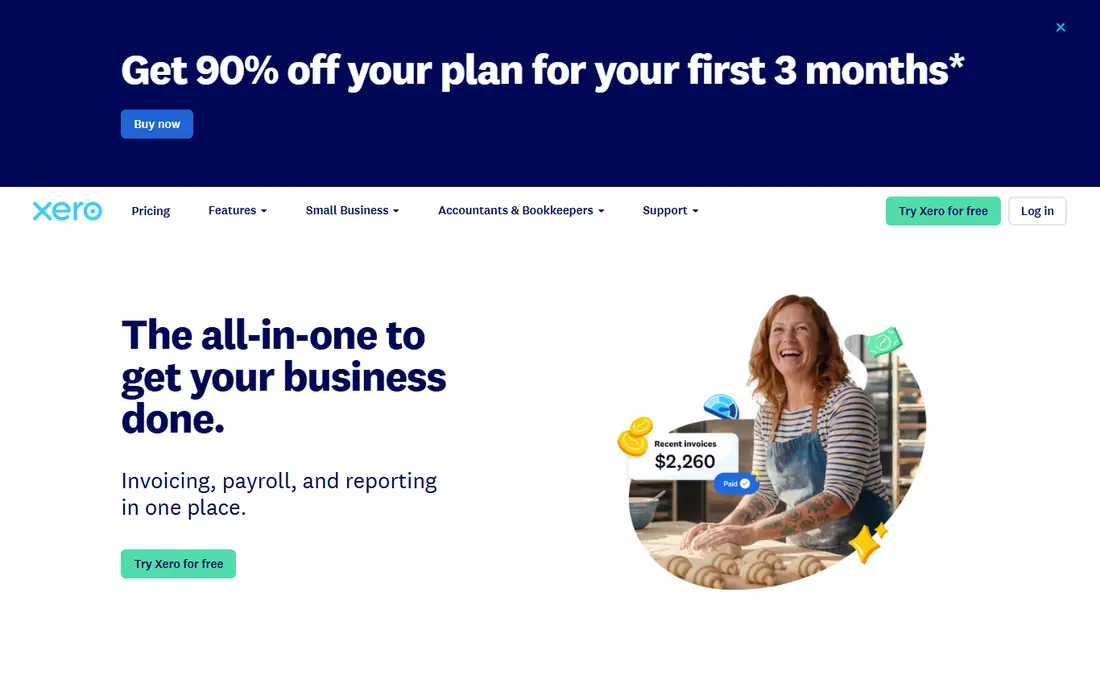
Xero is the clean, modern alternative to QuickBooks, and its unlimited-users policy is the main reason growing teams choose it. Every plan includes unlimited users, so a bookkeeper, an owner, and staff can all work in the books without per-seat fees. Bank reconciliation is widely praised, and the interface stays simple as transaction volume grows.
Entry pricing starts around 29 dollars per month for Early, which caps quotes, invoices, and bills, with higher tiers removing those caps. US payroll is handled through a Gusto integration rather than natively, which suits firms already using Gusto but adds a separate system for others. For a fresh start with a platform-agnostic accountant, Xero is often the better value.
- Unlimited users on all plans
- Clean bank reconciliation
- Strong app ecosystem
- Entry plan caps invoices and bills
- US payroll runs through Gusto, not natively
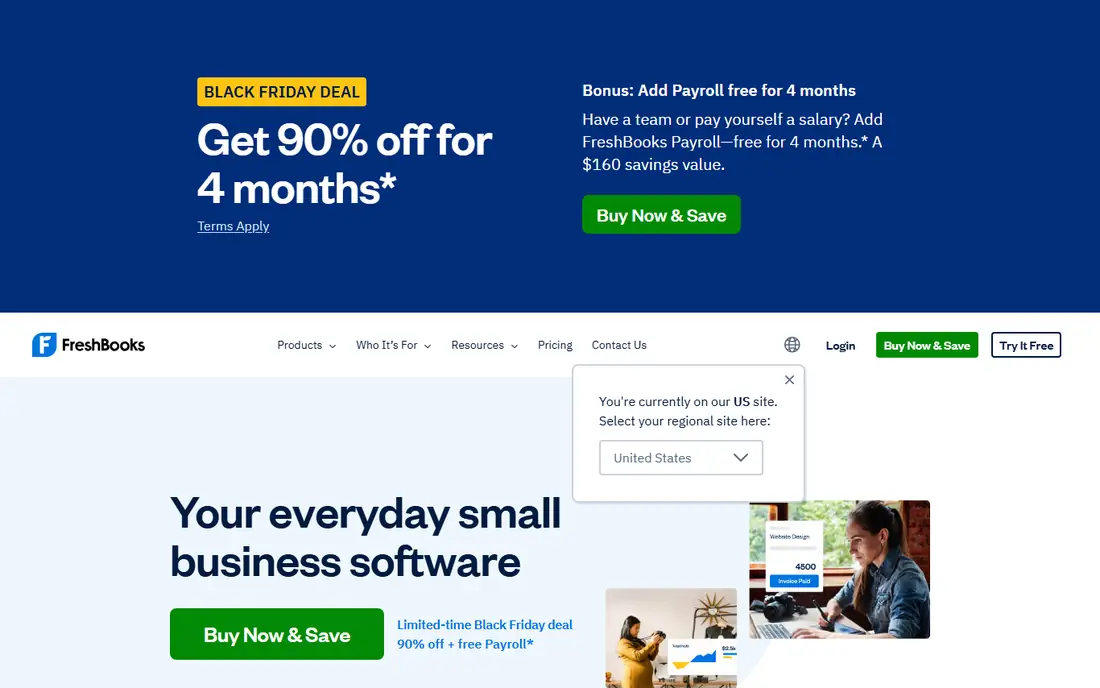
FreshBooks is built around getting paid, which fits freelancers, agencies, and service businesses that invoice constantly. Invoicing, estimates, time tracking, expense capture, and client payments sit in a simple interface that non-accountants find easy. The client portal lets customers view invoices and pay online without extra steps.
Entry pricing starts around 19 dollars per month for Lite, which limits billable clients, with higher tiers raising that cap. FreshBooks is not a full double-entry system in the same way as QuickBooks or Xero, and it lacks inventory depth. For a service business whose main job is invoicing and time billing, FreshBooks is the most pleasant tool in this list.
- Excellent invoicing and time tracking
- Easy for non-accountants
- Good client portal
- Entry plan limits billable clients
- Not built for inventory or complex bookkeeping
Wave offers genuinely free core accounting, invoicing, and receipt handling, which makes it the right choice for a solopreneur or very small business with simple books and a zero budget. Setup is quick, and unlimited invoices and estimates come with the free tier. Wave earns money from payment processing fees and optional paid services.
The catch is bank feeds. Automatic bank connections now sit on the paid Pro plan, starting around 16 to 19 dollars per month in recent listings, so free users enter transactions by hand or upload statements. Payroll is also an add-on with state limits. For simple books where free matters most, Wave still wins on price.
- Free core accounting and invoicing
- Simple setup
- Unlimited invoices on the free tier
- Bank feeds now require a paid Pro plan
- Payroll is an add-on and limited by state
Zoho Books gives the most accounting per dollar in this list for many small businesses. The free plan covers businesses with annual revenue under 50,000 dollars, and paid Standard plans start around 15 dollars per month billed annually or 20 dollars month to month. The platform offers full double-entry accounting, invoicing, bank reconciliation, and client portal features.
The limits to check are invoice counts on lower tiers and third-party integration depth, which trails QuickBooks. Businesses already using Zoho CRM, Zoho Inventory, or other Zoho apps get extra value from the shared ecosystem. For a cost-conscious business that wants real accounting without QuickBooks pricing, Zoho Books is hard to beat.
- Free plan under 50,000 dollars revenue
- Full double-entry accounting
- Deep Zoho ecosystem integration
- Fewer third-party integrations than QuickBooks
- Invoice limits on lower paid tiers
Sage covers a wide range of accounting products, from Sage Business Cloud Accounting for small businesses to Sage 50 and Sage Intacct for larger firms. Its strength for this list is inventory and job costing depth, which suits product businesses and firms with more complex stock needs than FreshBooks or Wave can handle. Sage has served accountants for decades, and its reporting is solid.
The drawback is complexity. Plan names, pricing, and feature sets vary across the Sage range, and the learning curve is steeper than Xero or FreshBooks. Buyers should pin down the exact Sage product for their size before comparing prices. For a business outgrowing simple tools on inventory grounds, Sage is a credible next step.
- Deep inventory and job costing options
- Long accounting track record
- Scalable product range
- Steeper learning curve
- Pricing and plan names vary by product line
Bench is not just software. It pairs bookkeeping software with a real bookkeeper who categorizes transactions, reconciles accounts, and prepares monthly statements. That service model suits owners who want books done correctly without learning accounting themselves. Pricing starts around 199 dollars per month for the service, with a free trial of the first month in some offers.
The cost is the obvious trade-off: Bench costs several times a software-only plan. Owners who enjoy doing their own books, or who need inventory and complex reporting, may prefer QuickBooks or Xero. For an owner who wants to hand the books to a professional and get clean monthly reports, Bench removes the weekly bookkeeping chore entirely.
- Real bookkeeper does the books
- Monthly financial statements
- Tax-season support options
- Service price is far above software-only tools
- Less hands-on control for owners who like doing books
Patriot Software offers simple accounting for very small US businesses, with payroll available as an add-on from the same vendor. Setup is quick, the interface stays plain, and US-focused support helps with common small business questions. Accounting pricing starts around 20 dollars per month in recent listings.
Reporting depth and third-party integrations are lighter than QuickBooks or Xero, so a growing firm with complex needs may outgrow Patriot. For a micro-business that wants simple books and payroll in one place without a steep learning curve, Patriot is a tidy and affordable option.
- Easy setup
- Accounting plus payroll add-on from the same vendor
- US-focused support
- Limited reporting and integrations compared with QuickBooks
- Less suited to larger firms
Kashoo targets non-accountants who want simple books without accounting jargon. Invoicing, expense tracking, bank reconciliation, and basic reporting sit in a plain interface that a first-time owner can learn quickly. Pricing is listed around 216 dollars per year, which is low compared with monthly-priced rivals.
The limit is depth. Kashoo offers a smaller feature set, fewer integrations, and less reporting than QuickBooks, Xero, or Zoho Books. A business with inventory, payroll complexity, or multi-user needs will outgrow it. For a solo owner who wants simple, correct books at a low annual price, Kashoo does the job without fuss.
- Extremely simple interface
- Invoicing and bank reconciliation
- Low annual price
- Very limited feature set
- Fewer integrations and less depth than larger rivals
How we picked these
We compared official pricing pages, feature pages, and public documentation for bookkeeping tools serving US small businesses in October 2026. We favored tools with current US pricing, real small business deployments, and coverage of invoicing, bank reconciliation, and reporting. We left out enterprise ERP systems and expense-only tools with no full bookkeeping. Where prices conflicted across sources, we used the most recent vendor-listed figure or wrote See website. This article is general information, not financial or tax advice.
How to choose bookkeeping software in the United States
Start with your accountant. If your accountant works mainly in QuickBooks, using QuickBooks saves their time and your money at tax time. If your accountant is platform-agnostic, Xero or Zoho Books may save money, especially with unlimited users or lower entry pricing. That single decision often matters more than a small monthly fee difference.
Next, check the plan limits that force upgrades: user count, invoice count, bill count, and bank connections. An entry plan that caps invoices at twenty per month will fail a busy service business in the first month. Also confirm payroll coverage for your state, sales tax handling, and 1099 support, since US tax needs vary by business type. Trial the bank reconciliation flow with your real bank, since that daily task shapes how much time books actually take.
Switching and tax-season checks
Ask whether you can export full transaction history, chart of accounts, and client lists before signing. Ask how year-end reports work and whether your accountant gets free access. Finally, run the new tool alongside the old one for one month so tax-season reports can be checked against a known set of books before you rely on the new system alone.
Frequently asked questions
What is the best bookkeeping software in the United States?
For most US small businesses, QuickBooks Online is the safest default because accountants know it and its tax coverage is deep. Xero is a strong alternative for growing teams that want unlimited users, and Wave is best when the budget is zero. The right pick depends on your accountant, team size, and transaction volume.
Is Wave really free?
Yes, for core accounting and invoicing. Wave charges for payment processing and for paid add-ons such as payroll and, in recent terms, automatic bank feeds on Pro. A business with simple books and manual entry can run on Wave at no monthly cost.
Do I need payroll with my bookkeeping software?
Not always. Payroll can be an add-on, as with QuickBooks Payroll and Patriot, or a separate service such as Gusto paired with Xero. If you have employees, confirm state coverage, tax filings, and whether payroll data flows into the books automatically.
Can bookkeeping software handle my taxes?
It prepares reports, tracks deductible expenses, and helps with sales tax and 1099 forms, but it does not replace a tax professional. Tax rules change and vary by state and business type, so review year-end reports with your accountant before filing.
How much should a small business pay for bookkeeping software?
Software-only plans in this list run from free to about 35 dollars per month at entry level, with service-based Bench starting around 199 dollars per month. Promotions often cut the first months, so budget at list price and model cost after promotions expire.
Can I switch bookkeeping software mid-year?
Yes, but plan the move carefully. Export transactions, balances, and client data, and run both systems for a month to check that reports match. A mid-year switch is easier when the new tool imports history cleanly and your accountant reviews the opening balances.
Sources
See where you really rank - block by block
ProMapRanker scans Google Maps across a grid of your service area. Simple monthly plans from $19, white-label on every plan.
Start freeKeep reading
 zoro.to alternatives
Best Zoro.to Alternatives in 2026
We compare the best zoro.to alternatives in 2026, listing only legal licensed anime streaming services, from Crunchyroll to free options for fans today.
Read → zip alternatives
Best Zip Alternatives in 2026
We compare the best zip alternatives for buy now, pay later in 2026, covering pay-in-4 plans, fees, spending limits, and credit reporting options today.
Read → yesware alternatives
Best Yesware Alternatives in 2026
Compare the best yesware alternatives for sales email tracking, templates, and sequences, with current pricing and honest tradeoffs for small sales teams.
Read →