 ProMapRanker
Best Book Summary App in 2026

Key takeaways
- Blinkist gives the broadest polished library for audio-first readers, while Shortform gives the deepest guides for a smaller set of titles.
- Headway suits habit building, with daily summaries and growth plans, but its library is smaller than Blinkist or getAbstract.
- Four Minute Books and StoryShots are the lowest cost ways to start, and both work well for sampling before you pay.
- A summary is a starting point, not a replacement for a full book, so check a title that matters before you quote it.
Quick comparison
| Pick | Great for | Pricing starts at | Free tier | |
|---|---|---|---|---|
 Blinkist | audio-first broad reading | See website | Yes | Visit |
 Headway | habit building and growth plans | See website | Yes | Visit |
 Shortform | deep study of fewer books | $24 per month | Free trial | Visit |
 Instaread | business and nonfiction plus originals | $8.99 per month | Free trial | Visit |
 getAbstract | professional and business learning | $29.90 per month | Free trial | Visit |
 StoryShots | low cost sampling and free summaries | $29.99 per year | Yes | Visit |
 Bookey | 30 minute summaries with audio | See website | Yes | Visit |
 12min | quick 12 minute reads on a budget | See website | No | Visit |
 Four Minute Books | free written summaries with no account | Free | Yes | Visit |
The best book summary apps
We compared libraries, audio quality, depth, price and free access, and kept only services that still publish current summaries in October 2026.
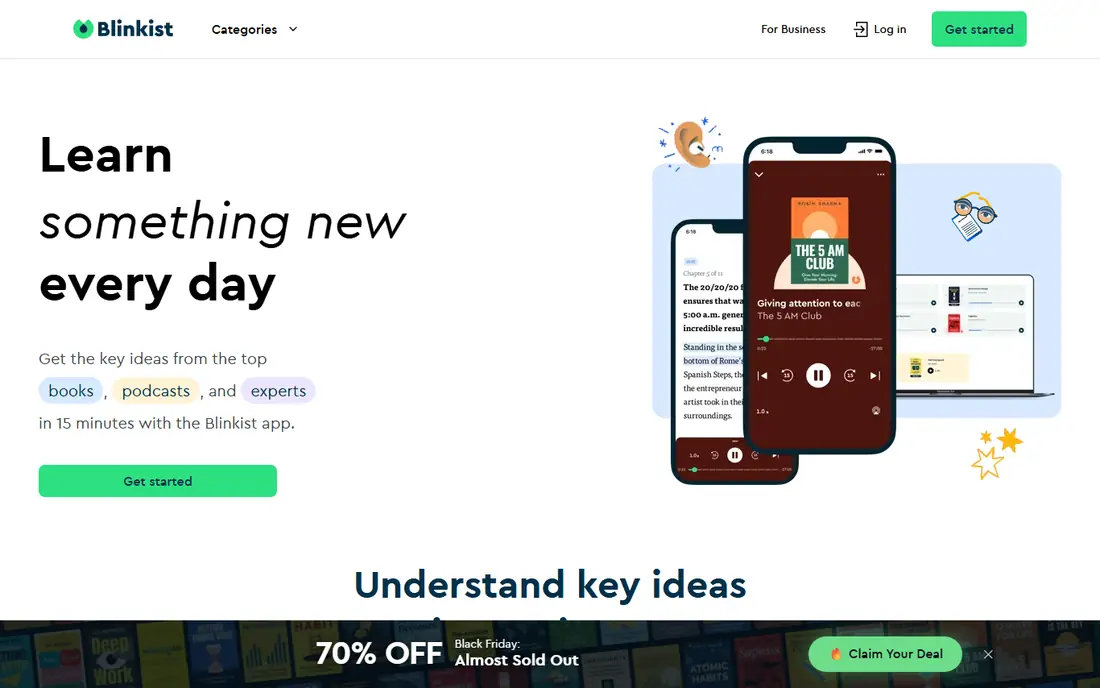
Blinkist is the default pick for most people who want to sample many nonfiction books. Its summaries are built to be read or heard in about 15 minutes, which fits a commute or a short break. The library covers business, psychology, history and science, and the audio narration is consistent across titles.
The catch is depth. A hard book on economics or philosophy will lose detail in a short summary, so treat Blinkist as a filter for what to read in full. The free plan gives one pre-selected summary each day, which is enough to test the style before you pay.
- Large library
- Polished audio
- Offline reading
- Summaries can feel brief on complex books
- Price varies by offer
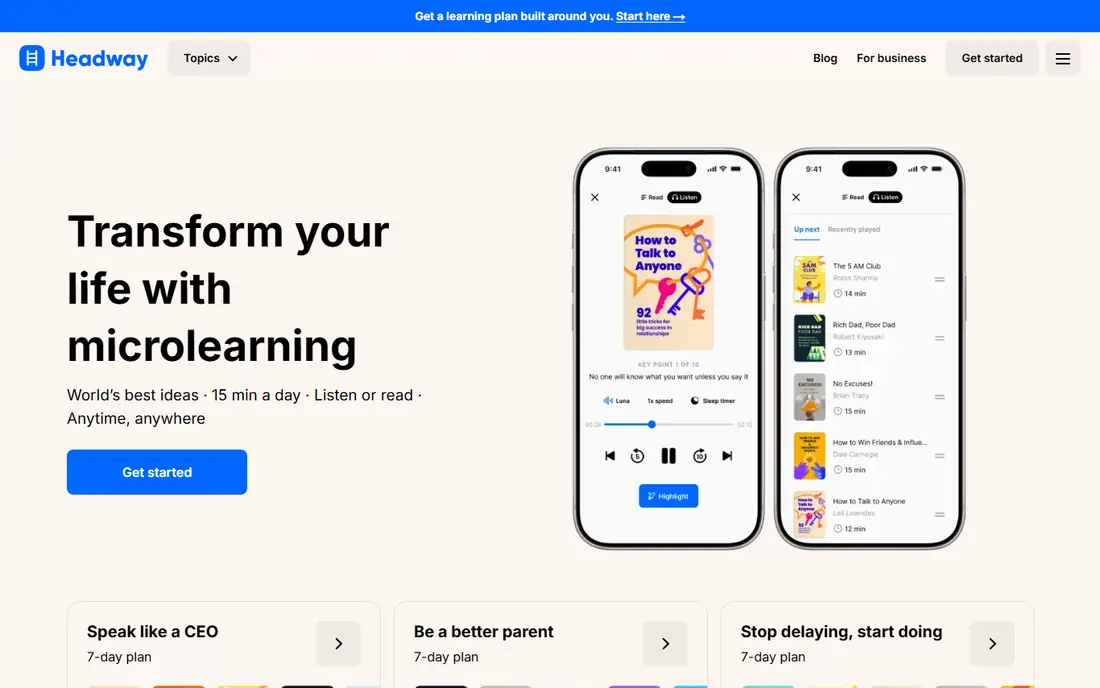
Headway works best when the problem is not finding a book, but keeping a reading habit. It pairs short summaries with streaks, challenges and personal growth plans, so the app nudges you back each day. Text and audio versions are both available, and the tone is plain and encouraging.
The trade-off is catalog size. If you chase a specific new release, Headway may not have it yet, and you may need a second source. Check the price at checkout, because recent listings show different prices on the website and in app stores.
- Daily summaries
- Growth plans
- Spaced repetition tools
- Smaller library
- Prices vary by channel and offer
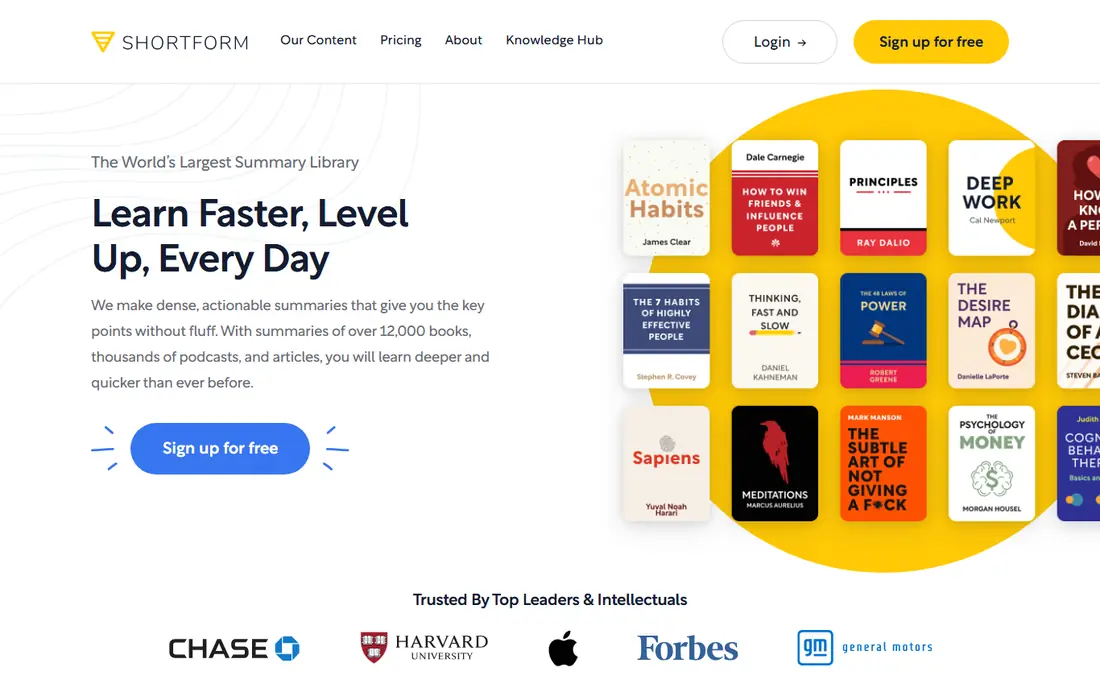
Shortform is the pick for readers who want to understand a book, not just skim it. Its guides work through chapters in order, add context, and note where an author argument is weak or contested. That structure helps when you plan to use ideas at work or in study.
The cost and the time demand are real. A guide can take far longer than a 15 minute summary, and the catalog is smaller than Blinkist. Choose Shortform for a short list of important books, not for browsing dozens of titles each month.
- Chapter-level guides
- Commentary and counterpoints
- Exercises
- Highest price here
- Slower to finish
- Smaller catalog
Instaread covers popular nonfiction and adds its own original short books and expert interviews, which gives it material you will not find in other apps. The Cards format gives key points in under a minute, which suits a quick refresh before a meeting.
The limits show up when you want to study. Highlight and note tools are thinner than in study-focused rivals, so serious readers may keep notes elsewhere. The monthly price is mid-range, and a trial lets you test the originals before you commit.
- Original short content
- Text and audio
- Quick Cards format
- Note-taking is limited
- Some summaries feel shorter than rivals
getAbstract is built for managers and professionals who need business books, reports and articles in a short, work-ready form. Summaries are tight, neutral in tone, and easy to pass to a team. Many employers buy it for staff, which tells you where it fits best.
For a single reader, the individual price is steep compared with Blinkist or Headway. It is hard to justify unless business reading is part of your job. If your employer already offers it, use it first before paying for a second app.
- Large business library
- Concise professional summaries
- Multiple languages
- High individual price
- Less suited to casual fiction readers
StoryShots is the budget pick in this list. It offers a large set of free summaries and a low annual upgrade, which makes it a good first step for readers who are unsure about paying. Audio is included, and the daily free summary keeps the habit going.
Quality is less even than in the edited services above, because some content comes from the community. Stick to well-known titles at first, and compare a summary against the book description before you rely on it for work.
- Many free summaries
- Low annual price
- Audio included
- Community content quality varies
- Library claims are hard to verify
Bookey sits between the very short apps and Shortform. Its summaries run longer, often around 30 minutes, and mind maps help you see how ideas connect. That extra length suits readers who find 15 minute versions too thin but do not want a full study guide.
The downside is uneven depth across titles, and pricing varies by region and store, so confirm the total before you subscribe. The free daily summary, with ads, is a fair way to judge whether the longer format suits your pace.
- Longer summaries
- Audio and mind maps
- Daily free summary
- Price varies by region
- Some titles feel generic
12min does exactly what its name promises. Each summary is built to be read in about 12 minutes, which makes it easy to fit two or three ideas into a lunch break. It is a practical choice for readers who want breadth without a large monthly bill.
The catalog is smaller than the leaders, and there is no free tier to test it at length. If you want audio depth, quizzes or detailed notes, you will need a different app. For fast sampling, though, the format is hard to beat.
- Very short format
- Low entry price in some regions
- Multilingual options
- No free tier
- Smaller catalog
- Fewer study tools
Four Minute Books is the best free book summary app for readers who prefer text and do not want another subscription. Summaries are short, plain and free to read on the web, with no account required. It is ideal for checking a book before you buy it.
The limits are clear. There is no audio, no app-based tracking and no personalized plan, so it will not build a habit for you. Pair it with a note in your calendar if you want a daily routine, and use a paid app only when you want audio or structure.
- Completely free
- No account needed
- Large written archive
- Text only
- No audio
- No personalization or tracking
How we picked these
We compared official pricing pages, app store listings and public feature descriptions for each service, and we kept only services with current libraries in October 2026. We weighed library size, summary depth, audio quality, price and free access, rather than star counts alone.
We did not claim hands-on testing. Our picks reflect what each service states it offers, what its pricing page shows, and where its limits are clear from its own descriptions. Prices change often, so check the vendor page at checkout.
How to choose a book summary app that you will actually use
Start with time, not price. If you have 15 minutes a day, a short-summary app fits. If you have an hour on weekends, a deeper guide may give more value. Pick the format that matches the time you already have, because an app you open daily beats a deeper app you ignore.
Next, test the free option for a week. Read or listen to summaries of books you already know well. That test shows whether the tone, depth and audio suit you, and it exposes weak summaries fast. If a service cannot explain a familiar book clearly, it will not help with a new one.
Finally, decide on one job for the app. Use it to choose full books, to refresh ideas before work, or to study a small set of titles. Trying to do all three in one app leads to a cluttered library and no habit. A clear job also makes it easier to cancel when the app stops serving it.
Frequently asked questions
What is the best app for book summaries?
For most people, Blinkist is the safest starting point because of its broad library and steady audio. Headway suits habit building, Shortform suits deep study, and Four Minute Books suits free text reading. Your best pick depends on time, budget and depth.
What is the best free book summary app?
Four Minute Books is free with no account, and StoryShots offers many free summaries. Blinkist, Headway and Bookey each offer one free summary a day, but you cannot choose the title. Start free, then pay only for audio or structure you use.
Are book summary apps worth it?
They are worth it as a filter and a refresher, not as a full replacement for important books. Use summaries to choose what to read in full, to recall ideas before a meeting, and to sample new topics. For a book that shapes a decision, read the full text.
Do book summary apps have audio?
Most paid apps in this list offer audio, including Blinkist, Headway, Shortform, Instaread, getAbstract, StoryShots and Bookey. Four Minute Books is text only. Check audio for a specific title before you subscribe, because coverage can vary.
Can I use a summary app instead of reading the book?
For light topics, a good summary may be enough. For complex, contested or technical books, a summary will miss nuance, evidence and counterarguments. Treat summaries as notes on a book, and read the full book when accuracy matters.
Sources
See where you really rank - block by block
ProMapRanker scans Google Maps across a grid of your service area. Simple monthly plans from $19, white-label on every plan.
Start freeKeep reading
 zoho inventory alternatives
6 Alternatives to Zoho Inventory, Compared on Price and Fit
Zoho Inventory alternatives: 6 tools compared on price, free plans and fit. Katana leads the list for manufacturers. Fit and flaws are laid out for each entry.
Read → zoho crm alternatives
Best Zoho CRM Alternatives (2026)
Need Zoho CRM alternatives? We compare 7 tools on cost, free access and who each suits. Every pick gets a straight assessment. Built for quick decisions.
Read → zelle alternatives
Best Zelle Alternatives in 2026
Compare the best Zelle alternatives for sending money to friends, paying sellers and moving funds abroad, with honest notes on fees, speed and safety in 2026.
Read →