 ProMapRanker
Best Blue Green Deployment Tools in 2026


Kubernetes blue green and canary control · Pricing starts at: Free
Key takeaways
- Blue green deployment runs old and new versions side by side, then switches traffic in one step, which makes rollback fast.
- Kubernetes teams most often use Argo Rollouts or Flagger, while cloud teams use CodeDeploy, Azure DevOps or Google Cloud Deploy.
- A blue green release fixes the app rollback, not the database rollback, so schema changes need backward-compatible steps.
- Set health checks and promotion gates before you automate, or a bad version can be promoted without a human check.
- Start with one service and a manual promotion step, then automate promotion once the pattern is proven.
Quick comparison
| Pick | Great for | Pricing starts at | Free tier | |
|---|---|---|---|---|
| Argo Rollouts | Kubernetes blue green and canary control | Free | Yes | Visit |
 Spinnaker | Multi-cloud pipelines at scale | Free | Yes | Visit |
 AWS CodeDeploy | Blue green on AWS services | See website | No | Visit |
 Azure DevOps | Blue green in Azure pipelines | See website | Yes | Visit |
 Google Cloud Deploy | Blue green on Google Cloud | See website | No | Visit |
 Flagger | Automated progressive delivery with Flux | Free | Yes | Visit |
 Octopus Deploy | Deployment automation across many targets | See website | Free trial | Visit |
 Harness | Managed continuous delivery with verification | See website | Free trial | Visit |
 GitLab CI/CD | Blue green patterns in one DevOps platform | See website | Yes | Visit |
The best blue green deployment tools
Blue green deployment means running two versions of an application at once: the blue version serves production traffic while the green version is tested, then traffic switches to green in a single step. If green fails, traffic switches back to blue. We compared vendor docs, deployment guides and public usage, and we favored tools with a real blue green strategy, traffic control and rollback, rather than tools that only do rolling updates. Prices for open source tools are shown as Free for the software itself, with cloud costs still applying.
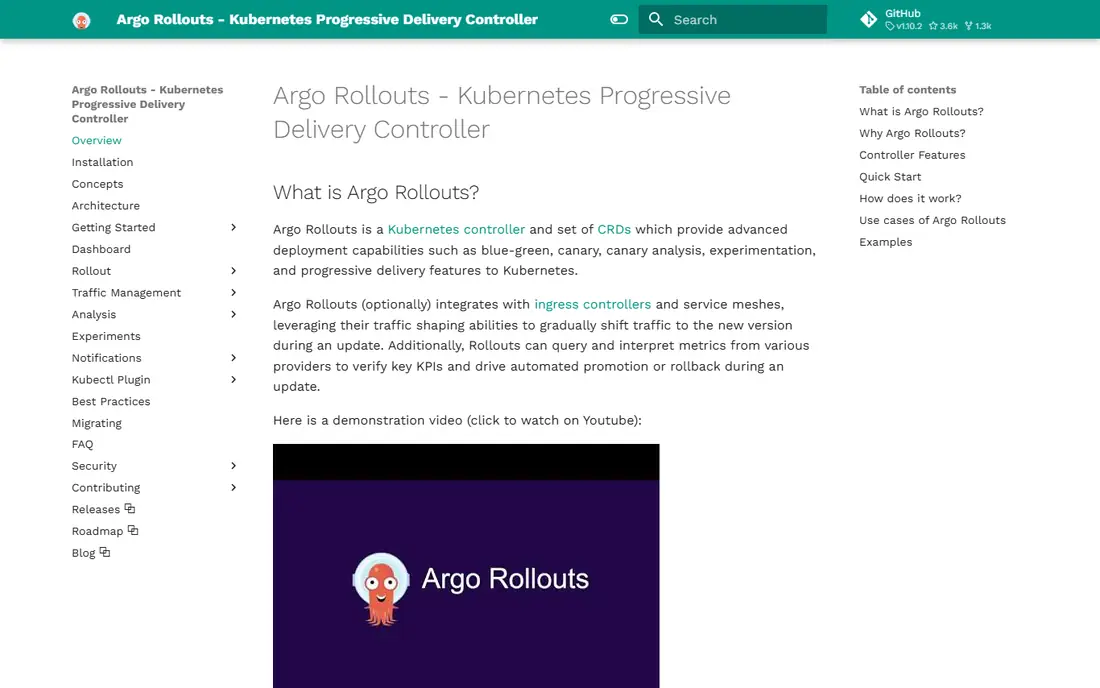
Argo Rollouts adds progressive delivery to Kubernetes, with a blue green strategy that keeps the old version running while the new version is verified. You can pause promotion for manual approval, run analysis against metrics such as error rates, and promote or roll back from the dashboard or command line. That control suits teams that want explicit gates rather than fully automatic promotion.
The limit is scope. Argo Rollouts is Kubernetes only, and it works best beside Argo CD, so a team without Kubernetes gains nothing from it. For a Kubernetes team that already uses GitOps, it is the most direct route to safe blue green releases with clear promotion control.
- A native blue green strategy for Kubernetes
- Manual promotion gates and analysis runs
- A dashboard and kubectl plugin
- Kubernetes only
- Teams need Argo CD or a similar GitOps setup to get the full value
Spinnaker is an open source continuous delivery platform built for multi-cloud deployment at scale. Its pipelines support blue green strategies across AWS, Google Cloud, Azure and Kubernetes, with manual approvals and canary analysis through its Kayenta service. That breadth suits a large organization that deploys the same service to several clouds with one pipeline model.
The honest catch is operational weight. Spinnaker runs as many services, and installing, upgrading and monitoring it is a real platform job. Small teams should compare it only if they already face multi-cloud complexity, since a lighter Kubernetes or cloud-native tool will serve a single-cloud team with far less upkeep.
- Mature blue green and canary pipelines
- Multi-cloud targets
- Manual judgment and automated canary analysis
- A large system to run, with many services
- Setup and upkeep need a platform team

AWS CodeDeploy automates blue green deployments for Amazon EC2, Lambda and ECS, with traffic shifting, health checks and rollback tied to CloudWatch alarms. For Lambda, alias and version handling makes blue green a natural pattern, while ECS and EC2 use replacement environments behind a load balancer. That native fit suits teams already built on AWS.
The limit is cloud lock-in. CodeDeploy does not deploy to other clouds or to on-premises targets in the same way, so a multi-cloud team needs another tool for those targets. Judge it on how much of your estate already runs on AWS, and whether your team is comfortable with its per-service setup differences.
- Native blue green for EC2, Lambda and ECS
- Traffic shifting with CloudWatch alarms
- Automatic rollback on failed checks
- AWS only
- The setup differs by compute service, so teams must learn each pattern
Azure DevOps provides pipelines that support blue green patterns, often through Azure App Service deployment slots, where a staging slot is warmed and swapped into production. That slot swap is a clear, well-understood blue green step, and it pairs with gates, approvals and health checks in the pipeline. Teams already using Azure Boards or Repos get a single platform for planning, code and release.
The trade-off is breadth. Azure DevOps covers far more than deployment, so a team that only wants blue green releases may find the suite larger than needed. It still earns a place here for Azure teams, since slot swaps and pipeline gates give a practical blue green path without extra tooling.
- Pipelines with deployment strategies for Azure targets
- Integration with Azure App Service slots
- A free tier for small teams
- The strongest value is inside Azure
- The full suite can feel large for a team that only needs deployment
Google Cloud Deploy is a managed continuous delivery service for Google Kubernetes Engine and other Google Cloud targets. It supports progressive rollout strategies, including canary and blue green patterns, with promotion controls, approvals and a delivery pipeline view. That managed model suits teams that want Google to run the delivery control plane rather than hosting it themselves.
The limit is cloud scope. Like CodeDeploy, it is a single-cloud tool, so multi-cloud teams need a different layer for other targets. Compare it when your services already run on Google Cloud, and check its pricing for pipeline and execution usage before you commit a large fleet to it.
- Managed delivery pipelines on Google Cloud
- Canary and blue green strategies for GKE
- Promotion and approval controls
- Google Cloud only
- Teams outside Google Cloud gain little from it
Flagger is a progressive delivery operator for Kubernetes that automates canary releases and blue green deployments using metrics from tools such as Prometheus. It shifts traffic in steps, checks error rates and latency, and rolls back automatically when metrics fail. It was built to work with Flux, so a Flux GitOps team gets a natural pairing.
The catch is fit. Flagger is more opinionated and automated than Argo Rollouts, which suits teams that want hands-off promotion, but it can fight with Argo CD, which may revert traffic weight changes. Choose Flagger when you use Flux and want metric-driven automation, and Argo Rollouts when you want manual gates and an Argo CD dashboard.
- Automated canary and blue green with metric checks
- Built to work with Flux GitOps
- Support for common service meshes
- Kubernetes only
- The opinionated automation suits Flux teams more than Argo CD teams
Octopus Deploy automates releases to servers, containers and cloud targets, with deployment processes that support blue green patterns, rolling steps and manual approvals. Its dashboard shows which version is on each environment, and its runbooks cover routine operations beside releases. That visibility suits teams that deploy many services and need a shared release record.
The trade-off is cost and style. Octopus is a commercial product with licensing by target and user scale, and its model is release-centric rather than GitOps-centric. Teams that want every change driven by Git may prefer Argo or Flux tooling, while teams that want a clear release dashboard will like Octopus.
- A clear deployment dashboard
- Blue green patterns across servers, containers and cloud
- Runbooks beside releases
- Paid licensing for larger teams
- The model suits release management more than pure GitOps
Harness provides managed continuous delivery with blue green and canary strategies, traffic shifting and continuous verification that compares metrics during a release. When verification fails, it can roll back automatically, which reduces the time a bad version serves traffic. It supports Kubernetes, cloud and server targets, so a mixed estate can use one delivery model.
The limit is price and scope. Harness is a commercial platform, and its full suite covers far more than deployment, including feature flags and infrastructure management. Small teams should trial it on one service and check pricing at their scale, while larger teams may value the managed control plane and verification most.
- Managed blue green and canary with verification
- Automated rollback on failed checks
- Support for Kubernetes and cloud targets
- Commercial pricing at scale
- The platform breadth can exceed a small team's needs
GitLab CI/CD lets teams build blue green deployments as pipeline patterns, using environments, manual approval jobs and deployment scripts for Kubernetes or cloud targets. Its strength is having code, CI, review apps and CD in one place, so a small team can move from commit to a controlled release without stitching several tools together. The free tier makes it easy to trial the pattern.
The honest catch is that GitLab gives you the building blocks, not a ready-made blue green controller like Argo Rollouts or Flagger. Teams that want metric-gated promotion out of the box will need extra tooling, while teams happy with manual promotion and clear pipeline steps will find GitLab enough.
- CI and CD in one platform
- Environments and manual jobs for blue green steps
- A free tier for small teams
- Blue green is a pattern you build, not a single built-in strategy
- Large runners and minutes can add cost
How we picked these
We compared vendor documentation and deployment guides, and we favored tools with a documented blue green strategy, traffic control and a rollback path. We left out tools that only do rolling updates or only run CI, since blue green needs two live versions and a traffic switch. Open source tools are listed as Free for the software, with the reminder that cloud and hosting costs still apply.
How to choose a blue green deployment tool
Start with your platform. Kubernetes teams should shortlist Argo Rollouts and Flagger, cloud teams should shortlist the native tool for their cloud, and multi-cloud teams should look at Spinnaker, Harness or Octopus. A tool that fights your platform will cost more in upkeep than any feature advantage is worth.
Next, decide how much automation you want. Manual promotion suits a team that is new to blue green, since a human checks the green version before traffic switches. Metric-driven promotion suits a mature team with good monitoring, since it can roll back fast without waiting for a person. Do not automate promotion until manual promotion has worked reliably for several releases.
Finally, plan for data and state. Blue green keeps two app versions live, but a database schema change still needs a backward-compatible path, such as adding a column before code uses it and removing an old column only after the old version is gone. Test rollback with a real data change in staging, and confirm that session, cache and queue behavior survives a traffic switch.
Frequently asked questions
What is the best blue green deployment software for Kubernetes?
Argo Rollouts and Flagger are the usual picks for Kubernetes. Argo Rollouts suits teams that want manual gates and an Argo CD dashboard, while Flagger suits Flux teams that want metric-driven automation.
Is blue green deployment better than canary deployment?
Neither is better in every case. Blue green switches all traffic at once after testing, which gives a fast rollback, while canary shifts a small share of traffic first, which limits the blast radius of a bad release. Many teams use both, with canary for risky changes and blue green for clean version swaps.
Does blue green deployment need twice the infrastructure?
It needs capacity for two versions at once during the switch, though the old version is removed after promotion. For large services, plan that temporary doubling into cost and capacity, and check whether your cloud tool reuses capacity or provisions a full second environment.
How do I roll back a blue green deployment?
Switch traffic back to the blue version, which is still running until promotion is complete. Keep the old version until you are sure the new version is healthy, and test the rollback step in staging, since a rollback you have never practiced is easy to get wrong under pressure.
What is the main risk with blue green deployment?
Database and state changes are the main risk, since the app can roll back while data cannot roll back as easily. Use backward-compatible schema steps, keep old and new code able to read the same data during the switch, and clean up old schema only after the old version is gone.
Sources
- https://argoproj.github.io/argo-rollouts/
- https://www.spinnaker.io
- https://aws.amazon.com/codedeploy/
- https://azure.microsoft.com/en-us/products/devops
- https://cloud.google.com/deploy
- https://flagger.app
- https://octopus.com
- https://www.harness.io
- https://about.gitlab.com
- https://spacelift.io/blog/blue-green-deployment-kubernetes
See where you really rank - block by block
ProMapRanker scans Google Maps across a grid of your service area. Simple monthly plans from $19, white-label on every plan.
Start freeKeep reading
 zscaler alternatives
Best Zscaler Alternatives in 2026
Looking for zscaler alternatives? We compare 9 SASE and zero trust platforms on architecture, data protection, pricing, and fit for your network and team.
Read → zapier alternatives free
Best Zapier Alternatives Free in 2026
Nine automation tools for zapier alternatives free in 2026, all with genuinely free tiers, plus free plan limits, starting prices and upgrade paths explained.
Read → which platform is best for online reputation
Which Platform Is Best for Online Reputation in 2026
Wondering which platform is best for online reputation? We compare 8 review, listing, and response tools for small and multi-location businesses and agencies.
Read →