 ProMapRanker
Best Blockchain Development Companies in 2026

Key takeaways
- ConsenSys, OpenZeppelin and Alchemy suit teams building on Ethereum or needing proven infrastructure, while ChainSafe suits protocol-level work.
- LeewayHertz, PixelPlex, Unicsoft, SoluLab and Innowise suit product teams that want a full build partner for dApps, tokens or enterprise systems.
- No company is best for every project, since chain choice, security needs and product scope change the right partner.
- Always ask for past work on your chain, a security review plan and a clear handover, since blockchain code is hard to fix after launch.
Quick comparison
| Pick | Great for | Pricing starts at | Free tier | |
|---|---|---|---|---|
 ConsenSys | Ethereum software and services | See website | No | Visit |
 OpenZeppelin | Smart contract security | See website | No | Visit |
 Alchemy | Developer infrastructure | Free | Yes | Visit |
 ChainSafe | Protocol and infrastructure engineering | See website | No | Visit |
 LeewayHertz | Blockchain plus AI products | See website | No | Visit |
 PixelPlex | Tokenization and DeFi builds | See website | No | Visit |
 Unicsoft | Enterprise blockchain systems | See website | No | Visit |
 SoluLab | Broad Web3 product builds | See website | No | Visit |
 Innowise | Custom blockchain and Web3 products | See website | No | Visit |
The best blockchain development companies
A blockchain development company may build smart contracts, apps, tokens, wallets or the infrastructure behind them. The firms here cover different parts of that work, from Ethereum software and security audits to full product builds. Use this guide to shortlist by project type, then verify recent work and terms directly with each firm.
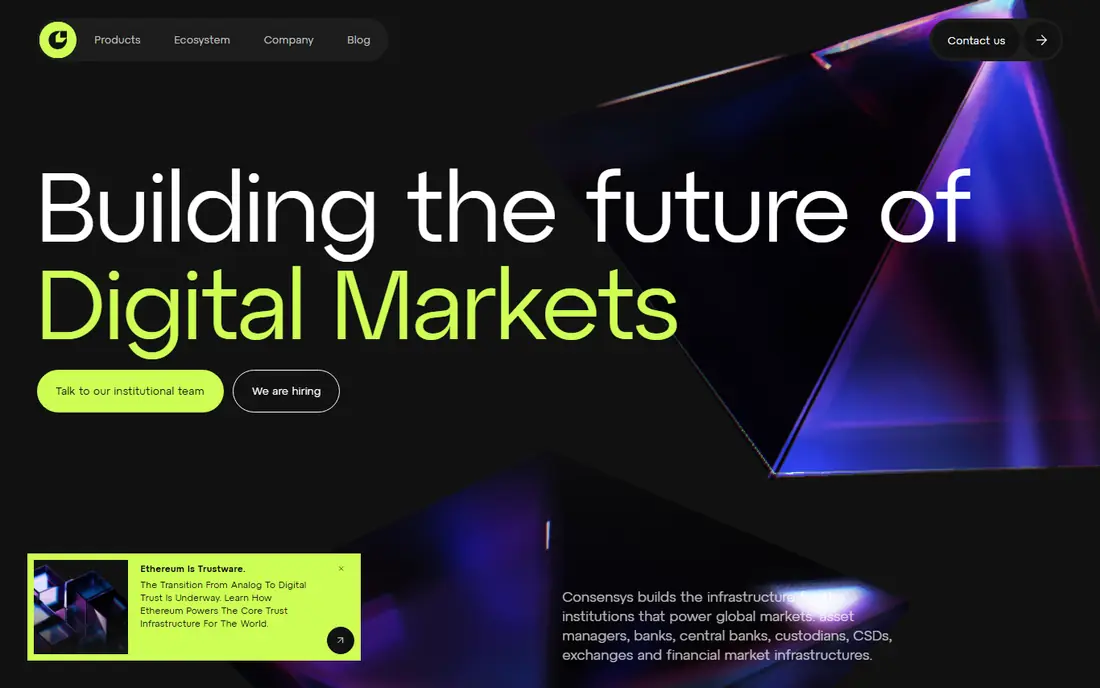
ConsenSys is one of the best-known names in Ethereum development. It builds Ethereum software such as the Besu and Teku clients, offers developer tools, and provides advisory and managed services for institutions building on Ethereum technology. That depth matters when a project needs protocol alignment, not just a simple token.
The trade-off is fit and cost. ConsenSys suits institutions and serious Ethereum projects more than a small startup with a simple app idea. Pricing is project-based, so expect a scoping conversation before you see numbers. If your product must live on Ethereum and meet institutional standards, ConsenSys belongs at the top of the list.
- Deep Ethereum expertise, including Besu and Teku clients
- Advisory and managed services for institutions
- Widely used developer tools
- Enterprise focus may price out small startups
- Project scope needs a direct quote
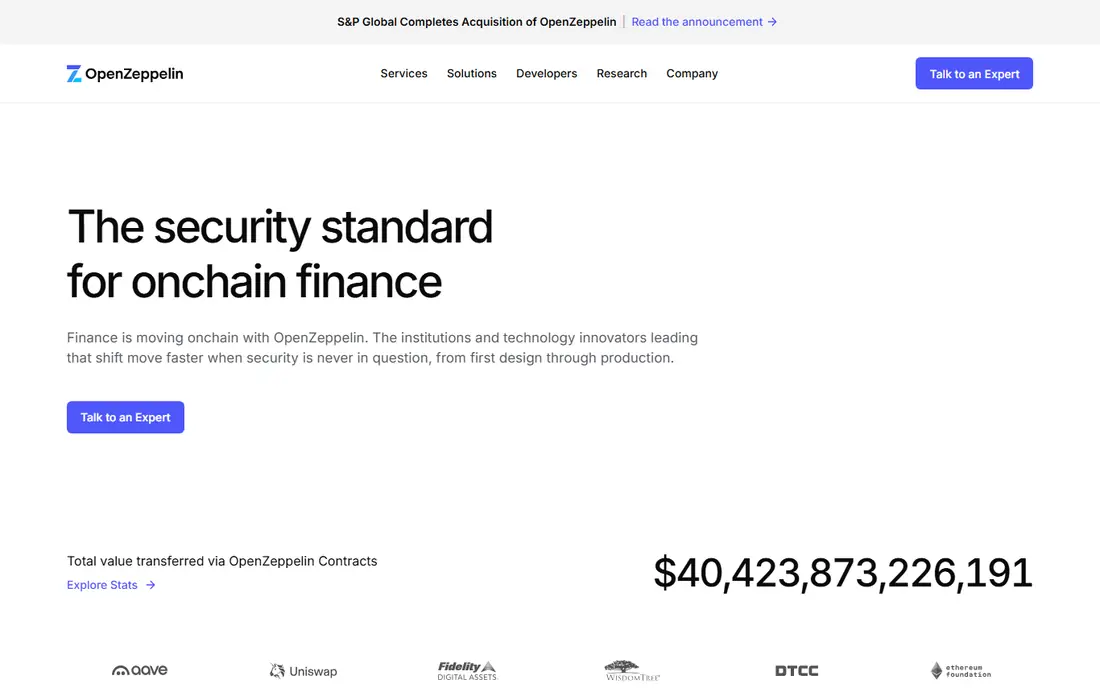
OpenZeppelin is best known for its smart contract libraries, which many Ethereum projects use as a starting point for tokens and other contracts. It also offers security audits, monitoring and development services for teams that need strong contract assurance. For a project where a contract bug could lose user funds, that security focus is the main reason to choose OpenZeppelin.
OpenZeppelin is not the right pick if you mainly need product design or a consumer app with light on-chain logic. Its strength is contracts and security, so pair it with a product team if your project needs both. Ask for audit scope, timelines and past work on your token standard before you commit.
- Trusted smart contract libraries and standards
- Security audits and monitoring tools
- Strong Ethereum ecosystem reputation
- Audit and service pricing is project-based
- Not a general app design agency
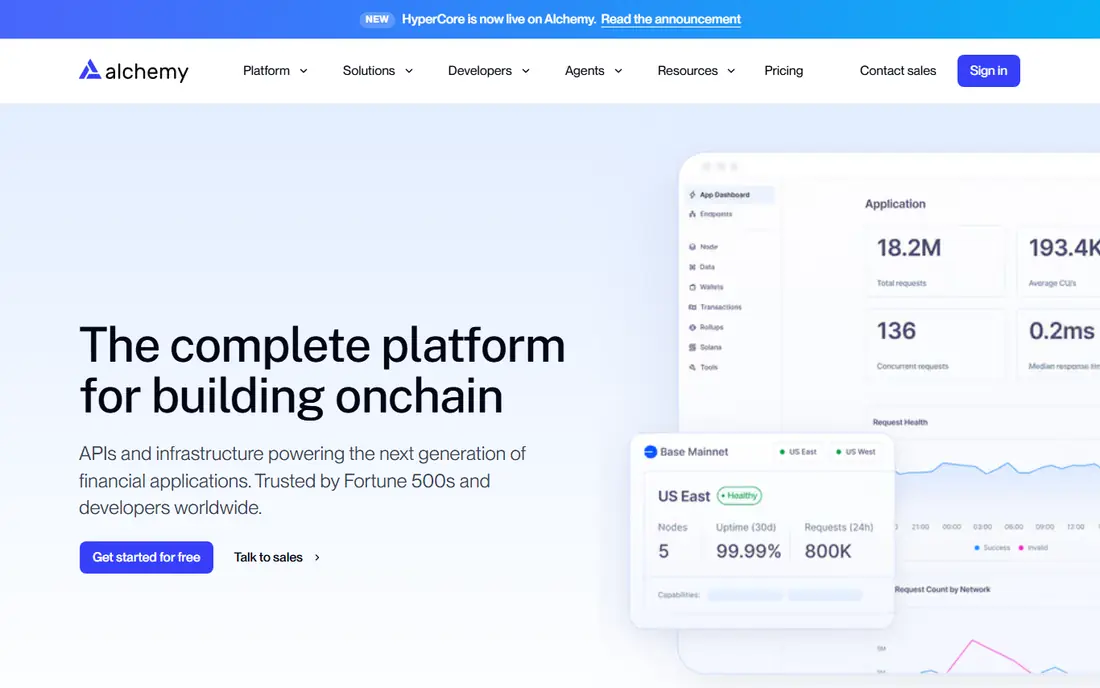
Alchemy provides the infrastructure that many Web3 apps run on, including APIs, node services, indexing and developer tools. Product teams use it to read chain data, send transactions, track NFTs and build wallets without running their own nodes. A free tier lets a small team start building and testing before paying.
Alchemy is a platform, not a traditional agency that will design and build your whole product. Some teams hire Alchemy for infrastructure and a separate agency for product work, while others build in-house on top of Alchemy. If you have developers and need scale and uptime, Alchemy is a strong foundation.
- Reliable blockchain APIs and infrastructure
- Developer tools for apps, NFTs and wallets
- Free tier for early building
- Infrastructure, not a full custom development agency
- Costs scale with usage at larger volumes
ChainSafe is an engineering firm focused on blockchain protocols and infrastructure. It has worked on Ethereum and Filecoin clients, cross-chain tools and Web3 infrastructure, often with foundations and protocol teams. That background suits a team building at the infrastructure layer, or a product that needs custom protocol work.
A startup that only needs a token and a simple app may find ChainSafe more technical than needed. Its value shows when the project touches consensus, clients, bridges or custom chain logic. Check its recent protocol work and ask how it handles handover and long-term maintenance, since infrastructure projects live for years.
- Protocol engineering across Ethereum and Filecoin
- Cross-chain and infrastructure tools
- Open-source work with major foundations
- Protocol focus may not suit a simple consumer app
- Project pricing needs a direct quote
LeewayHertz builds blockchain products with AI features, covering consulting, smart contracts, dApps, tokenization and enterprise systems. It works across chains such as Ethereum, Solana and Hyperledger, which helps a team that has not yet fixed its chain choice. Its service model covers discovery, build and post-launch support.
Because the range is broad, check depth on your specific chain and product type. Ask for case work that matches your project, not just a general portfolio. LeewayHertz suits a firm that wants blockchain and AI from one vendor, with a team that can carry the product from idea to launch.
- Full product development across blockchain and AI
- Tokenization and enterprise builds
- Consulting through launch and support
- Broad service range means you must check depth on your chain
- Pricing is project-based
PixelPlex is a development firm that builds custom blockchain systems, tokenization platforms, DeFi products and enterprise applications. It also works on smart contracts and audits, which helps a team that needs a build-audit loop in one partner. Its portfolio spans product teams and larger firms that need a working platform, not just a demo.
As with most agencies, pricing and timelines depend on scope, so expect a discovery phase before a firm quote. PixelPlex suits a product team with a clear token or DeFi idea that needs engineering depth and a partner who can handle security review alongside the build.
- Custom blockchain development and tokenization
- DeFi and enterprise systems
- Smart contract audit work
- Project pricing needs a scoping call
- Timelines vary with product complexity
Unicsoft builds private blockchains, enterprise systems and Web3 products, often combining blockchain with AI features. It follows a process-driven approach with security and delivery controls, which suits regulated or larger firms that need clear documentation and handover. Its work includes private ledger systems and product builds for mid-size and large clients.
That process can feel heavy for a two-person startup that wants a fast prototype. Unicsoft suits a team that values governance, documentation and long-term support over the fastest possible launch. Ask about team size, communication rhythm and post-launch support before you sign.
- Private blockchains and enterprise delivery
- AI plus blockchain projects
- Process-driven development with security focus
- Enterprise process may feel heavy for a tiny startup
- Pricing is project-based
SoluLab offers a broad Web3 development menu, including blockchain apps, tokenization, wallets, smart contracts and AI-linked products. That breadth suits startups and mid-size firms that want one partner for a full product, from design through launch. It works across several chains, so a team still choosing a chain can get guidance during discovery.
Breadth is also the thing to check. Ask for recent work that matches your product type, chain and user scale, and confirm who will actually work on your project. SoluLab suits a startup that wants a full build partner and a clear project plan, rather than a narrow specialist for one contract.
- Wide Web3 menu covering tokens, wallets, dApps and AI
- Startup-friendly project models
- Experience across many chains
- Broad range means you should verify depth for your product type
- Pricing varies by scope
Innowise is a software development firm with a strong blockchain practice, covering custom chains, layer-2 work, enterprise dApps and Web3 products. Its larger delivery team suits bigger projects that need several engineers, designers and project managers working together. It also handles tokenization and integration with existing business systems.
A small prototype may not need a team of that size, and pricing will reflect the scope. Innowise suits a mid-size or enterprise team with a substantial product to build, where delivery capacity and process matter as much as chain expertise. Ask for a team plan and a phased quote, so you can test the partnership on a first milestone.
- Custom blockchain development and Web3 products
- Enterprise dApps and tokenization
- Large delivery team for bigger projects
- Large-team model may cost more than a boutique firm
- Project pricing needs a scoping phase
How we picked these
We compared public service descriptions, recent industry roundups and company sites for firms that are active in 2026 and cover smart contracts, dApps, tokenization or infrastructure. We kept a mix of Ethereum specialists, security firms, infrastructure providers and full build agencies, and we left out firms whose blockchain work we could not confirm from a current site or portfolio. Pricing for agencies is project-based, so we list See website rather than invented day rates.
How to choose a blockchain development partner
Start with the product, not the hype. Define what must happen on-chain and what can stay off-chain, since every on-chain feature adds cost, security work and maintenance. A token, a wallet, a DeFi protocol and a supply-chain ledger are different projects, and they need different partners. Write that scope down before you talk to any firm.
Next, check security and ownership in the contract. Ask who audits the contracts, who owns the code and keys, how upgrades work, and what happens after launch if a bug appears. Blockchain code is hard to change once deployed, so an upgrade plan and a monitoring plan matter more than a fast launch date.
Finally, test the partnership in phases. Start with discovery and a small milestone, such as a contract prototype or a technical design, before you commit to a full build. That phase will show you how the firm communicates, how it handles feedback, and whether its estimates hold up. A partner that is clear in phase one is more likely to stay clear when the project gets hard.
Frequently asked questions
What is the best blockchain development company?
There is no single best firm, since the right partner depends on your project. ConsenSys and OpenZeppelin suit Ethereum and security work, Alchemy suits infrastructure, and LeewayHertz, PixelPlex and Innowise suit full product builds. Match the firm to your chain, security needs and product scope.
What is the best blockchain company for smart contracts?
OpenZeppelin is the strongest smart contract specialist here, with trusted libraries, audits and monitoring tools. ConsenSys also offers contract and Ethereum services for larger projects. For a simple token, a full agency may be enough, but for high-value contracts, use a specialist audit as well as the build team.
What are the best Web3 companies for startups?
SoluLab and LeewayHertz suit startups that want a full product partner, while Alchemy suits startups with developers who need infrastructure. A startup should start with a small milestone and a clear scope, rather than a large fixed project. Check recent work on your chain before you sign.
How much does blockchain development cost?
Most agencies price by project scope, team size and timeline, so there is no single price for a blockchain build. A simple token and landing page costs far less than a DeFi platform with audits and infrastructure. Ask for a phased quote with discovery, build, audit and support priced separately.
Should I build on Ethereum or another chain?
Choose the chain where your users, tools and liquidity already live, and where fees and speed fit your product. Ethereum suits projects that need its ecosystem and security, while other chains may suit lower fees or specific features. A good partner will explain the trade-offs for your product, not push one chain for every project.
How do I check a blockchain firm before hiring?
Ask for recent work on your chain, client references you can contact, and a sample audit or code review. Check who owns the code, how upgrades work, and what post-launch support covers. Avoid any firm that promises guaranteed returns or asks you to skip a security review.
Sources
See where you really rank - block by block
ProMapRanker scans Google Maps across a grid of your service area. Simple monthly plans from $19, white-label on every plan.
Start freeKeep reading
 zoho inventory alternatives
6 Alternatives to Zoho Inventory, Compared on Price and Fit
Zoho Inventory alternatives: 6 tools compared on price, free plans and fit. Katana leads the list for manufacturers. Fit and flaws are laid out for each entry.
Read → zoho crm alternatives
Best Zoho CRM Alternatives (2026)
Need Zoho CRM alternatives? We compare 7 tools on cost, free access and who each suits. Every pick gets a straight assessment. Built for quick decisions.
Read → zelle alternatives
Best Zelle Alternatives in 2026
Compare the best Zelle alternatives for sending money to friends, paying sellers and moving funds abroad, with honest notes on fees, speed and safety in 2026.
Read →