 ProMapRanker
Best Bidding Software for Construction in 2026


Bidding inside a full project platform · Pricing starts at: See website
Key takeaways
- BuildingConnected and SmartBid suit general contractors who manage many subcontractor bids from one bid board.
- ConstructConnect and PlanHub suit firms that also need project leads, not just bid management.
- Procore suits contractors already using Procore for project management who want bidding tied to the same system.
- Most of these tools price by quote, so a demo and a written quote matter more than a headline price.
- Subcontractors should check which tools are free to receive and respond to invitations before paying for a plan.
Quick comparison
| Pick | Great for | Pricing starts at | Free tier | |
|---|---|---|---|---|
| Procore | Bidding inside a full project platform | See website | No | Visit |
 BuildingConnected | Bid management with a large sub network | See website | Free trial | Visit |
 ConstructConnect | Project leads plus bid tools | $129 per month | Free trial | Visit |
 SmartBid | Bid invites, prequalification and leveling | See website | No | Visit |
 PlanHub | Finding bids and managing invites | Free | Yes | Visit |
 STACK | Takeoff and estimating linked to bidding | See website | Free trial | Visit |
 Buildertrend | Residential builders managing bids | See website | No | Visit |
 BidNet Direct | Public sector bid opportunities | Free | Yes | Visit |
 PipelineSuite | Bid invites with planroom tools | See website | Free trial | Visit |
 BidClerk | Subcontractor bid tracking | See website | Free trial | Visit |
The best bidding software for construction
We compared tools that help general contractors invite subcontractors, share plans, collect bids and compare them fairly. Some tools focus on bid management alone, while others add project leads, takeoff or full project management. The right pick depends on if you need more bids coming in, better control of bids you already have, or both.

Procore is a full construction platform, and its preconstruction and bidding tools sit inside that wider system. A general contractor can send bid invitations, share drawings, track responses and move an awarded bid into project management without re-entering data. That continuity is valuable on large commercial work where handover errors cost money.
The downside is scope and price. Procore is priced by quote based on company size and volume, and implementing the full platform takes time and training. A small contractor who only needs bid invites will find a focused tool cheaper and faster. A firm already planning to use Procore for field and financial work gets the most value from its bidding side.
- Bidding connects to project management, documents and financials
- Widely used by large contractors
- Strong mobile access
- Priced by quote and can be costly
- Broad scope means longer setup
- Smaller firms may not need the full suite
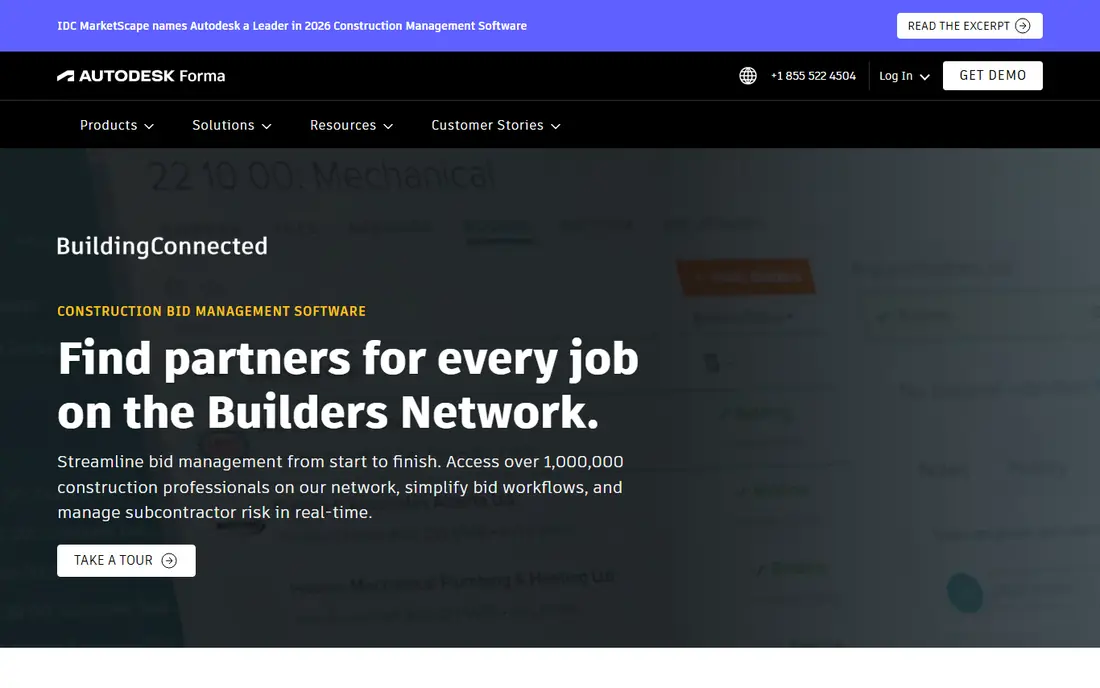
BuildingConnected, part of Autodesk, is built for general contractors who run competitive bidding at scale. You can create a bid package, invite subcontractors from its network, share plans, answer questions in one place and compare bids side by side. Bid leveling tools help spot missing scope before an award, which reduces change orders later.
Pricing is by quote, and general contractor plans are not free, while subcontractors can receive invitations at no cost. Teams moving from email and spreadsheets should allow time for onboarding, especially around bid forms and document control. For a contractor bidding many commercial projects a year, the network and structure justify the effort.
- Large subcontractor network
- Bid board, messaging and bid leveling
- Autodesk integration
- Priced by quote
- No free tier for general contractors in recent years
- Learning curve for new teams
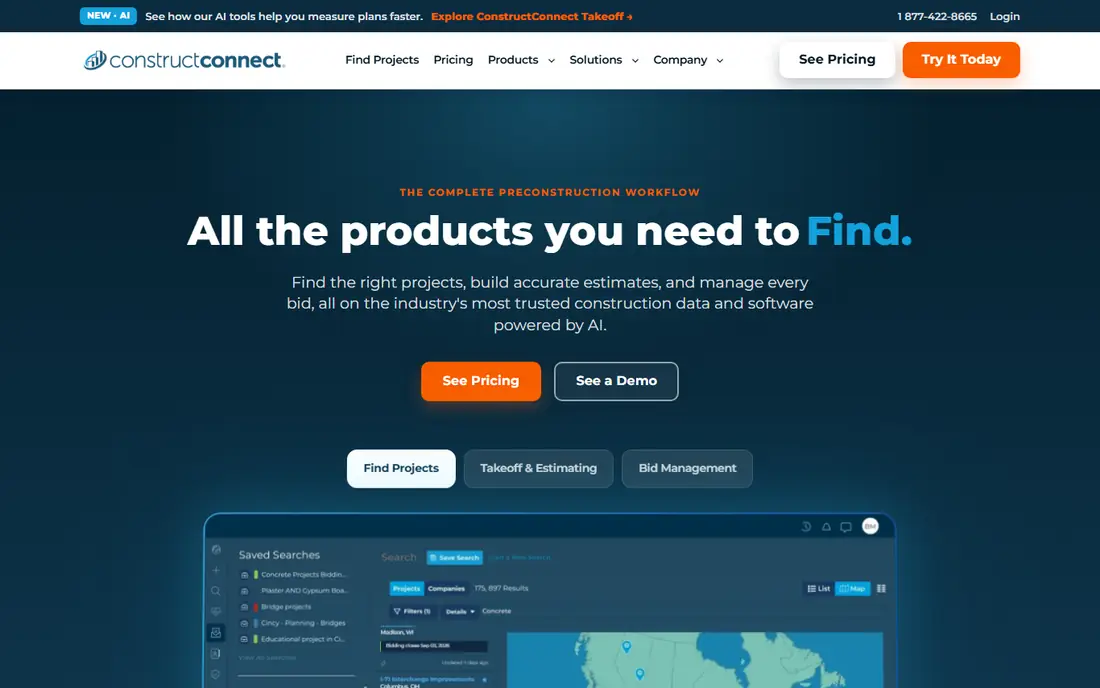
ConstructConnect combines a project database with bidding tools, so it suits firms that need both leads and bid control. You can search for projects in your markets, track them through planning and bidding stages, invite subcontractors and manage documents. That pipeline view helps a business plan workload months ahead, not just react to invitations.
The entry price reported for a single market is a starting point, and costs grow as you add markets or users. Coverage is also stronger in some regions than others, so check project volume in your area during a trial. For a contractor expanding into new markets, the lead data alone can justify the subscription.
- Large database of public and private projects
- Bid management and planroom tools
- Per-market pricing
- Price rises with markets covered
- Database depth varies by region
- Some features need higher plans
SmartBid focuses on the core job of a general contractor: invite the right subcontractors, collect comparable bids and pick a winner with confidence. Prequalification forms, document sharing and bid leveling sit at the centre, and integrations with Procore, Autodesk BIM tools and Dropbox keep estimating workflows connected. Unlimited users on some plans help growing teams avoid per-seat surprises.
The main drawback is opaque pricing, which is quoted rather than published, so budgeting requires a sales conversation. Users also report a learning curve and limits in file search and reporting. A contractor that values bid comparison and prequalification over lead generation will still find SmartBid a strong fit.
- Strong bid leveling and side-by-side comparison
- Prequalification forms
- Integrations with Procore and Autodesk tools
- No public pricing
- Interface takes time to learn
- Reporting depth is limited for some teams
PlanHub takes a different pricing approach: general contractors can post projects and invite subcontractors at no cost, while subcontractors pay for premium access to project leads. That makes it an easy tool for a general contractor to try, since the barrier to posting a first project is low. Invitations, plan sharing and bid tracking are included in the core workflow.
Subcontractors should weigh the annual premium cost against the project volume in their trade and region. A busy commercial subcontractor may recover it quickly, while a small specialty firm may prefer free invitation tools. General contractors should also check local network depth, since any bid platform is only as good as the subcontractors who respond in your area.
- Free for general contractors
- Subcontractor plans from $1,999 per year
- Private and public project coverage
- Subcontractor cost is high for small firms
- Feature depth varies by plan
- Network strength varies by region
STACK starts with takeoff and estimating, then connects that work to bidding and plan sharing. An estimator can measure plans in the cloud, build an estimate and share bid packages with subcontractors from the same project. That link reduces double entry between takeoff sheets and bid invitations, which is a common source of errors.
It is not a pure bid board, so a contractor that only needs invitations may find it broader than necessary. Pricing is by quote, and teams should test the takeoff tools during a trial rather than judging it on bid features alone. For firms where estimating accuracy drives bid quality, STACK earns its place.
- Cloud takeoff and estimating
- Planroom and bid sharing
- Collaboration for estimating teams
- Priced by quote
- Takeoff focus means bid management is not the whole product
- Training helps for advanced use
Buildertrend is made for residential builders and remodelers, and its bidding tools sit inside a wider job management system. You can request bids, compare subcontractor responses, manage selections with clients and track schedules and budgets from the same login. That breadth suits a builder who wants one system from first bid to final walkthrough.
Commercial general contractors will find the feature set tuned to homes rather than large commercial packages. Pricing is by quote based on volume, and adopting the full platform is a bigger change than adding a bid board alone. For a home builder, though, the link between bidding, selections and client updates is a real time saver.
- Bid requests, selections and client communication in one system
- Scheduling and financial tools
- Good for home builders
- Priced by quote
- Residential focus limits commercial fit
- Full platform takes time to adopt
BidNet Direct is a marketplace for public sector work, covering state, local and education buyers. Contractors can search solicitations, set alerts for their trade and region, and view bid documents. Basic access is free, with paid state plans that add broader access and alerts for firms that chase public work seriously.
Public bidding is not the same as private bidding. Compliance forms, bonding and strict deadlines add work, and competition for public jobs can be intense. A contractor new to public work should start with free access in one state, learn the paperwork, and only then pay for wider plans.
- Free basic access
- State and local government opportunities
- Bid alerts by category and region
- State plans cost extra
- Public work brings compliance paperwork
- Competition can be heavy
PipelineSuite gives a general contractor a clean bid board with planroom storage, invitations and response tracking. The interface is simpler than enterprise platforms, which helps a small or mid-size team get running without a long implementation. Subcontractors can view plans, download documents and submit bids through the same system.
The trade-off is network size and lead data. PipelineSuite does not offer the same project database as ConstructConnect, and its subcontractor network is smaller than BuildingConnected's. A contractor with an established sub list who needs better organisation will like it; a contractor hunting for new leads will need another source as well.
- Bid invitations, planroom and tracking in one place
- Simple interface
- Unlimited projects on some plans
- Smaller network than larger rivals
- Pricing by quote
- Fewer lead database features
BidClerk serves subcontractors and suppliers who need to find projects, track bids and view plans without a heavy enterprise system. Alerts flag projects in your trade and area, and bid tracking keeps deadlines, documents and responses organised. That focus makes it a practical second tool for a subcontractor already receiving invitations from general contractors.
Coverage varies by region, so a trial should start with a check of live projects in your markets. Pricing is by quote, which makes direct comparison harder. For a subcontractor in a well-covered region, BidClerk can surface work that would otherwise arrive late or not at all.
- Project leads and bid tracking for subcontractors
- Plan viewing tools
- Alerts for relevant projects
- Pricing by quote
- Coverage varies by region
- Interface is functional rather than polished
How we picked these
We compared official product pages, pricing pages and public comparison guides for construction bidding tools live in October 2026. We kept tools that handle real bid workflows, such as invitations, plan sharing and bid comparison, and we included both general contractor tools and subcontractor lead tools. Where a vendor prices by quote, we wrote See website instead of repeating third-party estimates as fact.
How to choose the right bid tool
Start by naming your bottleneck. If you struggle to find projects, a lead database such as ConstructConnect or BidNet Direct matters most. If you already have projects but lose time chasing bids by email, a bid board such as BuildingConnected, SmartBid or PipelineSuite matters most. If estimates are the weak link, a takeoff-linked tool such as STACK may help more than either.
Then test with a live project, not a demo dataset. Invite your real subcontractors, share real plans and run a bid leveling comparison. Watch how many subs respond, how easy it is to answer questions, and how long it takes to compare bids. Ask for a written quote that covers users, projects and any per-market fees, and check what subcontractors pay, since their cost affects response rates.
Frequently asked questions
What is the top construction bidding software for general contractors?
BuildingConnected and SmartBid are strong general contractor picks, with Procore a good fit for firms already on its platform. The best choice depends on project volume, sub network and if you need lead data. Run a live project trial on two finalists before signing.
What is the best construction bidding software for subcontractors?
PlanHub, BidClerk and BidNet Direct all help subcontractors find work, but their value depends on your trade and region. Check live project volume in your area during a trial, and confirm whether receiving invitations is free. A paid plan only pays off if it brings bids you would otherwise miss.
What are the best construction bidding apps for small firms?
PlanHub is easy for a small general contractor to start with, since posting is free, while PipelineSuite offers a simpler bid board than enterprise tools. Small firms should avoid paying for a full project platform until bid volume justifies it. Start narrow, then expand.
How much does construction bidding software cost?
Costs range from free for basic access to quoted enterprise pricing that varies by users, volume and markets. ConstructConnect lists entry pricing from $129 per month per market, while many rivals price by quote. Always ask for a written quote that includes every fee before comparing.
Sources
See where you really rank - block by block
ProMapRanker scans Google Maps across a grid of your service area. Simple monthly plans from $19, white-label on every plan.
Start freeKeep reading
 zscaler alternatives
Best Zscaler Alternatives in 2026
Looking for zscaler alternatives? We compare 9 SASE and zero trust platforms on architecture, data protection, pricing, and fit for your network and team.
Read → zapier alternatives free
Best Zapier Alternatives Free in 2026
Nine automation tools for zapier alternatives free in 2026, all with genuinely free tiers, plus free plan limits, starting prices and upgrade paths explained.
Read → which platform is best for online reputation
Which Platform Is Best for Online Reputation in 2026
Wondering which platform is best for online reputation? We compare 8 review, listing, and response tools for small and multi-location businesses and agencies.
Read →