 ProMapRanker
Best Bid Management Software in 2026


Large contractors needing full preconstruction · Pricing starts at: See website
Key takeaways
- Procore and BuildingConnected suit larger general contractors, while PlanHub and BidNet Direct suit smaller firms and public-sector bidding.
- Bid leveling, subcontractor prequalification, and a clean planroom matter more than a long feature list when bid day gets busy.
- Most construction bid tools use custom or quote-based pricing, so a demo on your real bid workflow beats a price table alone.
- Check integrations with estimating, project management, and accounting tools before you buy, since bid data should flow into the project, not stop at award.
Quick comparison
| Pick | Great for | Pricing starts at | Free tier | |
|---|---|---|---|---|
| Procore | Large contractors needing full preconstruction | See website | No | Visit |
 BuildingConnected | Bid invites and subcontractor risk checks | $399 per month | No | Visit |
 PlanHub | General contractors and subcontractors | Free | Yes | Visit |
 SmartBid | Mid-size contractors on Procore or Autodesk | $450 per month | No | Visit |
 ConstructConnect | Bid leads and project data | See website | No | Visit |
 BidNet Direct | Public-sector and government bids | See website | No | Visit |
 Bonfire | Public procurement and bid evaluation | See website | No | Visit |
 STACK | Takeoff plus bid workflow | See website | Free trial | Visit |
 Buildertrend | Smaller builders needing bids plus projects | See website | No | Visit |
The best bid management software
Bid management software covers a wide job: finding bid opportunities, inviting subcontractors, sharing plans, collecting bids, leveling them side by side, and awarding work. Construction tools dominate this category, with a separate set for public procurement. The nine tools below cover both, with different sizes and budgets in mind.
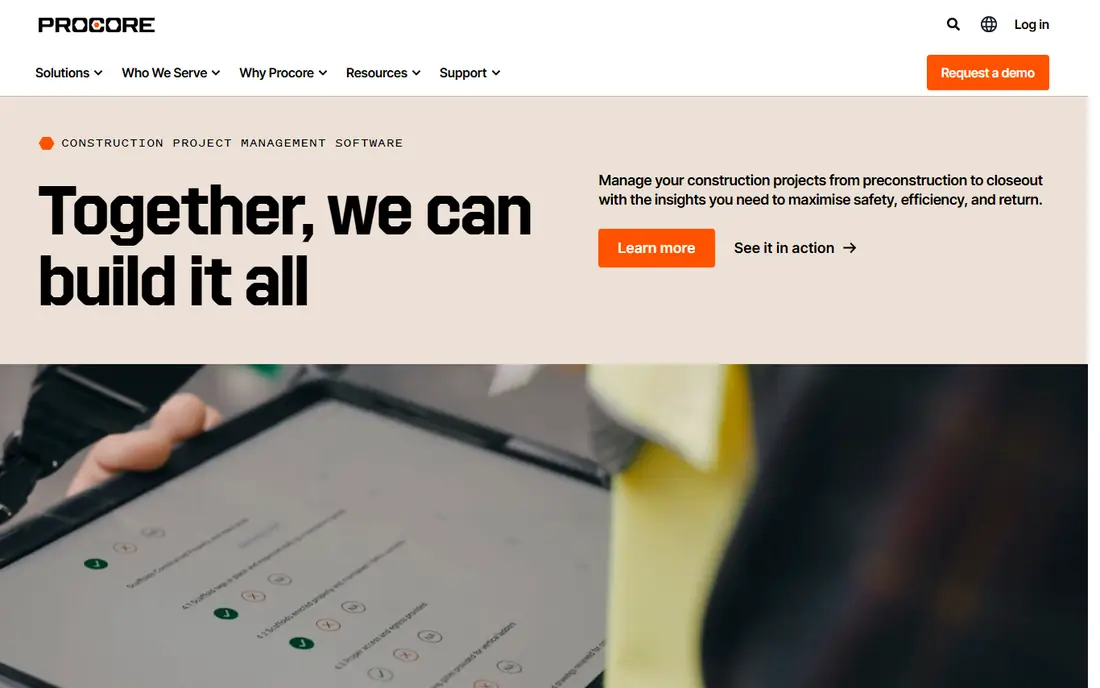
Procore's preconstruction tools sit inside a much larger construction platform, which is its main strength for large contractors. Bid management connects to estimating, project management, financials, and field tools, so bid data can flow into the awarded project without re-entry. Its bid board, invitation tracking, and subcontractor management suit teams handling many bids at once.
That breadth brings cost and setup time. Procore pricing is custom and scales with company volume, and smaller firms may find a focused bid tool cheaper and faster to adopt. Choose Procore when you already use, or plan to use, its wider platform, and compare a standalone bid tool when bid management is your only need.
- Broad preconstruction and project platform
- Bid board and subcontractor tools
- Strong mobile access
- Enterprise pricing and setup time
- More platform than a small firm may need
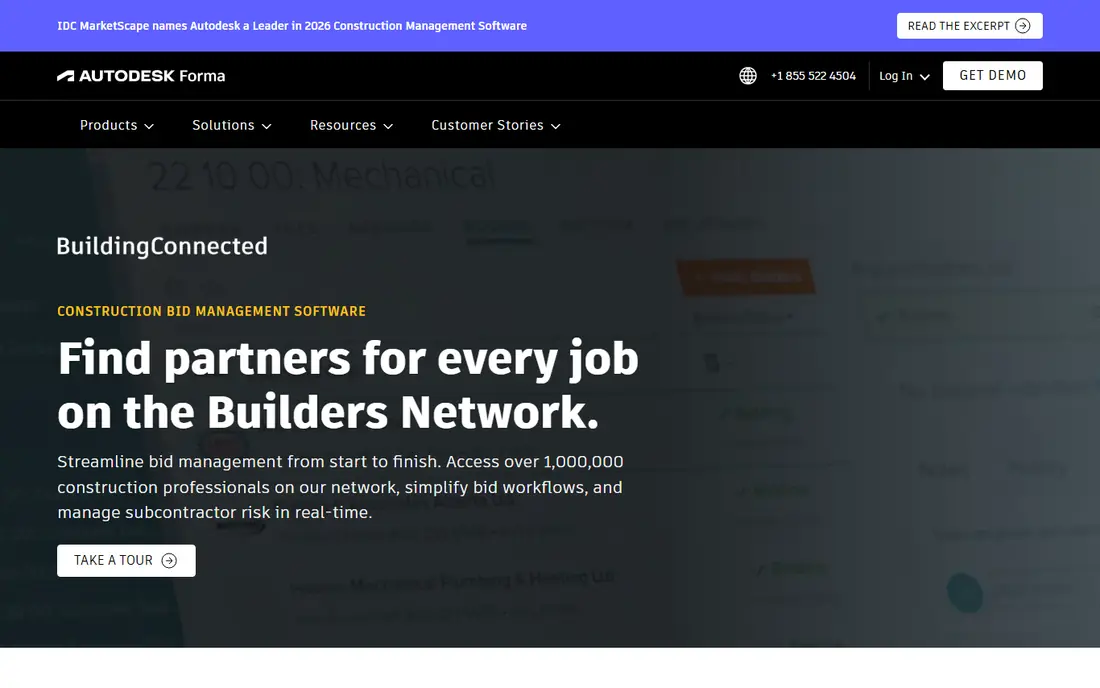
BuildingConnected, part of Autodesk, focuses on the core bid job: invite subcontractors, share plans, track responses, and compare bids. Its TradeTapp product adds risk checks on subcontractor finances, safety, and backlog, which helps general contractors avoid awarding work to a firm that cannot finish it. The subcontractor database also widens the pool beyond a company's own contacts.
Pricing starts around $399 per month in third-party comparisons, with final pricing quote-based, so confirm seat and project terms for your volume. Users also note that the web interface is less smooth on mobile than some rivals. If bid invites and risk screening are your priority, BuildingConnected is a strong, focused choice.
- Large subcontractor network
- TradeTapp risk checks
- Bid leveling tools
- Web experience on mobile is weaker
- Pricing rises with use and seats
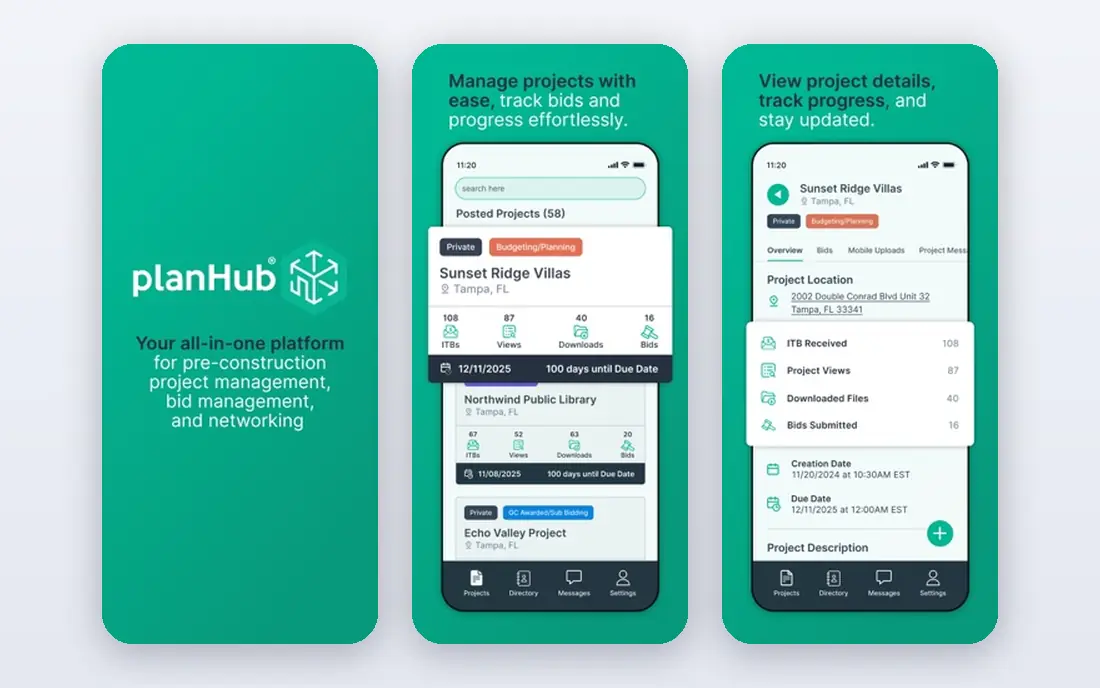
PlanHub takes a different pricing approach: general contractors can post projects and invite bids free, while subcontractors pay for plans that give access to bid opportunities and tools. That model makes it easy for a general contractor to try, and it gives subcontractors a steady stream of project leads. Its planroom, bid tracking, and messaging cover the basics well.
Enterprise depth is lighter than Procore or BuildingConnected, with fewer advanced risk and analytics tools. Subcontractors should compare plan tiers against the bid volume in their trades and regions, since value depends on relevant leads. For small and mid-size firms, PlanHub's low entry cost and simplicity are genuine advantages.
- Free for general contractors
- Simple bid invites and planroom
- Subcontractor plans available
- Subcontractor subscriptions add cost
- Feature depth is lighter than enterprise tools
SmartBid is built for general contractors who need disciplined bid tracking, invitations, prequalification, and leveling. Its side-by-side comparison tools help estimators spot scope gaps and pricing outliers on bid day, and its integrations with Procore, Autodesk, STACK, and Dropbox keep estimating workflows connected. A mobile app lets field and office staff check bid status away from desks.
New users report a learning curve, and pricing starts around $450 per month in third-party comparisons, which is a real commitment for a small firm. SmartBid fits best when bid volume is high enough to justify structured leveling and integrations, and when your team will invest time in setup and training.
- Bid leveling and side-by-side comparison
- Integrations with Procore and Autodesk
- Mobile app
- Steep learning curve for new users
- Pricing can feel high for small firms
ConstructConnect combines project data, bid leads, and bid management tools, which suits subcontractors and suppliers hunting for work as well as general contractors managing bids. Its database covers a large number of projects across the US, with plans, specs, and bid details that help firms decide which jobs to pursue. Bid tools and planroom features support the process after a lead is found.
Pricing is custom, and lead quality varies by trade, region, and project type, so a trial or demo on your actual market matters. Ask how many relevant, active projects appear for your trades before signing a long term. For firms whose main problem is finding the right bids, ConstructConnect's data is its core value.
- Large project and bid lead database
- Planroom and bid tools
- Strong for finding work
- Pricing is quote-based
- Lead value varies by trade and region
BidNet Direct serves the public procurement side of bid management, connecting government agencies with vendors. Agencies can post solicitations, manage vendor lists, and receive bids, while vendors can register, get alerts for relevant opportunities, and submit responses. For suppliers and contractors that sell to government, that focused marketplace saves time versus checking dozens of agency sites.
Private construction firms will find it less relevant than Procore or PlanHub, since its strength is public bids. Vendor pricing and access vary by state and region, so check coverage for the agencies you target. If government work is a major revenue line, BidNet Direct belongs on your shortlist.
- Focus on government and public bids
- Vendor registration tools
- Bid alerts
- Public-sector focus limits private construction use
- Vendor plans vary by region
Bonfire is a procurement platform for public-sector and institutional buyers, with tools for solicitation creation, vendor management, bid intake, and structured evaluation. Its scoring and audit trails help buyers run fair, documented evaluations, which matters for government, education, and healthcare procurement. Vendors benefit from a clearer submission process, but the platform is bought mainly by the buying organization.
A bidder looking for leads should not confuse Bonfire with a lead database. It is best judged by procurement teams that need defensible evaluation workflows and compliance records. Pricing is custom, so buyers should demo it on a real solicitation type they run often.
- Structured bid evaluation
- Vendor management
- Audit trails for public buyers
- Buyer-focused, less useful for bidders alone
- Pricing is custom
STACK is known for cloud-based takeoff and estimating, and its bid workflow builds on that strength. Estimators can measure plans, build estimates, invite bids, and collaborate in one place, which reduces the handoffs between takeoff, estimating, and bid collection. For firms where accurate quantity takeoff drives bid quality, that link is valuable.
Bid management alone is not STACK's whole story, so firms that only need invites and leveling may prefer a focused bid tool. Pricing is quote-based, with a trial available, so test takeoff accuracy on your own plans before committing. STACK fits best when estimating and bidding live in the same workflow.
- Cloud takeoff and estimating tools
- Planroom and bid collaboration
- Good for estimators
- Takeoff focus means bid management is part of a wider tool
- Pricing is quote-based
Buildertrend suits residential and smaller commercial builders who want bidding inside a wider business platform. It covers lead and bid tracking alongside scheduling, client communication, change orders, and payments, so a small builder can run a job from first bid to final invoice in one system. Its client portal also helps homeowners follow progress.
Large commercial bid programs with complex subcontractor leveling may need a more specialized tool such as BuildingConnected or SmartBid. Pricing is custom based on annual volume, so get a quote for your actual job count. For a growing builder, Buildertrend's breadth often beats buying separate bid, project, and client tools.
- Combines bidding with project, client, and financial tools
- Good for residential builders
- Client portal
- Less specialized for large commercial bid programs
- Pricing is custom by volume
How we picked these
We compared official product pages, pricing reports, feature descriptions, and public construction software comparisons in October 2026. We included general contractor bid tools, subcontractor lead platforms, and public procurement tools, because bid management means different jobs for buyers and bidders. Where pricing is custom or reported by third parties, we list the figure we could support or See website, and we urge readers to demo tools on a real bid.
What to check before you choose
Start with your bid workflow, not a feature checklist. Map how you find opportunities, invite subs, share plans, collect bids, level them, and award work, then test each tool on that exact flow. Pay attention to planroom handling, version control, prequalification forms, and bid-day comparison, since those steps cause the most errors and delays.
Next, check data flow and cost. Confirm integrations with estimating, project management, and accounting, and ask whether bid history, win rates, and subcontractor performance carry forward. Add up seats, project limits, and any lead or data subscriptions, since total cost often exceeds the headline plan price. A tool that fits your real bid day, even if it looks plain in a demo, will serve you better than a feature-rich platform your team avoids.
Frequently asked questions
What is the best bid management software for general contractors?
BuildingConnected and SmartBid are strong focused choices for general contractors, while Procore suits larger firms that want bid management inside a full construction platform. PlanHub is a good low-cost starting point for smaller general contractors.
What are the best bid management tools for subcontractors?
PlanHub and ConstructConnect suit subcontractors, because both help find bid opportunities as well as manage responses. Check lead relevance for your trades and regions before paying, since value depends on local project volume.
What are the best bid management platforms for government bids?
BidNet Direct and Bonfire suit public-sector bidding, with BidNet Direct focused on vendor access to government solicitations and Bonfire focused on buyer-side evaluation. Pick by your role: buyer or bidder.
How much does bid management software cost?
Costs range from free for general contractors on PlanHub to several hundred dollars per month for focused tools, and custom enterprise pricing for Procore and large platforms. Always confirm seats, project limits, and data subscriptions in a quote.
What features matter most in bid management software?
Bid invites and tracking, a clean planroom with version control, subcontractor prequalification, side-by-side bid leveling, and integrations with estimating and project tools matter most. Reporting on win rates and subcontractor performance helps over time, but only if the daily bid workflow is smooth.
Sources
See where you really rank - block by block
ProMapRanker scans Google Maps across a grid of your service area. Simple monthly plans from $19, white-label on every plan.
Start freeKeep reading
 zscaler alternatives
Best Zscaler Alternatives in 2026
Looking for zscaler alternatives? We compare 9 SASE and zero trust platforms on architecture, data protection, pricing, and fit for your network and team.
Read → zapier alternatives free
Best Zapier Alternatives Free in 2026
Nine automation tools for zapier alternatives free in 2026, all with genuinely free tiers, plus free plan limits, starting prices and upgrade paths explained.
Read → which platform is best for online reputation
Which Platform Is Best for Online Reputation in 2026
Wondering which platform is best for online reputation? We compare 8 review, listing, and response tools for small and multi-location businesses and agencies.
Read →