 ProMapRanker
Best Baseball Card Value App in 2026

Key takeaways
- A scanner value is an estimate, not a sale price, so check recent sold listings before buying, selling or paying to grade a card.
- CollX is the best free scanner for most collectors, while Ludex is stronger on modern parallels in third party comparisons.
- Card Ladder and Market Movers suit serious tracking, while PSA and Beckett suit graded card research.
- Condition and grade move value more than any scan, so a raw card and a PSA 10 of the same card can be worth very different amounts.
Quick comparison
| Pick | Great for | Pricing starts at | Free tier | |
|---|---|---|---|---|
 CollX | Free scanning | Free | Yes | Visit |
 Ludex | Modern parallels | See website | Yes | Visit |
 Card Ladder | Sales based tracking | $20 per month | Yes | Visit |
 PSA | Graded card prices | Free | Yes | Visit |
 Beckett | Price guide research | See website | No | Visit |
 Sports Card Pro | Free collection values | Free | Yes | Visit |
 130Point | Real sold prices | Free | Yes | Visit |
 eBay | Sold listing checks | Free | Yes | Visit |
 Market Movers | Portfolio and sales history | $9.99 per month | Free trial | Visit |
The best baseball card value app
We compared baseball card tools on scanning, price source, grade handling, collection tracking and price. The key point runs through the whole list: an in app value is an estimate. For a real decision, check what the same card, in the same grade and condition, actually sold for recently.
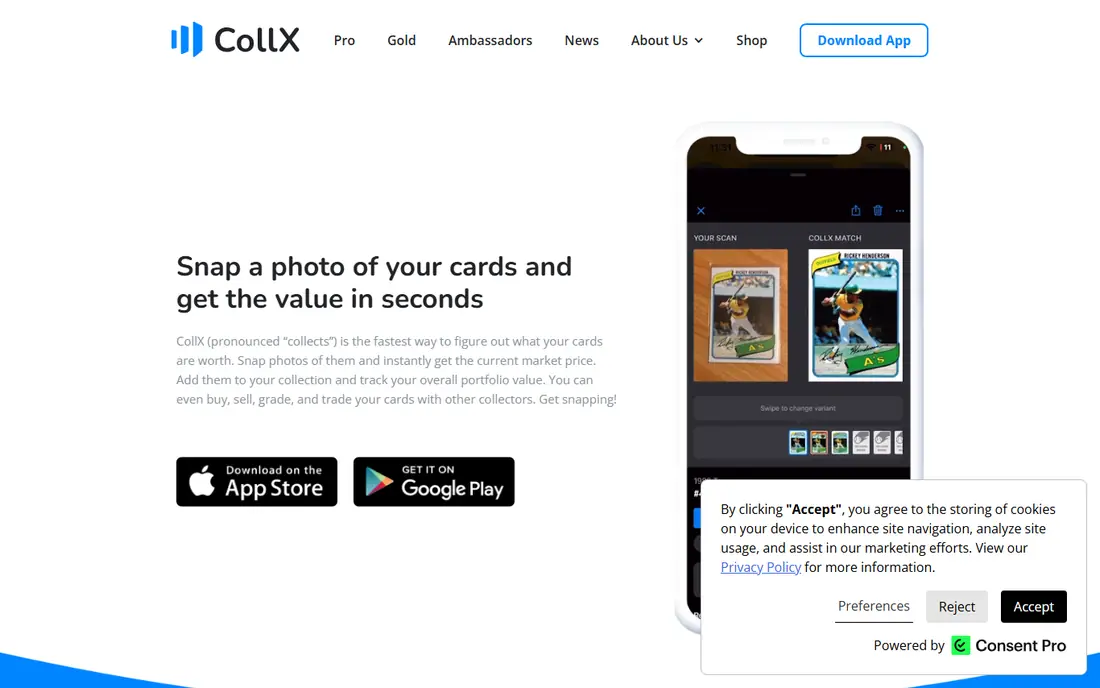
CollX is the easiest free starting point. Point a phone camera at a card, get an identification and a value estimate in seconds, then add the card to a collection. The database covers baseball and other sports, plus trading card games, and the built in marketplace makes listing a card simple.
Accuracy is the honest catch. Third party comparisons note that CollX can misidentify parallels and that its values can run above recent eBay sold prices, because estimates blend different data. Use CollX to identify and organize a collection, then verify a valuable card on 130Point or eBay sold listings before pricing it.
- Free unlimited style scanning for casual collectors
- Large card database
- Built in marketplace and collection tracking
- Parallel identification can miss on tricky cards
- Values blend asking prices and sales in some summaries, so they can run high

Ludex is a scanner built for sports cards and trading cards, with price history charts and portfolio totals. Third party comparisons rate it more accurate than CollX on modern parallels, which matters for chrome, refractor and numbered cards where a small variation changes value a lot. That edge makes it a good second scanner for modern collectors.
Pricing is less clear, with different summaries listing different Premium figures, so we list See website and advise checking the current app store listing. Ludex still gives estimates, not guaranteed sale prices, so a high value card still deserves a sold listing check.
- Stronger parallel accuracy in third party comparisons
- Price history charts
- Sports and trading card coverage in one app
- Pricing summaries differ across sources, so check the current app listing
- Grade specific detail is still limited
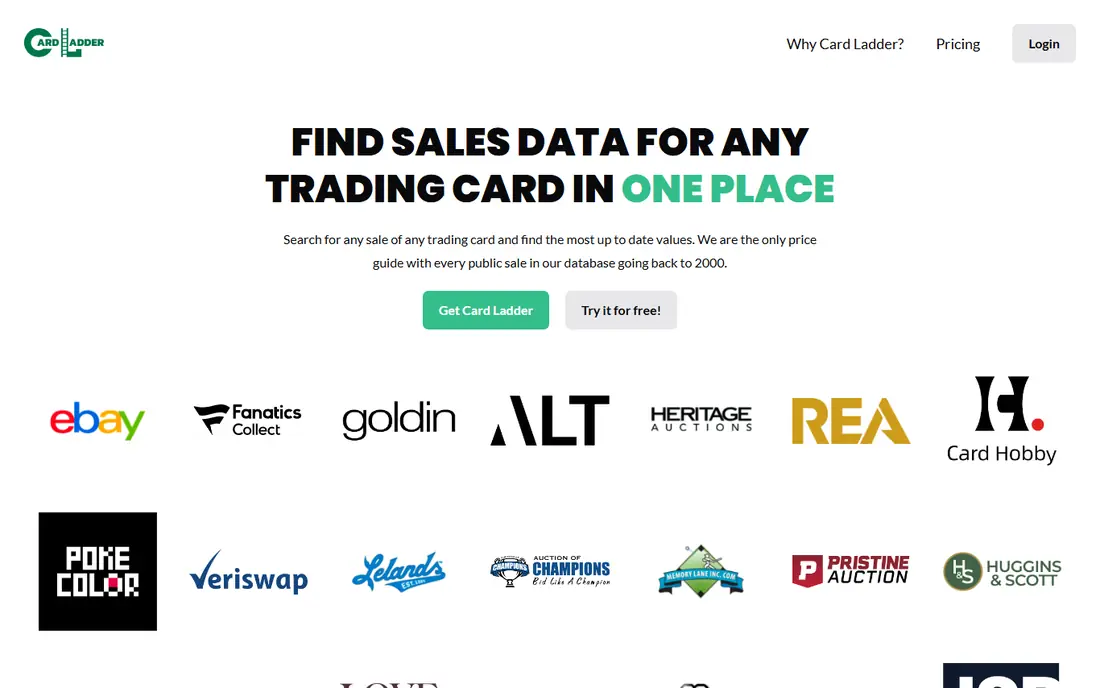
Card Ladder is a pricing and tracking platform built around actual sales data, with charts, indexes and collection values. Serious collectors use it to follow a card or a player over time, rather than relying on a single scan estimate. The free tier covers basic price guide use, while Pro, listed at $20 per month in third party comparisons, adds full tracking and history.
Casual collectors with a small collection may not need Pro. For a collector with a growing portfolio, or someone tracking graded cards before a sale, the sales based charts are more useful than a scanner estimate alone. Check the current Pro page for what is included before subscribing.
- Sales database built for sports cards
- Charts and portfolio tracking
- Free price guide tier for basic lookups
- Pro at $20 per month is a real cost for casual collectors
- Free tier limits history and tracking depth
PSA, short for Professional Sports Authenticator, is the grading company behind many of the most valuable baseball cards. Its free app and site offer price estimates, auction prices realized and population reports, which show how many copies exist at each grade. That scarcity data matters, because a low population PSA 10 can be worth far more than a common PSA 9.
PSA tools are less useful for raw, ungraded cards, and grading itself costs money and time. Use PSA to research graded values and population, use a scanner for raw identification, and use sold listings to confirm what buyers actually paid.
- Free price guide and auction prices realized for PSA graded cards
- Population reports show scarcity
- Trusted grading reference
- Focused on PSA graded cards, not raw values
- Grading fees and turnaround are separate
Beckett has published sports card price guides for decades, and its online price guide remains a reference for many collectors. It covers baseball checklists, set details and values, alongside hobby news. For vintage collectors and set builders, that guide structure is useful in a way a scanner alone is not.
The online guide is a paid product, so we list See website for current pricing. Book values also differ from live market prices at times, so treat Beckett as a research reference and check recent sales for a final price. For long term collecting and set research, it still earns a place.
- Long running price guide tradition
- Online price guide for baseball and other sports
- Hobby news and checklists
- Online price guide is paid
- Book values can differ from recent market sales
Sports Card Pro is a free web tool for tracking a collection and seeing estimated values. It uses automated sales tracking to estimate values across grades, and it lets a collector build a searchable inventory without a subscription. For a casual collector who wants a portfolio total without paying monthly, that free access is attractive.
Estimates are the limit. Third party commentary notes that algorithmic values can run high, so a portfolio total should be treated as a rough guide, not a sale price. Use Sports Card Pro for organization and tracking, then verify individual high value cards on sold listings.
- Free collection tracking with estimated values
- Automated eBay sales tracking in summaries
- Simple web based use
- Values are algorithmic estimates
- Interface is plainer than newer apps
130Point is the reality check on this list. It searches sold items across eBay and other auction sites, so a collector sees real transaction prices for a specific card and grade. That data matters more than any estimate when setting a sale price or deciding whether grading is worth the fee.
It is not a scanner or a collection tracker. You need to identify the card first, often with CollX or Ludex, then search 130Point for the same card, year, set, parallel and grade. For any card worth more than a few dollars, that extra step is worth the time.
- Searches actual sold listings across auction sites
- Shows what buyers paid, not asking prices
- Free to use
- No scanning or collection tracking
- You need to know the card details to search well
eBay is both a marketplace and a price research tool. Its sold listings filter, available on web and mobile, shows what comparable cards actually sold for, including grade, condition notes and sale date. That is the most direct market evidence available to most collectors, and it is free to browse.
The trap is using active listings instead of sold listings. An asking price is a hope, not a sale. Always filter to sold items, match grade and parallel closely, and allow for fees and shipping when calculating a net return. For buying and selling, eBay remains the central market.
- Largest marketplace for baseball cards
- Sold listings filter shows real sales
- In app scanner for listing
- Asking prices can mislead if sold filter is not used
- Fees apply when selling
Market Movers is a sports card pricing and portfolio platform with sales histories, charts and collection tracking. Its Starter plan is listed at $9.99 per month in third party comparisons, with higher tiers for unlimited use. That lower entry price makes it an alternative to Card Ladder for collectors who want sales based tracking without the $20 Pro tier.
As with Card Ladder, the value depends on collection size and trading frequency. A casual collector may do fine with free tools, while an active buyer or seller will use the sales history daily. Check the current plan page for trial terms and tier limits before subscribing.
- Real time data and portfolio monitoring
- Extensive sales histories
- Starter plan lower than Card Ladder Pro
- Higher tiers cost more
- Free access is a trial, not a full free tier
How we picked these
We compared official app and site pages, app store listings and third party scanner comparisons for October 2026. We kept only tools that are live now, that cover baseball cards specifically or sports cards broadly, and that give a value, a sold price or a graded price reference. Where pricing differed across summaries, we used See website or the most widely reported figure, and we advised checking the vendor page.
How to value a card without overpaying
Identify the card exactly first: year, brand, set, card number, parallel, and whether it is raw or graded. A scanner helps, but check the parallel yourself, because a refractor, chrome or numbered parallel changes value sharply. Then search sold listings for that exact card and grade, and look at several recent sales, not one outlier.
Factor in condition and fees. Centering, corners, edges and surface affect grade, and grading fees, shipping and marketplace fees affect net return. A card that looks valuable raw may be worth far less after grading costs if it grades low. When in doubt, keep a card, get more opinions, or sell raw with clear photos rather than guessing a grade.
Frequently asked questions
What is the best app for baseball card values?
CollX is best for free scanning, Card Ladder is best for sales based tracking, and 130Point is best for checking real sold prices. Most collectors should use a scanner plus a sold price check together.
What are the best apps for baseball card values for free?
CollX, Sports Card Pro, 130Point and eBay sold listings are all free to use for basic value research. PSA also offers free price guide and auction data for graded cards.
How accurate are baseball card scanner apps?
Scanners are reliable for identifying common base cards, but less reliable on parallels and on exact value. Treat every scanner value as an estimate and verify valuable cards against recent sold listings for the same grade.
Should I grade a baseball card before selling it?
Grading can raise value for a card in excellent condition, but fees and turnaround time apply, and a low grade can reduce the return. Check raw versus graded sold prices first, and only grade when the likely graded value covers fees with room to spare.
What is the difference between book value and market value?
Book value comes from a price guide such as Beckett, while market value comes from recent actual sales. Market value matters more for a sale, because it reflects what buyers paid recently for that exact card and grade.
Can I use these apps for vintage baseball cards?
Yes, but vintage cards need extra care. Population reports from PSA, Beckett guides and auction sold data from 130Point are more useful for vintage than a quick scan, because condition and authenticity matter more for older cards.
Sources
See where you really rank - block by block
ProMapRanker scans Google Maps across a grid of your service area. Simple monthly plans from $19, white-label on every plan.
Start freeKeep reading
 zscaler alternatives
Best Zscaler Alternatives in 2026
Looking for zscaler alternatives? We compare 9 SASE and zero trust platforms on architecture, data protection, pricing, and fit for your network and team.
Read → zapier alternatives free
Best Zapier Alternatives Free in 2026
Nine automation tools for zapier alternatives free in 2026, all with genuinely free tiers, plus free plan limits, starting prices and upgrade paths explained.
Read → which platform is best for online reputation
Which Platform Is Best for Online Reputation in 2026
Wondering which platform is best for online reputation? We compare 8 review, listing, and response tools for small and multi-location businesses and agencies.
Read →